Age
41
Gender
Female
Ethnicity
Hispanic/Latino, Caucasian
Religion
Christian
Church
Catholic
Hobbies and interests
Advocacy And Activism
Bible Study
Writing
American Sign Language (ASL)
Child Development
Church
Clinical Psychology
Politics and Political Science
Law Enforcement
Law
Government
Social Sciences
National Honor Society (NHS)
Public Health
Public Policy
Public Relations
Public Speaking
Reading
Politics
I read books daily
Credit score
Adrienne Adrienne
1x
Finalist
Adrienne Adrienne
1x
FinalistBio
I am a behavioral-health leader, prevention specialist, and mother of three whose purpose is shaped by lived experience and more than a decade of service across municipal, county, state, and federal systems. I currently serve as a Supervisor II for a US City, where I lead teams of Mental Health Crisis Responders and Community Health Medical Responders, coordinate complex community-safety interventions, and advance data-driven, trauma-informed public-health strategies for the most vulnerable residents.
My commitment began years earlier on the East Coast, where I served three elected terms on my municipal alliance board, became a statewide advocate for family support, overdose prevention, maternal behavioral health, and adolescent substance-use education. My story and expertise have been featured at national conferences and were even shared before members of the US House of Representatives during the rise of the fentanyl crisis.
As a Certified Alcohol and Drug Counselor II, Qualified Mental Health Associate II, Certified Prevention Specialist, and National Certified Peer Recovery Support Specialist, I bring a comprehensive understanding of addiction, prevention science, and community-level change. I am now pursuing a Master’s in Social and Public Policy to strengthen my ability to evaluate systems, guide evidence-based reform, and advocate for families like my own. Rooted in my Catholic, family-centered values driven by service, I am committed to shaping policies that protect youth, strengthen communities, and expand compassionate, effective behavioral-health responses.
Education
SUNY Empire State College
Bachelor's degree programMajors:
- Community Organization and Advocacy
GPA:
4
SUNY Empire State College
Master's degree programMajors:
- Public Policy Analysis
Miscellaneous
Desired degree level:
Doctoral degree program (PhD, MD, JD, etc.)
Graduate schools of interest:
- SUNY Empire State College
Transfer schools of interest:
Majors of interest:
Career
Dream career field:
- Government Relations
Dream career goals:
Supervisor to a first response crew of Mental Health Crisis Responders and Community Health Medical Responders
City of Portland2023 – Present3 years
Research
Public Policy Analysis
Horizon Blue Cross Blue Shield — Coordinator2021 – 2022
Public services
Advocacy
State of NJ Department of Mental Health and Addiction Services — Public Speaker; Subject Matter Expert2016 – 2024Volunteering
Leukemia and Lymphoma Society — Volunteer at Light the Night2006 – 2022Public Service (Politics)
Hamilton Alliance Against Substance Abuse — Board Member; Chairman2016 – 2024
Future Interests
Advocacy
Politics
Volunteering
Philanthropy
Entrepreneurship
Tawkify Meaningful Connections Scholarship
Some of the most important lessons in my life did not come from a classroom. They came from spending weekends at my grandparents’ house growing up.
Almost every weekend, my siblings and I would go over to their house. At the time it just felt like a normal routine, but looking back now I realize how much those weekends shaped who I am today. We would sit in the living room watching The Mary Tyler Moore Show and The Carol Burnett Show, laughing together while my grandparents sat nearby enjoying the moment.
As a kid, I remember thinking how happy they seemed and hoping that someday I would grow up to have a life that looked like theirs. I admired the way they moved through life together with such steadiness and humor.
What I didn’t realize then was that the person I was really looking up to was my mom-mom. She had a quiet strength about her that made everyone feel comfortable and cared for. She didn’t need grand gestures to show love. Instead, it showed up in simple things—family dinners, conversations at the kitchen table, or sitting together watching television after a long day.
At the time those moments seemed small, but now I understand that they were teaching me what real connection and family looked like.
What made those weekends special wasn’t anything extravagant. It was the consistency. My grandparents’ house was a place where family mattered and where people showed up for each other. There was a sense of stability there that stayed with me long after I left their front door.
Those lessons have stayed with me into adulthood in ways I didn’t fully understand when I was younger.
I am incredibly blessed that both of my grandparents are still alive. Even though I now live about 3,000 miles away from them, we still stay connected in meaningful ways. One of my favorite things to do is call my pop-pop and talk about politics. He has always had strong opinions, and so do I, so our conversations can get lively. But no matter how our discussion goes, he always ends the same way—by asking how the kids are doing.
That simple question says a lot. It shows that even with distance and time, family remains a priority.
In a world that is increasingly driven by technology, people often assume that connection can be replaced by texts, social media, or even artificial intelligence. Technology can help us communicate, but it cannot replace the kind of human connection that grows from shared time and real relationships.
The memories of sitting in my grandparents’ living room watching old television shows, the laughter we shared, and the conversations I still have with my pop-pop today are things that cannot be replicated through a screen. They were built through years of love, trust, and simply being present with each other.
Those early weekends taught me something important: meaningful relationships are not built through big, dramatic moments. They are built through small, consistent acts of showing up for the people you care about.
Today, those lessons shape how I connect with others in my own life. They influence how I raise my children and how I try to be present for the people around me. I often think about the example my grandparents set and the quiet strength my mom-mom showed every day.
When I think about the kind of person I want to be, I still think about those weekends at their house. I think about the laughter, the warmth of their home, and the feeling that family was always the most important thing.
Those memories taught me that real human connection is built through presence, love, and time—things that technology can support but will never replace.
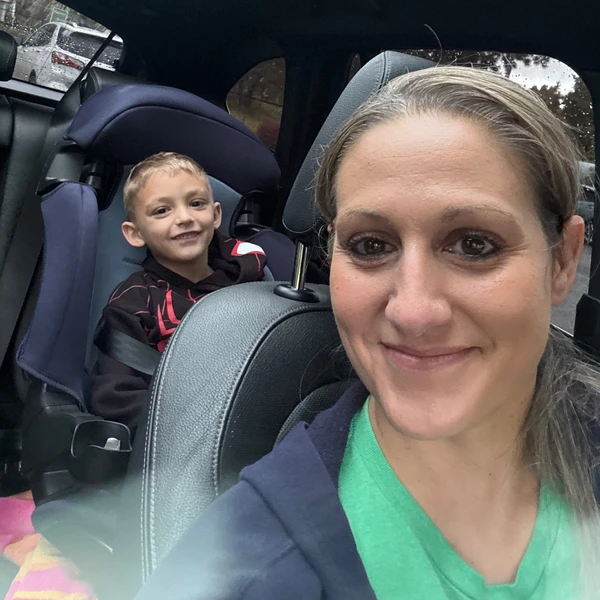
When I show people the picture I attached, I tell them that this is my whole world in one shot. The emotion that fills my body each time I look at it, speaks for itself-they are everything to me. Family is everything.
Lost Dreams Awaken Scholarship
Recovery, to me, is about learning how to notice life again in the small, quiet moments I once missed.
I remember standing outside an AA meeting one winter night when a snowflake landed on the sleeve of my black coat. I stared at it for a moment before it melted. It sounds simple, but in active addiction I moved through the world so numb and disconnected that I never noticed things like that. That snowflake felt like proof that I was finally present in my own life.
Another moment that stays with me is hearing the birds in the morning. When I was in active addiction, I hated that sound. Birds meant the sun was coming up and another day was starting, and to me that meant another day of chaos, shame, and exhaustion. In recovery, that same sound slowly started to mean something different. Now it reminds me that I’ve been given another day to live differently.
I also remember the first time I truly looked at myself in the mirror. Not just a quick glance, but really seeing myself. I realized I hadn’t done that in a very long time. Recovery meant facing who I had been and choosing to become someone better.
For me, recovery is breaking the chain that kept me from becoming the person I was meant to be, and learning to live a life I once thought was impossible.
Christian Fitness Association General Scholarship
My path through school has not been traditional. Like many people, I have faced difficult challenges along the way, but those challenges helped shape who I am today and the work I now do in my community.
Earlier in my life, I struggled with substance use and the instability that comes with addiction. During that time, education and long-term goals felt out of reach. I was focused on simply getting through each day. The choices I made during that period of my life had serious consequences, and eventually I had to face the reality that I needed to change if I wanted a different future.
The turning point in my life came when I became a mother. My children were born dependent because of my substance use during pregnancy. Facing that truth was incredibly difficult, but it forced me to take responsibility for my life and the path I was on. As someone raised with strong Italian Catholic values, family has always been at the center of how I see the world. I knew that if I wanted my children to grow up in a stable, healthy home, I had to do the work to rebuild my own life first.
Recovery was not easy. It required discipline, accountability, and faith. I had to learn how to make better choices and rebuild trust with the people around me. During that time, my faith played an important role. My faith taught me that people are capable of redemption and that even after making mistakes, it is possible to rebuild a life that is meaningful and productive.
Education became a big part of that rebuilding process. I returned to school with a new sense of purpose. I wanted to understand the systems that affect families dealing with addiction, mental health challenges, and poverty. I also wanted to prove to myself, and to my children, that it is possible to overcome difficult circumstances through hard work and determination.
I eventually earned my degree in Community Health and Human Services. During my studies, I discovered that my lived experience was not something to be ashamed of. Instead, it gave me a deeper understanding of the struggles many people face and the barriers that prevent families from getting the help they need.
Today, I work for the City of Portland in a leadership role with Portland Street Response. Our teams respond to individuals experiencing mental health crises, homelessness, and substance use issues. Instead of responding with punishment or force, our goal is to de-escalate situations and connect people to services that can help them stabilize and move forward.
This work is deeply personal to me. Every day I encounter people who remind me of where I once was in my own life. Because of that, I approach my work with compassion and understanding. At the same time, I also believe strongly in personal responsibility and the importance of helping people take steps toward healthier choices and more stable lives.
The values I was raised with continue to guide how I approach both my career and my education. My family taught me the importance of hard work, faith, and showing up for others when they need help. Those values are part of my Italian Catholic upbringing and they remain central to who I am today.
Balancing work, school, and raising three children has been one of the biggest challenges I have faced while pursuing my education. There are many days when the responsibilities feel overwhelming, but my children are the reason I keep moving forward. I want them to grow up seeing that perseverance, faith, and commitment to family can help overcome even the most difficult circumstances.
I am currently continuing my education in social and public policy because I want to work on improving the systems that affect families like mine. Too often, policies are created without input from people who have experienced addiction, poverty, or involvement with the criminal justice system. My goal is to help bring those real-world experiences into policy conversations so that solutions are practical, compassionate, and focused on strengthening families and communities.
Receiving this scholarship would help ease the financial pressure that comes with continuing my education while supporting a family. More importantly, it would allow me to keep working toward a future where my education and my lived experience can help create better opportunities for others.
The challenges I faced earlier in life could have held me back permanently. Instead, they became the reason I chose to change the direction of my life. Through recovery, education, faith, and a commitment to family, I have been able to rebuild my life and dedicate my work to helping others do the same.
My journey is proof that difficult beginnings do not have to define a person’s future. With determination, support, and the right opportunities, people can rebuild their lives and create something meaningful not only for themselves, but for their families and their communities as well.
Bulkthreads.com's "Let's Aim Higher" Scholarship
There is something profoundly sacred about the first moments of holding a newborn—the weight of them in your arms, the softness of their skin, the awe of realizing an entire life has just begun. As a mother of three children who were all born prematurely, those early moments were especially powerful for me. My babies were tiny, fragile, and fighting for their place in the world. Those memories are etched into me, yet as they grow, I often wish I had a tangible way to show them just how small and strong they once were.
What I hope to build in the future is a life-like newborn replica—an artistic, meaningful keepsake that mirrors a real infant’s size, weight, skin tone, and features. While it may initially sound unusual, this idea has a deeply emotional purpose: to preserve one of the most significant moments in a parent’s life. For many families, especially those with premature infants, early life can be overwhelming, medically complex, and emotionally draining. The opportunity to one day hold a representation of that moment again—accurate in size and weight—can be healing, grounding, and profoundly meaningful.
My vision is to turn this into a resource for families, not just a personal keepsake. I want to build a service that offers parents, especially NICU and preemie families, a way to honor their child’s beginning—something they can cherish, share as their child grows, or use as a therapeutic tool in processing the experience of early birth or medical trauma. For parents who have experienced infant loss, this could become a gentle and respectful memory item that provides comfort during grief.
Building this idea into a future career would allow me to blend creativity, compassion, and lived experience. It would also strengthen my commitment to supporting families in my community. I hope to partner with hospitals, perinatal support organizations, and NICUs so this resource can be accessible to families who might benefit from it the most.
Ultimately, what I want to build is not just a physical object, but a bridge between past and present—a way for families to remember, honor, and celebrate the earliest moments of their children’s lives. In doing so, I hope to create something that brings comfort, connection, and healing to parents in my community and beyond.
Frank and Patty Skerl Educational Scholarship for the Physically Disabled
Living with a physical disability has shaped not only how I move through the world, but how I see it. Living with multiple autoimmune and degenerative disorders means waking up in pain nearly every day of my life. Over the years, degeneration has led to multiple surgeries on my feet—including full reconstruction using cadaver bone and later titanium. These procedures helped me continue walking, but they also left lasting limitations and daily challenges. There are mornings when simply standing feels impossible. There are days when walking requires deliberate effort, planning, and endurance. And yet, every day I choose to rise. Even as my body changes and declines, each morning becomes a daily reprieve—an invitation to try again, contribute again, and find meaning again.
Being part of the disabled community has transformed my understanding of strength. Society often defines strength as physical capability or stamina, but within this community, strength looks entirely different. Strength is enduring pain while caring for your children. Strength is showing up to work, to school, or to service even when your body resists. Strength is learning to walk again after surgeries and accepting new limitations with grace. Strength is choosing purpose on the hard days, not because it is easy, but because it matters.
My disability has also expanded my capacity for empathy. Chronic illness and physical disability often come with invisibility; people do not always understand the level of pain or fatigue you are managing because it cannot be seen. Walking with reconstructed feet or living with autoimmune flare-ups is not always obvious to those around me. This invisibility has taught me to approach others gently, with the understanding that many people carry struggles that are not visible. Compassion, I have learned, is not optional—it is a responsibility.
This perspective directly shapes the future I am pursuing. My academic and professional passions lie in public policy, community health, and supporting populations who navigate complex and often misunderstood barriers. My lived experience gives me insight into what it means to navigate systems that are not always built with disabled people in mind. I know the frustration of inadequate accommodations, the exhaustion of advocating for yourself, and the relief that comes when someone finally understands what you need. These personal insights motivate me to advocate for improved accessibility, trauma-informed services, and equitable health policy.
I want to use my education to elevate the voices of individuals living with disabilities and chronic illnesses—ensuring they are not only cared for, but also included, respected, and empowered. The disabled community has taught me that disability is not a deficit; it is a form of knowledge and resilience that can bring depth to leadership and policy work. I hope to bring that depth into every space I enter.
Most importantly, living with disability has reshaped my definition of success. For me, success is not measured by perfection or unbroken productivity. Some days, success is walking—quite literally—through pain. Other days, it is excelling academically or professionally despite physical limitations. Every day, success is choosing meaning over despair, purpose over discouragement, and resilience over defeat.
Though my body challenges me, it has also taught me to live with intention, humility, and hope. The disabled community has given me strength, perspective, and purpose—and these gifts are what I will carry into my future endeavors.
Elijah's Helping Hand Scholarship Award
Mental health has shaped nearly every chapter of my life—how I parent, how I lead, how I love, and how I move through the world. I was raised in a conservative, religious family where mental illness was dismissed or denied entirely. Looking back, I now see clear generational patterns in my mother and grandmother: depression, mood instability, trauma responses, and emotional volatility that went untreated simply because acknowledging mental health was seen as weakness. That silence shaped all of us. Even today, my sister does not believe mental health is real, a reminder of just how deeply stigma can take root.
As a young woman, I struggled with depression, shame, and the impact of unresolved trauma. Substance use became a coping mechanism long before I understood what trauma-informed care meant. When I became a mother, I was still navigating my own mental health, and all three of my children were born dependent due to my earlier substance use. The guilt was overwhelming. Yet that moment also became a turning point. My children were the reason I chose recovery and the reason I began to confront the mental health challenges I had carried alone for so long.
As my children grew, so did my understanding of our family’s mental-health landscape. While I would never diagnose my own family as a mental-health clinician, I recognize the patterns: my oldest lives with bipolar disorder, my youngest has ADHD, and my daughter and I both struggle with borderline personality traits. To support her—and to strengthen myself—I participate actively in Dialectical Behavior Therapy (DBT). Through DBT, I’ve learned emotional regulation, mindfulness, and how to break generational cycles that once felt inevitable.
My lived experience ultimately shaped my professional path. Today, I am a supervisor and mental-health clinician in a first-response program serving individuals facing crisis, addiction, homelessness, and trauma. I work daily with people who remind me of the hardest moments in my own life—people who have been silenced, misunderstood, or judged instead of supported. I carry those experiences into every interaction, leading with compassion and a deep understanding of what stigma can destroy. Many of the individuals we serve identify as LGBTQIA+, and I have seen firsthand how discrimination, rejection, and lack of support can intensify mental-health suffering. I am committed to creating trauma-informed, affirming care for every person we encounter.
My professional work and personal healing have also driven my academic goals. I am completing my bachelor’s degree in Community and Human Services and preparing to pursue a master’s degree in Social & Public Policy. I want to influence mental-health systems at a broader level—especially around adolescent addiction, family trauma, and prevention. Too many people fall through the gaps. Too many families suffer in silence. Too many individuals, like Elijah, lose their lives before receiving the support they deserved.
My journey has not been easy, but it has made me someone who refuses to look away from suffering—my own or anyone else’s. I believe people heal when honesty replaces shame, when connection replaces fear, and when we recognize that mental health is not a character flaw but part of being human. I hope to honor Elijah’s legacy by continuing to support those in crisis and by helping build a world where no one’s struggle is met with silence.
Ethel Hayes Destigmatization of Mental Health Scholarship
My journey with mental health has shaped every part of who I am—my beliefs, my relationships, my role as a mother, and the work I feel called to do in the world. My story is one of trauma, survival, stigma, and ultimately transformation. Mental health was not openly discussed in my family, and for many years, I carried the weight of untreated trauma and the belief that I had to manage everything alone. Looking back, I now recognize longstanding generational mental-health struggles in my mother and grandmother—issues that were never named or treated due to our conservative and deeply religious family culture. Mental illness simply “did not exist” in our home, and to this day my sister does not believe in mental health at all.
As a young woman, I struggled with depression, shame, and the impact of substance use—challenges that grew from unresolved trauma and a lack of support. Becoming a mother while navigating mental-health symptoms added layers of fear and pressure, especially when all three of my children were born dependent due to my earlier substance use. I carried tremendous guilt, compounded by society’s stigma toward mothers with addiction histories. But I also carried determination. My children were the reason I chose recovery—and the reason I learned to face my own mind with honesty.
As my children grew, our family’s mental-health story deepened. Though I would never ethically diagnose my own family as a clinician, I am mindful of the patterns: my oldest lives with bipolar disorder, my youngest has ADHD, and my daughter and I both struggle with borderline personality traits. Understanding these challenges has brought clarity, not shame. To better support my daughter, I actively participate in DBT, which has strengthened both of us. It has also taught me that healing is a relationship—not just with others, but with yourself.
My recovery became the foundation for everything that followed. Recovery is not a single event—it is a lifelong commitment to healing, accountability, and growth. Over time I learned how trauma shapes the nervous system, and how mental-health challenges can impact relationships, self-worth, and identity. I worked to rebuild trust, stability, and emotional safety in myself and in my family. Through that work, I learned that strength is not the absence of struggle, but the willingness to confront it.
My experience transformed how I show up in the world. Today, I am a supervisor in a first-responder program that supports people experiencing mental-health crises, addiction, and homelessness. Every day, I work alongside people navigating the same layers of trauma and silence that once shaped my life. My lived experience allows me to lead with compassion and to see the humanity behind behaviors that others may misunderstand. When I train new responders, I emphasize that people are not “difficult”—they are hurting. I know this because I was once the person on the other side of the call.
Mental health has also shaped my academic goals. I am completing my bachelor’s degree in Community and Human Services and preparing for a master’s program in Social & Public Policy. I want to focus on adolescent addiction, family systems, prevention, and the structural barriers that keep people from accessing care. My goal is to combine lived experience, clinical training, and policy knowledge to influence statewide and national mental-health systems. Stigma—especially around addiction and complex mental-health diagnoses—has cost far too many lives. I want to help create policies that treat mental health as a public-health issue, not a moral failing.
My relationships have evolved along with my understanding. I parent differently because I know how trauma is passed through generations unless it is acknowledged and healed. I teach my children what I never learned growing up: that feelings are not something to hide, that asking for help is courageous, and that mental health is simply part of being human. Mental health will always be part of our family’s story—not as shame, but as evidence of resilience.
Through all of this, my understanding of the world has changed profoundly. I no longer see mental-health struggles as weakness. I see them as responses to pain, biology, and lived experience—things that require compassion, connection, and evidence-based care. The darkness loses power when people speak honestly about what they have lived through. I hope to be one more voice bringing that darkness to light.
My journey with mental health is the reason I am who I am today: a mother in recovery, a first-responder leader, a mental-health clinician, a student of public policy, and an advocate for those whose stories have been ignored or misunderstood. The stigma around mental health may be deep, but I am living proof that healing is possible—and that sharing our stories can change lives.
Elizabeth Schalk Memorial Scholarship
Mental illness has shaped every chapter of my life—first in ways I never understood, and later in ways that fueled my purpose, my education, and my career. I grew up in a family where untreated mental health issues silently influenced decisions, relationships, and stability. As a child, I didn’t have the language to name what I was experiencing; I only knew cycles of chaos, fear, and emotional unpredictability that I tried to outrun for years. It was only in adulthood that I recognized those experiences for what they were: generational trauma rooted in untreated mental illness.
This legacy affected my own mental health, contributing to anxiety, depression, and a period of substance dependence that nearly took my life. I became justice-involved, lost my footing, and struggled to imagine a future where I could be more than the circumstances I was born into. The impact of mental illness didn’t just touch my life—it consumed it during some of my darkest years. But it also set the foundation for my resilience. Recovery forced me to confront truths I had avoided, break generational patterns, and learn how to manage my own mental health with honesty, humility, and persistence.
Mental illness also shaped my family in a deeply personal way: all three of my children were born dependent due to my substance use disorder. Although neonatal dependence is a medical condition, not a moral failure, the shame and stigma attached to it weighed heavily on me. I battled postpartum depression while navigating fear, guilt, and the pressure to prove myself capable of being the mother my children deserved. Those early years were some of the hardest, but they taught me the power of treatment, support, and compassion. Today, my children are thriving—and my lived experience has become part of the advocacy work I do for mothers facing similar struggles.
These personal experiences are also the reason I built a career in behavioral health and crisis response. I now serve as a supervisor for a US city, where I lead teams of first responders who specialize in mental-health emergencies. Every day, I encounter people who remind me of my past self: overwhelmed, misunderstood, and unseen. I sit with individuals battling psychosis, depression, trauma, and addiction. I talk with families who feel helpless watching someone they love unravel. My work is not just a job—it is a way of honoring the people I wish had been there for my family and me.
Mental illness has affected my life in painful ways, but it has also given me purpose. It shaped my decision to pursue a degree in Community and Human Services and continue on to graduate school in social and public policy. My goal is to reform systems that criminalize mental illness, expand access to treatment, and build compassionate responses that support families instead of tearing them apart.
I used to believe mental illness was something that took from me. Now I recognize it as something that shaped me—into a mother, a responder, a student, and an advocate who fights every day for people who feel forgotten. My past fuels my commitment to create a future where mental illness is met with understanding, not judgment.
A Man Helping Women Helping Women Scholarship
My path into public service reflects the strength, grit, and determination that so many women carry but are not always recognized for. I am a mother of three, a woman in long-term recovery, a formerly incarcerated individual who rebuilt her life from the ground up, and now a supervisor for a US city, where I lead mental-health crisis first responders. My journey has taught me that women rise not because conditions are easy, but because they are capable—and when one woman rises, she brings others with her.
I did not take the traditional path to college or to a leadership career. I pursued education later in life while working full-time in first response, raising children, navigating systems I once barely survived. For years, I was told—directly or indirectly—that women with my history don’t “make it,” don’t lead, and certainly don’t shape policy. Instead of accepting that narrative, I decided to rewrite it.
Working in crisis response has shown me how deeply women’s needs are overlooked across institutions. Women in crisis are often interrupted, doubted, dismissed, or judged before they are heard. I have sat with mothers who were too afraid to disclose addiction because they feared losing their children. I have helped women experiencing homelessness who were ignored until they became a public safety concern. I have responded to calls where women’s physical or mental pain was minimized simply because they were women. These experiences strengthened my commitment to being the kind of first responder—and the kind of leader—who listens, believes, and advocates.
One particular moment shaped the direction of my career. My crew was dispatched to check on a woman lying in a grassy area, soaked by rain, covered in a thin piece of plastic. She had been there for hours, unnoticed by thousands of people who passed by. When I knelt beside her, she told me quietly, “No one ever stops for me.” That sentence stayed with me. It reminded me of the many times I, too, felt invisible—times when I needed compassion more than judgment and support more than stigma. Moments like that have shown me that systemic change begins with human connection, and that women in crisis are not problems to be managed but people deserving of dignity.
This is why I am pursuing a degree in Community and Human Services and continuing into a Master’s program in Social and Public Policy. My goal is to use my lived experience—combined with my education and work on the front lines—to influence policy around addiction, maternal health, adolescent support systems, and community-based crisis response. Women deserve to be represented in policy spaces, especially women who have lived through the very systems they seek to change.
I want to ensure that mothers in crisis are met with support rather than punishment, that girls facing adversity see role models who look like them, and that women working in public safety and human services are empowered to lead rather than pushed aside. I want to build programs that keep families intact, protect vulnerable women, and dismantle the stigma that keeps so many from seeking help.
My ambition is not just to build a successful career but to make a meaningful impact. Every step I take—every class, every shift, every policy I help craft—is driven by the belief that women deserve opportunities, representation, and a world that supports their dreams.
By investing in my education, you are investing in my mission: to uplift women who have been silenced, overlooked, or underestimated, and to ensure that the next generation of women rises higher than the last.
Lost Dreams Awaken Scholarship
Recovery, to me, is the gift of a second chance—one I began on September 3, 2010, the day I took my last substance. That date marks the moment my life shifted from surviving to truly living. Recovery is not just the absence of substances; it is the presence of purpose, clarity, and hope.
Before recovery, my life was defined by instability, fear, and moments I never thought I would overcome. Sobriety allowed me to rebuild everything I once believed was permanently lost—my identity, my stability, and my faith in myself. It gave me the ability to show up fully as a mother. Today, my three children see a woman who is present, reliable, loving, and strong. Recovery gave me the chance to become the mother they deserve.
Recovery also means service. My sobriety opened the door for me to help others who are facing the same darkness I once lived through. Through nonprofit work, crisis response, and community leadership, I’ve been able to support individuals and families during their most vulnerable moments. Every act of service is a reminder of how far I’ve come and why I must continue giving back.
Recovery is growth. It allowed me to return to school, graduate summa cum laude, and pursue my master’s degree. It taught me that it is never too late to rise.
Recovery is no longer something I fight for—it is something I live for. It is freedom, resilience, and the foundation of the life I am blessed to have today.
Priscilla Shireen Luke Scholarship
Service has never been something I do for recognition—it is something woven into my identity, my values, and my purpose. From nonprofit work to public health leadership to community advocacy, giving back has shaped every chapter of my life. I believe deeply in the responsibility we have to care for those around us, and that belief guides both how I show up today and how I plan to serve in the future.
My commitment to service began in my twenties when I founded a nonprofit that supported families in crisis. I worked with hospitals, social service agencies, prenatal programs, and community coalitions to identify families who needed help. I spent countless hours collecting donations, coordinating deliveries, and ensuring families received essentials like clothing, baby supplies, home goods, and furniture. In one year alone, the organization helped more than 400 children from over 100 families. At year’s end, I organized a holiday celebration for the families we served—a day where every child received gifts, a warm meal, and a moment of joy. That experience taught me the impact that compassion and community action can have when systems fall short.
Around the same time, I was appointed—three consecutive terms—by the mayor and township council to serve on a municipal alliance. In this community leadership role, I helped plan prevention initiatives, support youth programs, and allocate state funds toward evidence-based community services. This work gave me firsthand experience in policy, coalition building, and the importance of coordinated community efforts. It deepened my understanding of how service must operate at both the individual and systems level to truly create lasting change.
Today, I continue that mission through my work in leadership for a crisis-response program in a major U.S. city. In this role, I support teams of mental health crisis responders and community health professionals who serve individuals experiencing behavioral health crises, homelessness, and other vulnerabilities. My job allows me to ensure that every person we encounter is treated with compassion, dignity, and trauma-informed care. I advocate daily for humane responses, equitable practices, and stronger support systems for individuals and families who have been historically underserved or misunderstood.
Giving back is also something I practice quietly in my personal life—mentoring emerging professionals, supporting families I meet in the community, providing guidance when people reach out in crisis, and always striving to model integrity and kindness in every interaction. Service is not defined solely by formal roles; it is found in the consistency of how we treat others, especially when no one is watching.
As I continue growing in my career, I am now pursuing a Master’s degree in Public and Political Policy. My long-term goal is to move from frontline and organizational service into meaningful policy work that improves how communities support families, strengthens behavioral health systems, expands prevention initiatives, and ensures that resources reach those who need them most. Education, to me, is a tool for changing the world—not just improving my own circumstances.
This scholarship would provide essential support as I balance graduate-level study, full-time work, and motherhood. Returning to higher education later in life has been one of the most meaningful decisions I have made, but it also brings financial challenges. Your support would allow me to focus more on developing the skills and knowledge needed to create long-term, systemic impact in the communities I serve.
My life has always been rooted in service. Every step of my journey has reinforced my belief that service, compassion, and advocacy can create a better world. I will continue to honor those values and work to make a lasting, positive impact for future generations.
Natalie Joy Poremski Scholarship
My Catholic faith shapes every aspect of my life—how I mother, how I lead, how I serve, and how I understand the dignity of every human being. As an Italian Catholic woman, I was raised with traditions that center family, sacrifice, and unwavering belief in God’s purpose. These values did not simply influence my pro-life convictions; they became the foundation of them.
In my upbringing, life was always seen as sacred. I grew up surrounded by strong Italian women—my mother, grandmother, and aunts—who modeled what it meant to protect family with fierce devotion. They taught me that every life, no matter how fragile or unexpected, is a gift to be cherished. Their example shaped my understanding of motherhood long before I became a mother myself.
When I became a mother, these values deepened. Each of my three children changed my life in ways that strengthened my sense of purpose and love. Motherhood is where my faith and identity meet most clearly. Raising my children has shown me that life—every life—is intentional, meaningful, and worthy of protection.
My Catholic faith teaches that every human life has value from conception to natural death. It also teaches responsibility: that pro-life values must be lived out through action and compassion. To me, being pro-life means supporting mothers, families, and children; it means offering empathy, encouragement, and practical help. It means defending the unborn but also standing beside individuals and families throughout every stage of their lives.
In my everyday life, I strive to embody these values through service and leadership. I work in a crisis-response leadership role in a major U.S. city, supporting individuals and families during vulnerable moments. Many of the people I encounter are experiencing fear or instability. My Catholic upbringing guides me to treat each person with dignity and respect—recognizing them as a child of God deserving compassion.
Faith also drives my long-term goals. I recently completed my Bachelor of Science degree summa cum laude, and I am preparing to pursue a master’s degree in Social and Public Policy. I want to use my education to advocate for policies that strengthen families, promote maternal and child well-being, improve access to care, and ensure that life is protected at every stage. I hope to help create a society where mothers feel supported and where human dignity is central to decision-making.
This scholarship would directly support my ability to continue my education while raising my children and working full-time. Returning to higher education in my forties has been a blessing but also comes with financial pressures. Your support would allow me to stay focused on my goals and continue building a career rooted in faith and service.
My pro-life convictions are not political—they are rooted in my heritage, my motherhood, and my belief in God’s design for every soul. As a Catholic Italian mother, I have always understood life as sacred. As a leader serving vulnerable communities, I work each day to honor the dignity of every person. And as a student preparing for a career in public policy, I am committed to using my education to protect life, uplift families, and advocate for a society that recognizes the value of every human being.
My faith has shaped my identity, sustained me through hardship, and guided every major decision I’ve made. With your support, I hope to continue using my life, my education, and my voice to defend and protect life at all stages.
Debra S. Jackson New Horizons Scholarship
Returning to higher education at forty years old was not something I ever imagined for myself when I was struggling through my twenties. My early adulthood was consumed by addiction, homelessness, incarceration, and navigating child protective services. I spent years in survival mode, unsure if I would ever break free from the chaos that had taken over my life. Yet those experiences shaped my values, strengthened my faith, and ultimately inspired my decision to pursue higher education later in life.
As a young mother battling addiction, I lived with constant instability. I experienced deep shame, trauma, and the fear that I would never be able to rebuild my life or provide the stability my children needed. Yet even when my circumstances were at their worst, I held onto the belief that I was capable of becoming more than the hardships I was living through.
A major turning point came when I made the difficult decision to leave the East Coast and move across the country to Oregon with my children. The move was sudden and terrifying, but necessary for our safety and future. Starting over in a new state, with no nearby family or support system, forced me to confront my life head-on. I entered recovery, found stability, and began healing from years of trauma. Through counseling, faith, and slowly rebuilding trust with myself and others, I created a life built on consistency, responsibility, and hope.
With long-term sobriety behind me, I was finally ready to pursue the dream addiction had taken from me: a college education. At age 40, I enrolled in school while working full-time and raising my three children. Returning to the classroom after so many years was intimidating, but I approached it with determination and gratitude. There were many late nights spent writing papers after my children were asleep, and many early mornings studying before work. But every moment reminded me of how far I had come—and how much further I could go.
Last month, I graduated with my Bachelor of Science in Community and Human Services, earning summa cum laude honors and induction into Alpha Sigma Lambda, the national honor society for adult learners. These achievements represent not only academic excellence, but a decade of growth, healing, and perseverance.
Today, I work in leadership for a crisis response program in a major U.S. city, supporting people experiencing mental health crises, addiction, and homelessness. My lived experience allows me to lead with empathy and dignity, and it fuels my commitment to improving the systems that once harmed me. I have seen firsthand how lives can change when communities offer compassion instead of punishment.
My educational journey is far from over. I plan to pursue a Master’s degree in Social and Public Policy, with the goal of shaping policies that address addiction, family systems, and criminal justice reform. I want to use my education to advocate for humane treatment, expanded prevention, and more effective support for families in crisis.
This scholarship will directly support me as I transition into graduate school, helping me continue my education while balancing full-time work and motherhood. As an adult learner and a mother returning to school later in life, this support is invaluable.
My life has been a journey of transformation—from surviving crisis to serving others, from being shaped by broken systems to working to improve them. I am committed to using my education to create change that will uplift families, strengthen communities, and honor the belief that transformation is possible at any age.
Begin Again Foundation Scholarship
My experience with sepsis is not only a medical story but a defining part of my survival, my growth, and the advocate I have become today. In my early twenties, I was living of homelessness, incarceration and substance use. The state I lived in at the time had a deeply punitive approach toward people with addiction. Those years were filled with instability, fear, and a constant fight to stay alive—but nothing compares to the day sepsis nearly took my life.
During one incarceration, overcrowding forced me to sleep on the concrete floor. I was in active withdrawal—unable to eat, unable to stand, and barely able to move from the spot where I lay. As days passed, the other women around me noticed that something was very wrong. My skin had started to turn green, and I had developed what I later learned was a grapefruit-sized abscess on my buttock. The women urged me to see the nurse. When I finally found enough strength to walk there, she glanced at me and dismissed my symptoms as “just withdrawal.”
Back on the floor, the infection spread rapidly. One woman in the pod—incarcerated for issues related to forging prescriptions but trained as a nurse—became increasingly alarmed. She used the payphone to call her mother, also a nurse, and told her that the jail needed an ambulance immediately or I was going to die. When the ambulance arrived, the jail—following the nurse’s instructions—turned it away.
The message was clear: my life was not worth the trouble.
The pain became unbearable. Desperate and terrified, I found a lone staple on the floor and used it to puncture the abscess myself. The odor was so overwhelming that guards evacuated the entire pod. Yet even then, the nurse insisted I did not need a hospital. She told the jail doctor over the phone that if she could “get the core out,” I would be fine. She made me clean the trail of infection dripping behind me while guards watched from behind the glass saying, “Don’t put me in your lawsuit. This isn’t right.” But none of them intervened.
I eventually passed out from sepsis. Only then was I finally transported to the hospital, where I remained for weeks. I underwent multiple surgeries, and a wound vacuum was placed because the infection had spread inward. Doctors told me that had I waited even a few more hours, I may not have survived.
I do not share this experience for sympathy. I share it because it shows the seriousness of sepsis and the injustice of being denied lifesaving care due to stigma, bias, and systemic neglect. It also represents the lowest point of my life, the moment that forced me to understand how deeply broken our systems are—and how desperately change is needed.
Today, after many years of sobriety and personal rebuilding, I work for a crisis response program in a major U.S. city, where I help support people experiencing the same kinds of crises I once endured, often septic. My lived experience allows me to approach every person with dignity, compassion, and the understanding that their life is valuable, no matter their circumstances.
I recently earned my Bachelor of Science summa cum laude, and I am pursuing graduate studies to influence policy, improve correctional healthcare, and advocate for humane treatment of people with substance use disorders.
Sepsis almost took my life, but surviving it gave me purpose. Today, I stand not as a victim, but as someone determined to ensure that no one else is ever dismissed, neglected, or left suffering the way I once was.
Ella's Gift
My journey through addiction, mental health struggles, and trauma has shaped every part of the woman, mother, and student I am today. I did not grow up imagining that my twenties would be consumed by substance use, incarceration, homelessness, and involvement with child protective services—but that was the reality I faced for many years. My three children were born dependent, and the pain and shame of that truth stayed with me for a long time. Yet those same experiences also became the foundation of my resilience and the reason I fight so hard today to build a different future—for myself, for my children, and for the families I now serve in my professional work.
My mental health struggles were deeply intertwined with my addiction. I lived through years of untreated trauma, depression, and anxiety, and I used substances to numb the emotional pain I didn’t yet know how to face. Addiction cost me nearly everything: my stability, my freedom, my sense of self, and at times even my children. There were stretches of homelessness where I didn’t know where we would sleep, moments sitting in jail wondering how my life had spiraled so far, and years defined by survival rather than living. My breaking point became my turning point. I knew that if I didn’t change, I would lose everything that mattered, including the opportunity to be the mother my children deserved.
Choosing recovery meant choosing discomfort, honesty, humility, and accountability. It meant showing up for detox, treatment, court hearings, supervised visits, therapy appointments, and daily battles with the parts of myself that wanted to give up. But each day I stayed sober, I began to see glimpses of the person I could become. Over time, sobriety became the solid ground I rebuilt my life upon. Mental health treatment, therapy, and community support strengthened that foundation. Today I have years of sobriety—years that have been hard-won, deeply healing, and transformative.
A major turning point came when I moved from the East Coast to Oregon with my children. It was not planned. It happened fast. And it required leaving behind everything familiar in order to protect our safety and stability. Starting over in unincorporated Clackamas County with no family, no support system, and no roadmap forced me to grow in ways I didn’t expect. But rebuilding from nothing showed me that I was capable of more than I ever imagined.
At age 40, with over a decade of sobriety and stability behind me, I decided it was time to reclaim the dreams addiction had stolen. I returned to school—juggling classes, full-time work, and full-time motherhood. The academic anxiety was real; I doubted whether I belonged in a classroom after so many years away. But I pushed forward because I knew that education was the key to breaking generational cycles.
Last month, I graduated with my Bachelor of Science in Community and Human Services, earning summa cum laude honors and induction into Alpha Sigma Lambda, the national honor society recognizing outstanding adult learners. Every class, every late-night essay, and every semester was a testament not just to academic growth, but to personal healing—a reminder that it is never too late to begin again.
Today, I work as a Supervisor, where I oversee crisis responders who serve people experiencing mental health crises, addiction, and homelessness. The people we encounter remind me daily of the version of myself that once needed compassion, understanding, and someone to believe in her. I lead with empathy because I once needed empathy. I provide resources, support, and trauma-informed care because I know what it feels like to be on the receiving end of judgment instead of help. My lived experience makes me a stronger leader, a more compassionate supervisor, and a more effective advocate.
My educational goals now include pursuing a master’s degree in social and public policy so I can influence systems at a higher level. I want to improve the policies that affect young mothers, people in recovery, justice-involved individuals, and families navigating crisis. My long-term vision is to combine my lived experience, academic training, and professional role to create trauma-informed programs and prevention strategies that support children and families long before crisis occurs.
Maintaining my recovery today remains a daily commitment—through therapy, healthy coping skills, faith, community, and a conscious decision each day to choose the life I fought so hard to earn. Recovery is not something I completed; it is something I continue to build and protect.
My story is not defined by the trauma I survived, but by the resilience I cultivated, the growth I embraced, and the purpose I found on the other side. I am proof that people can transform their lives—and with support, I hope to continue transforming systems so that others can, too.
Nabi Nicole Grant Memorial Scholarship
My deepest obstacles in life were not overcome by strength alone—they were overcome by faith. As a Roman Catholic, my relationship with God has been the thread holding my life together through the darkest seasons. My faith guided me through years marked by addiction, homelessness, incarceration, and involvement with child protective services, all while trying to be a mother to three children who deserved so much more stability than I was able to give at the time. There were moments when the weight of my past felt unbearable, but it was in those moments that my faith became my lifeline.
One of the greatest challenges I have ever faced was fighting my way back from addiction while also trying to protect and reunify my family. All three of my children were born dependent, and the shame I carried as a young mother was suffocating. There were many nights when I prayed with my whole heart, asking God to give me the strength to change—not just for myself, but for them. My Catholic faith taught me that redemption is possible for every person, regardless of their past, and that God’s grace is unconditional. Holding onto that truth became the foundation of my recovery.
There was a moment during my twenties when I had lost nearly everything—my freedom due to incarceration, my stability due to homelessness, and control of my life due to addiction. I remember sitting alone in a shelter, feeling completely defeated, and reaching for the only thing I still had: prayer. I opened myself to God in the most honest way I ever had. I told Him I was broken. I told Him I didn’t know how to be a mother, or a daughter, or even a functioning adult. And in that moment of surrender, I felt something shift. It wasn’t a miracle that changed my circumstances instantly, but it was a clarity—a sense that God still had a purpose for me, and that He had not abandoned me even when I had abandoned myself.
That moment became the spiritual turning point that guided the years that followed. I began to rebuild my life one choice at a time, leaning on prayer and the belief that God restores what is lost. My faith carried me through sobriety, through every court hearing, through every supervised visit, and through every step of rebuilding trust with my children. When I felt weak, I repeated, “I can do all things through Christ who strengthens me.” And I did. Years later, with consistent sobriety and God’s grace, I regained full stability and custody of my children.
Now, as a mother of three and a supervisor of Mental Health Crisis First Responders, I rely on my faith daily. I serve people walking the same painful roads I once did, and I often silently pray for them as I offer support. My Catholic values—compassion, service, forgiveness—shape how I lead, how I parent, and how I show up in the world.
My life is proof that faith can turn suffering into purpose. When everything felt impossible, God made a way. And I continue to walk forward knowing that
Second Chance Scholarship
For most of my life, “second chances” felt like something that belonged to other people—people who hadn’t made the mistakes I had made, or lived through the hardships I had endured. In my twenties, I struggled with addiction, homelessness, incarceration, and child protective services involvement. I spent years fighting battles that felt impossible to win, while trying to navigate motherhood at the same time. But recovery taught me something powerful: a second chance isn’t given—it’s built. It’s earned through resilience, honesty, and the willingness to rebuild your life piece by piece, even when shame tells you to give up.
Today, after years of sobriety and transformation, my desire to make a change comes from knowing that I was not meant to stay where I once was. I want to use my story not just to heal my own family, but to help others who are still climbing out of the same darkness I once lived in. My life now is proof that a second chance can turn into a generational change.
The steps I’ve taken to reach my goals have been intentional and difficult—but absolutely worth it. At the age of 40, after rebuilding my life, my sobriety, and my stability, I returned to school. Going back to college later in life as a single mother with a full-time career was not easy. There were nights I wrote essays after putting my kids to bed, mornings I studied before work, and moments I doubted I belonged in an academic setting at all. But I pushed forward because I knew education was the bridge between who I used to be and who I wanted to become.
Last month, I earned my Bachelor of Science in Community and Human Services, graduating summa cum laude and becoming a member of Alpha Sigma Lambda, the national honor society for adult students. These achievements reflect far more than academic excellence—they represent the years I spent fighting for my life, the courage to return to school after a decade away, and the determination to model resilience for my children.
Professionally, I now serve as a Supervisor for a US City, leading crisis responders and supporting people experiencing addiction, mental health crises, homelessness, and trauma. Every day I meet individuals who remind me of my younger self—overwhelmed, hurting, misunderstood. My role allows me not only to lead with compassion, but to demonstrate that people with conviction records, recovery histories, and complex pasts can rise to leadership and make meaningful contributions to their communities.
This scholarship would directly support my pursuit of a master’s degree in social and public policy, a path I am committed to because I want to influence the systems that impact the very populations I serve—people in recovery, justice-involved individuals, families in crisis, and young mothers who need support instead of punishment. Financial support would allow me to continue my education while balancing motherhood, professional leadership, and community service.
To honor the spirit of this scholarship—and Nelson Vecchione’s legacy—I will pay my second chance forward the same way he did: through mentorship, compassion, and advocacy. I plan to continue guiding justice-involved individuals toward recovery, supporting mothers who feel hopeless, hiring and mentoring people in recovery within public safety roles, and shaping policies that create opportunities rather than barriers.
I am living proof that a second chance can change everything. And with this scholarship, I will continue transforming my life—not just for myself, but for the generations that come after me and the communities I serve.
Moms on the Rise (MoThR) Scholarship: Empowering Young Mothers Through Education
Becoming a mother at a young age shaped every part of who I am—how I see the world, how I fight for my family, and the type of life I am determined to build. It placed immediate responsibility on my shoulders at a time when I was still trying to understand my own identity. I did not have the luxury of stability or time to figure things out. Instead, I entered adulthood navigating challenges that many people never face in their entire lives. And yet, even through the chaos and uncertainty, one thing remained constant: my determination to create a better future for my children.
My early academic path began in legal studies. I believed a legal career would allow me to advocate for those who needed a voice. But life took me in a different direction—one shaped not by textbooks, but by lived experience. Throughout my twenties, I battled addiction, incarceration, homelessness, and involvement with child protective services. These years were painful, chaotic, and marked by decisions I deeply regret. But they were also the years that taught me resilience. They taught me humility. They taught me that the same woman who once felt lost could one day rise with purpose.
Recovery didn’t happen overnight. It took years of rebuilding, learning hard lessons, and recommitting to sobriety again and again. Eventually, sobriety became my solid ground. With years of clean time behind me and a renewed sense of purpose, I began to ask myself who I truly wanted to become—not the person shaped by addiction, but the person shaped by perseverance. At forty years old, I finally felt ready to return to school and make up for the years that addiction had stolen from me. I wanted to show my children that even if you get knocked down seven times, you can stand up on the eighth—and you can rise stronger than before.
A defining moment in my journey came with my sudden relocation from the East Coast to Oregon. The move was not planned; it had to happen quickly, and it felt like my entire life had been uprooted in an instant. I arrived in unincorporated Clackamas County with my children, very few resources, and absolutely no support system. I left everything familiar behind because staying would have meant sacrificing our safety and our future. Starting over from scratch in a completely different part of the country forced me to grow in ways I could never have anticipated. There were times I felt completely alone, overwhelmed, and unsure of how to rebuild a life from nothing. But I did it anyway. I learned that courage is not the absence of fear—it is choosing to take the next step even when the ground beneath you is shaking.
As a mother, I have always carried the dual role of protector and provider. For years, I put my own education on hold while I worked, parented, and pieced together a new life for us. Eventually, I realized that returning to school wasn’t just a personal goal; it was a way to break generational cycles and open doors for my children. So, at forty years old, while working full-time and raising my family, I re-enrolled in college.
Balancing full-time motherhood, full-time work, and full-time coursework required a level of discipline I didn’t know I possessed. Many nights I waited until my children were asleep before starting my own assignments. There were times I wrote papers in my car between shifts. There were moments of exhaustion so deep I wasn’t sure I could keep going. But I pushed through every obstacle.
Last month, that work paid off. I earned my Bachelor of Science in Community and Human Services, graduating summa cum laude, and was inducted into Alpha Sigma Lambda, the national honor society recognizing adult students who achieve academic excellence while balancing the demands of work, family, and life. These accomplishments reflected so much more than grades—they reflected healing, growth, and a decade of resilience.
My lived experience—combined with my education—guided me toward a second-career path in prevention, community health, addiction services, and public policy. Today, I am proud to serve as a Supervisor with Portland Street Response, where I oversee mental health crisis responders and help shape compassionate, trauma-informed approaches to public safety. Every day, I work with people experiencing the same kinds of struggles I once lived through: addiction, homelessness, poverty, and fear. My journey gives me a unique understanding and empathy that cannot be taught in a classroom. I lead with compassion because I once needed someone to show compassion to me.
Returning to graduate school now is not just the next step—it is the fulfillment of a promise I made to myself and to my children. I want to earn a master’s degree in social and public policy so I can influence the systems that shape the lives of young mothers, families in crisis, and children growing up in high-risk environments. I want to combine my lived experience, my professional role in crisis response, and my academic training to create upstream solutions—not just responses—for the families who need it most.
This scholarship would significantly lighten the financial burden of pursuing a graduate degree while supporting my family and continuing my work within the community. As a mother returning to graduate school later in life, I may not fit the traditional student mold—but I bring something powerful: lived experience, resilience, leadership, and a deep commitment to service.
I am a young mother who rose—again and again—and I am still rising. My children inspired my resilience; my struggles shaped my determination; and education became the pathway that transformed my life. With the support of this scholarship, I will continue building a future defined not by what I survived, but by what I have chosen to become.
Susie Green Scholarship for Women Pursuing Education
What gave me the courage to return to school was the realization that the life I wanted for my children—and the impact I wanted to make for other families—required me to become the strongest, most educated version of myself. In my twenties, I began my academic journey studying legal studies, believing I would build a career in law. Life, however, took a different path. I became a mother, faced challenges that reshaped my worldview, and eventually found myself drawn to the field of community health, addiction recovery, and prevention work. Returning to school at close to 40 wasn’t a simple decision; it was a profound act of reclaiming my future and rewriting my story.
My courage came from my children first. They have lived through circumstances that would break many adults, and their resilience inspired my own. I wanted them to see that their mother did not give up, that starting over—especially later in life—is not a sign of failure but of strength. Enrolling again, after years away from the classroom, meant facing my fears, rebuilding my confidence, and balancing textbooks with bedtime routines. It required the kind of tenacity that can only come from a mother determined to build a better life.
What solidified my courage was the realization that my lived experience had value, and that combining it with formal education could create real change. I began studying Community and Human Services with a concentration in community health and substance-use prevention, shifting from my previous legal studies path. I knew firsthand how deeply substance use impacts families, and I wanted to become part of the solution—especially for children. This career change was not only a professional choice; it was a calling.
Returning to school demanded more than academic effort. It required discipline, humility, and an unwavering belief that it was not too late. I pushed myself harder than I ever had before, and the results reflected that commitment. At 40 years old, I graduated summa cum laude with my Bachelor of Science in Community and Human Services, and I was inducted into the Alpha Sigma Lambda Honor Society—achievements that served as living proof that perseverance pays off. Every late night, every exam I studied for after my children went to sleep, and every moment of doubt I overcame built the confidence I carry with me today.
What ultimately gave me the courage to return to school was my desire to transform my struggles into purpose. I wanted to build a second career rooted in prevention, recovery, public service, and advocacy for vulnerable youth. I wanted to show my children—and any woman starting over at thirty-five or beyond—that it is never too late to choose a new path, pursue a new degree, or create a life that reflects your values. Courage, I learned, is not the absence of fear but the decision to rise anyway. And rising has made all the difference.