Hobbies and interests
Research
Teaching
STEM
Adrianna Biddle
1x
FinalistAdrianna Biddle
1x
FinalistBio
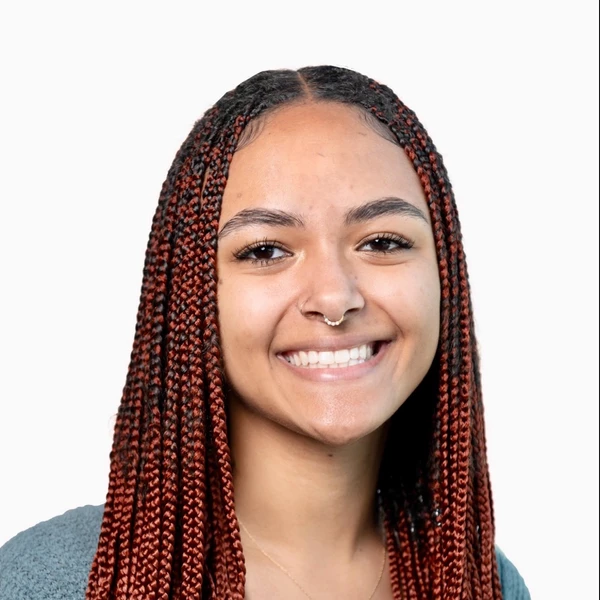
I’m an Honors College student at UT San Antonio majoring in biochemistry with a concentration in medicinal chemistry. My research experience spans synthetic organic chemistry, medicinal chemistry, and bioinformatics, with a focus on developing preclinical drug therapies. As a former NIH MARC scholar and president of the ASBMB student chapter, I’m passionate about increasing access to research, representation in STEM, and advancing precision medicine. A first-generation college student from a rural Texas town, I aspire to earn a Ph.D. in chemistry and lead my own lab dedicated to learning,research, equity, and therapeutic innovation.
Education
The University of Texas at San Antonio
Bachelor's degree programMajors:
- Biochemistry, Biophysics and Molecular Biology
Miscellaneous
Desired degree level:
Doctoral degree program (PhD, MD, JD, etc.)
Graduate schools of interest:
Transfer schools of interest:
Majors of interest:
Career
Dream career field:
Medicinal Chemistry Research
Dream career goals:
Research
Biomathematics, Bioinformatics, and Computational Biology
UTSA — Student Researcher2022 – 2024Biomathematics, Bioinformatics, and Computational Biology
The Jackson Laboratory — JAX SSP Summer Undergraduate Research Fellow2024 – 2024Chemistry
UTSA — Student Researcher2024 – Present
Dulce Vida First Generation Scholarship
If I could give one piece of advice to another first-generation college student, it would be this: you are allowed to take up space, ask questions, and expect support—because you deserve to be here just as much as anyone else.
As a first-generation student, I know what it’s like to walk onto a college campus and feel out of place. I didn’t grow up visiting college campuses or having conversations about SAT scores, FAFSA deadlines, or research internships at the dinner table. Instead, I spent my time learning how to navigate life without a blueprint—balancing academics with part-time work, managing responsibilities at home, and learning to advocate for myself in spaces where I didn’t always see people who looked like me or came from similar backgrounds.
In the beginning, I made the mistake of thinking I had to do everything alone. I was afraid to ask for help because I thought it meant I wasn’t prepared enough or smart enough. But what I’ve learned over time is that asking for help is not a weakness—it’s a strength. Reaching out for support, whether it’s through office hours, peer mentors, student organizations, or financial aid advisors, is how you build a support system. It’s how you go from surviving to thriving.
The pressure on first-gen students to succeed can be overwhelming. We often carry the hopes of our families on our backs. But we also carry something else—resilience. That resilience comes from knowing how far we’ve come and how many obstacles we’ve already overcome. It’s what pushes us to keep going even when we’re tired, even when we doubt ourselves, even when the path ahead feels unclear.
That’s why I would tell other first-generation students to stop questioning whether they belong. You do. You are not here by accident. You are here because you worked for it, and because you deserve to be in every room your education brings you into. Don’t be afraid to raise your hand, to sign up for that leadership position, to apply for that internship—even if you think you’re not ready. Growth doesn’t happen when we stay comfortable. It happens when we step into unfamiliar territory and prove to ourselves that we are capable of more than we thought.
Most importantly, don’t forget to be proud of yourself. It’s easy to get caught up in what’s next—your next class, your next goal, your next challenge—but take time to celebrate how far you’ve already come. Every step forward is a victory, not just for you, but for the generations that will come after you. You are building a legacy.
So again: ask for help. Take up space. Know that you belong. And never forget that you are not alone in this journey.
Eric W. Larson Memorial STEM Scholarship
As a first-generation college student from a low-income, rural town in East Texas, the odds have never been in my favor. I grew up in a place where opportunities felt limited and where very few people looked like me in spaces of influence, especially in science. My family has always struggled financially, and while they’ve supported me emotionally, they weren’t able to provide financial resources or academic guidance. I’ve had to navigate the path to higher education on my own—learning how to apply for college, secure funding, and manage life as a student from a disadvantaged background.
Despite these challenges, I’ve never stopped dreaming big. I am currently an Honors College student at the University of Texas at San Antonio majoring in biochemistry with a concentration in medicinal chemistry. I chose this path because I’m passionate about solving complex health problems through drug development, especially in the areas of neuropsychiatric and neurological disorders. These are fields that are often overlooked, stigmatized, or misunderstood—but they impact millions of lives. My goal is to use chemistry to create more effective, targeted therapies that reflect the diversity of the populations they are meant to serve.
My research journey began during my freshman year, and since then, I’ve gained extensive experience across several fields—bioinformatics, synthetic organic chemistry, and medicinal chemistry. I’ve worked on transcriptomic analysis of pathogenic bacteria, contributed to medicinal chemistry projects for industry collaborations, and even presented my work at national research conferences. I’m now completing an undergraduate thesis in medicinal chemistry, and I’ve had the opportunity to participate in research programs at institutions like The Jackson Laboratory for Genomic Medicine.
However, this journey has not been without significant obstacles. My primary source of financial support for research and school—the NIH-funded MARC (Maximizing Access to Research Careers) program—was recently discontinued due to federal budget cuts. This sudden loss left me scrambling to find alternative funding while trying to maintain my academic standing and continue doing research. I’ve had to meet with the financial aid office repeatedly, apply for loan adjustments, request work-study reinstatement, and stretch every dollar just to stay afloat. I don’t receive any financial support from my family, and my living expenses, tuition, and research costs are solely my responsibility. Balancing these burdens while continuing to excel in a rigorous STEM field has taken resilience, focus, and an unwavering belief that my goals are worth fighting for.
My experience in science hasn’t just been about technical skills—it’s been about community, advocacy, and purpose. As a Black woman in chemistry, I’ve often found myself as the only person of my background in the room. That can be intimidating, but it’s also motivating. I serve as the president of the ASBMB (American Society for Biochemistry and Molecular Biology) student chapter at UTSA, where I work to create inclusive, supportive spaces for students who are underrepresented in STEM. I’ve also helped organize professional development events, mentor transfer students, and speak openly about the need for more women and BIPOC scientists in leadership roles. I believe that science is stronger when it reflects the full diversity of our society—and I want to be part of building that future.
What keeps me going is the vision I have for the kind of scientist—and leader—I want to be. I aspire to earn a Ph.D. in chemistry and eventually lead my own lab at an academic institution. I don’t just want to do research—I want to train, mentor, and uplift others. I want to help build a world where students from underrepresented backgrounds can thrive in STEM without feeling like they have to prove they belong. I want to work on drug discovery projects that prioritize the needs of marginalized communities, and I want to start a medicinal chemistry core facility that makes high-quality science more accessible to both academic researchers and the public. My long-term goal is to bridge the gap between scientific innovation and health equity, using chemistry as a tool to create meaningful change.
Receiving the Eric W. Larson Memorial Scholarship would be more than just financial support—it would be a powerful affirmation that my story, my background, and my goals matter. Mr. Larson’s legacy as an advocate for racial and gender equity in the sciences resonates deeply with me. Like him, I believe that higher education and scientific careers should be accessible to anyone, regardless of their background or zip code. This scholarship would ease the financial pressure I’m currently facing, allowing me to focus more fully on research, academics, and outreach without the constant stress of how I’ll pay for rent or books next month.
Science has given me the tools to dream, to persist, and to uplift others. I hope to continue honoring that by contributing to the scientific community in a way that is not only innovative but inclusive. I’m incredibly grateful for the opportunity to be considered for this scholarship, and I hope to carry forward Eric Larson’s commitment to equity and excellence in all that I do.