Hobbies and interests
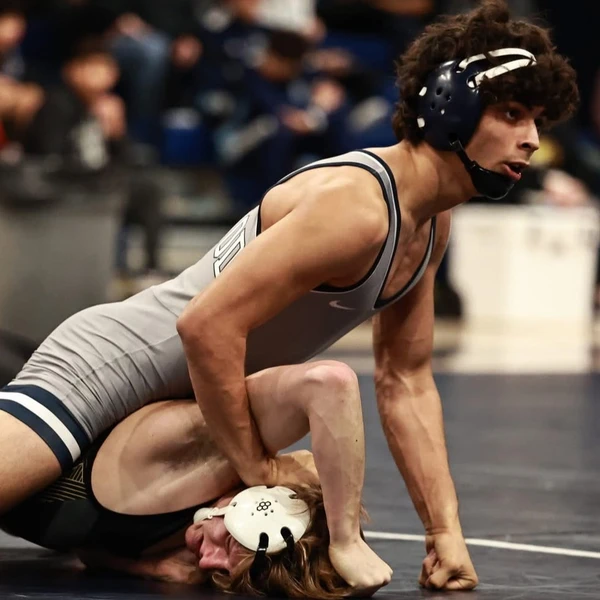
Wrestling
Bodybuilding
Boxing
Coaching
Adrian De Leon
1x
FinalistAdrian De Leon
1x
FinalistBio
I want to complete my college education and become a math teacher, while also being one of the top wrestlers in the world. There's nothing else I've ever tried so hard for that can compare to this. Math and wrestling are the two things I want to excel in, especially throughout college.
Education
Fresno City College
Associate's degree programMajors:
- Mathematics and Statistics, Other
Miscellaneous
Desired degree level:
Bachelor's degree program
Graduate schools of interest:
Transfer schools of interest:
Majors of interest:
Career
Dream career field:
Education
Dream career goals:
Detailer
Quick Cars CA2021 – Present5 years
Sports
Wrestling
Varsity2018 – Present8 years
Awards
- 2x state qualifier
- national team qualifier
- CAUSA state champion
Public services
Volunteering
Redwood High — Teachers Aide2024 – 2025
Emerging Leaders in STEM Scholarship
I’ve always believed that education has the power to change lives, and I want to be part of that change. My goal is to become a math teacher—not just to teach numbers and formulas, but to help students gain confidence, problem-solving skills, and a deeper understanding of the world around them. Math has always been my favorite subject because it challenges the mind and rewards persistence. But even more importantly, I’ve seen how it can open doors when taught with patience and creativity. That’s the kind of teacher I aspire to be—someone who makes math feel possible, not intimidating.
I’m particularly passionate about working with students who struggle with math or have been told they’re “not good at it.” Too many students carry anxiety and self-doubt into math classrooms. I want to change that narrative. My dream is to create an environment where every student feels seen, supported, and capable of growth, especially those who learn differently or who’ve been left behind in traditional classrooms. I believe math should be accessible to everyone, and that a great teacher can turn even the most reluctant student into a curious problem-solver.
As someone who comes from a first-generation, Mexican-American background, I’ve seen firsthand the importance of representation in education. Growing up, I rarely had teachers who looked like me or understood the challenges I was facing at home, like translating documents for my parents, working part-time jobs, or being the first in my family to navigate the college process. That lack of representation made it harder to imagine myself succeeding in academic spaces. I want to be the teacher who shows students—especially students of color and those from low-income communities—that they do belong, and that they are capable of achieving big things.
The path to get here hasn’t been easy. I’ve faced financial struggles, cultural pressure, and the weight of being a role model in my family. There were times when I doubted whether college was even possible for me. I had to work harder than most of my peers just to stay afloat, balancing school, work, and family responsibilities. But through it all, I kept going because I knew I was building something bigger than myself. Every challenge has made me more resilient and more committed to my future as an educator.
Ultimately, I want to be more than a math teacher. I want to be a mentor, an advocate, and a source of encouragement for my students. I want to create a classroom where students feel safe to make mistakes, ask questions, and celebrate their progress. I want to help them believe in their potential and carry that belief into every area of their lives. That is the impact I hope to make—and it’s why I’m so passionate about this field.
José Ventura and Margarita Melendez Mexican-American Scholarship Fund
Being a first-generation, Mexican-American college student is more than just a label—it’s a source of deep pride, responsibility, and motivation. It represents my family’s sacrifices, my cultural heritage, and the dreams that have been carried across generations. My passion for becoming a college graduate stems from the desire to honor my roots while building a future that was once thought impossible for people like me.
Growing up in a Mexican-American household, education was always seen as the pathway to a better life, even if no one in my family had yet traveled. My parents worked incredibly hard—often holding multiple jobs—to provide for our family, even though they didn’t have the opportunity to pursue higher education themselves. They instilled in me the value of hard work, resilience, and humility. While they couldn't always help with homework or navigate the college system, they gave me something more important: unwavering support and belief in my potential.
Being first-generation means learning how to balance two worlds. At home, I speak Spanish, embrace cultural traditions, and uphold family responsibilities. At school, I navigate systems that were not built for people like me—filling out financial aid forms, attending college prep meetings, and asking questions that no one in my family had ever had to ask before. It has not always been easy. I’ve faced moments of self-doubt, cultural isolation, and pressure to succeed not just for myself, but for my family and community. But these challenges have made me stronger, more focused, and more determined to achieve my goals.
I am passionate about earning my college degree because I know what it will mean—not just for me, but for those who come after me. I want to be an example to my younger siblings, cousins, and other students in my community who may not yet see college as a real possibility. Representation matters. When you see someone who looks like you and shares your background succeed, it plants a seed of hope. I want to be that source of inspiration.
My Mexican-American identity is also a major source of strength. Our culture values family, community, and perseverance. These values guide me every day in my work, my relationships, and my goals. As I pursue my education, I carry my heritage with pride, knowing that my accomplishments are rooted in the strength of my ancestors.
Graduating from college will not just be a personal achievement—it will be a historic moment for my family. It will symbolize breaking cycles, creating new opportunities, and rewriting our story. I am not just doing this for myself. I am doing it for my parents, who sacrificed everything for a better future. I am doing it for my community, which deserves more leaders who understand our struggles and can advocate for change. And I am doing it for future generations so that being a first-generation, Mexican-American college graduate becomes the beginning of a tradition, not the exception.
RonranGlee Special Needs Teacher Literary Scholarship
Professor Harold Bloom once said, "I have learned that the purpose of teaching is to bring the student to his or her sense of his or her presence." At first glance, this quote might sound abstract, even poetic—but within it lies a deep truth about the purpose of education, especially special education. To me, Bloom is saying that teaching is not just about transferring knowledge or preparing students for tests. Instead, the highest calling of a teacher is to help students recognize their worth, their capabilities, and their place in the world. Teaching, at its best, awakens a student to themselves. It is about guiding them to realize that they matter, that they belong, and that they are capable of growth.
For students with special needs, this sense of “presence” can often be buried under layers of self-doubt, societal stigma, and frustration. They may have been told—directly or indirectly—that they are less than their peers. As a result, some retreat inward, believing they are incapable of learning or succeeding. Others act out, misunderstood by systems that prioritize conformity over individuality. My mission as a future special education math teacher is to break through those layers, helping each student see that their voice matters and that they are just as capable of achieving meaningful growth and success as anyone else.
Defining a Sense of Presence
To help my students find a “sense of their own presence,” I must first define what that means in an educational context. “Presence” means more than just existing in a classroom physically. It means feeling seen, heard, and valued. It means that the student understands who they are, what they are capable of, and where they fit into the world around them. This is especially vital in special education, where students often face significant obstacles—not just academically, but socially and emotionally.
Helping a student feel their presence is about more than academics. It’s about helping them develop confidence, self-awareness, and resilience. It’s guiding them to the realization that their differences do not define them in a limiting way—but rather, they are simply one part of who they are, and they can be a strength. My role as a teacher is to help them feel empowered, not diminished, by their challenges.
My mission is to become the kind of teacher who sees every student as a whole person, not just a list of accommodations or diagnoses. I want to use math—my favorite subject and a powerful tool for problem-solving and logical thinking—as a way to build not just skills, but confidence. Far too often, math is presented as a rigid subject with one right answer, which can be intimidating, especially for students with learning differences. But math is also creative, visual, exploratory, and deeply human. It provides structure and predictability that many special education students find comforting, and it also offers endless opportunities for finding alternative solutions and personal strategies.
As a special education teacher, I will work to tailor instruction to individual learning styles. I will create an environment where students are not afraid to make mistakes because they understand that mistakes are part of learning. I will celebrate small victories and help students track their growth in a way that is visible and meaningful to them. My classroom will be a space where students feel respected and safe, where their needs are met without judgment, and where their voices are heard.
I also believe that collaboration with families, therapists, and fellow educators is essential. No teacher can support a child alone; it takes a team. I will prioritize communication with parents, not just to report progress or concerns, but to understand the child’s world outside the classroom and to ensure consistency and support across settings. My goal is to be an advocate, not only for my students but for more inclusive and equitable educational practices in general.
Finally, I want to inspire my students to dream big. Just because a child learns differently does not mean they should aim lower. I will help my students set goals—academic, personal, and even long-term career goals—and I will support them every step of the way as they strive to achieve them. I want my students to leave my classroom not only knowing how to solve equations, but also knowing how to advocate for themselves, how to ask for help when needed, and how to believe in their worth.
Learner Math Lover Scholarship
I love math because it provides a clear and logical way of understanding the world. From a young age, I was drawn to how math could solve real problems, from calculating distances to analyzing data. It felt like a puzzle—every problem had a solution, and with enough effort and the right tools, I could find it. That sense of structure and order has always appealed to me. In a world that can sometimes feel uncertain or unpredictable, math offers a reliable foundation and a way to think through challenges logically and thoroughly.
What excites me most about math is how it builds upon itself. Every new concept connects to something I’ve learned before, and that interconnectedness helps me develop a deeper understanding with every lesson. I enjoy the process of learning mathematical theories, applying them to new problems, and seeing how they translate into real-world applications. Whether it’s geometry in architecture, algebra in coding, or statistics in social science, math is everywhere—and that makes it feel relevant and powerful.
Math has also taught me perseverance and critical thinking. Not every problem is easy to solve, but I’ve learned to be patient, work through mistakes, and keep pushing forward until I find a solution. That mindset has helped me not just in school, but in life as well. It’s shown me that challenges are opportunities to grow.
Looking ahead to college, I want to continue studying math and use it to make a difference and become a math teacher. I believe math is more than just a subject; it's a tool that can be used to solve meaningful problems and create positive change in the world. That’s why I love it, and why I’m excited to keep learning and applying it in the future.
Reimagining Education Scholarship
In seventh grade, I sat in math class staring at a problem about calculating the area of a triangle. I remember thinking, When will I ever use this in real life? That single question stuck with me, not because I didn’t enjoy math, but because no one ever answered it in a way that made math feel useful or exciting. Years later, as a tutor and aspiring teacher, I’ve found myself passionate about giving students the answer I never got: “You’ll use this every day—you just need to know how.”
If I could create a class that every K–12 student was required to take, it would be called "Real-World Math: Solving Life’s Problems." This course would be introduced early and adapted across grade levels, with one consistent goal: to show students how math empowers them to solve practical, everyday challenges.
In the early grades, the class would focus on relatable scenarios like planning a birthday party on a budget or dividing snacks among friends. As students progress, so does the complexity of the math and the problems. High schoolers might tackle calculating mortgage interest, comparing college loan options, or analyzing climate data. The emphasis would be less on memorizing formulas and more on using math as a tool for decision-making, critical thinking, and confidence-building.
The impact of this class would be profound. First, it would break the myth that math is only for “math people.” By anchoring concepts in real-life situations, students of all learning styles would see their relevance and potential. This could reduce math anxiety and improve engagement, especially for those who struggle with abstract concepts. Second, it would promote financial literacy, data literacy, and civic understanding—skills that are increasingly essential in our world. Lastly, the course would open doors to STEM careers for students who might not otherwise see themselves represented in those fields, simply because no one ever showed them how math connects to their dreams.
I’ve already seen this kind of impact on a small scale. As a volunteer math tutor at my local community center, I helped a middle school student who hated math learn how to calculate discounts and compare phone plans. Her excitement when she realized she could help her family save money was unforgettable. She didn’t just learn a formula—she learned power.
Ultimately, my dream isn’t just to teach math. It’s to teach students how to think, solve, and believe in their ability to make sense of the world. With a class like Real-World Math, we can redefine what it means to be “good at math,” and ensure that every student—regardless of background—feels prepared for life beyond the classroom.