user profile avatar

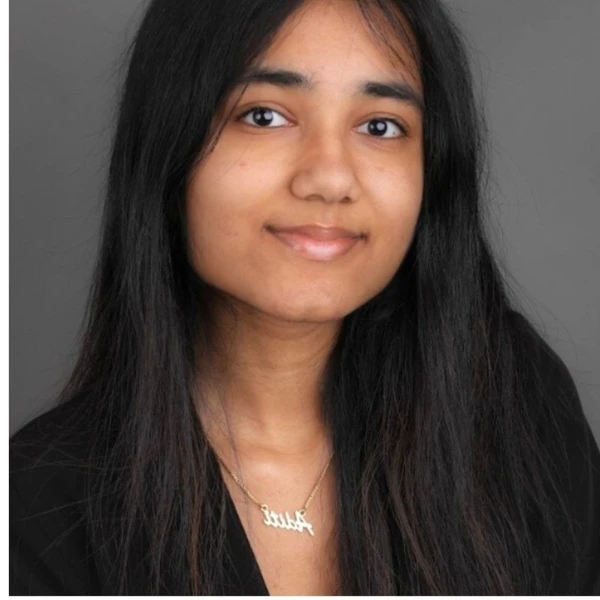
Aditi Chhawacharia

2x

Finalist

Bio

Aditi Chhawacharia is an Indian-American technologist, entrepreneur, and youth leader who builds technology that serves the underserved. She is the founder of CyberBear, a gamified cybersecurity platform reaching 5,000+ students across 52 countries and 1,000+ rescued child laborers in India, and the McKinney Tech & Data Youth Council, Texas's first student-led municipal technology advisory board, where her AI-powered civic apps improve accessibility for 200,000+ residents. A NeurIPS 2025 presenter and UC Berkeley AI Policy Fellow, Aditi co-authored peer-reviewed research on AI governance and large language model risk assessment. She also founded Project Ruby, mentoring girls whose leadership initiatives have reached 8,000+ people globally, and co-authored Maddie's STEMAventure, an interactive children's STEM book. Aditi holds professional certifications in IBM AI, AWS AI Practitioner, and University of Michigan Python and Web Development, and has built award-winning apps including Pennywise and TeaTime AI. An NCWIT Aspirations in Computing honoree and DECA ICDC Finalist (top 20), 3X State champion and 4X District champion, she brings both technical depth and a human-centered lens to everything she creates. Her north star: technology that centers the most vulnerable users first.

Education

Walnut Grove Highschool

High School
2023 - 2026

Miscellaneous

  • Desired degree level:

    Bachelor's degree program

  • Majors of interest:

    • Computer Science
    • Mathematics and Computer Science
    • Human Computer Interaction
    • Economics and Computer Science
    • Data Science
  • Not planning to go to medical school
  • Career

    • Dream career field:

      Technology

    • Dream career goals:

      My long-term goal is to found a B-Corp at the intersection of AI, education, and health equity — building technology that centers underserved communities first, not as an afterthought. After gaining industry experience on a product-focused AI team and completing a Master's in Artificial Intelligence, I want to create platforms that fund universal free education and deliver health-tech that prioritizes equity. Like Princess Diana, I aim to blend entrepreneurship with humanitarian work, using technology to serve the voiceless and prove that women are not exceptions in tech — we are its future.

    • Programming Instructor — teaching 35+ students (K–8th grade) Python and Scratch fundamentals

      Best Brains Learning Center
      2025 – 2025
    • Content creator and entrepreneur — grew channel to 3,000+ subscribers, 800K+ views; founded K-pop merchandise business serving 1,000+ customers

      Self-employed (YouTube & Idore Collections)
      2022 – Present4 years

    Research

    • Human Computer Interaction

      Human-Centered Cyber Physical Systems Lab, University of Texas at Dallas (under Professor Dr. Yi Ding) — Research Assistant — co-developed the multimodal detection system, built a React Native data collection app, built a decision tree classifier, and co-authored a paper on multimodal sensing in human posture recognition
      2025 – 2025
    • Computer Science

      NeurIPS 2025 — 39th Annual Conference on Neural Information Processing Systems — Co-author and Presenter — developed risk assessment metrics, designed mathematical governance frameworks, and presented findings to leading academic researchers in AI policy
      2024 – 2025

    Public services

    • Volunteering

      Volunteers in Plano / Plano Parks & Recreation — Environmental Volunteer — supported Green Fairs, children's programs, and cleanup events
      2022 – 2023
    • Volunteering

      Agoura Math Circle and TechFirst — Math and Coding Tutor — tutored many students in Algebra, Geometry, and Python
      2022 – 2025
    • Volunteering

      ICC Men's T20 Cricket World Cup, Dallas — Volunteer Usher — provided meet-and-greet, seating assistance, and guest services
      2024 – 2024
    • Advocacy

      Girls Who Code, Walnut Grove HS — President — mentored 50+ girls, organized Women-in-STEM speaker series, co-led authorship of Maddie's STEMAventure children's book with 13+ co-authors
      2022 – Present
    • Volunteering

      McKinney Tech and Data Youth Council, City of McKinney Government — Founder, Team Lead, Developer — founded Texas's first student-led municipal tech board; built McKinney Minutes, an LLM-powered civic app officially deployed by the city
      2025 – Present
    • Volunteering

      TechFirst (501c3) — Founder and Python Tutor — hosted weekly workshops for 30+ students, developed 7-lesson curriculum
      2023 – 2024
    • Advocacy

      3FTL Nonprofit — Volunteer Web Developer and UI/UX Designer — built full-stack responsive website reaching 6,000+ unique users
      2023 – 2024
    • Volunteering

      Project Ruby (501c3) — Founder and President — mentored 100+ girls, built web platform, led campaigns reaching 18,000+ students
      2023 – Present
    • Advocacy

      CyberBear.app - Nonprofit Founding / Technology — Founder and Developer - built gamified cybersecurity platform educating 5000+ students across 52 countries and 1000+ rescued child laborers, trained 30+ Digital Safety Ambassadors globally
      2022 – Present

    Future Interests

    Advocacy

    Volunteering

    Philanthropy

    Entrepreneurship

    Richard Neumann Scholarship
    I was scammed on Instagram at fourteen. It was embarrassing, and my first instinct was to never speak of it again. My second instinct was a question I could not shake: how many children have no one to warn them at all? That question became CyberBear. I built CyberBear from scratch using HTML, CSS, and JavaScript because I saw a problem nobody was solving: young people were navigating an increasingly dangerous digital world with almost no real education on how to protect themselves. Schools covered fire drills. Nobody covered phishing, password hygiene, or what to do when a stranger online made you uncomfortable. I decided to fill that gap myself. CyberBear is a gamified cybersecurity education platform with interactive levels, animated modules, and an AI chatbot I built with custom safety guardrails to keep conversations focused on digital literacy. I authored the entire curriculum: social media safety, phishing, malware, passwords, and online predators. I trained 30+ Digital Safety Ambassadors globally to extend the platform's reach. I partnered with Prosper ISD to adapt CyberBear for neurodivergent students, currently piloting at the Family Resource Center with plans for district-wide expansion. When an NGO in Hyderabad reached out on behalf of rescued child laborers encountering the internet for the first time, I adapted lessons for their context, teaching virtually through a translator. Today CyberBear educates 5,000+ students across 52 countries. It began as a solution to my own embarrassing moment and became something I could not have imagined: a platform protecting some of the world's most vulnerable children. The next problem I want to solve is bigger, and I have thought carefully about how I would approach it given the resources. The problem is this: millions of students in underserved communities fall behind in foundational subjects not because they lack intelligence, but because they lack access to patient, personalized instruction. One teacher managing thirty students cannot adapt to thirty different learning speeds. Tutors are expensive. And generic educational apps do not account for how different children actually learn. Given the resources, I would build an AI-powered adaptive learning platform specifically designed for underserved elementary and middle school students, with a focus on math and reading. The platform would use large language models fine-tuned on pedagogical research to deliver genuinely personalized instruction, adjusting difficulty, pacing, and teaching style in real time based on each student's responses. It would be built mobile-first, because in many underserved communities a smartphone is more accessible than a laptop. It would be available entirely free, supported by institutional partnerships with school districts and nonprofits rather than individual subscriptions. Critically, the platform would be designed with the input of teachers, not around them. Teachers would have dashboards showing exactly where each student is struggling, so classroom time could be spent on human connection and higher-order thinking rather than rote instruction. The AI handles the repetition. The teacher handles the relationship. I know this is buildable because I have already built a version of it at smaller scale. CyberBear taught me that gamification increases retention, that accessibility features expand reach, and that the best educational technology disappears into the background and lets the learning happen. Those lessons would inform every design decision. The world's most urgent problems are not waiting for better technology. They are waiting for people willing to build it for the right reasons. I intend to be one of those people.
    Dream BIG, Rise HIGHER Scholarship
    My father was the first in his family to graduate from college. My mother was the second of her siblings to do so. Neither had a roadmap. Both built one anyway, and in doing so, gave me something more valuable than directions: the belief that you do not wait for a door to open. You build one. I have spent my life building doors. At seven, hunched over a Python Turtle workbook with my dad in our Dallas bedroom, I discovered something that felt like magic. Colorful flowers danced across the screen and I matched his smile. With just a few lines of code, I built Flappy Bird games for my dad, birthday websites for friends, and ciphers to tease my brother. Programming became my native language for creativity and connection. I did not yet know it would also become my vehicle for purpose. Then high school arrived, and joy collided with reality. In Pre-Calculus, Computer Science UIL, and Computer Club, I was the only girl. Male peers dismissed my contributions and scrutinized my appearance. When classmates followed me through hallways with phone cameras raised to ridicule, I wondered why my passions deserved such ostracism. My identity felt trapped between two rigid boxes: girly or smart. The message was clear. You cannot be both. That bullying was documented. The school investigated, took disciplinary action, and the situation was resolved. But the damage to my confidence and sense of belonging took far longer to repair. My freshman year grades reflected that fracture, not my ability. I was not struggling academically. I was struggling to believe I deserved to be in the room at all. What pulled me through was not a single moment but a gradual reclamation. I thought often of the lotus flower on my home altar, a symbol in my Hindu faith of beauty rising from mud. I began to understand that the mud was not the obstacle. It was the material I had to work with. So I got to work. I restarted our school's Girls Who Code club. When only four girls showed up to the first meeting, I did not quit. I built community through hot chocolate socials, creative outreach, and a marketing campaign called Girls-in-STEM. The club grew to 48 tech sisters. Together we wrote and published a children's book to show younger girls they have a home in STEM. In coding class, I met Anisha, seated beside me by chance, facing the same isolation I had lived a year earlier. Our late-night pep talks became meaningful mentorship. She calls me her big sister now, and in her, I found proof that my struggles had not been wasted. Education gave me back my direction. Since sophomore year, my academic trajectory has been consistently upward. Today I stand in the top 11% of my class, carrying one of the most rigorous course loads at my school, with senior year grades reflecting the focus and drive I found on the other side of that difficult year. I hold professional certifications in AWS AI, IBM AI Development, and University of Michigan Python and Web Development. I was selected as a UC Berkeley AI Policy Fellow at a 10% acceptance rate, primarily among graduate students. I co-authored a peer-reviewed paper on AI governance accepted to NeurIPS 2025, one of the most prestigious conferences in artificial intelligence. But education did not just restore my confidence. It expanded my sense of what was possible to build. I founded CyberBear, a gamified cybersecurity platform now educating 5,000+ students across 52 countries, including rescued child laborers in India encountering the internet for the first time. I founded the McKinney Tech and Data Youth Council, Texas's first student-led municipal technology advisory board, where my team built McKinney Minutes, an AI-powered civic app officially deployed by the City of McKinney to serve 200,000+ residents. I founded Project Ruby, a 501(c)(3) nonprofit mentoring girls whose leadership initiatives have reached 8,000+ people globally. While I could have spent my hours outside school on paid work, I chose instead to volunteer, because serving underserved communities was always the more urgent need. The challenge I face now is financial. The college where I have been accepted costs over $280,000, and the gap between that number and what my family can contribute is real. My parents gave everything to make my opportunities possible. Two first-generation graduates who built their own roads do not have the financial cushion that comes from generational wealth or family networks in higher education. This scholarship would not just ease a burden. It would honor what they sacrificed to get me here. My goal is to earn a degree in Computer Science, gain industry experience on a product-focused AI team, pursue a Master's in Artificial Intelligence, and ultimately found a B-Corp building equitable AI-powered education and health technology for underserved communities. I want to prove that the most rigorous engineering and the most human-centered design are not competing goals. They are the same goal. I am a girly girl who loves computer science. I learned machine learning between layers of magenta polish drying, wore my strawberry milkshake jacket to every tech meeting, and kept my mascara intact through AI governance research. I have stopped measuring myself by someone else's boxes. I have stopped waiting for rooms that were not built for me and started building my own. Education taught me that who I am becoming matters just as much as where I am going. I am becoming someone who builds technology that protects children, empowers women, and serves communities that have been overlooked for too long. I am becoming someone my parents' sacrifices deserve. And I am just getting started.
    Big Picture Scholarship
    In the Hindi film 12th Fail, Manoj Kumar Sharma fails his 12th grade exams, watches every door close around him, and still decides to pursue the IAS, one of India's most competitive examinations. He fails again. And again. A friend shows him the path forward when he cannot see it himself. He keeps going anyway, not because success is guaranteed, but because giving up would mean abandoning the truest version of himself. I watched that film and recognized myself. At seven, hunched over a Python Turtle workbook with my dad in our Dallas bedroom, I discovered magic. Colorful flowers danced across the screen and I matched his smile. With just a few lines of code, I built Flappy Bird games, birthday websites, and ciphers to tease my brother. Programming became my native language for creativity and connection. Then high school arrived, and joy collided with reality. In Pre-Calculus, Computer Science UIL, and Computer Club, I was the only girl. Male peers dismissed my ideas and scrutinized my appearance. When classmates followed me through hallways with phone cameras raised to ridicule, I wondered why my passions deserved such ostracism. Like Manoj staring at another failed result, I faced a moment where quitting felt easier than continuing. But I thought of the lotus on my home altar, rising beautifully from mud. I thought of Manoj, who kept showing up to the exam he had every reason to abandon. And I thought of what it would mean to walk away from the thing I loved most simply because others had decided it was not meant for me. So I stayed. I restarted our school's Girls Who Code club. When only four girls showed up, I did not quit. I built community through hot chocolate socials and creative outreach until the club grew to 48 tech sisters. Then, in coding class, I met Anisha, seated beside me by chance, facing the same isolation I had lived a year earlier. Like the friend who redirected Manoj when the original path closed, I became that person for her. Our late-night pep talks became meaningful mentorship. She calls me her big sister now, and in her, I found proof that my struggles had not been wasted. What Manoj understood, and what I have come to understand, is that persistence is not simply stubbornness. It is the decision to keep becoming, even when the world is not yet ready to receive you. His journey was never only about passing an exam. It was about refusing to let circumstances define the ceiling of his life. Mine has never only been about coding. It has been about proving that a girl who loves magenta nail polish and machine learning equally does not have to choose between them. It has been about building technology that protects children in India, supports firefighters navigating trauma, and shows younger girls they have a home in STEM. Education, like Manoj's pursuit of the IAS, is not a straight line. It is a series of failures, redirections, and moments where a single person showing you the path makes all the difference. My father showed me that path at seven. My friend Anisha reminded me why it mattered. This scholarship would help me continue walking it. I have stopped measuring myself by someone else's boxes. The most powerful innovations happen when we bring our whole, authentic selves to the work. I intend to spend my career proving exactly that.
    StatusGator Women in Tech Scholarship
    "A TURTLE MAKING RAINBOW FLOWERS!!?" At seven, hunched over a Python Turtle workbook with my dad in our Dallas bedroom, I discovered magic. As colorful flowers danced across the screen, I matched his smile. With just a few lines of code, I created Flappy Bird games for my dad, birthday websites for friends, and ciphers to tease my brother. Programming became my native language for creativity and connection. Projects from my bedroom reached children in India, teens in Europe, and neighbors next door. I realized technology was more than typing on a screen—it was a way to build beauty, joy, and bridges between people. Yet as I entered high school, that joy collided with reality. In Pre-Calculus, Computer Science UIL, and Computer Club, I was the only girl. Male peers scrutinized my appearance and dismissed my ideas, while the gender imbalance distanced me from other girls. When classmates followed me through the halls with phone cameras ready to ridicule, I wondered why my passions deserved such ostracism. My identity felt trapped between two rigid boxes—girly or smart—leaving no room for who I truly was. Suppressing my love for STEM left me hollow. I often thought of the lotus flower on my home altar, a symbol of rising beautifully from the mud. Watching creators like Tam Kaur, who shared similar struggles while embracing full authenticity, helped me reframe my challenges as preparation for who I wanted to become. With renewed confidence, I restarted our school's Girls Who Code club. Ignoring the urge to quit when only four girls appeared, I built community through hot chocolate socials and creative marketing. The club grew to 48 girls, creating a supportive circle of "tech sisters" to counterbalance the "tech bros" who dominated my world. In coding class, sitting next to Anisha thrilled me—until I learned she faced the same isolation despite being younger. Our late-night pep talks turned into meaningful mentorship. She now calls me her "big sister," proving my struggles had not been in vain. Empowered, I embraced my full self: a "girly girl" who loved computer science. I learned machine learning as magenta nail polish dried, wore my strawberry milkshake jacket to every tech meeting, kept my mascara intact during AI governance research, and carried my dusty rose Stanley to Calculus. I was designing a life that made space for both femininity and technical ambition. Conversations with my tech sisters revealed that many girls avoid computer science not from lack of interest, but because they don't see themselves reflected in it. Technology doesn't just lose women—it loses diverse perspectives. This drives what I build: apps centered on human perspectives, like helping firefighters access mental health resources or supporting teens navigating toxic social situations. Through Girls Who Code, I recently wrote a book to show other girls they belong in STEM. From the isolating "only girl" in 9th grade to confidently thriving in Calculus 3, this journey taught me resilience and the power of authenticity. The bullies who once followed me now sound like distant crickets. I've stopped measuring myself by someone else's boxes. Through my future career in tech, I hope to bridge gaps in representation, amplify diverse voices—especially girls and women—and create inclusive technologies that reflect the full spectrum of human experience. By continuing to mentor, innovate, and lead with compassion, I want to ensure no young girl feels forced to choose between being "girly" or "smart," because the most powerful innovations happen when we bring our whole, authentic selves to the table.
    Nebustream Technology Development Scholarship
    The first time I walked into Computer Science UIL, I was the only girl in the room. I told myself it wouldn't matter. It did. Within weeks, male peers were dismissing my contributions mid-sentence, scrutinizing my appearance instead of my code, and following me through hallways with phone cameras to mock the girl who dared to belong in both worlds, the one who painted her nails pink and debugged Python spirals. The easy choice would have been to walk away. And honestly, for a while, I almost did. I stopped raising my hand in class. I stopped wearing the things that made me feel like myself. I compressed who I was into whichever box felt safer that day, girly or smart, never both. And the more I suppressed my love for STEM, the hollower I felt. That hollowness was its own kind of failure: not a failed test or a broken program, but a failure to protect something I genuinely loved. The turning point came when I decided to start a Girls Who Code chapter at my school. I expected momentum. Instead, four girls showed up to the first meeting, and most of them admitted they came mostly to skip class. Anyone watching from the outside would have called it a lost cause. I almost agreed with them. But I thought about the lotus flower on my home altar, pictured beneath the Hindu goddess Lakshmi, a flower that rises from mud to bloom. I had been collecting mud for years. Quitting now meant none of it counted for anything. So I refused to quit. I stayed late to plan hot chocolate socials. I redesigned our marketing to speak directly to girls who had never seen themselves in tech. I showed up every week, even when the chairs were mostly empty, because I believed the community was worth building before anyone else could see it. Slowly, it grew, to 10 girls, then 30, then 48. For the first time, I had built something that pushed back against every room that had tried to shrink me. What kept me going wasn't confidence. It was stubbornness rooted in purpose. I had watched technology lose women's perspectives over and over, and I had felt the cost of that personally. I didn't want the next girl sitting alone in that classroom to feel what I felt. That "why" was stronger than every reason to stop. That same mindset now shapes everything I build. I've developed apps helping firefighters access mental health resources and helping teens navigate toxic social situations, projects that center human perspectives, because I learned early that technology without empathy solves the wrong problems. My Girls Who Code club recently wrote and published a book showing girls their place in STEM, because sometimes the resource you needed doesn't exist yet, so you create it. Failure taught me that persistence, not perfection, is what builds something worth keeping. That persistence directly shapes how I approach computer science today. Technology is fundamentally a problem-solving discipline, and problems don't yield to people who quit. Every time I debug code that won't run, learn a concept that doesn't click the first time, or push into a subfield where I'm again the only girl in the room, I draw from the same muscle I built refusing to abandon that near-empty club meeting. Now in Calculus 3. I can still count the girls in the room on one hand. But that reality motivates me now instead of isolating me, because I know that changing a number starts with refusing to become one of the people who accepted it.
    Women in STEM Scholarship
    I was the only girl in 9th grade Honors Pre-Calculus. The only girl in Computer Science UIL. The only girl tutoring in Computer Science Club. I thought being "the only one" was something I would grow out of. Instead, it became something I grew into, and eventually, something I decided to change. Growing up, I loved two things equally: painting my nails pink and coding spirals in Python. My peers saw those as contradictions. I never did. But the pressure to choose between being feminine and being technical was real, and it cost me. When bullying in freshman year targeted exactly that contradiction, following me through hallways with phone cameras raised to ridicule, I felt trapped between two boxes: girly or smart. The message was clear. You cannot be both. I refused to accept it. I chose STEM not despite that experience but because of it. I wanted to prove, to myself first and then to every girl watching, that femininity and technical excellence are not in tension. I learned machine learning between layers of magenta polish drying. I wore my strawberry milkshake jacket to every tech club meeting. I kept my mascara intact through AI governance research at UC Berkeley. And slowly, by refusing to shrink, I began to build. I built CyberBear, a gamified cybersecurity platform now educating 5,000+ students across 52 countries, including rescued child laborers in India encountering the internet for the first time. I founded Girls Who Code at my high school, growing from 3 reluctant attendees to 48 tech sisters who support each other's growth and co-authored a children's STEM book to show younger girls they have a home in this field. I founded Project Ruby, a 501(c)(3) mentoring girls whose leadership initiatives have reached 8,000+ people globally. I co-authored a peer-reviewed AI governance paper accepted to NeurIPS 2025 and was selected as a UC Berkeley AI Policy Fellow at a 10% acceptance rate, primarily among graduate students. The through line in all of it is the same conviction: technology built without women's perspectives is incomplete. Not just unfair, but incomplete. When I surveyed Project Ruby mentees and found that only 3% were interested in computer science, I did not see a pipeline problem. I saw a perception problem, a culture problem, a belonging problem. Those are the problems I have spent the last four years trying to solve, and they are the problems I intend to keep solving. As a woman in STEM, I do not just want to occupy a seat at the table. I want to redesign the table so that the next girl who walks in does not have to fight to sit down. That means building platforms centered on the most vulnerable users, advocating for fairness in AI systems, mentoring girls who are still searching for proof that they belong, and using every line of code I write as an argument for what technology can be when it is built by everyone. I have come a long way from the girl who was told she had to choose. Now in Calculus III, I can still count the women in the room on one hand. That reality no longer intimidates me. It motivates me. The work of creating belonging in STEM is never finished. I do not intend to stop until it is.
    Lyndsey Scott Coding+ Scholarship
    I learned to code between layers of magenta nail polish drying. I toted a dusty rose Stanley to Calculus, kept my mascara intact through AI governance research, and wore my strawberry milkshake jacket to every tech club meeting. I refused to choose between being feminine and being a computer scientist, because I refused to accept that those two things were ever in conflict. That refusal is the throughline of everything I have built. My computer science goals are rooted in artificial intelligence, ethics, and civic technology. I co-authored a peer-reviewed paper on AI governance accepted to NeurIPS 2025, was selected as a UC Berkeley AI Policy Fellow, and built software used by thousands. CyberBear, my gamified cybersecurity platform, educates 5,000+ students across 52 countries, including rescued child laborers in India. McKinney Minutes, an AI-powered civic app I built for the City of McKinney, is officially deployed to serve 200,000+ residents. Long term, I plan to pursue a Master's in Artificial Intelligence and found a B-Corp building equitable AI-powered education and health technology for underserved communities. But computer science has never been the whole picture. My non-computer science passions are business, education, gender psychology, policy, and the arts. Nearly a decade after pair-programming with my dad, I have learned that coding's magic is not in what it creates but in who it serves. As a DECA ICDC Top 20 worldwide finalist in Marketing Communications, I learned to think about technology not just as something to build but as something to position and scale. That business lens changed how I approached CyberBear: I did not just build a platform, I recruited NGO partners, pitched school administrators, and grew a user base across 52 countries. Each of my other passions has made me a better engineer. Understanding cognitive load theory shaped how I designed CyberBear's gamified curriculum. Studying gender psychology through Project Ruby, my 501(c)(3) nonprofit, helped me understand why only 3% of surveyed girls expressed interest in computer science, and gave me the framework to change that through Girls Who Code, growing participation from 3 girls to 48 tech sisters. My policy research at UC Berkeley taught me that understanding the technical realities behind an AI system makes you a more effective advocate for regulating it. Even the arts showed up: co-authoring Maddie's STEMAventure, a children's STEM book written by my Girls Who Code members, taught me that storytelling reshapes who feels welcome in a field. I view computer science not as an isolated skill but as a translator between disciplines. Code allowed me to transform learning design theory into an interactive platform. It allowed me to take a survey about gender perception and turn it into a community of girls who now believe they belong in tech. The most meaningful problems I want to solve sit at intersections: AI and ethics, education and equity, technology and human dignity. I am a BIPOC woman who grew up as one of the only girls in every computer science room I entered. I know what it costs to belong to a field not designed with you in mind. I also know what it feels like to redesign that field, one platform, one club, one children's book at a time. The Lyndsey Scott Coding+ Scholarship was built for students who refuse to be one-dimensional. I have never been one-dimensional. I am girly and technical, creative and rigorous, a coder and a policy researcher and an educator and an entrepreneur. I plan to spend my career proving that the most human-centered technology comes from people who bring all of themselves to the work.
    Valerie Rabb Academic Scholarship
    I learned to code at seven, sitting beside my father on a secondhand laptop, building Rock-Paper-Scissors from a Python textbook. He was the first in his family to graduate from college. My mother was the second of her siblings to do so. Neither had a roadmap. Both built one anyway, and in doing so, gave me something more valuable than directions: the belief that you do not wait for a door to open. You build one. That belief has shaped everything I have created since. I am a computer scientist, entrepreneur, and advocate who builds technology for the people most often forgotten when technology is built. I founded CyberBear, a gamified cybersecurity platform now educating 5,000+ students across 52 countries, including 1,000+ rescued child laborers in India encountering the internet for the first time. I founded the McKinney Tech and Data Youth Council, Texas's first student-led municipal technology advisory board, where my team built McKinney Minutes, an AI-powered civic app officially deployed by the City of McKinney to make government proceedings accessible to 200,000+ residents. I co-authored a peer-reviewed research paper on AI governance accepted to NeurIPS 2025, one of the most prestigious conferences in artificial intelligence. I founded Project Ruby, a 501(c)(3) mentoring girls whose leadership initiatives have reached 8,000+ people globally. None of this emerged from a clear path. All of it emerged from choosing to keep going when the path disappeared. The adversity I faced was real and documented. During my freshman year, I experienced sustained bullying, both online and in person, that followed me through hallways and onto my phone screen. My confidence fractured. My grades reflected that fracture, not my ability. The school investigated, took disciplinary action, and the bullying stopped. But the damage to my sense of belonging in academic spaces took longer to repair. What helped me rebuild was something unexpected: building for others. When I channeled my energy into creating CyberBear, I was not thinking about my own recovery. I was thinking about the kids who had no one to warn them about the dangers I had lived. That outward focus became my way through. Service, I discovered, is not separate from healing. Sometimes it is the same thing. Since sophomore year, my academic trajectory has been consistently upward. Today I stand in the top 11% of my class, with senior year grades reflecting the focus and drive I found on the other side of that difficult year. I hold professional certifications in AWS AI, IBM AI Development, and University of Michigan Python and Web Development. I was selected as a UC Berkeley AI Policy Fellow at a 10% acceptance rate, primarily among graduate students. My chosen career path sits at the intersection of artificial intelligence, ethics, and social impact. I plan to gain industry experience on a product-focused AI team, pursue a Master's in Artificial Intelligence, and ultimately found a B-Corp building AI-powered education platforms for underserved communities and equitable health technology. I want to prove that the most rigorous engineering and the most human-centered design are not competing goals. They are the same goal. I come from a family that built its own doors. I am building mine, and then leaving them open for others. Whether that means a child in Hyderabad who now knows a link can be a trap, a girl in my school who found her place in tech, or a resident of McKinney who can finally understand what her city council decided, I want the technology I build to make people feel seen. That is how I plan to make a positive impact on the world.
    Chi Changemaker Scholarship
    When I was scammed on Instagram at fourteen, my first instinct was embarrassment. My second was a question that has not left me since: how many children have no one to warn them at all? That question became CyberBear, a gamified cybersecurity education platform I built from scratch, now reaching 5,000+ students across 52 countries. But the community issue I set out to address was not global. It was local and specific: young people in my own schools and neighborhoods were navigating an increasingly dangerous digital world with no real education on how to protect themselves. Cyberbullying, phishing scams, predatory strangers, manipulative content. These were not hypothetical threats. They were things happening to kids I knew, in hallways I walked through every day. What motivated me was equal parts personal experience and frustration with the gap between how seriously adults treated digital safety and how little they actually taught it. Schools covered fire drills and stranger danger. Nobody covered password hygiene or what to do when someone online made you uncomfortable. I decided to fill that gap myself. I built CyberBear using HTML, CSS, and JavaScript, teaching myself what I did not already know, and embedded an AI chatbot with custom safety guardrails to keep conversations focused on digital literacy. I authored the entire curriculum: social media safety, phishing, malware, passwords, and online predators. I partnered with Prosper ISD to adapt CyberBear for neurodivergent students, currently piloting at the Family Resource Center with plans for district-wide expansion. When an NGO in Hyderabad reached out, I adapted lessons for rescued child laborers encountering the internet for the first time, teaching virtually through a translator. I trained 30+ Digital Safety Ambassadors globally to extend the platform's reach beyond my own. The accomplishments matter. But the gap remains wide. Expanding CyberBear means securing district-wide adoption across Prosper ISD, building multilingual curriculum to serve non-English-speaking communities, and developing a teacher training module so educators can deliver lessons independently. Longer term, I want to partner with pediatric health organizations to address the intersection of screen time, mental health, and digital safety, a conversation schools are not yet having seriously enough. The internet is not going anywhere. Neither is the responsibility to make sure every child who uses it knows how to stay safe on it.
    Patricia Lindsey Jackson Foundation-Mary Louise Lindsey Service Scholarship
    When I built CyberBear, I imagined reaching students in classrooms like mine - kids with smartphones, stable WiFi, and parents who warned them about strangers online. What I did not anticipate was an NGO in Hyderabad reaching out on behalf of children who had been rescued from labor situations and were encountering the internet for the very first time. For them, a smartphone was not a distraction. It was a lifeline and no one had taught them how to use it safely. The inspiration behind CyberBear was humbling by comparison. I had been scammed on Instagram - embarrassing, but ultimately harmless. That small moment of vulnerability made me wonder how many children had no one to warn them at all. So I built a platform. What I did not know was that building it would eventually mean teaching virtually through a translator, adapting lessons in real time for students whose lives looked nothing like mine, and confronting the limits of what I had originally designed. The challenges were real. My curriculum assumed a baseline of digital familiarity that these children did not have. I had to strip lessons down to their most essential truths: that a link can be a trap, that a stranger online is still a stranger, that your personal information has value worth protecting. Teaching through a language barrier meant I could not rely on nuance or humor - only clarity. It taught me that the best communication is always the simplest, and that designing for the most vulnerable user makes the product better for everyone. My Hindu faith quietly shaped how I understood what I was doing. In our tradition, seva - selfless service - is not charity. It is dharma. It is the recognition that your gifts are not entirely your own, that they carry an obligation to be used in service of others. I had been given curiosity, access to education, and a father who sat beside me at age seven and taught me to code. Those were not accidents. They were mud for the lotus to grow through. What I did not expect was what I received in return. Children who greeted me with "Hi Teacher!" through a screen thousands of miles away. A moment of recognition that the platform I had built in my bedroom in Texas was protecting someone I would never meet. That exchange, that invisible thread of care between builder and beneficiary, reshaped my understanding of service entirely. It is not about the scale of what you build. It is about whether the person on the other end feels seen. This experience also reframed my understanding of leadership. I had thought leadership meant having answers. What it actually requires is the humility to realize your first answer was wrong, and the persistence to find a better one. I redesigned curriculum. I trained Digital Safety Ambassadors to continue the work beyond my reach. I added accessibility features for neurodivergent students through a Prosper ISD partnership. Each iteration made CyberBear less about what I had built and more about who it could serve. Today, CyberBear reaches 5,000+ students across 52 countries. But the number I return to is smaller: one child in Hyderabad who now knows that a link can be a trap. Service, I have learned, is not measured in scale. It is measured in whether you showed up — and whether, because you did, someone else is safer.
    Patricia Lindsey Jackson Foundation - Eva Mae Jackson Scholarship of Education
    On my home altar sits a image of Lakshmi, the Hindu goddess of prosperity, seated on a lotus. As a child, I asked my mother why a goddess would choose a flower rooted in mud. She told me the lotus does not grow despite the mud - it grows because of it. That answer has stayed with me longer than almost anything I have learned in a classroom. I am Hindu in the way my family practices it: not loudly, but consistently. Faith in our home is not a Sunday obligation but a quiet presence - in the diya lit before exams, in the gratitude said before meals, in my mother's certainty that effort and integrity are never wasted. It has shaped how I move through difficulty. When I was bullied freshman year, when only four girls showed up to the coding club I had poured myself into, when the gap between my college dream and my family's finances felt impossible to bridge - I kept returning to that image of the lotus. The mud was not the obstacle. It was the point. My parents have pushed me toward higher education in ways that go beyond encouragement. My father was the first in his family to graduate from college. My mother was the second of her siblings to do so. Neither had a roadmap. Both built one anyway, and in doing so, made it easier for me to imagine building my own. My father sat beside me when I was seven, pair-programming through a Python textbook, never once suggesting that coding was not for girls. My mother modeled quiet determination - the kind that does not announce itself but simply keeps going. Watching them taught me that higher education is not just a credential. It is an inheritance you create for the people who come after you. That belief drives everything I have built: CyberBear, educating 5,000+ children across 52 countries on digital safety. The McKinney Tech and Data Youth Council, deploying civic technology for 200,000+ residents. Research accepted to NeurIPS 2025. A children's book written with 48 girls who once doubted they belonged in STEM. None of it emerged from a clear path. All of it emerged from choosing to keep going when the path disappeared. Faith, for me, is not separate from ambition - it is the foundation of it. It is the belief that what you build with integrity matters, that service to others is never wasted effort, and that the mud you grow through is exactly what makes the bloom worth something. I am applying for this scholarship because the college where I have been accepted costs over $280,000, and my family - two first-generation graduates who gave everything to make my opportunities possible - cannot bridge that gap alone. I want to honor what they built by building something that lasts. This scholarship would make that possible.