Hobbies and interests
Crocheting
Cooking
Cosmetology
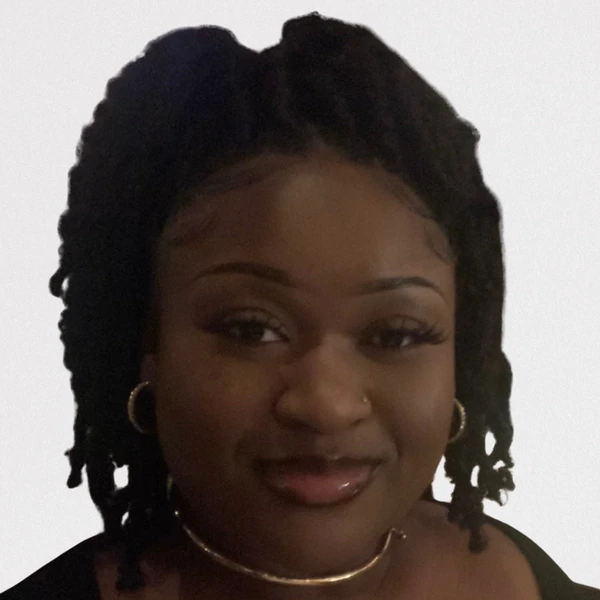
Trisha Adiele
1x
FinalistTrisha Adiele
1x
FinalistBio
Trisha Adiele is a highly dedicated second-semester Nursing student at the University of Maryland School of Nursing (UMSON). A 27-year-old native of Harford County, she successfully transferred from Harford Community College, bringing maturity and a unique perspective to the demanding field of healthcare. Trisha's ultimate career aspiration is to transition into Nursing Education, specifically as a Nursing School Professor. This goal is driven by a deep commitment to not only providing expert patient care but also to mentoring and shaping the next generation of highly qualified nurses, leveraging her own non-traditional path and real-world experience to inspire future students.
Education
University of Maryland, Baltimore
Bachelor's degree programMajors:
- Registered Nursing, Nursing Administration, Nursing Research and Clinical Nursing
Miscellaneous
Desired degree level:
Master's degree program
Graduate schools of interest:
Transfer schools of interest:
Majors of interest:
Career
Dream career field:
nursing
Dream career goals:
Sports
Track & Field
Junior Varsity2013 – 20152 years
Future Interests
Advocacy
Politics
Volunteering
Philanthropy
Entrepreneurship
Lotus Scholarship
From Scarcity to Systemic Advocacy
My perseverance is rooted in the chronic instability of my single-parent household. Financial strain instilled a fierce discipline: the understanding that survival demands strategic, calculated effort. This was tested when external precarity met the profound, internal chaos of untreated mental health barriers. Debilitating depression and subsequent academic failures resulted, seeming to confirm that my life would be perpetually defined by setback.
My greatest act of perseverance was strategically stopping. Recognizing burnout as a systemic failure, the academic detour I chose prioritized professional mental health treatment. This intense self-work, paired with caregiving for my blind grandmother, forged a new, purposeful resilience. True strength is found in mastering determined action, not controlling external circumstances.
I plan to use this hard-won life experience to make a positive impact as a nursing school educator. My influence will address systemic inequities directly, focusing on two areas. First, training future nurses in holistic patient advocacy, ensuring they recognize financial and mental health barriers. Second, diversifying academic leadership by actively mentoring underrepresented students, using my story of overcoming chaos as visible proof of possibility.
I am actively working toward this goal through disciplined action. I successfully completed rigorous BSN prerequisites and am dedicated to thriving in the demanding UMSON program. Applying the resilience forged by my background, I work a work-study job at my school to manage finances while maintaining focus. This commitment ensures I build the strong clinical mastery needed to gain advanced degrees and fulfill my mission as a systemic change agent in nursing education.
Robert F. Lawson Fund for Careers that Care
From Adversity to Nursing Leadership
My name is Trisha Adiele, and I am a 27-year-old Black woman and non-traditional student at the University of Maryland School of Nursing (UMSON). My story is one of converting significant adversity into a powerful, professional purpose. I was raised in a single-parent household after my parents’ divorce, which instilled independence but also created chronic financial instability. This external pressure was compounded by an invisible internal barrier: years of living with untreated neurodivergence (ADHD and Bipolar disorder), which led to debilitating depression and academic failure.
The most critical challenge I overcame was the deeply personal decision to stop my academic pursuit and prioritize treatment. This necessary detour was my first act of self-advocacy, which ultimately stabilized my mental health and gave me the resilience required for the rigor of nursing school. During this period, my vocational path crystallized while serving as a primary caregiver for my grandmother, navigating both her blindness and her final struggle with lung cancer. This experience revealed that my true calling was in hands-on, deeply empathetic patient advocacy. I returned to college with a fierce focus, succeeding in my BSN prerequisites and earning acceptance into UMSON.
I plan to make a positive impact on the world not solely as a clinical nurse, but as a systemic change agent in education. My ultimate goal is to become a nursing school educator.
My impact will focus on two interconnected areas of inequity:
Enhancing Healthcare Equity: As an educator, I will train future nurses to practice holistic patient advocacy. My curriculum will be infused with lessons learned from my personal struggles and my caregiving experience (especially witnessing the complexities of treating a blind patient with cancer). This will ensure that graduates are skilled in recognizing the intersection of social determinants of health and patient outcomes, prioritizing cultural competence and mental health screening (as detailed in my proposed Integrated Mental Health Advocacy curriculum).
Diversifying Nursing Leadership: As an underrepresented Black woman in nursing academia, my presence itself is a positive impact. I will mentor students, particularly those from marginalized and non-traditional backgrounds, using my own history of overcoming financial strain and mental health barriers to inspire their success. I will teach them that their unique journeys are sources of strength, not shame. By increasing the diversity of future nursing professionals, I aim to ensure that healthcare reflects and understands the diverse communities it serves.
This scholarship is the essential investment that ensures the culmination of this plan. It allows me to dedicate myself fully to the intensity of my UMSON studies, guaranteeing that the resilience forged in my adversity is converted into the clinical excellence and academic leadership required to train the next generation of compassionate, equitable healthcare providers.
RonranGlee Literary Scholarship
The paragraph I have chosen is from the Greek philosopher Epictetus's Enchiridion, which is a guide on how to achieve a purposeful life through moral and psychological discipline:
"Some things are in our control and others are not. Things in our control are opinion, pursuit, desire, aversion, and, in a word, whatever are our own actions. Things not in our control are body, property, reputation, command, and, in one word, whatever are not our own actions. Wherefore, if you suppose that only to be your own which is your own, and what belongs to others, as it really is, to be none of your concern, no one will ever be able to compel you, and you will rest contented."
— Epictetus, Enchiridion (Chapter 1)
The Stoic Foundation of Resilience
The underlying meaning of Epictetus's foundational maxim is that the human experience is a constant negotiation between external chaos and internal sovereignty, and true resilience is achieved through the disciplined mastery of one's own perception and response to invisible systemic and personal barriers. This text is not merely a philosophical statement but a practical blueprint for survival for anyone, like myself, who has navigated life while simultaneously fighting financial hardship and the relentless internal warfare of untreated mental illness. The wisdom offered by Epictetus provides the intellectual framework that ultimately validated my decision to pivot my life toward nursing education.
For years, my academic life was dominated by "things not in our control." I grew up in a single-parent home, where the scarcity of "property" and "command" meant a perpetual financial strain that fueled anxiety and depression. Simultaneously, the internal chaos of undiagnosed neurodivergence (ADHD and Bipolar disorder) was a biological obstacle, or a problem of the "body," that consistently sabotaged my efforts. The resulting academic failure and professional derailment became my negative "reputation." I was compelled by these external and internal forces into a self-destructive cycle of ambition and inevitable burnout. I mistakenly viewed these uncontrollable outcomes as personal failures rather than systemic or biological obstacles, which only intensified my suffering. I was, in Epictetus's terms, desperately trying to control the uncontrollable, leading to compulsion and deep discontent.
The profound power of this Stoic lesson was realized during my necessary, years-long academic detour. This period marked the radical pivot toward what Epictetus defines as "our own actions." The decision to step away from college and prioritize securing professional treatment for Bipolar disorder and ADHD was the ultimate expression of controlling my "opinion" and "pursuit." I chose to reject the opinion that I was a failure and pursue the action of healing and stability. This was a direct, courageous act of controlling my own will when everything else (my financial situation, my brain chemistry) seemed utterly uncontrollable. It was the moment I stopped trying to force external circumstances to bend to my will and focused entirely on mastering my internal landscape.
This mastery became the fuel for my subsequent academic success. My return to Harford Community College to pursue my BSN prerequisites was not based on blind hope, but on the certainty that I had established an unshakable internal foundation. I controlled my pursuit of excellence in the classroom, knowing that the rigor of nursing school required the same discipline I had to forge in managing my mental health. This rigorous self-discipline transformed my personal vulnerability into professional strength.
My chosen vocation as a nursing school educator is the applied translation of Epictetus's philosophy into service. In the context of caregiving, the patient's illness, their diagnosis (like my blind grandmother’s lung cancer), and their eventual fate are "not in our control." However, the quality of care we deliver, the empathy we express, the dignity we protect, and the professionalism we maintain are entirely "our own actions." My goal is to train future nurses not only in clinical precision, but also in the Stoic principle of emotional clarity. I will teach them to avoid compassion fatigue by understanding where their responsibility ends, allowing them to remain effective advocates without being personally compelled by uncontrollable tragedy.
Furthermore, my plan to integrate mandatory mental health resource navigation training into the BSN curriculum is directly rooted in this Stoic distinction. The lack of affordable mental health care is a systemic failure (an uncontrollable external barrier). My response (my "action") is to train frontline nurses to become immediate resource coordinators, using their trusted position to instantly connect vulnerable patients to low-cost or free services. This empowers the patient with controllable options (referrals) where previously they only saw insurmountable external barriers (cost and complexity).
Ultimately, Epictetus’s text provides the framework that explains my journey: my past was defined by the tyranny of uncontrollable external factors, but my present and future are defined by the unwavering commitment to controllable actions, opinions, and pursuits. The freedom promised by the Stoic tradition is not a freedom from suffering, but a freedom to act with purpose and dignity within suffering. My pursuit of advanced nursing education is the final, compelling "action" that demonstrates this philosophical lesson, leveraging personal resilience to create systemic change and foster contentment not just for myself, but for the diverse generations of nurses and patients I intend to serve.
Healing Self and Community Scholarship
Training Nurses to Close the Mental Health Gap
My experience with untreated neurodivergence (ADHD and Bipolar disorder) and the financial strain of my single-parent upbringing taught me a brutal truth: systemic barriers, more than clinical symptoms, prevent access to mental health support. My necessary academic detour to achieve stability solidified my commitment to solving this crisis. To make mental health care affordable and accessible, my unique contribution is to use my future role as a nursing school educator to pioneer a new, mandatory curriculum: Integrated Mental Health Advocacy (IMHA).
The affordability crisis is an access crisis, and nurses are the most frequent point of contact. The IMHA program would transform every BSN graduate into a frontline mental health resource coordinator. This specialized training involves three core components:
1) Mandatory Resource Mapping: Teaching nurses to make immediate referrals to low-cost community resources and affordable teletherapy
2) Advanced Screening: Ensuring common conditions like depression and anxiety are identified during general medical assessments
3) Systemic Advocacy: Educating nurses on how financial strain creates invisible barriers.
This contribution is highly scalable and affordable. It leverages the existing, trusted infrastructure of bedside nursing to instantly connect patients to needed support before they leave the unit. My personal journey allows me to mentor underrepresented students and teach from a place of radical empathy, ensuring that my graduates are trained to proactively bridge the mental health gap, creating a powerful, visible shift toward health equity.
Ethel Hayes Destigmatization of Mental Health Scholarship
Invisible Barriers, Visible Purpose
My experience with mental health is not a challenge I overcame and left behind; it is the single greatest force that has shaped my goals, relationships, and understanding of the world. For years, the compounding chaos of untreated neurodivergence (ADHD and Bipolar disorder), coupled with the financial strain of a single-parent upbringing, resulted in debilitating depression and repeated academic failures. This internal struggle redefined my worldview, teaching me that the most powerful barriers in life are often invisible.
My greatest goal is no longer just about external achievement; it is about establishing and maintaining stability, and then using that stability to advocate for others. My initial pursuit of a Childhood Education degree lacked this grounding. However, after the difficult decision to step away from college and prioritize my treatment, the goal became crystal clear: nursing school educator. This vocation is the ultimate expression of my recovery. It requires the discipline I had to forge to manage Bipolar disorder and the focus I had to cultivate to manage ADHD. It allows me to transform my struggle into a practical methodology for training future nurses in empathy, ensuring they see mental health not as a footnote, but as an integral component of holistic patient care.
My illness taught me the true meaning of vulnerability and the necessity of radical honesty. Relationships previously built on superficial high achievement collapsed under the weight of my struggles. The relationships that survived and flourished are those built on authenticity, patience, and mutual support. This personal trial has given me an uncommon ability to recognize subtle signs of distress in others. As a future nurse, this translates into an enhanced capacity to connect deeply with patients who are feeling marginalized, overwhelmed, or unseen, whether they are navigating the chaos of the Emergency Room or the terminal diagnosis of cancer (like my blind grandmother). I know what it feels like to have an invisible wound, which makes me uniquely equipped to advocate for the whole person.
The world, as I once saw it, prioritized external metrics of success. The world, as I see it now, is defined by systemic inequities. My experience highlighted how health disparities are compounded for those who are financially strained and struggling with invisible health barriers. This understanding fuels my professional mission: to use my advanced education to mentor underrepresented students. I am committed to diversifying the academic landscape of nursing, ensuring that future nurses, especially those who share my demographic background, see a path to leadership.
This scholarship is the essential guarantee that I can dedicate myself entirely to my UMSON studies, preventing the financial stress that once jeopardized my mental health and academic future. By investing in my education, you are ensuring that the resilience forged in my internal battle is converted into the compassionate, empathetic, and systemically aware leadership that the nursing profession requires.
Lavender Ribbon Cancer Scholarship
Loss, Service, and the Path to Nursing
My journey toward becoming a Registered Nurse is a commitment rooted in firsthand experience with profound vulnerability. While my upbringing in a single-parent household instilled resilience, my life was dramatically shaped by the fight against lung cancer in my grandmother, who was blind. Witnessing her navigate diagnosis, treatment, and the subsequent end-of-life care brought me face-to-face with the true meaning of service in healthcare (a lesson more potent than any textbook could offer).
This family crisis arrived at a time when I was already struggling with my own significant challenges. Years of financial strain and the internal chaos of untreated neurodivergence (ADHD and Bipolar disorder) had led to academic failures and deep depression. The necessity of stepping away from college to prioritize my mental health was my first act of self-advocacy, which stabilized the foundation upon which my service career is now built. However, it was the added reality of her cancer diagnosis, which compounded her existing challenges with blindness, and the subsequent caregiving I undertook, that gave my life's purpose its final, sharp clarity.
I observed the critical difference between indifferent care and truly compassionate nursing. I saw dedicated nurses who, with specialized knowledge and radical empathy, managed not only the aggressive physical symptoms of her lung cancer but also navigated the complexities of treating a patient with visual impairment and providing comfort to our grieving family. This confirmed for me that nursing was a vocation of immense power and responsibility, requiring practitioners who are as skilled in clinical precision as they are in emotional support. This experience transformed my goal from merely "getting a degree" to a fierce urgency to serve others during their absolute hardest moments.
My subsequent actions have been entirely driven by this commitment. The focus and discipline I developed post-treatment allowed me to thrive in my prerequisites upon my return to Harford Community College in Fall 2022. Now, as a student at the University of Maryland School of Nursing (UMSON), I am gaining the clinical mastery required to fulfill this service commitment. My goal is to work in high-stakes environments, such as the Emergency Room and Operating Room, to hone my skills before pursuing my ultimate aim: becoming a nursing school educator.
My plan to make a difference in the world is to leverage my education to diversify and deepen the compassion within the healthcare system. I will train future nurses, using my lived experiences (including the challenges of financial instability, overcoming mental illness, and witnessing the cancer journey) to instill a profound sense of holistic patient advocacy. I will ensure that cultural competence and empathy for patients and families navigating the devastation of diagnoses like cancer are core tenets of their professional practice. This scholarship is the essential investment that protects my ability to focus entirely on my rigorous UMSON studies, guaranteeing that my hard-won resilience translates into the clinical expertise and academic leadership required to pay forward the dignity and service my family received.
Sue & James Wong Memorial Scholarship
Family, Adversity, and Nursing
My name is Trisha Adiele, and my identity is deeply rooted in the resilience of a single-parent household. Following my parents’ divorce, my mother raised my sister and me primarily alone. This family structure instilled independence but also created severe financial strain. I grew up keenly aware of the sacrifices required, and the perpetual anxiety of economic instability became a heavy, internal burden. This external pressure was compounded by an internal challenge: I lived for years with the chaos of untreated neurodivergence (ADHD and Bipolar disorder).
The confluence of these factors (financial precarity and undiagnosed mental illness) became the greatest obstacle in my pursuit of higher education. I struggled desperately with debilitating depression, which led to repeated academic failures and necessary, lengthy breaks from college. This cycle of high ambition and inevitable burnout shattered my self-esteem and made me feel perpetually like a financial and academic burden. The necessary step of dropping out to seek treatment was a dramatic personal inflection point. It required facing failure head-on and making the crucial decision to prioritize healing over deadlines.
This challenging detour became the crucible for my current success. The act of stabilizing my mental health and developing robust coping mechanisms was the foundational work that enabled my comeback. My vocational direction then crystallized during this break while I served as a primary caregiver for my grandmother. My experience navigating her blindness and her holistic needs transformed my perspective. It confirmed that my true passion lay in the intense, hands-on, deeply empathetic work of nursing, not my former pursuit of theoretical education.
I plan to make a lasting difference in the world through my education by focusing on systemic change within the healthcare profession. My ultimate goal is to become a nursing school educator.
My impact will be twofold. First, I will train future nurses with a profound commitment to health equity and cultural competence, using my personal history to illustrate the necessity of holistic advocacy for vulnerable patients. Second, and perhaps most crucially, I will mentor underrepresented students. As a Black woman and non-traditional student, I aim to be a visible, successful academic leader (a professor who understands the financial strain and invisible barriers many minority and non-traditional students face). My presence and teaching will inspire the next generation, ensuring that the academic landscape diversifies and the cycle of leadership is renewed.
This scholarship is the essential investment that protects this entire mission. By alleviating the necessity of working excessive hours, it ensures I can dedicate myself fully to the rigors of UMSON, guaranteeing that the resilience forged in my single-parent upbringing and personal struggle is successfully converted into the clinical excellence and academic leadership required to pay it forward.
Zedikiah Randolph Memorial Scholarship
Identity and Nursing Leadership
My name is Trisha Adiele, and I am a 27-year-old Black woman and non-traditional student at the University of Maryland School of Nursing (UMSON). My journey to this highly competitive BSN program was not linear but was forged in a crucible of personal and financial struggle. For years, I contended with the compounding burdens of financial strain from a single-parent upbringing and the internal chaos of untreated neurodivergence (ADHD and Bipolar disorder). This led to debilitating depression, academic failures, and a necessary, years-long break from college.
The definitive choice to pursue nursing was born from two simultaneous acts of self-advocacy and service. First, I prioritized treatment and stabilized my mental health, developing the resilience required for this demanding field. Second, my experience as a primary caregiver for my grandmother, navigating her blindness and end-of-life care, crystallized my vocational direction. It revealed that my true calling was in the hands-on, deeply empathetic work of patient advocacy, rather than my previous focus on theoretical education. I chose the rigor of UMSON because I demand the highest standard of clinical excellence to serve the most vulnerable patients and to position myself for maximum future influence.
My plan to impact my community begins with my presence. Statistically, I represent a demographic that is severely underrepresented, particularly within nursing faculty. While Black individuals comprise only about 13% of the U.S. population, Black nurses make up a smaller percentage of the RN workforce, and the number is even smaller among nursing educators. My goal is to address this disparity directly by becoming a nursing school educator.
I will use my education to create systemic change. My community is twofold: the marginalized patients who deserve equitable care, and the underrepresented students who deserve a clearer path to professional leadership. I plan to leverage my lived experience (understanding financial strain and navigating invisible barriers) to mentor future nurses, showing them that resilience is possible. I will inspire the next generation to continue to increase the odds by being a visible, successful academic leader (a professor who looks like them and who understands their unique challenges). My curriculum will center on cultural competence, health equity, and the holistic advocacy learned at my grandmother's bedside.
This scholarship is the essential investment that protects this entire mission. By alleviating the necessity of working excessive hours, it ensures that I can dedicate myself entirely to my UMSON studies. This support guarantees that the resilience I forged in my detour is successfully converted into the academic excellence and leadership required to truly pay it forward and diversify the professional and academic landscape of nursing for decades to come.
Rev. and Mrs. E B Dunbar Scholarship
Resilience, Education, and Community Impact
My pursuit of higher education has been less a straight path and more a rigorous climb defined by the obstacles I have had to strategically overcome. My early academic life was plagued by the heavy, compounding burdens of untreated mental illness and financial instability. Living with undiagnosed neurodivergence (ADHD and Bipolar disorder) meant I was constantly fighting my own ability to focus and sustain effort. This internal chaos, coupled with the profound financial strain of growing up in a single-parent household after my parents’ divorce, resulted in debilitating depression and repeated academic failures. I felt trapped in a cycle of high ambition and inevitable burnout, which severely damaged my self-esteem and made the dream of a successful career feel impossible.
The greatest obstacle I overcame was the deeply personal one: accepting that I needed a complete, years-long academic detour to heal. This was an act of profound self-advocacy. I prioritized securing professional treatment, stabilizing my mental health, and developing robust coping mechanisms. This period of focused recovery, far from being a setback, was my most critical education.
This new foundation of stability allowed me to return to school in Fall 2022 with a clear and urgent purpose: nursing. My experience as a primary caregiver for my grandmother, especially navigating her blindness and her end-of-life care, crystallized my commitment to patient advocacy. Armed with maturity and focus, I thrived in my prerequisites, successfully transferring to the highly competitive University of Maryland School of Nursing (UMSON). Every step taken, from seeking treatment to earning my acceptance, has been a direct action against the forces that once sought to count me out.
My education is not solely for personal achievement; it is a tool for systemic change and community upliftment. I will use my education to give back by becoming a nursing school educator.
My community is twofold: the marginalized patients who deserve radically empathetic care, and the underrepresented students who deserve a path to professional leadership. I plan to mentor future nurses, particularly those from non-traditional backgrounds, using my own story of resilience and overcoming invisible barriers to inspire them. My ultimate goal is to diversify the academic and professional landscape of nursing, ensuring that those who feel counted out know they can not only survive the program but lead the profession. My curriculum and teaching will center on health equity, cultural competence, and the holistic advocacy learned at my grandmother's bedside.
This scholarship is the essential investment that protects this mission. It removes the necessity of working excessive hours, ensuring that my focus remains entirely on my UMSON studies. This support guarantees that the resilience forged in my detour is successfully converted into the academic excellence and leadership required to truly pay it forward and create a more equitable future for both patients and future nurses.
Eden Alaine Memorial Scholarship
The Final Lesson: Vocation Forged in Loss
The singular event that most profoundly impacted my life and unequivocally cemented my journey into nursing was not an acceptance letter, but the eventual loss of my beloved grandmother. For years, she had been a quiet, formidable force in my life, her blindness necessitating a level of attention and advocacy that became my first true education in healthcare. While her illness and eventual passing brought immense grief, it was through this experience that I gained the maturity, resolve, and specific direction I needed to fully commit to the nursing profession.
Before her final decline, caring for my grandmother had already taught me the meaning of holistic patient advocacy. I learned that care for a person with a disability (like her blindness) required constant patience, specialized communication, and a fierce commitment to preserving dignity in every interaction. However, witnessing her journey through hospice and eventually losing her crystallized a darker, equally crucial lesson: the importance of the nurse’s role in managing the vulnerability and sorrow inherent in the final chapter of life. I watched as dedicated nurses provided comfort, clarity, and peace to her, and to our family, transforming a time of devastation into one of protected dignity.
This experience redefined my commitment. Before, my goal to become a nurse was driven by overcoming my own academic failures and mental health struggles (ADHD and Bipolar disorder). After her passing, it became about much more than my personal success; it became about service during the absolute hardest moments of a family’s life. The grief was channeled into a fierce urgency to return to school, which led me back to Harford Community College in Fall 2022, focused entirely on my BSN prerequisites. The stability I had fought so hard to achieve through treatment was immediately put to the test, and my success in those demanding courses, culminating in my acceptance to UMSON, proved that the depth of my commitment matched the difficulty of my loss.
I plan to carry the memory of my grandmother’s life and loss into my professional future. My immediate goals involve mastering the clinical precision required in the Emergency Room and Operating Room, but my ultimate purpose is to become a nursing school educator. I will pay forward the lessons learned at her bedside by training future nurses to approach end-of-life care, and all patient interactions, with radical empathy. My curriculum will integrate the understanding that treating the whole person means acknowledging the family unit and managing the emotional burdens of vulnerability, mirroring the dignified care my grandmother eventually received.
This scholarship is essential to ensure that the powerful lessons learned from loss are not diluted by financial pressure. By allowing me to focus entirely on my UMSON studies, this support guarantees that the profound impact of my grandmother’s life and loss is converted into the highest possible level of academic excellence and leadership in nursing education.
Shanique Gravely Scholarship
Redefining Purpose Through Adversity
The biggest impact on my life did not come from a single person or a single event, but from the convergence of two profound forces: the quiet strength of my blind grandmother and the dramatic, necessary failure of my initial academic path. Together, they redefined my purpose and led me directly to the University of Maryland School of Nursing (UMSON).
My grandmother, who was blind, became the first and most critical figure in shaping my understanding of human vulnerability and resilience. Her life required my family to continuously adapt and provide specialized care. From a young age, I learned that advocacy meant more than just physical help; it meant communicating with profound patience, anticipating needs that others might overlook, and ensuring her dignity in a world not built for her. This experience established the foundation of my clinical empathy, teaching me that true patient care is holistic, requiring the provider to see beyond the diagnosis and address the full person and their systemic barriers.
The second dramatic impact was my decision to step away from college. For years, I struggled with the dual burdens of financial strain and untreated neurodivergence (ADHD and Bipolar disorder), which led to debilitating depression and repeated academic failure. The cycle of high ambition followed by inevitable burnout was severely damaging. The act of hitting "pause" was the most impactful event of my young adult life (it was an admission of defeat that became the catalyst for ultimate victory). This self-advocacy (prioritizing treatment and rebuilding my mental stability) was a profound act of self-care and resilience, proving that my commitment to my own well-being had to precede my commitment to any professional goal.
The true pivot came when I returned to school in Fall 2022. The clarity I gained from my mental health journey, combined with the hands-on empathy I learned from caring for my blind grandmother, made the choice of nursing undeniable. My personal history, once a source of shame, became my greatest asset, equipping me with the tenacity to thrive in the rigorous BSN prerequisites and ultimately gain acceptance into UMSON.
I am now dedicated to translating these personal impacts into public service. My goal is to become a nursing school educator, using my platform to pay forward the perspective I gained. I will ensure that future nurses (especially those from marginalized backgrounds) are trained not only in clinical excellence, but also in the radical empathy and holistic advocacy that my grandmother required and deserved. This scholarship is the essential support that allows me to dedicate myself fully to my studies, guaranteeing that these hard-won life lessons are successfully converted into the academic leadership that will train a more compassionate and equitable generation of healthcare professionals.
Melendez for Nurses Scholarship
Caregiving and Clinical Purpose
My life, like many others, has been profoundly shaped by the family members I love, but my journey into nursing was uniquely defined by my grandmother’s blindness. She lived with a disability that fundamentally alters interaction with the world and dependency on others. From a young age, I learned that her needs extended far beyond simple physical assistance; they required profound patience, specific communication, and a continuous exercise in empathy to understand her perspective in a sighted world. It was at her side, navigating her home and her appointments, that I received my first, most critical, education in patient-centered care.
This caregiving role was pivotal, especially during the time I took away from college to address my own health challenges (untreated ADHD and Bipolar disorder) and financial strain. While I had once pursued Childhood Education, it was the reality of tending to my grandmother (witnessing her vulnerability and the occasional indifference of healthcare providers who focused only on visible symptoms) that transformed my vocational direction. Her condition taught me that true care is holistic: it addresses not only the immediate medical issue but also the dignity, emotional needs, and systemic barriers faced by the person. I realized my personal history of feeling counted out and marginalized, combined with this caregiving experience, had equipped me with the resilience and perspective required for the intensive, hands-on, deeply empathetic work of nursing.
The clarity gained from this experience fueled my return to Harford Community College in Fall 2022. I successfully pursued my BSN prerequisites, thriving academically, and earning acceptance to UMSON. Every step taken since then has been a direct action toward translating that caregiving lesson into clinical practice. My decision to focus initially on the Emergency Room and later the Operating Room is driven by a desire to master high-acuity, precision skills, but always with the foundational understanding that the patient on the table is a whole person with unique vulnerabilities, just like my grandmother.
The goal I now pursue is to pay forward the perspective I gained. I plan to use my eventual advanced nursing degree to become a nursing school educator. By mentoring future nurses, I will ensure that cultural competence and radical empathy for vulnerable populations, including those with disabilities, are core tenets of their training. My personal story, including the challenges I overcame and the patience I learned while guiding my blind grandmother, will serve as a powerful, non-academic case study on the critical importance of seeing beyond the diagnosis.
This scholarship is the necessary investment that safeguards this mission. By relieving the immediate financial pressure of full-time study, it allows me to dedicate myself completely to clinical excellence and academic preparation. This support will ensure that the deep lessons I learned through personal struggle and caregiving for a blind family member are converted into the academic leadership required to train a generation of nurses who are truly equipped to advocate for the whole human being.
Second Chance Scholarship
The Purpose-Driven Change: From Caregiving to Clinical Leadership
My decision to make a profound change in my life (pivoting from a pursuit of Childhood Education to the intensive field of Nursing) was born from a necessary and difficult reckoning. For years, my academic journey was plagued by struggles that were deeply personal and financial. The emotional weight of growing up in a single-parent home after my father’s absence created deep-seated financial anxiety, which was severely compounded by the chaos of untreated neurodivergence (ADHD and Bipolar disorder). I found myself repeatedly derailed by debilitating depression and academic failure, prolonging my journey and making me feel like a permanent academic burden. My desire for change was rooted in a realization that my life needed not just a new goal, but a stable foundation.
The first crucial step I took toward my current goal was not academic, but personal: taking a long break to prioritize my health, seek treatment, and stabilize. This was the most courageous and necessary step, establishing the mental resilience required for the rigor of nursing school. The second step was vocational, catalyzed by serving as a primary caregiver for my grandmother. This experience revealed a profound, practical love for patient care, replacing my abstract interest in education with a concrete, urgent purpose. When I returned to Harford Community College in Fall 2022, I did so with this new clarity and discipline, successfully thriving in my prerequisite courses, culminating in my transfer to the University of Maryland School of Nursing (UMSON).
My acceptance into UMSON and the subsequent transition require a full-time commitment that prevents me from working as I did before. This is where the scholarship becomes absolutely vital. Having overcome the self-doubt and financial strain of my past, this funding is the necessary bridge that ensures I can dedicate every hour to my challenging coursework without the risk of burnout or academic derailment due to excessive external work. This scholarship protects the hard-won stability I achieved, allowing me to convert my BSN into a foundation of clinical excellence.
My ultimate plan is to use my education to pay it forward by becoming a nursing school educator. I plan to gain mastery in high-acuity environments (starting in the Emergency Room and then specializing in the meticulous discipline of the Operating Room) to build the clinical credibility required for advanced degrees (MSN/DNP). My presence in academia, as a 27-year-old Black woman who overcame mental health and socioeconomic barriers, will serve as a beacon. I will pay it forward by creating an academic environment where resilience and self-advocacy are valued, ensuring that future nurses (especially those from underrepresented and non-traditional backgrounds) are trained by a mentor who knows exactly what it feels like to be counted out, and who can inspire them not just to survive the profession, but to lead it.
Dream BIG, Rise HIGHER Scholarship
Academic Resilience and New Purpose
For me, education was initially a source of great aspiration that quickly became a painful mirror reflecting internal and external burdens. For many years, my undergraduate path was overshadowed by the compounding realities of my life. My mother, following my parents' divorce, raised me and my sister primarily alone, leaving us to contend with the significant financial strain of a single-parent household. This difficulty was compounded by the emotional fallout of a father who ceased to invest time, effort, or presence in our lives. This environment left me with an enduring feeling of being a financial and emotional burden, a weight that became critically heavy when paired with the internal chaos of untreated neurodivergence (ADHD and Bipolar disorder). I struggled desperately with debilitating depression, leading to repeated academic failures and necessary, lengthy breaks from college, which shattered my self-esteem and made me feel like my dreams were perpetually out of reach.
My earlier goal of becoming a childhood education major was heartfelt, but theoretical. I was drawn to the idea of nurturing young minds, yet my untreated mental health conditions meant I was constantly fighting my own ability to focus and sustain effort. The challenges I faced were not just external; they were a systemic internal sabotage that prolonged my education and seemed to confirm my deepest fears of inadequacy.
The true shaping of my direction did not come from a textbook but from the courage to step entirely away from school in order to heal. This period of deliberate self-advocacy (prioritizing securing professional treatment, working diligently to stabilize my mental health, and developing robust coping mechanisms) was, paradoxically, my most rigorous education. It was during this pivotal time, while serving as a primary caregiver for my grandmother, that my vocational compass finally aligned. The work of nursing, the practical, immediate, and deeply empathetic work of tending to a vulnerable life, was a powerful contrast to my previous academic focus. This experience revealed a profound, practical love for patient care, demonstrating that my true calling lay not in the abstract theory of teaching, but in the hands-on demands of medical care. This was the moment I realized my resilience, my ability to remain calm and focused under pressure, was meant for the bedside.
The decision to return to Harford Community College in Fall 2022 with a new focus on nursing was a calculated, purposeful act built on a stable foundation of self-care. Education, for the first time, provided unwavering clarity and direction. Armed with stability and discipline, I didn't just meet the standards; I thrived, diligently retaking my prerequisites and excelling in the challenging courses required for admission. This effort culminated in the immense validation of earning acceptance into every nursing program I applied to, and ultimately transferring to the highly competitive University of Maryland School of Nursing (UMSON). This academic success was the final, powerful proof that the challenges I overcame had not defeated me, but had forged an uncommon level of focus, tenacity, and professional commitment.
The education I am receiving now, as a 27-year-old Black woman and non-traditional student at UMSON, is shaping a future I am uniquely equipped to lead. My immediate goal post-BSN is to gain mastery in high-stakes environments, initially in the Emergency Room to build foundational critical thinking and stabilization skills. I will then specialize in the Operating Room, which requires the kind of meticulous discipline and focused attention that my journey has taught me to cultivate. This intensive clinical experience is essential, but it is only the first step.
My ultimate aspiration is to use this education to create a better future for others by fulfilling my "Pie in the Sky" dream: becoming a nursing school educator. My lived experience (understanding what it means to feel marginalized, financially strained, and counted out) will profoundly inform my teaching and mentorship. I will ensure that future nurses, particularly those from underrepresented backgrounds and those navigating invisible mental health challenges, are trained not only in clinical excellence but also in radical empathy and cultural competency. My presence in academia will serve as visible proof of possibility, and my curriculum will integrate the understanding that patient vulnerability often extends far beyond physical health. My education is my vehicle for driving health equity and diversifying the professional and academic landscape of nursing.
To ensure this powerful trajectory of impact is realized, I must remain dedicated to my studies without the distraction of significant work hours. This scholarship is the necessary investment that protects the resilience I worked so hard to build, allowing me to convert my hard-won BSN into the advanced degrees required to become the academic leader and mentor that the healthcare industry desperately needs.
Harvest Scholarship for Women Dreamers
My Commitment to Nursing Education Leadership
My "Pie in the Sky" is not merely attaining a professional title, but achieving a state of influence where I can decisively reverse the narrative of my early academic life and create a new trajectory for others. My ultimate, inspiring, and often seemingly out-of-reach dream is to become a Nursing School Educator: a professor who trains the next generation of nurses at an institution like the University of Maryland School of Nursing (UMSON).
This dream was not sparked by a single clinical moment, but by the dramatic contrast between my past struggles and my recent academic triumph. For years, I was the student who repeatedly failed, sidelined by the compounding forces of financial strain, a feeling of being a financial burden, and the internal chaos of untreated ADHD and Bipolar disorder. That experience left deep wounds on my self-esteem and made the idea of advanced degrees or a position of academic leadership feel permanently unattainable.
The spark ignited when I successfully returned to school in Fall 2022. Having taken time away to receive treatment, heal, and stabilize, I witnessed my own potential unlock, thriving in my prerequisites and earning acceptance into every nursing program I applied to. My courage now lies in translating that personal victory into a public mission. My dream is to stand at the front of a classroom, a 27-year-old Black woman and non-traditional student, and provide mentorship that directly addresses the invisible barriers many students face (whether that is navigating systemic bias or managing a mental health condition while pursuing a high-stakes degree). The creativity in this dream is creating a teaching environment where resilience, self-advocacy, and cultural competency are core tenets of the curriculum.
To achieve this audacious goal, I recognize that the commitment required is multifaceted. The first, and most crucial, step is successfully earning my BSN from UMSON, which requires laser focus. Immediately following graduation, I plan to gain mastery in high-acuity environments: first the Emergency Room for foundational critical thinking, and then specializing in the Operating Room, which will hone the precision and discipline required for future research and advanced practice.
The steps to truly reaching my "Pie in the Sky" involve immediate, aggressive pursuit of advanced degrees (MSN and eventually a DNP or PhD). This is the part that feels just out of reach, as it requires a multi-year investment of time and significant capital for tuition. This scholarship is essential because it removes the immediate financial distraction of my current BSN studies, allowing me to build the strong academic record necessary to secure competitive entrance and funding for those future doctoral programs.
My dream is rooted in the honesty that I know what it feels like to be counted out. My commitment is to ensure that future nurses (especially those from underrepresented backgrounds) know they can not only survive the program but lead the profession. This scholarship is an investment that converts my hard-won resilience into the academic leadership the healthcare industry desperately needs.
Nabi Nicole Grant Memorial Scholarship
Faith in the Detour: Trusting the Path to Healing
There are moments in life where the path forward is obscured, and success feels like an intellectual possibility but an emotional impossibility. For me, this moment arrived after years of struggling against untreated neurodivergence (ADHD and Bipolar disorder), which, combined with the financial and emotional weight of my difficult upbringing, led to severe depression and repeated academic failure. The constant cycle of starting school, burning out, and taking long breaks prolonged my educational journey and severely damaged my self-esteem, leaving me feeling not only academically defeated but utterly adrift.
The most profound test of my faith was the decision to step away from school entirely, knowing that further attempts without complete healing would be futile. This was a challenging move; it meant accepting a longer timeline and risking financial stability. But my faith, rooted in my relationship with Jesus Christ, was the quiet, determined conviction that my life and purpose were meant for more than mere survival. It was a trust in the possibility of recovery and a belief that the setbacks were not failures, but necessary chapters in my formation.
This inner conviction compelled me to focus on self-advocacy: securing professional treatment, developing coping mechanisms, and rebuilding my foundation from the ground up. This period required a deep reliance on spiritual fortitude; when my own strength and self-esteem were depleted, I leaned entirely on the hope and assurance I found in Jesus Christ, realizing I had nothing else left in me. My faith became the anchor that allowed me to redefine my identity not as a victim of my circumstances, but as a deliberate architect of my comeback.
When I successfully returned to Harford Community College in Fall 2022, switching my major to nursing, it was the ultimate act of this renewed faith. I committed to the rigorous BSN prerequisites, taking my time to master the material. The results were undeniable: I not only returned but thrived academically, culminating in the exhilarating affirmation of multiple acceptances, including my choice, UMSON.
This experience has profoundly influenced my approach to nursing. Having been in a place of deep vulnerability and needing to rely on a belief in a better future, I am now uniquely prepared to serve patients who are experiencing their own moments of crisis (whether in the chaos of the Emergency Room or the high-stakes environment of the Operating Room). My faith will translate into the compassion I show when others feel vulnerable, and the unwavering conviction that I can advocate for every patient’s holistic well-being.
This scholarship is the practical investment that validates the faith I placed in my own potential. By removing the immediate financial pressure, it allows me to dedicate myself fully to my studies, ensuring that the resilience I forged during my darkest times can be channeled entirely into becoming an exceptional, compassionate, and purpose-driven Registered Nurse.
Kim Moon Bae Underrepresented Students Scholarship
The Impact of Perspective: My Commitment to Equitable Nursing
My identity as a 27-year-old Nigerian-American woman and non-traditional student is not merely a demographic fact; it is the foundation of my clinical perspective and professional mission. My lived experience from navigating a strained financial background as a child of divorce to advocating for my own healthcare needs while living with neurodivergence has instilled in me a deep, visceral understanding of patient vulnerability, systemic barriers, and the critical importance of health equity.
As I pursue my Bachelor of Science in Nursing at the University of Maryland School of Nursing (UMSON), I carry the realization that Black patients often face disparities in care, stemming from unconscious bias and a lack of cultural competency within the healthcare system. My presence in the BSN program is, therefore, a commitment to changing this narrative. I believe that a diverse nursing workforce is essential for fostering trust, ensuring culturally sensitive communication, and ultimately improving outcomes for all marginalized populations.
My journey here was forged by resilience. The necessity of stepping away from school, seeking treatment for ADHD and Bipolar disorder, and successfully returning to thrive academically in Fall 2022. This experience has uniquely equipped me to approach patients with radical empathy, particularly those facing invisible battles or navigating complex health systems. I understand that the social determinants of health which are, financial stability, educational opportunity, and timely mental health treatment, are often just as crucial as the diagnosis itself.
My near-term goals are to begin in the Emergency Room to build critical, rapid assessment skills, and then specialize in the Operating Room. However, my long-term vision is to leverage these high-acuity experiences to become a nursing school educator. This goal is deeply tied to my identity. If we want a healthcare system that reflects and respects the diversity of the population, we must diversify the educators who shape the next generation of nurses. I aim to be a mentor and a visible example, ensuring that future curricula and clinical training address equity, cultural competence, and the unique challenges faced by students of color and non-traditional students.
This scholarship is not just funding for my tuition; it is an essential investment in diversifying the future leadership of the nursing profession. By alleviating the need to work excessive hours, this support allows me to dedicate my focus fully to the rigors of UMSON, ensuring I successfully complete my BSN and fulfill my commitment to becoming a practitioner and educator who advocates fiercely for equitable care.