Hobbies and interests
Art
True Crime
Biomedical Sciences
Adeline Worman
1x
Finalist
Adeline Worman
1x
FinalistBio
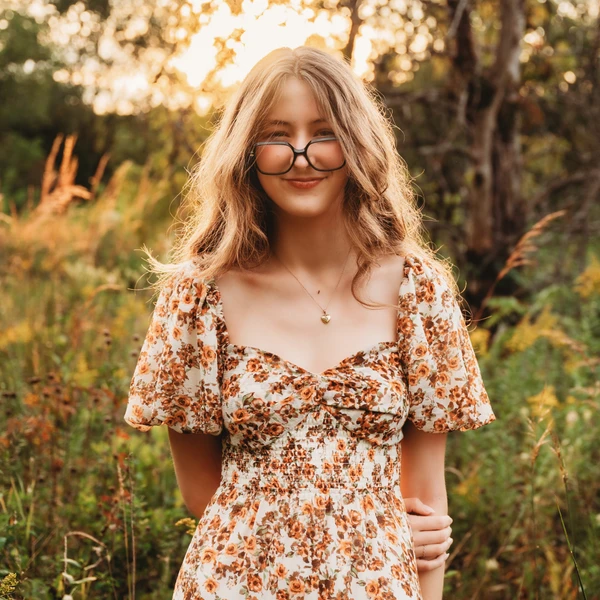
I’m Addie Worman, a senior at Dominican High School in Whitefish Bay. I've lived with Type 1 Diabetes for 6 years and it has taught me resilience, responsibility, and the importance of self-advocacy. I’m passionate about theater and reading, and I strive to approach everything I do with curiosity and dedication. I hope to continue exploring my interests and making a positive impact as I pursue a major in bio, with the intent to one day be an endocrinologist.
Education
Dominican High School
High SchoolMiscellaneous
Desired degree level:
Master's degree program
Majors of interest:
- Registered Nursing, Nursing Administration, Nursing Research and Clinical Nursing
Career
Dream career field:
Medicine
Dream career goals:
Public services
Advocacy
Breakthrough T1D — Youth Ambassador2023 – 2025
MannKind Al Mann Centennial Scholarship
I loved getting shots when I was a child. A strange thing for most kids to enjoy, but I was ecstatic every time I needed a vaccine or had to get my blood drawn. I remember begging my mom to schedule another doctor’s visit just so I could experience it again. My parents laughed and joked that I was destined for the medical field. At the time, it was simply childhood curiosity. But years later, that love felt like a curse.
At age eleven, I was diagnosed with Type 1 Diabetes. Overnight, curiosity turned into responsibility. I had never heard of the disease before, yet suddenly I was expected to count carbohydrates, calculate insulin doses, and monitor my blood sugar constantly. My parents supported me, but they could not take injections for me or watch over me every moment. For the first time, my health, and my survival, depended on decisions I had to make for myself.
Living with diabetes reshaped not only my daily routine but also my understanding of science and medicine as a whole. Life sciences are no longer abstract subjects in a textbook; they explain what is happening inside my own body every day. Learning about biology feels personal, empowering me to understand the systems I rely on and the treatments that sustain me. This connection inspires me to pursue a career in medicine, where science directly improves lives.
The past six years with Type 1 Diabetes have been both exhausting and redefining. While the physical management is demanding, the mental burden has often been the greatest challenge. Early after my diagnosis, I struggled deeply with my relationship with food and developed disordered eating habits as I tried to gain control over something that felt uncontrollable. I felt isolated and misunderstood, and finding mental health professionals who truly understood the psychological weight of diabetes was difficult.
Everything changed when my endocrinologist recognized what others had missed. She looked beyond my numbers and saw a person who was overwhelmed and struggling. She listened, validated my experience, and helped me find support that addressed both my physical and mental health. Her compassion showed me what healthcare can and should be: not just treating a disease, but caring for the whole person.
Her example inspired my goal of becoming an endocrinologist. I want young patients to feel seen in ways I once needed. Diabetes is not only about injections and carb counting; it is about fear, resilience, identity, and learning to live fully despite constant challenges. When setbacks occur, difficult blood sugar days, burnout, or frustration, I stay grounded by remembering how far I have come and by thinking about the patients I hope to help one day.
If I could make one meaningful contribution to the diabetes community, it would be improving access to integrated mental health care for people with chronic illnesses. Emotional support should not be an afterthought in diabetes treatment. By advocating for care that treats mental and physical health together, I hope to help patients feel supported, understood, and empowered rather than alone.
Diabetes will always be part of my life, but it does not define my limits. Instead, it shapes my purpose. My experiences have shown me the strength that can grow from vulnerability and the impact compassionate healthcare providers can have. I want to become that source of support for others, helping children with diabetes see not just the challenges ahead, but the full and meaningful lives still waiting for them.
District 27-A2 Lions Diabetes Awareness Scholarship
I loved getting shots when I was a child. A strange thing for a child to love, but I was ecstatic every time I found out I needed a vaccine or had to get my blood drawn. I remember pleading with my mom to schedule another doctor's visit so I could get one. My parents found it odd, but would quickly laugh it off and joke that I was destined to enter the medical field.
I’m not sure what I loved about the shots. It wasn't the pain or praise. What made me love shots was the challenge. I had an obsession with proving myself. I needed to prove to my parents, doctors, friends, and even myself that I was strong; if they believed in me, maybe I could believe in myself.
On August 26, 2019, I faced the biggest challenge I had yet to encounter. I was diagnosed with Type 1 Diabetes. My parents had hushed and anxious conversations with the doctor outside my door. I would soon learn that I was admitted to the hospital with a blood sugar of 800; a couple of days later and I would have likely entered a coma. That's a scary idea for an eleven-year-old to come to terms with.
After the diagnosis, I kept up a brave face; I didn’t want to show, I couldn't show, how much the disease was wearing me down. I was now responsible for doing the job of my failed pancreas. The shots I once loved became something I dreaded. I desperately wanted to prove that I was strong, brave, and most of all, happy. But after each prick of the needle, I felt more broken.
But one event changed how I viewed everything. I volunteered at a speaking event, in which they asked me to help watch over a 3 year boy with Type 1 so his parents could attend the event. I happily agreed and was left shocked. This kid was full of so much energy and life, running around and chasing imaginary birds. I had to stop him to drink a sip of juice, and he happily took the break while we chatted about his favorite color. Diabetes didn't limit him from enjoying life, so why should it limit me?
I’ll never forget the days before my diagnosis when life felt so easy and stressfree, but diabetes helped shape me into the person I am today. I learned the hardest lesson of all: I would never manage my diabetes perfectly. And that was okay. Diabetes wore me out so much because I let it. The disease is exhausting and frustrating at times, but I began to channel that frustration into a passion for medicine, where I hope to become an endocrinologist. It showed me that no matter how worn out, beaten, or broken I felt, I can always make it through. Because I know firsthand that treatment is more than numbers, it’s fear, exhaustion, and learning to live fully anyway. I honestly never imagined when I was first diagnosed that I could stand here, genuinely happy and excited for the future. The only thing I ever want in life is for all young diabetics out there to know they are strong. It took a while for me to channel that strength, but it shaped me into who I am today. The shots I once saw as a test of strength have become something different , not proof that I’m perfect, but proof that I’m still here. Still strong. Still ready for whatever challenge comes next.