user profile avatar

Adeline Kontos

1x

Finalist

Bio

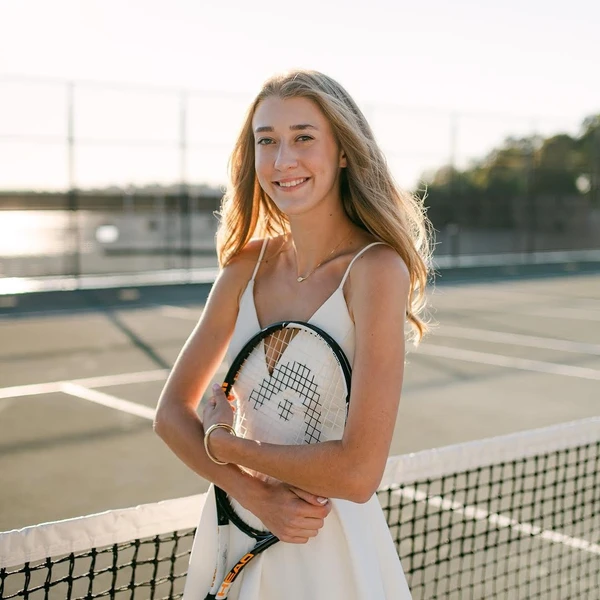
Hi there! My name is Adeline and I am a senior at Beverly High School. I am a committed college student at clark university starting in the fall of 2026. I love art, tennis, and spending time with my friends. I want to pursue an educational career of some sort and want to major in it as well.

Education

Beverly High

High School
2023 - 2026

Miscellaneous

  • Desired degree level:

    Master's degree program

  • Majors of interest:

    • Education, Other
  • Not planning to go to medical school
  • Career

    • Dream career field:

      Education

    • Dream career goals:

    • Assistant tennis pro instructor

      Annisquam Yacht Club
      2024 – Present2 years

    Sports

    Tennis

    Varsity
    2023 – Present3 years

    Awards

    • All around singles player
    • NEC all confrence star player
    • rising star award

    Public services

    • Public Service (Politics)

      Beverly Bootstraps — I bagged snacks and prepared meals at a soup kitchen
      2025 – 2025
    RonranGlee Special Needs Teacher Literary Scholarship
    To me, that statement means helping students truly understand themselves, their strengths, struggles, identities, and worth. A sense of presence is not just about academic success; it is about feeling seen, valued, and capable. It is the moment when a student realizes, I belong here. I matter. I can do this. As someone who has grown up navigating ADHD, anxiety, depression, and autism, I understand how powerful and life-changing that realization can be. My passion for becoming a special education teacher comes from my own journey toward discovering my presence and my desire to guide others through theirs. For as long as I can remember, my brain has been a whirlwind of thoughts, emotions, and sensory overload. Some days, that chaos felt beautiful and creative; other days, it was exhausting and overwhelming. I often struggled to focus, regulate emotions, and manage expectations, especially in traditional academic environments. The noise in my head could become so loud that I felt disconnected from myself and from the world around me. Video games became my escape. Inside those digital worlds, I found friendships, freedom, and a sense of control that I lacked in real life. But what started as comfort slowly became avoidance. I was hiding rather than healing. By my freshman year, my grades no longer reflected my abilities or my effort. I knew I needed change. That realization led me to enroll in an Outward Bound program in Minnesota’s Boundary Waters a decision that challenged me physically, mentally, and emotionally. With no technology, no distractions, and no easy way out, I was forced to confront myself. Paddling across endless lakes, navigating rough terrain, and relying on teamwork taught me resilience, patience, and trust. More importantly, I learned that I was capable of more than I had ever believed. That experience planted the seed of self-confidence and self-awareness that I continue to grow today. Sophomore year, I carried those lessons forward. With limited access to technology, a renewed focus on paper assignments, and weekly therapy, I began to rebuild my academic foundation. Slowly, my confidence returned. By junior year, my hard work paid off. I finished with A’s and B’s, raised my GPA to a 3.8, and balanced honors-level courses with extracurricular activities I loved. More than the numbers, however, I gained a sense of presence and an understanding of who I was, how I learned, and how to advocate for myself. Yet, academics alone were not where my true passion emerged. That happened on tennis courts, surrounded by laughter, sun, and children discovering their own abilities for the first time. Every summer, I work at a camp in Gloucester, Massachusetts, where I teach kids how to play tennis. It is my happy place, a space where anxiety fades, social pressure disappears, and authenticity thrives. As someone on the autism spectrum, routine brings comfort, and camp offers structure paired with joy. It is where I can exist fully as myself, without masking or fear of judgment. What makes this experience even more meaningful is watching campers, many of whom struggle socially, emotionally, or academically, grow in confidence through sport, encouragement, and connection. One summer, I got a sunburn, my first ever sunburn. It was painful, uncomfortable, and far from glamorous. But strangely, it became a metaphor for growth. That unexpected burn represented stepping outside comfort zones and embracing change. Just as my skin peeled and revealed a stronger layer beneath, I found myself becoming more resilient and adaptable. Camp, a place of routine and safety, taught me that unpredictability does not have to be frightening, it can be transformative. This lesson mirrors the journey many special education students face: growth often comes from challenge, and with the right support, even discomfort can lead to empowerment. Teaching tennis has shown me that learning is not one-size-fits-all. Some kids need repeated demonstrations. Some need visual cues. Some need emotional reassurance before they can even attempt a skill. Others thrive through competition or humor. The most important lesson I’ve learned is that every child wants to succeed; they just need the environment and guidance that allow them to do so. This understanding is at the heart of special education. Special education teachers do more than teach academic content. They teach self-belief, resilience, independence, and self-awareness. They help students recognize their own presence, their value and agency in the world. My mission as a future special education teacher is to create classrooms where students feel safe, supported, understood, and empowered to discover their strengths. To guide students toward experiencing their own presence, I will first help them understand themselves. This begins with building relationships rooted in trust, patience, and empathy. Students must know that their classroom is a place where differences are not merely accepted but celebrated. By offering individualized instruction, sensory accommodations, flexible pacing, and emotional support, I will ensure that every learner feels capable rather than confined by their challenges. Second, I will teach self-advocacy. Many students with disabilities struggle to articulate their needs or feel ashamed of asking for help. I want my students to learn that their voices matter. Whether through structured self-reflection, goal setting, or communication strategies, I will empower them to express who they are and what they need. Confidence grows when students feel heard. Third, I will incorporate movement, creativity, and play into learning tools that helped me thrive. Hands-on activities, games, art, and outdoor learning can transform education from stressful to engaging. These methods foster motivation, emotional regulation, and meaningful connection, especially for neurodivergent learners. Finally, I will emphasize progress over perfection. Too often, students measure themselves against rigid standards that fail to recognize personal growth. By celebrating small victories, perseverance, and effort, I hope to show my students that success is not about comparison, it is about becoming the strongest version of themselves. Once upon a time, there was a girl who lived in a world that often felt too loud, too bright, and too fast. Her mind was full of storms, but also stars. Though she doubted herself, she possessed a rare gift: the ability to see beauty in difference. One day, she stumbled upon a classroom where children felt invisible. Some were misunderstood, some unheard, and others forgotten. The girl remembered what it felt like to be unseen, and she chose to stay. She taught them through patience, kindness, and laughter. She showed them how to speak for themselves, how to trust their abilities, and how to believe in their own magic. Slowly, the children began to glow. They discovered their voices, their courage, and their worth. And as they found themselves, the girl did too. She realized that her struggles were not weaknesses, but tools that allowed her to understand others more deeply. Together, they built a world where everyone belonged. And so, the girl became a teacher not just of lessons, but of presence. My passion for special education stems from lived experience, personal growth, and deep empathy. I understand the frustration of feeling different, the exhaustion of navigating expectations, and the triumph of discovering inner strength. Through teaching, I hope to provide students with the same opportunities I was given to grow, to struggle safely, and to ultimately find their presence. Special education is not just my career goal; it is my calling. I am ready to guide students through uncertainty, help them uncover their strengths, and stand beside them as they discover who they are. Just as I learned to navigate chaos and change, I will help my students learn to embrace their own journeys one step, one breakthrough, and one victory at a time.
    Ed and Flora Pellegri Scholarship
    For as long as I can remember, my brain has been a chaotic mix of ADHD, anxiety, depression, and autism. It is beautiful in the way it allows me to see the world differently, but it is also exhausting. The constant noise in my head often made everyday life overwhelming, and for a long time I hated the way my mind worked. Video games became my escape. Inside those worlds, I found freedom, focus, and friendships I struggled to form in real life. What began as comfort slowly became a hiding place, and by my freshman year, that escape had pulled me away from my academics. My grades did not reflect what I knew or who I was, and I realized something had to change. That realization became my first real obstacle and my first major turning point. I enrolled in an Outward Bound program in Minnesota’s Boundary Waters, where I was stripped of technology and comfort and forced to face myself head-on. The experience was physically and mentally demanding, but it taught me discipline, resilience, and how to sit with discomfort instead of running from it. Sophomore year continued that reset. With paper assignments, no access to tech, and consistent weekly therapy, I learned how to manage my challenges rather than let them control me. By junior year, that work showed. I finished with A’s and B’s, raised my yearly GPA to a 3.8, and succeeded in honors-level courses while staying involved in extracurriculars. My mental health challenges did not disappear, but I gained the tools and support system to handle them. Another obstacle I’ve faced is learning to accept unpredictability. As someone who is autistic, routine makes me feel safe. That’s why my summer job at a tennis camp in Gloucester, Massachusetts means so much to me. Camp is my happy place. I grew up there, and now I get to return as a coach, teaching kids to play tennis. At camp, I don’t feel the pressure to mask or fit into conversations. I can simply be myself. Teaching young kids, watching them grin after missing a shot or scream “CAMPERS 1, COACH 0!” after hitting a winner, brings me genuine joy. Ironically, one of the moments that helped me realize how much I’ve grown came from something small and unexpected: a sunburn. I had always avoided burning, sticking to the predictable routine of tan lines. But one summer at camp, despite my best intentions, I burned badly. It was uncomfortable, flaky, and unfamiliar but it didn’t scare me. That unexpected discomfort in a place where I felt safe made me realize I’m more prepared for change than I thought. When my skin peeled, it revealed a stronger layer underneath, mirroring how I’ve grown through my own challenges. These obstacles have shaped not only who I am, but also what I want to do. My experiences have given me patience, empathy, and a deep understanding of how powerful a supportive environment can be. They’ve inspired my passion for teaching and mentoring, especially working with kids who may be struggling in ways others can’t see. Whether on a tennis court or in a classroom, I want to create the kind of space that helped me grow one that allows people to feel safe, capable, and confident in who they are. I know college will bring challenges, but I’m ready to face the unpredictable, knowing I can handle getting burned and come back stronger.