Hobbies and interests
Exercise And Fitness
Animation
Bible Study
Blogging
Artificial Intelligence
Computer Science
Reading
Academic
Biography
Christianity
Family
History
Religion
Business
Anthropology
Economics
I read books multiple times per month
Adedeji Joseph
1x
FinalistAdedeji Joseph
1x
FinalistBio
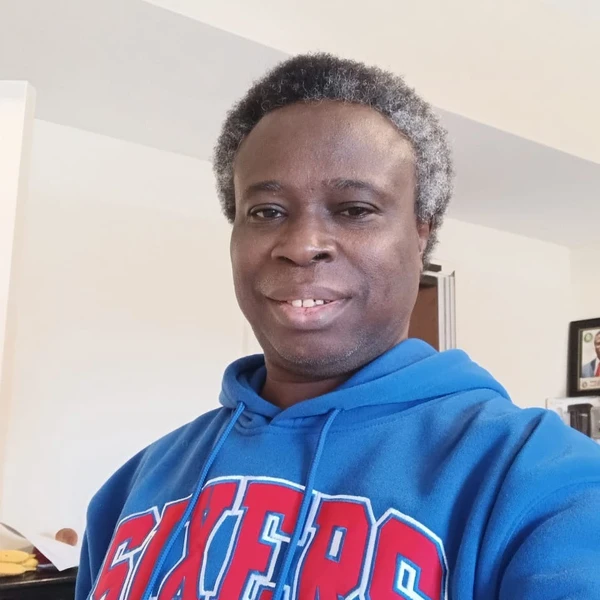
I am a theologian, pastor-in-training, and community leader shaped at the intersection of faith, education, and service. I am currently pursuing a Master of Divinity at Princeton Theological Seminary, building on a strong foundation of theological training, grassroots ministry, and sustained leadership. I previously served as Student Body President at the Nigerian Baptist Theological Seminary, where I led with integrity, strengthened student representation, and established initiatives that endured beyond my tenure.
My calling to Christian pastoral ministry is grounded in lived practice. I have served across children’s, youth, men’s, and family ministries, and I currently lead a Marriage and Parenting community of over 600 members, offering teaching, mentoring, and faith-centered support to families navigating real-life challenges. At Princeton, I continue this commitment through peer-led academic tutorials, participation in chapel life as a choir member, and cultivating supportive learning communities rooted in care and collaboration. My academic interests focus on theology, ethics, leadership, and public life, particularly how Christian thought can foster social healing, family formation, and moral leadership in African and global contexts. Having overcome early challenges with public expression, I have grown into a confident communicator and mentor. My long-term vision is to serve the church and society through pastoral leadership, theological education, and public engagement that restores dignity, strengthens families, and nurtures faith that transforms lives.
Education
Princeton Theological Seminary
Master's degree programMajors:
- Sociology and Anthropology
- Anthropology
- Theological and Ministerial Studies
- Theology and Religious Vocations, Other
Miscellaneous
Desired degree level:
Master's degree program
Graduate schools of interest:
Transfer schools of interest:
Majors of interest:
- Theology and Religious Vocations, Other
- Theological and Ministerial Studies
- Anthropology
- Pastoral Counseling and Specialized Ministries
- Student Counseling and Personnel Services
- Clinical, Counseling and Applied Psychology
Career
Dream career field:
Theology
Dream career goals:
Mentor
Baptist Student Fellowship1999 – 202425 yearsGeneral Secretary
Men Missionary Union2010 – 202010 yearsTeacher, writer, preacher, and counselor
Nigerian Baptist Convention1996 – Present30 years
Sports
Football
Intramural1990 – 19955 years
Tennis
Varsity2018 – Present8 years
Research
Theology and Religious Vocations, Other
Nigerian Baptist Convention — Facilitator, writers, and mentor2005 – Present
Arts
Baptist Student Fellowship
Music1997 – 2017The Nigerian Baptist Theological Seminary
Music2018 – 2022Princeton Theological Seminary
Music2025 – Present
Public services
Volunteering
Association of Bankers — President2015 – 2022Volunteering
YesweareWinning — Mentor2010 – PresentVolunteering
Marriage and Parenting — I served as the President, providing vision and strategic leadership, coordinating programs and facilitators, and overseeing teaching, mentoring, and community engagement for members.2012 – Present
New Beginnings Immigrant Scholarship
Crossing borders is more than a physical journey, it is a story of courage, hope, and the determination to build a meaningful future. My experience as an immigrant has taught me that pursuing education in a new country requires resilience, faith, and an unwavering commitment to one’s goals. Leaving the familiarity of home and stepping into a new cultural and academic environment meant learning to adapt quickly while holding firmly to the values that shaped me. Every step of this journey has reminded me that opportunity often comes with challenges, but those challenges also become the soil in which perseverance grows. As a first-generation student navigating life in a new country, I carry both the responsibility and the privilege of forging a path that many in my family did not have the chance to pursue.
Adapting to life in a new academic and social environment has required determination and humility. Moving to the United States meant adjusting to a different educational system, new expectations, and unfamiliar cultural rhythms. At times, the transition felt overwhelming; learning how to navigate institutions, build networks, and manage financial responsibilities without the guidance that many domestic students take for granted. Yet these experiences strengthened my resolve rather than discouraging me. Each challenge became an opportunity to grow in confidence and independence. Being a first-generation immigrant student has taught me to approach obstacles with creativity and persistence, trusting that perseverance can transform difficulty into progress. My immigrant experience has also shaped the direction of my career aspirations. I am currently pursuing graduate studies in theology, with a deep commitment to leadership, community development, and the strengthening of families through faith-based education. My academic journey is not only about personal advancement but about equipping myself to serve others more effectively. I hope to contribute to communities by teaching, mentoring young people, and developing programs that support ethical leadership, spiritual growth, and family stability. Growing up in a culture where faith and community are deeply interconnected has inspired me to pursue a career that bridges scholarship and service. My goal is to use education as a tool for empowerment, helping individuals and communities discover purpose, resilience, and hope.
Looking ahead, I envision a future where my education enables me to serve both immigrant communities and broader society through teaching, mentorship, and leadership development. I hope to work in spaces where faith, education, and community engagement intersect, helping others navigate challenges similar to those I have experienced. As an immigrant and first-generation graduate student, I face financial limitations that make pursuing higher education more difficult. This scholarship would significantly ease that burden and allow me to focus more fully on my studies and service initiatives. More importantly, it would affirm the belief that immigrant students, despite the obstacles they face, can contribute meaningfully to society when given the opportunity to pursue their dreams. My journey as an immigrant has taught me that perseverance, faith, and education together can transform not only individual lives but entire communities.
Pastor Thomas Rorie Jr. Christian Values Scholarship
Faith first reached me not as an abstract doctrine but as a living invitation that gradually shaped the direction of my life. I grew up in a Christian environment where prayer, Scripture, and church life were woven naturally into daily living. Yet my journey into Christianity was not merely the result of tradition or family influence. As I matured, I began to understand that faith required a personal response; a conscious decision to follow Christ. Through moments of reflection, teaching, and participation in church activities, I discovered that Christianity was not simply about attending services but about encountering God personally. In those moments, I sensed the Lord guiding my life and shaping my convictions. Like the life of Pastor Thomas Rorie Jr., whose faith was expressed through compassion and service, I came to see that genuine Christianity is revealed not only in belief but in the way one lives for others.
My journey with the Lord became clearer as I began to serve within the church community. From an early age, I became involved in children’s ministry and youth ministry, eventually serving as a Sunday school teacher and ministry volunteer. These opportunities allowed me to see faith in action and helped me realize that Christianity calls believers to participate actively in God’s work. Teaching younger members of the church, mentoring youth, and participating in outreach activities deepened my understanding of discipleship. Through these experiences, I realized that my faith was growing not just through learning but through service. Each act of ministry became a reminder that faith is strengthened when we extend God’s love to others. These early experiences planted within me a desire to continue serving the church and to help others discover the transformative power of the Christian faith.
My academic and professional aspirations are closely connected to this calling. I am currently pursuing advanced theological education with the goal of equipping myself for long-term service in Christian ministry, leadership, and education. My ambition is to contribute to the church by teaching, mentoring young believers, and developing programs that strengthen Christian families and communities. I believe that faith leaders today must be both spiritually grounded and intellectually prepared to address the moral, social, and spiritual challenges facing society. By studying Christian theology and ministry, I hope to build the knowledge and wisdom necessary to guide others toward meaningful faith and responsible leadership. Receiving this scholarship would support my academic journey by easing the financial burden of my studies and allowing me to devote greater focus to research, ministry development, and service initiatives that positively impact communities.
Looking ahead, my future plans involve continuing my theological studies while expanding my work in leadership development, family ministry, and Christian education. I am particularly passionate about helping young people and families cultivate strong spiritual foundations that can guide them through life’s challenges. Through teaching, mentorship, and community initiatives, I hope to create spaces where faith, learning, and service intersect in meaningful ways. This scholarship would not only assist me academically but would also strengthen my ability to pursue these long-term goals. By supporting my education, it would help equip me to serve the church and society with greater effectiveness, continuing the kind of faithful witness exemplified by leaders like Pastor Thomas Rorie Jr. Ultimately, my hope is to live a life where my faith in Christ becomes a source of encouragement, guidance, and transformation for others, helping them discover the same hope and purpose that I found in my journey with the Lord.
Michael Pride, Jr/ProjectEX Memorial Scholarship
Some people serve loudly through titles; others serve quietly through presence, and those are often the ones who save lives. Michael Pride, Jr. belonged to the latter. His life reminds me that true humanitarian work is not always found in grand gestures but in showing up, listening deeply, and refusing to turn people away in their most vulnerable moments. That understanding has shaped my own journey as a Black male committed to service in spaces where pain, silence, and unmet needs are common. From mentoring youth to supporting families under emotional strain, my life has been guided by a conviction that community care, especially for underserved Black people and youth, is not optional; it is necessary. Like Mike, I believe that being available, compassionate, and consistent can change the direction of a life.
My humanitarian service has centered on walking with people through difficult seasons rather than offering distant solutions. I currently engage in mentoring young men navigating academic pressure, identity struggles, and emotional distress, many of whom lack stable support systems. Through faith-based leadership, parenting and marriage initiatives, and informal counseling spaces, I have served as a listening ear and steady guide for individuals wrestling with anxiety, family instability, and self-doubt. I have also organized tutorials and support sessions for students preparing for major examinations, recognizing that academic stress often masks deeper emotional and psychological burdens. These acts of service are not episodic for me; they are woven into my daily life. I have learned that healing often begins when someone feels seen, heard, and believed in, especially in communities where Black men are rarely afforded that grace.
My decision to pursue advanced education in human-centered disciplines is a direct extension of this lived service. While compassion opens doors, education equips me to keep them open sustainably. Through formal training in behavioral science, human services, and pastoral counseling, I am gaining the tools to address trauma, mental health challenges, family breakdown, and substance-related struggles with ethical clarity and professional competence. My goal is to serve at the intersection of education, counseling, and community leadership, building programs that support emotional wellness, strengthen families, and create safe spaces for young Black men to process their experiences without stigma. Education allows me to transform informal care into structured impact, ensuring that the help I offer is both heartfelt and effective.
This scholarship represents more than just financial assistance; it embodies trust in the transformative power of community-centered leadership and the conviction that compassion, when harnessed effectively, can lead to lasting change. Michael Pride, Jr. gave his time, his presence, and his heart to others even while carrying his own burdens, embodying a quiet courage that continues to inspire my path. In that same spirit, I intend to use my education not merely for personal advancement but as a platform for service, advocacy, and healing within underserved communities. With this support, I can continue to show up where it matters most, walking alongside young people as they search for direction, helping families regain stability during times of strain, and creating safe spaces where hope can be restored. Honoring Mike’s legacy means committing to leadership rooted in empathy and action. I strive to be the kind of leader who listens before speaking, serves without condition, and refuses to turn away anyone who comes seeking help, dignity, or a second chance.
Bulkthreads.com's "Let's Aim Higher" Scholarship
I want to build a bridge, one that cannot be photographed or driven across, yet strong enough to carry people from where they are to where they never thought they could be. My vision is to build a community-rooted education and mentorship platform that helps young people, especially those from underrepresented and disadvantaged backgrounds, make informed decisions about education, careers, and life. This dream was born not from theory, but from lived experience: from watching talented students fall out of school because no one helped them see a way forward, and from standing beside families who wanted better futures but lacked guidance and access.
My background has shaped this vision deeply. Growing up and working within communities where educational pathways were often unclear or interrupted, I saw how intelligence alone was never enough. Students needed mentors who could interpret systems, advocate for second chances, and restore confidence after failure. I have already taken small but meaningful steps toward building this future by helping secondary school pupils who had dropped out return to school or transition into vocational training. Seeing these young people become graduates, skilled workers, and entrepreneurs convinced me that what communities lack is not potential, but structured support. What I want to build is an intentional system that multiplies these outcomes rather than leaving them to chance. This platform would operate at the intersection of education, family stability, and youth development. It would offer mentorship, academic guidance, career exploration, and values-based decision-making support for teenagers navigating critical transitions. It would also work with families, equipping parents to better support their children’s educational journeys. Education, I have learned, is rarely an individual pursuit; it is communal. By building relationships; between students and mentors, families and institutions, dreams and practical steps; I hope to create a sustainable model that transforms uncertainty into direction.
Pursuing higher education is central to this vision because it equips me with the intellectual rigor, leadership training, and ethical grounding necessary to build something that lasts. My studies are not an escape from my community; they are preparation to serve it more effectively. This scholarship would ease the financial burden that often competes with my ability to focus fully on learning and leadership development. In return, it would accelerate the construction of a future where more young people stay in school, make informed choices, and contribute meaningfully to society. Thus, what I hope to build is not just a program, but a legacy of access, clarity, and second chances. By investing in my education, this scholarship would help turn a personal vision into a communal reality, one bridge at a time.
Second Chance Scholarship
Change, for me, did not begin as a grand decision but as a quiet refusal to let adversity have the final word. I grew up in environments where limitations: financial strain, disrupted educational pathways, and social expectations; often defined how far people were allowed to dream. At several points in my life, I stood at crossroads shaped by failure, fear, and fatigue, tempted to accept survival as success. Yet something deeper kept stirring within me: the conviction that my story was not meant to end where it became difficult. I wanted change not because my past lacked value, but because I believed it could become the foundation for a more purposeful future. Like Nelson Vecchione, I came to understand that second chances are not indulgences; they are investments in human potential.
Taking responsibility for change required deliberate, often uncomfortable steps. I returned to education with renewed discipline, pursuing learning not merely as a credential but as a tool for transformation. I sought mentors, submitted myself to accountability, and embraced leadership roles that stretched my confidence and exposed my weaknesses. Beyond my personal growth, I committed myself to service, especially among young people and individuals’ society had quietly written off. I worked with secondary school students who had dropped out due to poverty, academic setbacks, or family instability, helping reintegrate some into formal education while guiding others toward vocational skills that restored dignity and direction. These actions were not symbolic; they were costly in time, energy, and persistence, but they moved me closer to the kind of person I aspired to become.
This scholarship would not simply ease a financial burden; it would strengthen the momentum of a life already in motion. Financial constraints remain one of the most persistent barriers in my journey, often forcing difficult choices between academic focus and basic sustainability. Support through the Second Chance Scholarship would allow me to devote fuller attention to my studies, deepen my leadership training, and expand my service initiatives without constant financial strain. More importantly, it would affirm the belief that perseverance is seen and supported, reinforcing my resolve to keep choosing growth over resignation. In many ways, this scholarship represents what Nelson embodied; trusting someone enough to believe that their next chapter can be better than their last.
Paying this opportunity forward is not an abstract promise; it is a continuation of what I already practice. I plan to keep mentoring young people navigating academic failure, legal limitations, or disrupted life paths, offering them not only advice but access: access to education, skills, and second chances. My long-term vision is to build structured mentorship and reintegration programs that help individuals reclaim purpose and contribute to their communities. If given this chance, I intend to multiply it, ensuring that one act of belief becomes a chain of renewed lives. Just as Nelson understood, second chances do not end with one person; they grow when someone chooses to pass them on.
Priscilla Shireen Luke Scholarship
In my opinion service, has never been a résumé line or a seasonal activity; it has been the quiet responsibility of noticing who is being left behind and choosing not to walk past them. Long before I understood leadership in formal terms, I learned it in streets and classrooms where opportunity was uneven and hope fragile. Giving back became my way of answering the question of purpose, why I was learning, leading, and striving at all. I discovered early that the most meaningful service does not begin with abundance, but with availability: the willingness to show up, to listen, and to act even when resources are limited and outcomes uncertain.
My commitment to service took concrete form when I began working with secondary school pupils who had dropped out due to poverty, family instability, or repeated academic failure. Many of these young people had been quietly written off by the system, labeled as distractions rather than potential. I refused that conclusion. Working with local educators, parents, and community leaders, I helped reintegrate several of them back into formal secondary education, advocating for second chances and providing academic support and mentorship. For those unable to return to traditional schooling, I coordinated access to vocational training, helping them learn practical skills that restored dignity and direction. Today, many of those once-forgotten pupils are graduates, skilled workers, and small business owners. Their success remains one of the clearest confirmations of why service must always be personal. Apart from this initiative, my service has expanded into broader community and faith-based engagement. I have consistently volunteered in youth mentorship, family-focused programs, and non-profit initiatives aimed at strengthening relationships and guiding young people through critical life decisions. Whether organizing tutorials for students preparing for exams, counseling young adults navigating career uncertainty, or supporting families through educational and emotional challenges, I see service as a long-term investment rather than a one-time intervention. Each act of service has sharpened my empathy and reinforced my belief that sustainable change happens when people are empowered, not merely assisted.
As I pay attention to the future, my ambition is to scale this commitment to service through education, leadership, and structured community development. I plan to continue working at the intersection of education, family stability, and youth development, creating programs that help teenagers make informed decisions about schooling, careers, and values. I am particularly passionate about preventive mentorship; intervening early enough to keep young people from disengaging before they fall through the cracks. By combining academic training with grassroots service, I aim to design initiatives that are both intellectually sound and socially grounded.
In honoring the legacy of Priscilla Shireen Luke, whose life reflected selflessness and hope, I am reminded that service is not measured by visibility but by impact. My goal is not simply to help individuals succeed, but to build systems of support that outlast my direct involvement. I want my education and experiences to multiply opportunity for others, ensuring that those who come after me inherit not just success stories, but stronger communities. Giving back is not something I plan to do someday; it is the work I am already doing, and the future I am committed to expanding.
Edwards Scholarship
The first time I realized that education could redraw the map of my life was not in a classroom, but in the quiet resolve of choosing to dream beyond my circumstances. I am an international, first-generation college student whose journey to the United States was shaped by equal parts faith, persistence, and necessity. Coming from Nigeria, where access to opportunity is often uneven and success is rarely linear, I learned early that ambition without endurance fades quickly. I arrived in the U.S. not merely to earn a degree, but to grow into the kind of leader who understands that education is most powerful when it is used in service of others. That conviction continues to guide every academic and personal decision I make.
My background is rooted in community, responsibility, and early leadership, long before I ever crossed borders. As the first in my family to pursue higher education abroad, I carried the weight of expectation alongside the uncertainty of unfamiliar systems, cultures, and academic norms. Navigating a new country while balancing financial pressure, immigration constraints, and rigorous academic demands required more than intelligence; it demanded resilience. I worked through moments of isolation, cultural adjustment, and self-doubt, often while serving in leadership roles and supporting others who were struggling in similar ways. Each challenge refined my sense of purpose, reminding me that progress is rarely solitary and that perseverance is most meaningful when it uplifts more than one life. Aside from the visible challenges of finances and transition, I also confronted quieter obstacles that shaped my growth. Public expression in a second language once intimidated me, especially in academic and leadership spaces where confidence often appears synonymous with fluency. Rather than retreat, I chose deliberate growth, seeking mentorship, practicing relentlessly, and placing myself in spaces that stretched me. Over time, fear gave way to clarity, and hesitation transformed into confidence rooted in preparation. These experiences taught me that obstacles are not barriers; they are invitations to develop character, discipline, and empathy. Today, those lessons allow me to relate deeply to students and young people who feel unseen or uncertain about their potential.
My academic pursuits in the United States are intentionally aligned with service to families, communities, and teenagers navigating critical life decisions. I am particularly committed to supporting young people as they discern education, career paths, and values in a world crowded with conflicting voices. Through teaching, mentoring, and community engagement, I aim to help teenagers make informed decisions rooted in purpose rather than pressure. I also remain deeply invested in strengthening families, recognizing that stable homes are foundational to healthy societies. My studies equip me with the intellectual tools, ethical grounding, and cross-cultural perspective necessary to address these interconnected needs both locally and globally.
Thus, my goal is to use my education as a bridge between knowledge and impact, theory and lived experience. The legacy this scholarship honors, one of global engagement and positive contribution; resonates directly with my journey. As an international student shaped by challenge and sustained by vision, I see education not as a personal achievement but as a shared resource. Through my studies in the United States, I plan to continue building pathways of hope: for families seeking stability, for communities longing for leadership, and for teenagers searching for direction. My ambition is not only to succeed, but to ensure that my success becomes a catalyst for others.
Nabi Nicole Grant Memorial Scholarship
Fear did not announce itself loudly in my life; it crept in quietly and learned to live in my voice. For years, I carried a deep anxiety about speaking publicly in English, not because I lacked ideas or conviction, but because I was terrified of making mistakes. I knew the weight of words, especially in spaces of faith, and I feared that an accent, a misplaced phrase, or a grammatical slip would reduce the truth I carried inside me. This fear followed me into classrooms, church halls, and leadership spaces, gradually shaping what I avoided rather than what I pursued. Though I felt called to teach and encourage others, I often stood at the edge of opportunity, convincing myself that silence was safer than vulnerability. Yet inwardly, I wrestled with a painful contradiction: how could I claim faith in God’s calling while allowing fear to dictate my obedience?
In fact, that contradiction came to a head one Sunday (March 21, 1999) morning when I was unexpectedly asked to give a short exhortation during a church service. As I stood before the congregation, my heart pounded, my palms sweated, and the familiar fear tightened its grip. I knew the scripture well; I had studied it carefully and lived it personally. Still, when I opened my mouth, doubt flooded my mind. In that moment, retreat felt easier than faith. I whispered a prayer; not polished or eloquent, but desperate and sincere; asking God to speak through my weakness and have mercy on me. I remembered biblical figures who felt inadequate yet were chosen nonetheless, and I realized that God had never demanded perfection before obedience. I spoke haltingly, aware of every stumble, yet determined not to stop. When the service ended, a young person approached me and shared that my words had spoken directly to their struggle. That single affirmation shattered my long-held belief that effectiveness required flawlessness.
From that experience onward, faith became my active response to fear rather than a passive belief I admired from a distance. I began volunteering to teach, lead discussions, and speak in settings that once terrified me, even when my confidence lagged behind my commitment. Each step felt uncomfortable, but faith reframed discomfort as growth rather than failure. I practiced diligently, prayed consistently, and allowed grace to meet me where skill fell short. Over time, my fear did not vanish, but it lost its authority. Financial hardship, academic pressure, and the complexities of navigating life as an underrepresented minority often compounded my challenges, yet faith grounded me when resources were limited and outcomes uncertain. I learned that faith is not proven by ease, but by persistence when the path forward feels fragile.
In retrospect, I now see that faith did more than help me overcome a single obstacle; it reshaped how I understand ambition, calling, and service. Faith taught me that my voice; imperfect as it is; can still be a vessel of hope, especially for those who feel unseen or uncertain. In honoring the legacy of Nabi Nicole, whose life reflected a commitment to faith and community, I am reminded that true impact flows from obedience rooted in trust. My journey continues, but I no longer measure success by fearlessness. Instead, I measure it by faithfulness, by choosing courage over comfort and trust over silence, even when my hands still tremble.
American Dream Scholarship
I learned early that dreams do not always come with documents. Sometimes, they arrive as questions: Can you belong without permission? Can you build without guarantees? Can you serve without recognition? For undocumented and non-citizen students like me, the American dream is not a promise written in law; it is a commitment written in courage.
The popular image of the American dream often centers on comfort, stability, and arrival. But my experience has taught me a different definition. The American dream is the freedom to pursue purpose even when the path is uncertain. It is the determination to grow intellectually and serve sacrificially while carrying invisible barriers that others do not have to explain. It is choosing excellence in classrooms and compassion in communities, even when the future feels conditional. Living as a non-citizen sharpens your awareness of how fragile opportunity can be. You learn to work twice as hard for doors that may never fully open. You learn to plan carefully, speak thoughtfully, and serve consistently, because service becomes a language of belonging. Through community volunteering, tutoring younger students, mentoring families navigating educational systems, and supporting faith-based and civic initiatives, I discovered something powerful: contribution often precedes acceptance. Long before papers validate your presence, your impact already does.
In my opinion, education is an act of struggle against limitations rather than just obtaining a degree. I refuse to let status dictate my ability in any subject I take. Every assignment is a declaration that learning should never be limited by one's place of origin. In addition to advancing myself, my goal in going to college is to increase knowledge in the communities where I was reared and now work. An entire network benefits when one undocumented student gains empowerment, including siblings, neighbors, students, and families who witness the results of tenacity. The American dream, as I understand it, is directly related to communal. It is not about climbing alone, but about lifting others as you rise. It is the belief that a society thrives when people on the margins are given the tools to lead, heal, and innovate. My volunteer work has taught me that hope becomes real when it is practiced; when tutoring turns into confidence, mentorship into direction, and service into shared dignity. For undocumented students, dreaming is an act of endurance. It means waking up each day aware of legal uncertainty, yet refusing to surrender vision. It means preparing for a future that may not be clearly defined, but still choosing to build one rooted in service, integrity, and excellence. The American dream is not ease; it is resilience with purpose. Thus, it is essential to have American dream without sleeping
This scholarship represents more than financial assistance, it is recognition. It is a recognition that undocumented students are not waiting to become valuable: we already are. We are builders in progress, servants in motion, and dreamers in action. Therefore, the American dream lives wherever education meets service, where courage outpaces fear, and where hope insists on moving forward; even without guarantees.
Debra S. Jackson New Horizons Scholarship
It takes quiet bravery to start over, not because one has failed but because one has survived. I did not go back to school because I did not know what I wanted to do; rather, I went back because life helped me figure it out. Like Debra S. Jackson, I decided to pursue further education at this point in my life after years of employment, responsibility, and service, as well as a growing realisation that the influence I was called to make may be limited by experience alone without fresh learning.
Long service and early responsibilities have molded my path. In fact, before I had official credentials, I led people in community, educational, and religious settings, worked in tough conditions, and carried the burden of leadership. Along the way, necessity rather than theory taught me resilience. I gained integrity by being accountable to those who relied on me. Serving in environments where hope was tenuous but vital, families navigating changes, youth looking for guidance, and adults silently yearning for second chances, also taught me the importance of community. Rather than being abandoned, education felt delayed for many years. Life required action before articulation, and productivity before introspection. But like Debra, I eventually realized that going back to school was an act of faith rather than a retreat. My education served as a link between my past experiences and my future potential. Later in life, I entered the classroom with stories, scars, and wisdom shaped by service in addition to discipline and attention. These experiences have formed my values. I believe in dignity earned through perseverance, leadership grounded in humility, and education as a public good rather than a private achievement. My career aspirations now center on strengthening communities through informed leadership, particularly in spaces that support families, adult learners, faith communities, and underserved populations. I am committed to mentoring others who believe it may be “too late” to begin again, because I know firsthand that purpose matures, not diminishes, with time.
My education equips me to translate compassion into competence and conviction into sustainable impact. Through my studies, I am developing the analytical tools, ethical frameworks, and institutional knowledge necessary to advocate effectively, lead responsibly, and serve with depth. I intend to use this training to build programs, mentor emerging leaders, and contribute to educational, faith-based, and community initiatives that restore hope and agency. The Debra S. Jackson Legacy Scholarship represents more than financial support, it represents recognition. Adult learners often carry invisible burdens: tuition alongside family obligations, academic excellence alongside economic pressure. This scholarship would ease that weight and affirm that journeys like mine, and Debra’s; are worthy of investment.
Debra S. Jackson’s life is a testament that education does not merely change careers; it awakens purpose and multiplies impact. Her return to learning was not a retreat from responsibility, but a courageous re-engagement with possibility. In honoring her legacy, I commit to using my education not as a finish line to cross, but as a force that carries me outward: into service, mentorship, and positive contribution. I seek to translate knowledge into compassion, experience into wisdom, and opportunity into access for others. My journey stands as living proof that second chances, when embraced with courage, discipline, and hope, do not simply transform individual lives; they renew families, strengthen communities, and leave a legacy that endures beyond oneself.