Hobbies and interests
Anime
Exercise And Fitness
Reading
Writing
Hair Styling
Reading
Academic
Self-Help
Young Adult
Business
Contemporary
Cultural
Speculative Fiction
I read books multiple times per week
Adeola Adeyemo
1x
FinalistAdeola Adeyemo
1x
FinalistBio
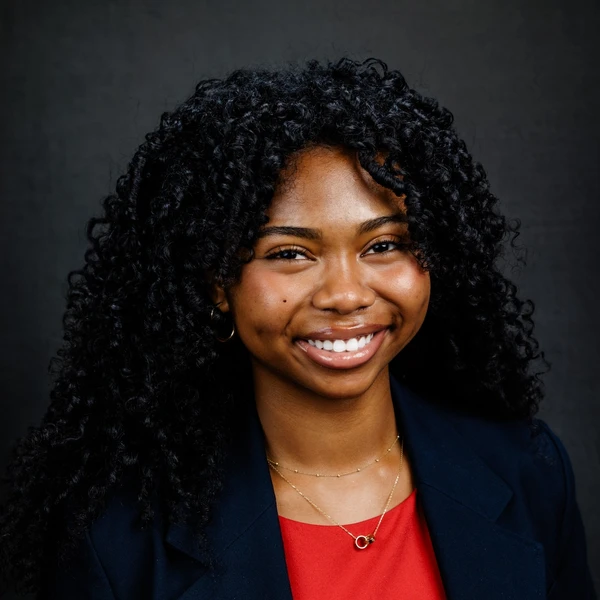
Hi! I'm Adeola, a senior from Tampa, FL. I have strong interests in business and computer science, hence I'm constantly learning and creating! Throughout high school, I've been strongly involved in service, DECA and a thorough pursuit of knowledge.
Outside of school you'll find me hitting the gym or watching a lot of anime :)
Education
Armwood High School
High SchoolMiscellaneous
Desired degree level:
Bachelor's degree program
Majors of interest:
- Business/Managerial Economics
- Accounting and Computer Science
Career
Dream career field:
Financial Services
Dream career goals:
Office Assistant
Optimum Staffing2022 – 20231 yearCar Salesman/Bookeeper
Fast and Friendly Motors2021 – 20232 yearsAccounting Technician
Dollar and Sense Mike Akwue CPA2023 – Present3 years
Sports
Volleyball
Varsity2022 – 20253 years
Awards
- Most Valuable Player
- Coach's Award
Public services
Volunteering
TalaNgAklat 501c-3 — Founder2022 – Present
Mark Caldwell Memorial STEM/STEAM Scholarship
When people ask how I became so organized, so disciplined, so comfortable managing fifteen things at once, I never know how to give a short answer. The real answer is that for most of high school, I was running a household.
During COVID-19, my mother became a travel nurse. After the pandemic, she kept going, taking assignments across state lines as far as Wisconsin. She came home once a month. My father was present but working, which meant that the domestic weight of our home fell on someone. Due to cultural expectations rooted in our Nigerian-Filipino background, that someone was me, not my older brother. I was the one cooking, cleaning, paying bills, managing appointments, and handling everything else that keeps a household from falling apart.
I was also the one raising my sister.
Every weekday, I drove her to school before going to my own. Her school is fifteen miles from mine, and depending on traffic, that is anywhere from twenty-five to forty minutes one way. I handled her school communications, her transportation, her appointments, everything. On top of that, I was spending at least an hour every weekday and three hours every weekend on household responsibilities, not counting the driving. I want to be clear: I was never without. My parents provided financially. But I had stepped fully into the maternal role for my sister, myself, and our home, and I did it without being asked and without complaining, because that is what the moment required.
The strategy was simple and brutal: prioritize ruthlessly and do not stop moving. I built routines so tight they became automatic. Dinner was handled before I opened a textbook. Bills were tracked in a spreadsheet I maintained myself. My sister's schedule lived in my phone like a second job. I learned to do homework in parking lots while waiting for her, to study in windows between responsibilities, to sleep less and plan better.
What I did not expect was how much it would sharpen me. I became a better leader because I understood what it meant to be responsible for people who were counting on you. I became a better student because every hour I had was one I had earned. I became a better version of myself because I had no other option.
I will be the first in my family to attend college in the United States. My mother crossed state lines every month to make sure I could get here. The least I could do was hold everything together while she did. In college, I am not just bringing my GPA or my resume. I am bringing four years of knowing exactly what I am capable of when things get hard.
It turns out the answer is: a lot.
Reach Higher Scholarship
I did not grow up with a roadmap. My parents immigrated from Nigeria and the Philippines, built a pharmacy and a car dealership from scratch, and raised me to understand one thing above everything else: you do not wait for someone to hand you what you need. You build it.
That lesson became very real when I tried to start TalaNgAklat.
I was a sophomore when I visited the Philippines and met a student named Ramil, who walked miles to a school with almost no resources. No books. Just kids determined to learn anyway. I came home and decided to fix that, at least in whatever small way I could. I registered a 501(c)(3), built a collection model, and started asking for book donations. The response was immediate: silence. Zero books. Zero donors. Zero traction. Nobody knew who I was, nobody trusted a fifteen-year-old with a nonprofit, and I had no idea what I was doing.
I could have stopped there. Instead I went back to what I watched my parents do my entire life: I showed up anyway and figured it out one step at a time. I started small, showing up in person, talking to local libraries, reaching out to schools directly. I learned that people do not donate to causes, they donate to people they believe in. So I stopped leading with the mission statement and started leading with Ramil's story. It worked. Slowly, then all at once. TalaNgAklat has now collected over 15,000 books for underprivileged schools in the Philippines, and received recognition from the Filipino House of Representatives.
The failure taught me more than the success did. It taught me that starting from zero is not a disadvantage if you are willing to stay in the room long enough to learn the game. First generation students know this intimately. We do not inherit networks or generational wealth or insider knowledge about how institutions work. We build our understanding in real time, with fewer safety nets, which means every mistake lands harder but every lesson sticks deeper.
That experience shaped everything that came after. It shaped how I lead in DECA, where I now serve as Executive President of Florida DECA and have learned to build systems that outlast any single person. It shaped how I think about my future in college, where I plan to study at the intersection of technology and finance so I can build tools that actually reach communities like the ones my parents came from. Small business owners who cannot access capital. Students who cannot access books. People who are capable of everything but have been dealt a starting hand with nothing in it.
I am first generation in every sense of the word. No blueprint, no guarantee, no head start. Just the same thing my parents had when they got here: the belief that zero is just a starting point.
Goobie-Ramlal Education Scholarship
I grew up in the in-between. Not quite American enough for some, not quite Nigerian or Filipino enough for others. My parents immigrated here with two things: work ethic and a refusal to wait for someone else to build what they needed. A pharmacist from Nigeria and a Nurse from the Philippines they built their business from scratch. I was nine the first time I helped out at the counter, and I never really stopped.
That upbringing taught me something that no classroom has since replicated: resources are not evenly distributed, and the people who understand that firsthand are the ones best positioned to change it. When my family visited the Philippines, I met a boy named Ramil who walked miles to a school with almost nothing in it. No books. No supplies. Just kids who wanted to learn badly enough to show up anyway. I went home and started TalaNgAklat, a 501(c)(3) nonprofit that has since collected over 15,000 books for underprivileged schools in the Philippines. The Filipino House of Representatives recognized it. But honestly, what I think about most is Ramil, and how many Ramils there still are.
Being the eldest daughter in an immigrant entrepreneurial family means you learn early that systems were not built with you in mind. My parents could not always access the financing, the networks, or the institutional trust that their non-immigrant counterparts took for granted. I watched them figure it out anyway. But I also watched what it cost them. The hours, the uncertainty, and the moments where one bad loan term or one denied application could have unraveled everything they built.
That is where my drive comes from. I want to work at the intersection of finance, technology, and community impact because I have seen firsthand what financial exclusion looks like in practice, not as an abstraction in a textbook. Through DECA, I competed in Business Finance, analyzed real bond deals, and learned the mechanics of how capital moves. Through Morgan Stanley's Finance Academy, I started learning who it moves toward and why. In college, is where I plan to dig deeper into the systems side of that question.
My goal is not just to enter the finance industry. It is to understand it well enough to redesign parts of it. To build the kind of fintech tools that actually reach small business owners like my parents, that fund schools like the ones I visited in the Philippines, that treat underserved communities as markets worth investing in rather than risks to be avoided. Education access, financial inclusion, and community entrepreneurship are not separate causes to me. They are the same cause, viewed from different angles.
I am college-bound because my parents made a life here out of sheer will, and because a boy named Ramil made me realize that access to opportunity is never a given. I plan to spend my career making it less of a lottery.
Rev. Ethel K. Grinkley Memorial Scholarship
I grew up working in my family's business, watching my parents sacrifice everything to build opportunities for our family. That foundation taught me that faith isn't just about belief. It's about action and recognizing that the blessings I have aren't just for me. They're tools to serve others.
On a family trip to the Philippines when I was fourteen, I visited my cousin's school in Davao. The building had cracked walls, no air conditioning, no bathrooms, and no cafeteria. But I'd never seen students so genuinely excited to learn. They crowded around books, sharing them because there weren't enough to go around. That's when I met Ramil.
When I gave Ramil the books I'd brought with me, his gratitude for something I'd taken for granted my entire life shook me. I thought about my bookshelf back home, packed with books I'd read once and forgotten about, and I felt ashamed. That moment redefined what love and service meant to me. Love isn't just about feeling compassion. It's about using your resources to create opportunities for others.
I founded TalaNgAklat, a nonprofit focused on improving literacy in underprivileged schools and orphanages in the Philippines. The name combines Tagalog words meaning "star" and "book" because I wanted these students to know that education could guide them anywhere. Starting the nonprofit as a sophomore in high school with no credibility tested my faith. Thirty emails and a dozen phone calls later, the book count was still at zero. But I kept going because this mission was bigger than me.
I changed my approach. Instead of emails, I started showing up in person. I spoke to librarians, teachers, community organizations, and local businesses. I shared photos from my trip and told Ramil's story. Books started coming in. Churches and schools became collection sites and I even got invited to speak at the University of South Florida.
To date, TalaNgAklat has collected over 15,000 books for 500+ children across 4 schools in the Philippines. The Filipino House of Representatives recognized our work and I got to collaborate with Congresswoman Maricar Zamora. But what makes this meaningful isn't the accolades. It's understanding what literacy actually means to these students. I've personally spoken to students who got jobs because they could read English and fed their families because of it. One student told me she could now help her younger siblings with homework. Another got a job that lifted his entire family out of poverty.
This experience taught me that faith and service aren't separate from each other. My faith drives me to recognize that God has given me privilege and resources for a reason. My responsibility is to use them to serve others. Community service isn't about charity or feeling good about helping people. It's about recognizing that my blessings are opportunities to create change.
Through TalaNgAklat, I've learned that love in action means showing up even when it's hard, even when thirty emails go unanswered, even when the work feels impossible. It means building systems that empower people rather than just offering temporary help. That's the kind of impact I want to create for the rest of my life. Not just solving problems for one person but building frameworks that enable thousands of people to solve their own problems. That's what love, faith, and community service look like to me.
Abigail O. Adewunmi Memorial Scholarship
As a first-generation Nigerian American, I've spent my entire life navigating two worlds. My parents immigrated to the United States with nothing, and built lives from the ground up, working tirelessly to provide opportunities they never had. That foundation shaped everything about how I see education, community, and responsibility.
In college, my goal is to study finance and technology so I can build automation solutions that give small businesses access to tools that Fortune 500 companies take for granted. I've watched my parents as small-business owners struggle with outdated systems and expensive software they can't afford. I became the first high school student to earn UiPath Student Champion status because I'm obsessed with solving that problem. In college, I want to develop the technical skills to build scalable solutions and the financial expertise to understand how businesses actually operate.
Post-graduation, I plan to launch my own company serving underserved markets. Specifically, I want to create affordable, plug-and-play automation packages designed for small businesses that don't require IT departments or technical expertise. This isn't just about efficiency. It's about leveling the playing field for entrepreneurs who look like my parents, who work 80-hour weeks and deserve the same advantages that larger corporations have.
My community service background centers on TalaNgAklat, an international nonprofit I founded to improve literacy in underprivileged schools in the Philippines. On a family trip to the Philippines, I met a student named Ramil at a school with cracked walls, no bathrooms, no cafeteria. But I'd never seen students so excited to learn. They crowded around books, sharing them because there weren't enough to go around. When I gave Ramil my books, his gratitude shook me. I thought about my bookshelf back home and felt ashamed.
I founded TalaNgAklat because students like Ramil deserved access to the same resources I'd taken for granted my entire life. Starting the nonprofit as a sophomore was hard. Thirty emails and a dozen phone calls later, the book count was still at zero. But I kept going. I showed up in person at libraries and community organizations, shared photos, and told Ramil's story. Books started coming in.
To date, TalaNgAklat has collected over 15,000 books for 500+ children across 4 schools in the Philippines. The Filipino House of Representatives recognized our work. But what makes this meaningful is understanding what literacy means to these students. I've spoken to students who got jobs because they could read English and fed their families because of it.
In college, I plan to expand TalaNgAklat to serve 10,000 students across 20 schools. I want to shift from English Literacy to Digital Literacy helping to bridge the digital divide.
Being first-generation means I understand what it's like to navigate systems that weren't built for people who look like me. My community service work reflects that understanding. Whether I'm collecting books for students in the Philippines or building automation tools for small business owners, I'm committed to using my privilege and education to create opportunities for others.
Clayton James Miller Scholarship
I've been a reader my entire life. Not the kind who casually picks up books, but the kind who consumes them. I've had seven diaries dating back to fifth grade filled with reflections on everything I've read, characters I've connected with, and lessons I've pulled from stories. Reading was my escape, my education outside the classroom, and eventually, my catalyst for creating real change.
On a family trip to the Philippines when I was fourteen, I visited my cousin's school in Davao. The building had cracked walls, no air conditioning in sweltering heat, no bathrooms, and no cafeteria. But what struck me most wasn't the infrastructure. It was watching students crowd around books, sharing them because there weren't enough to go around. That's when I met Ramil.
Ramil showed me around the school, and when I asked about a library, he looked confused. They didn't have any. I thought about my bookshelf back home, packed with books I'd read once and moved on from. Books I took completely for granted. Here was a student who valued education so deeply he'd walk hours just for the chance to learn, and he didn't have access to the one thing that had shaped my entire childhood.
So I gave him every book I'd brought with me Reading had always been personal, something I did for myself. But in that moment, I realized books weren't just about my own growth. They were tools that could change someone else's entire trajectory.
I founded TalaNgAklat when I got home. The name combines Tagalog words meaning "star" and "book" because I wanted students like Ramil to know that education could guide them anywhere. Starting a nonprofit as a sophomore in high school with zero credibility was harder than I anticipated. Thirty emails and a dozen phone calls later, the book count was still at zero. But I kept going because this wasn't about me anymore. It was about students who deserved the same access to knowledge that reading had given me.
I changed my approach. Instead of emails, I started showing up in person at libraries, schools, and community organizations. I shared photos from my trip and told Ramil's story. Books started coming in. To date, TalaNgAklat has collected over 15,000 books for 500+ children across 4 schools in the Philippines. The Filipino House of Representatives recognized our work.
But what makes this meaningful isn't the accolades. It's understanding what literacy actually means to these students. I've personally spoken to students who got jobs because they could read English and fed their families because of it. One student told me she could now help her younger siblings with homework. Another got a job that lifted his entire family out of poverty.
Reading taught me empathy, critical thinking, and how to see the world beyond my own experience. TalaNgAklat taught me how to turn that understanding into action. My passion for books didn't just shape who I am. It showed me that the things we love can become the tools we use to serve others. That's the kind of leadership I want to build for the rest of my life.
Route Tree Performance Higher Education Scholarship
I train five days a week outside of school to stay in peak condition for volleyball. My training routine combines strength training, conditioning, and position-specific drills that I've built around my schedule as a setter and right side hitter. Since balancing athletics with leading Florida DECA's 18,000 members, running my nonprofit, AP courses, and work requires intense discipline, I've learned to maximize every workout session.
Beyond physical training, volleyball at Florida Elite Volleyball Academy (FEVA) under Coach Fernando taught me lessons that extend far beyond the court. The biggest lesson I learned was that consistency builds trust. When I set the ball, my teammates have to trust I'll put it exactly where they need it. When I call plays under pressure, they have to trust my judgment. That trust only comes from proving yourself over and over again.
Volleyball also taught me how to maintain unwavering energy regardless of the score. Whether we're winning or losing, I keep the same intensity, the same encouragement for my teammates, the same commitment to execution. That consistency is rare, and it's translated directly into my leadership style. Whether conference plans upturned or assocation emergencies volleyball has taught me to stay composed, rally my team, and refused to let negative energy derail us.
I've applied to the University of Pennsylvania's Jerome Fisher Program in Management & Technology (M&T), which is my top choice. M&T allows students to pursue dual degrees in engineering and business simultaneously, which perfectly aligns with my goal of building automation solutions for small businesses. The program's focus on the intersection of technology and entrepreneurship is exactly what I need to develop the technical skills and business acumen to create scalable financial technology solutions.
While I don't plan to play varsity volleyball in college given M&T's rigorous demands, I'll continue training and playing recreationally. Volleyball is where I learned that leadership means showing up consistently, staying composed under pressure, and making everyone around you better. Those lessons will serve me far beyond any court.
Learner Math Lover Scholarship
I love math because it's the only language that doesn't lie. In a world where everything feels subjective and negotiable, math gives you absolute truth. Two plus two is always four, no matter where you are or what you believe.
My relationship with math became unshakeable my junior year when my calculus teacher left one quarter into the school year. Most students would have seen that as a setback, maybe even an excuse to give up. But I couldn't walk away from math. Instead, I doubled down. I enrolled in AP Statistics, AP Computer Science A, and AP Calculus BC all online, teaching myself the concepts that would have been handed to me in a traditional classroom. That experience taught me that loving math isn't about having the perfect teacher or ideal circumstances. It's about recognizing that mathematical thinking is a superpower you can develop independently.
As Executive President of Florida DECA managing over 18,000 members, I use math constantly. Budget allocations, event logistics, membership projections. But math became even more powerful when I combined it with technology. As the first high school student to become a UiPath Student Champion, I write automation code that solves real business problems for my family's pharmacy and car dealership. Every algorithm I build, every function I optimize, is applied mathematics making tangible impact.
Math also drives my nonprofit work. When I founded TalaNgAklat and started tracking our book collection efforts, I learned that data tells stories. Those 15,000 books we've collected aren't just numbers. They represent calculated outreach strategies, optimized distribution channels, and measurable impact on educational equity in the Philippines.
What I love most about math is its democracy. It doesn't care about your background, your zip code, or whether your teacher stayed the whole year. If you can think logically and solve problems systematically, math welcomes you. It gave a girl from a Title I school the tools to build businesses, lead thousands of students, and create international impact. Math didn't just teach me to solve equations. It taught me that every problem has a solution if you're willing to work through it step by step.
Redefining Victory Scholarship
Resilient Scholar Award
Growing up in a single-parent household taught me that strength isn't always loud or obvious. It's in the quiet moments when my mom chose to work double shifts so I could focus on school, or when she turned our tiny apartment into a space where dreams felt possible despite our circumstances.
My relationship with work started early, at nine years old, standing behind the counter of our family pharmacy. Back then, I resented it. I wrote resignation letters citing Florida labor statutes, convinced I was being cheated out of a normal childhood. I didn't understand why I had to be there while other kids played outside. But my mom, managing everything alone, needed the help. Our pharmacy and later our car dealership weren't just businesses. They were our lifeline.
The realization that changed everything came during a family trip to the Philippines when I was twelve. We visited a small school where I met a boy named Ramil. He showed me his classroom's "library," a single cardboard box with maybe twenty torn, outdated books shared among hundreds of students. He was so proud of it, so grateful for what little he had. I thought about my own complaints, about how I'd resented helping at the pharmacy while having access to resources Ramil could only dream of.
That moment cracked something open in me. I came home and couldn't stop thinking about those empty shelves. Within months, I founded TalaNgAklat, a nonprofit focused on collecting books for schools and orphanages in the Philippines. Starting with bake sales and donation drives in my community, we've now collected over 15,000 books. The Filipino House of Representatives recognized our work, but the real reward is knowing kids like Ramil have access to stories and knowledge that can change their trajectories.
This journey also transformed how I saw my own circumstances. My mom's sacrifices weren't holding me back. They were showing me what real determination looks like. Those early mornings at the pharmacy taught me accounting, customer service, and problem-solving. Working at our car dealership taught me negotiation and sales. Instead of a burden, these became the foundation of who I am today.
Now, as Executive President of Florida DECA managing over 18,000 student members, I lead with the understanding that everyone's fighting battles others can't see. When I work with students from Title I schools like mine, I recognize their potential isn't limited by their zip code or family structure. When I develop automation solutions or organize statewide conferences, I'm using skills I gained from necessity, not privilege.
My mom showed me that single-parent households don't create limitations. They create resilience. She taught me that when life gives you less, you don't shrink to fit those circumstances. You expand beyond them. That expansion led me from resenting work at nine to building an international nonprofit, from writing resignation letters to leading thousands of students, from seeing only what I lacked to creating opportunities for others who lack even more.
College represents the next chapter in honoring everything my mom sacrificed to get me here, and in continuing the work of proving that hardship can be the foundation of purpose.
Rev. and Mrs. E B Dunbar Scholarship
The biggest obstacle I've overcome in pursuing higher education is navigating systems designed for people who already understand the rules. As a first generation college student and daughter of Nigerian immigrants, I'm charting territory my parents never experienced. They stress education's importance constantly but can't guide me through college applications, explain financial aid processes, or advise on major selection. When I'm choosing between Wharton's Huntsman Program or MIT's computer science track, I'm researching frantically, cold emailing strangers for advice, and making high stakes decisions without the family expertise my peers access at their dinner tables.
Financial constraints create constant pressure. My parents built a pharmacy and car dealership from nothing, achieving stability but not wealth sufficient to make college costs insignificant. I've worked in our family businesses since age nine because they needed my help. While peers participated in resume building activities, I processed transactions and managed inventory. Balancing work with academics, leading Florida DECA's 18,000 students statewide, running TalaNgAklat nonprofit, and developing my AI grocery tracker app means constantly choosing between obligations with no margin for error.
I've also overcome the assumption that students from Title I schools like Armwood aren't elite college material. When I told people I was applying to top institutions, I got skeptical looks and suggestions to apply somewhere "more realistic." Counselors encouraged community college not because they doubted my abilities but because they'd seen talented students from our school get rejected and wanted to protect me from disappointment.
The cultural obstacle has been significant too. As a Black woman in STEM spaces, I'm often the youngest person in the room and frequently the only person who looks like me. Becoming the first high school UiPath Student Champion meant constantly proving my technical competence in environments where people questioned whether I belonged.
I'll use my education to give back by creating pathways for students facing the same obstacles. First, I want to build a fintech social enterprise making banking services accessible to underserved communities globally, proving that technology can address systemic inequities. My AI grocery tracker helping low income families maximize food budgets is just the beginning of using technical skills to solve real problems in my community.
Second, I'll mentor aggressively and invest deliberately. I want to fund scholarships for first generation students, teach workshops at Title I schools sharing knowledge about college navigation that I had to learn the hard way, and eventually fund startups led by entrepreneurs who look like me and solve problems in communities that need solutions.
Third, I'll succeed visibly. When young Black girls see me working in venture capital, building successful companies, and using business and technology to create social impact, they'll recognize these paths are available to them too. The best way to give back is to break through barriers then hold the door open, creating infrastructure so the next generation doesn't face obstacles alone like I did but finds mentors, resources, and proof that success is possible regardless of where you start.
Julie Holloway Bryant Memorial Scholarship
I'm Adeola, a senior at Armwood High School's Collegiate Academy in Tampa, Florida, and the daughter of Nigerian immigrants. My first language is Yoruba, which I spoke exclusively at home until starting school forced me to navigate English as my second language. I also speak some Tagalog, learned through my work with TalaNgAklat, my nonprofit that has collected over 15,000 books for Philippine schools and orphanages. Managing an international organization operating in the Philippines required me to learn basic Tagalog to communicate with partners, understand cultural nuances, and build authentic relationships with the communities we serve.
Post-graduation, I plan to study computer science and business at institutions like MIT, Stanford, or Wharton, then work in tech and impact investing before building a fintech social enterprise making banking services accessible to underserved communities globally. My multilingual background directly informs this vision. When you speak multiple languages, you don't just translate words but navigate entirely different ways of conceptualizing value, relationships, and community. That perspective is essential for building financial systems serving diverse populations rather than just replicating American models in different languages.
The challenges of being multilingual started early. I was the designated translator for my parents from age five, explaining medical forms, negotiating with contractors, and handling customer conflicts at our pharmacy and car dealership that required nuanced English my parents hadn't mastered yet. While other kids worried about homework, I worried about accurately translating lease agreements and insurance documents where mistakes could have serious consequences. That responsibility was heavy for a child, forcing me to develop adult communication skills and cultural code switching abilities before I developed emotionally.
School was particularly challenging. I thought in Yoruba but had to output in English, creating a mental translation delay that made me seem slow in class even though I understood concepts perfectly. Teachers sometimes mistook my language processing time for lack of comprehension, placing me in remedial groups until test scores proved otherwise. I also felt caught between cultures, not quite Nigerian enough at home where I increasingly thought in English, and not quite American enough at school where my accent and cultural references marked me as different.
But being multilingual has been overwhelmingly beneficial, especially as my ambitions expanded. As Executive President of Florida DECA managing 18,000 students statewide, my ability to code switch between formal business English, casual youth vernacular, and culturally specific communication styles helps me connect with diverse student populations. When working with TalaNgAklat's Philippine partners, speaking Tagalog signals respect and genuine investment in their communities rather than just American charity tourism.
Most importantly, multilingualism taught me that language shapes reality. Yoruba has specific words for family relationships that English combines generically, reflecting different cultural priorities around kinship. Tagalog's verb focus structures emphasize action and relationship differently than English's noun focus. Understanding these differences makes me a better entrepreneur because I recognize that successful products must adapt to cultural frameworks, not just translate surface features.
Being multilingual also made me comfortable with ambiguity and multiple right answers. There's rarely perfect word-for-word translation, just contextually appropriate choices. That mental flexibility serves me well in computer science and business where problems have multiple valid solutions depending on constraints and priorities. My multilingual brain is trained to hold multiple perspectives simultaneously, evaluate trade-offs, and choose optimal approaches for specific contexts rather than assuming one universal solution.
Learner Calculus Scholarship
Calculus is important in STEM because it's the first math that actually means something beyond abstract manipulation. After completing my first semester of Calculus BC, I finally understand why we spent years factoring polynomials and simplifying expressions. Those were just building blocks. Calculus is where math stops being theoretical exercises and starts being a tool for solving real problems that matter.
Before calculus, I could calculate slopes and areas using formulas, but I didn't understand why those formulas worked or how to derive them for situations that didn't fit textbook examples. Calculus teaches you to think about change itself, how systems evolve, how quantities relate to each other dynamically, and how to optimize outcomes when infinite possibilities exist. That shift from static calculations to dynamic analysis transforms how you approach problems in every STEM field.
As the first high school student to achieve UiPath Student Champion status, I build automation solutions that require understanding rates of change and optimization. When I'm developing workflows that minimize processing time while maximizing accuracy, I'm essentially solving calculus problems. How do we allocate computational resources to achieve the fastest execution without overwhelming system capacity? That's an optimization problem requiring understanding of derivatives and limits, even if I'm not writing out equations explicitly.
Similarly, developing my AI powered grocery tracker helping low income families maximize food budgets involves constant optimization challenges. How do we minimize API calls to price tracking services while maximizing data freshness? How do we balance algorithm complexity against processing speed to ensure the app remains responsive on older smartphones that low income users typically have? These aren't just coding problems but calculus problems disguised as engineering decisions. Understanding rates of change helps me predict how system performance degrades as user load increases. Understanding integration helps me calculate total costs across multiple variables and time periods to provide accurate savings projections.
In computer science specifically, calculus underlies machine learning algorithms I'm using to build intelligent price prediction features. Neural networks optimize through gradient descent, literally calculating derivatives to find minimum error rates. Understanding calculus means I'm not just implementing libraries blindly but comprehending why algorithms work and how to adjust them when standard approaches fail for my specific use case.
Beyond my technical work, calculus thinking influences how I approach organizational challenges as Executive President of Florida DECA managing 18,000 students statewide. When allocating limited conference budgets across 28 counties, I'm solving constrained optimization problems. How do we maximize student impact given fixed resources? Calculus trained my brain to think about these questions systematically rather than just intuitively.
Even in founding TalaNgAklat, my nonprofit collecting over 15,000 books for Philippine schools, calculus concepts apply. How do we minimize shipping costs while maximizing book delivery speed? How do we optimize warehouse space utilization as donation volumes fluctuate? These real world logistics problems benefit from calculus based thinking even when I'm not formally solving equations.
Most importantly, calculus teaches you that complex problems can be solved by breaking them into infinitely small pieces, analyzing how those pieces change, then reconstructing the whole. That mental model, understanding systems through rates of change and accumulation, is fundamental to every STEM field. It's not just about derivatives and integrals but about developing a mathematical framework for understanding how the world actually works, how things grow, decay, optimize, and relate to each other dynamically rather than statically.
Jessie Koci Future Entrepreneurs Scholarship
I'm planning to study computer science and business because I recognize that the most impactful ventures require both technical innovation and strategic execution. Computer science gives me tools to build scalable solutions addressing real problems, while business education provides frameworks for creating sustainable models that generate returns while serving communities. As the first high school student to achieve UiPath Student Champion status and winner of Samsung's STEM Innovation Award, I've already built automation solutions and developed an AI grocery tracker helping low income families maximize food budgets. But I know my self taught technical skills need deepening, and my business acumen, learned managing my family's pharmacy and car dealership since age nine, needs formal strategy education to scale effectively.
I've planned an entrepreneurial career because I refuse to let someone else's limited vision determine my ceiling or dictate which problems deserve solving. Working in my Nigerian immigrant parents' businesses taught me that entrepreneurship isn't just about building wealth but about creating systems that serve communities while generating sustainable income. As Executive President of Florida DECA managing 18,000 students statewide and founder of TalaNgAklat nonprofit that has collected over 15,000 books for Philippine schools, I've learned that the biggest challenges, educational inequity, financial exclusion, food insecurity, require entrepreneurial solutions, not just charitable Band-Aids. I want to build a fintech social enterprise making banking services accessible to underserved communities globally, proving that profit and purpose aren't opposing forces but complementary drivers of meaningful change.
I'll succeed in business while others fail because I've already built the mental models most entrepreneurs spend years developing. I've experienced failure repeatedly through TalaNgAklat's early struggles, automation workflows that didn't work, DECA initiatives that flopped, and learned that failure isn't fatal but feedback. I've developed resilience working since age nine, even when I hated it, showing up consistently regardless of how I felt. I understand that sustainable success requires systems, not just hustle, which is why I automated our family business processes and built scalable nonprofit operations rather than relying on manual effort alone.
Most importantly, I solve problems I understand intimately. My AI grocery tracker exists because I've witnessed families in my community struggle with food insecurity despite working full time. My fintech vision stems from watching my parents navigate financial systems designed to exclude immigrants and small business owners. I'm not building solutions because they sound impressive but because I've lived adjacent to the problems and understand nuances outsiders miss.
A successful life looks like using business and technology to create opportunities for communities that systemic barriers tried to deny. It means building profitable companies that generate competitive returns while treating employees with dignity and serving customers authentically. It means mentoring the next generation of entrepreneurs, particularly young Black women who need to see that business leadership is accessible to them. It means funding startups solving real problems in underserved communities and proving that diverse founders build better solutions because they bring perspectives homogeneous teams lack.
Success also means maintaining integrity throughout the journey. My parents showed me you can build thriving businesses while serving your community and honoring your values. I want to scale that model, creating companies that prove capitalism and compassion aren't opposing forces. Ultimately, a successful life means looking back and knowing I used every opportunity, skill, and resource to transform systems rather than just navigate them, creating pathways so the generation after me faces fewer barriers than I did.
Dream BIG, Rise HIGHER Scholarship
Education has been the bridge between the life my parents built through sheer determination and the future I'm creating through strategic preparation. As the daughter of Nigerian immigrants who came to America with nothing and built a pharmacy and car dealership from scratch, I grew up watching my parents succeed despite lacking formal business education. They learned everything through trial and error, paying tuition to the school of hard knocks when proper education could have saved them years of struggle and costly mistakes. Their journey taught me that while grit and hustle can take you far, education gives you frameworks, networks, and credibility that exponentially accelerate impact.
My educational journey began unconventionally. At nine years old, I started working in our family businesses, learning accounting, customer service, and operations before most kids learned long division. I hated it. I wrote resignation letters citing Florida labor statutes, desperately trying to escape while other kids played outside. But that early, unwanted education in real world business fundamentals became the foundation for everything that followed. When other students were reading about supply chains in textbooks, I was managing pharmacy inventory. When they were solving hypothetical business case studies, I was navigating actual customer conflicts and financial decisions.
Education shaped my goals by showing me the gap between what exists and what's possible. In school, I learned about systemic inequities in education access globally. That knowledge contextualized an encounter during a family trip to the Philippines where I met Ramil, a student who walked miles daily to attend a school with barely any books. Understanding the broader systems creating his reality, not just his individual circumstances, motivated me to found TalaNgAklat. That nonprofit has now collected over 15,000 books for Philippine schools and orphanages, earning recognition from the Filipino House of Representatives.
Similarly, learning about automation and AI sparked my interest in using technology to democratize access. I became the first high school student to achieve UiPath Student Champion status, building automation solutions for organizations that lack expensive consultant resources. I recently won the STEM Innovation Award through Samsung Solve for Tomorrow, placing top 400 of 2,600 schools, and I'm developing an AI powered grocery tracker helping low income families maximize food budgets. Education gave me technical knowledge to build these solutions and vision to recognize that technology could solve problems I witnessed in my community.
The biggest challenge I've overcome is navigating systems designed for people who already understand the rules. As a first generation college student attending Armwood High School's Collegiate Academy, a Title I school, I've had to figure out everything alone. My parents stress education's importance constantly but can't guide me through college applications or explain financial aid processes because they never experienced it themselves. When choosing between programs at Wharton or MIT, I'm researching frantically, cold emailing strangers for advice, and making high stakes decisions without the family expertise my peers access at dinner.
I've also overcome the assumption that students from schools like mine aren't elite college material. When I told people I was applying to top institutions, I got skeptical looks and suggestions to apply somewhere "more realistic." Counselors encouraged community college not because they doubted my abilities but because they'd seen talented students from our school get rejected and wanted to protect me from disappointment.
I overcame these challenges through relentless resourcefulness and refusing to internalize others' limited expectations. When my school lacked resources, I found them elsewhere, applying for free programs, joining Morgan Stanley's Finance Academy, teaching myself coding through YouTube when we didn't have computer science clubs. As Executive President of Florida DECA managing 18,000 students statewide, I demonstrated leadership capabilities transcending my school's resource constraints. Through TalaNgAklat and my automation work, I proved I could build organizations despite having no formal training or connections.
I hope to use my education to create a better future by building a fintech social enterprise transforming how underserved communities globally access financial services. Education in computer science will give me technical skills to build secure platforms. Business education will teach me sustainable, scalable models. Understanding economics and policy will help me navigate regulatory environments across borders.
Beyond building one company, I want to use my education to create pathways for others. I want to invest in the next generation of entrepreneurs, particularly young Black women who need to see that business and tech leadership are accessible. I want to fund startups solving real problems, mentor aspiring entrepreneurs, teach at Title I schools, and create scholarships reducing barriers for first generation students.
Education transforms how you approach the world. My parents built success through determination alone. I'm building on their foundation with education as my force multiplier, using their sacrifice as motivation and formal learning as acceleration toward impact they dreamed of but couldn't quite reach.
Women in STEM Scholarship
I chose to pursue STEM because I recognized that technology creates the systems shaping our world, and I refused to let those systems be built without voices like mine at the table. As a Black woman who became the first high school student to achieve UiPath Student Champion status, I've learned that diversity in STEM isn't just about representation but about building better solutions. When the people designing algorithms, creating apps, and developing AI systems don't reflect the communities being served, we get technology that excludes, exploits, or ignores entire populations.
My STEM journey began out of necessity rather than abstract fascination. Working in my family's pharmacy and car dealership since age nine, I watched my Nigerian immigrant parents struggle with inefficient manual processes that wasted time and money. I taught myself automation through UiPath, built workflows streamlining our operations, and realized that well designed systems could democratize access to efficiency previously available only to those who could afford expensive consultants. That discovery transformed how I view technology, not as neutral tools but as powerful levers either perpetuating inequity or addressing it.
I recently won the STEM Innovation Award through Samsung Solve for Tomorrow, placing top 400 of 2,600 schools, and I'm using the $1,000 classroom grant to develop an AI powered grocery tracker helping low income families maximize food budgets. The app uses machine learning to track prices across local stores, automatically apply coupons and discounts, optimize EBT spending, and suggest budget friendly meal planning. I'm building it using Python and TensorFlow, implementing features like real time price comparison and personalized savings recommendations. This project exists because I recognized that technology could bridge the gap between limited budgets and nutritional needs, turning smartphones into tools for economic empowerment.
As a woman in STEM, I hope to make a difference by changing who belongs in these spaces and what problems we prioritize solving. Currently, women earn only 35% of STEM degrees, and Black women specifically earn just 3% of computing degrees. These aren't just representation problems but innovation problems. Homogeneous teams build products serving homogeneous users, leaving entire populations underserved or harmed by technology designed without their input.
My impact will come through multiple channels. First, I'll build technology addressing problems I understand because I've witnessed them in my community. As Executive President of Florida DECA managing 18,000 students statewide and founder of TalaNgAklat nonprofit that has collected over 15,000 books for Philippine schools, I've learned that the best solutions come from people who intimately understand the problems being solved. Second, I'll succeed visibly, proving that Black women belong in STEM leadership roles and that our perspectives strengthen innovation rather than just fulfill diversity quotas.
Third, I'll mentor aggressively and hire deliberately. When I eventually build my fintech social enterprise making banking services accessible to underserved communities globally, I'll create pathways for other women in STEM who face barriers I'm still breaking through. I'll publish transparently about my journey, share failures alongside successes, and prove that women don't just belong in STEM but are essential to building technology that works for everyone.
The future of innovation depends on diverse minds bringing unique perspectives that challenge assumptions and expand what's possible. As a woman in STEM, I'm committed to being one of those perspectives while creating space for countless others to follow.
Ojeda Multi-County Youth Scholarship
Growing up in Tampa's inner city as the daughter of Nigerian immigrants, I learned early that your zip code often determines your opportunities more than your potential does. I attend Armwood High School's Collegiate Academy, a Title I school where many of my classmates work after school not for extra spending money but to help their families pay rent. Where guidance counselors are stretched so thin they can barely remember your name, let alone help you navigate college applications. Where AP classes exist but advanced resources don't, so teachers buy supplies with their own money and students share outdated textbooks.
The biggest challenge I faced was the assumption that students from schools like mine aren't college material, especially not for elite institutions. When I told people I was applying to Wharton, MIT, and Stanford, I got skeptical looks and "helpful" suggestions to apply somewhere "more realistic." Counselors encouraged me toward community college, not because they doubted my abilities but because they'd seen too many talented students from our school get rejected from top universities and wanted to protect me from disappointment. The systemic message was clear: kids from Title I schools don't belong at Ivy League institutions.
I also faced resource scarcity that wealthier students never consider. No SAT prep courses that cost thousands of dollars. No college admissions consultants. No alumni networks where my parents' friends could write recommendation letters or make introductions. When I needed to visit colleges, I couldn't afford plane tickets and hotel stays, so I researched virtually while my peers took curated campus tours. When I wanted to pursue robotics or coding clubs, my school didn't have them, so I taught myself through free online resources and YouTube tutorials, eventually becoming the first high school student to achieve UiPath Student Champion status.
Financial constraints created constant stress. Working in my family's pharmacy and car dealership since age nine wasn't character building. It was necessity. My parents are immigrants who built their businesses from nothing, and they needed my help whether I liked it or not. While my peers participated in after school activities building their resumes, I was processing transactions and managing inventory because our family business required it.
I overcame these challenges through relentless resourcefulness and refusing to accept limitations others tried to impose. When my school lacked resources, I found them elsewhere. I applied for every free program available, joining Morgan Stanley's Finance Academy for networking and skills development. I founded TalaNgAklat, my nonprofit that has collected over 15,000 books for Philippine schools, proving I could build organizations despite having no formal training. I became Executive President of Florida DECA managing 18,000 students statewide, demonstrating leadership capabilities that transcended my school's resource constraints.
I also founded the Principal's Action Committee at Armwood, deliberately including diverse student voices to advocate for changes our Title I school needed. Through inclusive representation and data driven advocacy, we helped achieve our school's first B rating, proving that inner city students aren't the problem but often the solution when given platforms and resources.
Most importantly, I stopped internalizing others' limited expectations and started defining success on my own terms. Growing up in the inner city taught me that systemic barriers are real but not insurmountable, that lack of resources requires creativity not resignation, and that the biggest challenge isn't external obstacles but refusing to let them determine your ceiling.
Harvest Scholarship for Women Dreamers
My "Pie in the Sky" goal is to build a fintech social enterprise that transforms how underserved communities globally access financial services, eventually becoming the bridge connecting billions of unbanked people to wealth building opportunities that generational poverty tried to deny them. I want to prove that a Black woman from Tampa can build a unicorn company, a billion dollar valuation business, that generates competitive returns for investors while fundamentally reshaping economic systems to work for everyone, not just the privileged few.
This dream sparked from two parallel experiences. First, working in my family's pharmacy and car dealership since age nine, watching my Nigerian immigrant parents build successful businesses but hit ceilings they couldn't break through because they lacked access to capital, networks, and financial systems designed for people who already have wealth. Second, founding TalaNgAklat, my nonprofit that has collected over 15,000 books for Philippine schools and orphanages, where I witnessed how systemic barriers trap entire communities in cycles of poverty regardless of their talent or work ethic. I realized that charity addresses symptoms while business and technology can transform systems.
The audacious part isn't just building a successful company but doing it without compromising my values or communities. I want to raise venture capital from top tier firms, build a world class team, scale internationally, and generate returns that prove impact investing works financially. But I also want to maintain majority ownership as a Black woman founder, something statistically almost impossible given that less than 1% of VC funding goes to Black women. I want to build company culture prioritizing employee wellbeing over extraction, serve communities authentically rather than exploit them, and demonstrate that you don't have to choose between profitability and purpose.
The steps to get there are clear but daunting. First, I need to excel academically at institutions like MIT, Stanford, or Wharton, studying computer science and business to build both technical and strategic foundations. Second, I need to work in tech and finance, probably at companies like Stripe or Goldman Sachs, learning how successful organizations operate at scale while building credibility and networks. Third, I'll likely need to work in venture capital or join an impact investing firm, understanding how capital flows and what investors look for while building relationships with people who could eventually fund my venture.
But here's what keeps me up at night: the statistics say this is nearly impossible. Black women receive 0.35% of venture capital funding. Most successful founders come from elite backgrounds with family wealth providing safety nets I don't have. The pathway from first generation college student to unicorn founder is so rare it's almost nonexistent. When I share this dream, even supportive people give me that look, the one that says "that's nice, honey, but be realistic."
Yet I refuse to shrink this dream to fit others' limited imagination. As Executive President of Florida DECA managing 18,000 students and the first high school UiPath Student Champion, I've already accomplished things people said were impossible for a teenager. I've learned that audacious goals require audacious courage, community holding you accountable, and willingness to fail publicly while refusing to quit privately. My "Pie in the Sky" feels out of reach because it is. But out of reach doesn't mean impossible. It just means I need to grow tall enough to grab it.
Learner Tutoring Innovators of Color in STEM Scholarship
I chose to pursue STEM because I recognized that technology creates the systems determining who has access to opportunities and who gets excluded, and I wanted the power to build systems that work for everyone, not just the privileged few. As the first high school student to achieve UiPath Student Champion status, I've built automation solutions for organizations that lack resources for expensive consultants. I recently won the STEM Innovation Award through Samsung Solve for Tomorrow, placing top 400 of 2,600 schools, and I'm using the $1,000 classroom grant to develop an AI powered grocery tracker helping low income families maximize food budgets through intelligent price comparison, automated coupon application, and optimized EBT spending strategies.
What drew me to STEM wasn't abstract fascination with technology but recognition that it could solve real problems I witnessed daily. Working in my family's pharmacy and car dealership since age nine, I watched my Nigerian immigrant parents struggle with inefficient manual processes that wasted time and money. I taught myself automation, built workflows streamlining our operations, and realized that well designed systems could democratize access to efficiency previously available only to those who could afford consultants. That discovery transformed how I view technology, not as neutral tools but as powerful levers either perpetuating inequity or addressing it.
As a Black woman in STEM spaces, I'm often the youngest person in the room and frequently the only person who looks like me. That reality could be discouraging, but instead it motivates me because I understand intimately what's at stake when technology is built without diverse perspectives. When the people designing algorithms, building apps, and creating AI systems don't reflect the communities being served, we get facial recognition that doesn't recognize Black faces, health algorithms that provide worse care recommendations for Black patients, and financial systems that exclude entire populations from wealth building opportunities.
My impact in STEM will come through building technology that solves problems I understand because I've lived adjacent to them or witnessed them in my community. The AI grocery tracker I'm developing addresses food insecurity affecting families who work full time but still struggle to afford healthy meals. It exists because I recognized that technology could bridge the gap between limited budgets and nutritional needs, turning smartphones into tools for economic empowerment rather than just entertainment devices.
Beyond individual projects, I plan to impact STEM by changing who belongs in these spaces. As Executive President of Florida DECA managing 18,000 students statewide and founder of TalaNgAklat nonprofit that has collected over 15,000 books for Philippine schools, I've learned that representation matters not just for optics but for innovation. Diverse teams generate better solutions because they bring different lived experiences, question assumptions others take for granted, and identify problems that homogeneous teams never notice.
I want to pursue computer science and business, combining technical depth with strategic understanding to build companies that use technology for social impact. My goal is to work in tech and impact investing before launching a fintech social enterprise making banking services accessible to underserved communities globally. But the deeper goal is proving that Black women belong in STEM leadership, that our perspectives strengthen innovation rather than just fulfill diversity quotas, and that the future of technology must be built by people who represent the full spectrum of humanity it's meant to serve. I'll succeed loudly, mentor aggressively, and create pathways so the next generation doesn't face the barriers I'm still breaking through.
Zedikiah Randolph Memorial Scholarship
I'm Adeola, a senior at Armwood High School's Collegiate Academy in Tampa, Florida, and the daughter of Nigerian immigrants who built a pharmacy and car dealership from nothing. As Executive President of Florida DECA managing 18,000 students statewide, founder of TalaNgAklat nonprofit that has collected over 15,000 books for Philippine schools, and the first high school UiPath Student Champion, I've built my high school career around using business and technology to address systemic inequities.
I'm pursuing business and computer science because I recognized early that these fields create the systems determining who has access to opportunities and who gets excluded. Working in my family's businesses since age nine, I watched my parents hit ceilings they couldn't break through not because they lacked talent or work ethic but because they lacked formal education, networks, and frameworks that would have accelerated their growth. I also saw how inefficient manual processes limited what small businesses could accomplish, which led me to teach myself automation and build solutions that democratize access to services previously available only to those who could afford expensive consultants.
My chosen field combines fintech and social entrepreneurship. I plan to work in impact investing and venture capital, funding startups in emerging markets that address educational inequity and financial exclusion, before building my own fintech social enterprise making banking services accessible to underserved communities globally. This path directly addresses the racial wealth gap perpetuating inequality. When communities lack access to banking, credit, investment opportunities, and financial literacy, generational wealth becomes impossible regardless of how hard people work.
The statistics in my field are stark. Black people represent only 8% of finance and insurance professionals despite being 13% of the U.S. population. In venture capital specifically, less than 1% of decision makers are Black women. In computer science, Black women earn only 3% of computing degrees. These aren't just representation problems but innovation problems. When the people building financial systems and technology solutions don't reflect the communities being served, we get products that exclude, exploit, or ignore entire populations.
I plan to make an impact by proving that diverse leadership creates better outcomes. Through my AI grocery tracker app helping low income families maximize food budgets, I'm already building technology that solves problems I understand intimately because I've witnessed them in my community. Through DECA, I'm creating pathways for students in Title I schools to access business education and networks they wouldn't otherwise reach. Through TalaNgAklat, I'm demonstrating how strategic resource allocation can transform educational outcomes in underserved communities.
I'll inspire the next generation by being visible and accessible. When young Black girls see me working in venture capital, building successful companies, and using business and technology to create social impact, they'll recognize these paths are available to them too. I plan to mentor aggressively, fund scholarships, speak at schools in communities like mine, and hire deliberately to build diverse teams that reflect the world we're serving.
Most importantly, I'll succeed loudly. Not arrogantly, but visibly enough that the next generation knows it's possible. I'll publish transparently about my journey, share failures alongside successes, and prove that Black women belong in boardrooms, on cap tables, and leading innovations shaping our future. The best way to increase representation is to represent, to show up excellently, and to create space for others to follow.
Shanique Gravely Scholarship
The event that has most significantly impacted my life was being forced to work in my family's pharmacy and car dealership starting at age nine. I didn't choose it. I resented it. I wrote actual resignation letters citing Florida labor statutes, desperately trying to escape while other kids played outside. But that unwanted experience fundamentally shaped who I am and taught me lessons I couldn't have learned any other way.
My parents are Nigerian immigrants who built their businesses from nothing after coming to America seeking better opportunities for our family. They needed my help whether I liked it or not, and my feelings about it didn't change their reality. So I showed up. I counted inventory, processed transactions, filed paperwork, answered phones, and learned to navigate customer interactions before I learned algebra. I watched my parents serve our Tampa community with dignity despite language barriers and cultural obstacles, treating every customer with respect regardless of how much they spent or how they treated us.
What I hated at nine, I eventually grew to appreciate and then genuinely love. Those early years developed business acumen most teenagers never get. I learned accounting fundamentals managing our books. I learned customer service handling difficult situations with grace. I learned operations watching my parents optimize workflows and manage employees. I learned that business isn't just about profit margins but about serving people, building relationships, and contributing to your community's wellbeing.
That foundation transformed everything that followed. When I became Executive President of Florida DECA managing 18,000 students statewide, I drew on operational knowledge learned in our pharmacy. When I founded TalaNgAklat, my nonprofit that has collected over 15,000 books for Philippine schools and orphanages, I applied business principles to create sustainable systems rather than one time charity efforts. When I became the first high school UiPath Student Champion building automation solutions, I identified inefficiencies because I'd lived them in our family businesses.
More importantly, working alongside my parents taught me about sacrifice, faith, and stewardship. They didn't just preach about hard work and integrity. They modeled it daily. They showed me that success means using your resources to uplift your community, that faith without works is dead, and that every blessing you receive is meant to be multiplied for others. My father has a bachelor's in theology and taught me that business done right is ministry, serving people's needs while honoring God in every transaction.
This experience also taught me resilience and perspective. When I'm overwhelmed managing DECA's statewide operations, developing my AI grocery tracker app, applying to competitive colleges as a first generation student, and maintaining my nonprofit work, I remember that nine year old who hated working but showed up anyway. If I could transform childhood resentment into genuine entrepreneurial passion, I can overcome any obstacle through persistence and perspective shift.
Like Shanique Gravely who worked as Director of Operations while maintaining strong faith and bringing people together, I learned that professional excellence and genuine care for people aren't opposing forces. The skills I resented learning became the foundation for everything I've built. That unwanted job taught me that sometimes our biggest challenges become our greatest advantages if we're willing to let them shape us rather than define us.
Arthur and Elana Panos Scholarship
My faith has been the foundation that transforms obstacles into opportunities and personal ambition into purposeful service. Growing up in a Nigerian Christian household, my parents taught me that every blessing I receive is meant to be multiplied for others and that success without stewardship is meaningless. This understanding fundamentally changed how I approach entrepreneurship, leadership, and life itself.
When I was nine years old working reluctantly in my family's pharmacy, I struggled to understand why God would allow me to miss out on childhood while other kids played. I was angry and resentful. But through prayer and my parents' patient guidance, I began to see that God was preparing me for something bigger than I could comprehend at that age. Those early years developed business acumen, work ethic, and understanding of service that now empower everything I do. What felt like a burden was actually God equipping me for the calling He had on my life. That realization transformed my perspective entirely.
My father has a bachelor's in theology and taught me the ins and outs of prayer warfare. If you know, you know. Those early morning prayer sessions, the fasting, the understanding that we're fighting battles in realms beyond what we can see, these practices grounded my faith in ways Sunday service alone never could. When I face overwhelming challenges, managing 18,000 Florida DECA students statewide, running TalaNgAklat nonprofit, developing my AI grocery tracker app, applying to competitive colleges as a first generation student, I don't rely on my own strength. I pray first, asking God for wisdom, discernment, and the humility to recognize when I'm operating in my own ambition versus His purpose.
When I founded TalaNgAklat after meeting Ramil in the Philippines, a student who walked miles to attend a poorly resourced school, I recognized that our encounter wasn't random but divinely orchestrated. God was showing me that my abundance wasn't just for me but for serving others. Watching the nonprofit grow to collect over 15,000 books for Philippine schools has been a constant reminder that when we partner with God's heart for the vulnerable, He multiplies our efforts beyond what we could accomplish alone.
My faith will assist my career by ensuring I never compromise integrity for profit or sacrifice purpose for success. The business world often operates on principles contrary to faith: exploit before you're exploited, maximize shareholder value regardless of human cost, win at any expense. But I believe God calls us to a different standard. My goal is to work in impact investing and social entrepreneurship, funding startups that address educational inequity and financial exclusion in underserved communities. This requires proving that faith driven business can be both profitable and purposeful, that you can generate competitive returns while treating employees with dignity, serving communities authentically, and honoring God in every decision.
Faith will also keep me grounded when success comes. My parents showed me that you can build successful businesses while maintaining integrity, serving your community, and staying humble before God. As I pursue careers in fintech and venture capital, spaces where ego and greed often dominate, my faith will remind me that I'm a steward, not an owner. Every opportunity, every dollar, every success belongs to God and should be used to advance His kingdom by serving the people He loves, particularly those the world overlooks.
Kristinspiration Scholarship
Education is important to me because it's the bridge between potential and impact, between good intentions and scalable solutions, between dreams and reality. As the daughter of Nigerian immigrants who built a pharmacy and car dealership from nothing, I watched my parents achieve success through sheer determination and work ethic. But I also watched them hit ceilings they couldn't break through because they lacked formal business education, networks, and frameworks that would have accelerated their growth. They built everything through trial and error, paying tuition to the school of hard knocks when formal education could have saved them years of struggle.
My parents stressed education's importance constantly, even requiring me to work in our businesses since age nine to understand what we were working toward. But they can't guide me through college applications, explain financial aid processes, or advise on major selection because they never experienced it themselves. When I'm choosing between Wharton's Huntsman Program or UChicago's economics track, I'm navigating alone, researching frantically, reaching out to strangers for advice my peers get at their dinner tables. That gap is real.
Yet that gap also motivates me. As Executive President of Florida DECA managing 18,000 students statewide, founder of TalaNgAklat nonprofit that has collected over 15,000 books for Philippine schools, and the first high school UiPath Student Champion, I've learned that education isn't just about personal advancement but about equipping yourself to serve more effectively. Every business framework I learn, every technical skill I develop, every network connection I build becomes a tool I can use to scale the impact I'm already creating.
Education matters because it transforms how you approach problems. When I started TalaNgAklat at fourteen, I coordinated everything through intuition and hustle. A business education would have taught me organizational management, nonprofit governance, strategic planning frameworks that could have accelerated our growth and prevented mistakes I learned through painful trial and error. When I build automation solutions and AI apps, I'm self taught, which works but formal computer science education would deepen my understanding and expand what's possible.
The legacy I hope to leave isn't about personal achievements but about the pathways I create for others. I want to be the first generation college graduate who comes back and funds the next generation, the mentor who guides students through processes I had to figure out alone, the entrepreneur who builds companies that employ and empower communities like the ones I come from. I want younger Nigerian Americans and first generation students to see my journey and recognize that our backgrounds aren't limitations but foundations.
Specifically, I want to build a fintech social enterprise that makes financial services accessible to underserved communities globally, proving that businesses can be both profitable and purposeful. I want to work in impact investing, funding startups led by entrepreneurs who look like me and solve problems in communities that need solutions. I want to teach, mentor, and create scholarships that reduce barriers for students navigating higher education without family roadmaps.
Education gives me the tools, credentials, and networks to transform good intentions into sustainable impact. The legacy I hope to leave is a world where first generation students after me don't have to choose between honoring their families' sacrifices and pursuing their full potential, where education becomes the inheritance we pass down, creating generational change that my parents' hard work deserves and future generations will build upon.
Richard Neumann Scholarship
When I founded TalaNgAklat, my international nonprofit collecting books for Philippine schools and orphanages, I quickly realized that traditional book drives created inefficiency and waste. People donated whatever books they had, regardless of whether schools needed them. We'd receive fifty copies of the same outdated textbook while schools desperately needed different subjects entirely. Storage became chaotic, shipping costs ballooned from poor organization, and we couldn't track which schools received what resources.
I created a digital inventory management system using Google Sheets integrated with automated workflows I built through UiPath. Schools and orphanages submit specific requests detailing exactly what subjects, grade levels, and quantities they need. Our system matches incoming donations against these requests in real time, flagging high priority needs and declining donations that don't serve current requirements. Volunteers scan barcodes during collection, automatically updating our database and generating optimized shipping manifests that group books by destination and priority level.
This system transformed our operations. We eliminated redundant shipments, reduced storage needs by 60%, cut shipping costs significantly through better organization, and ensured every book donated actually serves a real need rather than sitting unused. The solution wasn't complicated or expensive, just creative application of existing tools to solve a problem everyone accepted as inevitable. We've now tracked over 15,000 books through this system, and the Filipino House of Representatives recognized our work partially because of the operational efficiency proving our sustainability.
If I had the money and resources, I would build a blockchain based remittance platform specifically serving Filipino workers sending money home. Currently, Filipinos abroad send over $36 billion annually to family in the Philippines, but traditional services like Western Union and MoneyGram charge 5 to 10 percent in fees and take days to process. For someone sending $500 monthly to support family, that's $300 to $600 lost annually just in transaction costs.
My solution would use blockchain technology to create a peer to peer remittance network eliminating intermediaries. Here's the detailed plan:
Technical Infrastructure: Build the platform on Ethereum or Polygon blockchain, which offers lower transaction fees than Bitcoin while maintaining security and decentralization. Users would send cryptocurrency that's instantly converted to Philippine pesos and deposited into recipients' mobile wallets or bank accounts. Smart contracts would automate currency conversion at competitive rates, eliminating the markup traditional services charge.
User Experience: The platform needs to be accessible to people unfamiliar with cryptocurrency. The interface would look like Venmo or CashApp, hiding blockchain complexity behind simple "send money" functionality. Users in countries like the US, UAE, or Saudi Arabia where many Filipino workers live would deposit funds via bank transfer, debit card, or even cash at partner locations. Recipients in the Philippines would receive pesos directly, never needing to understand the underlying technology.
Partnerships: Establish relationships with Philippine banks and mobile money providers like GCash and PayMaya for seamless cash out options. Partner with Filipino community organizations abroad for user education and customer acquisition.
Regulatory Compliance: Work with financial regulators in both sending and receiving countries to ensure legal operation, obtaining necessary money transmitter licenses and implementing KYC protocols.
Revenue Model: Charge a flat 1 percent fee, drastically undercutting traditional services while remaining profitable through volume. On $36 billion in annual remittances, even 1 percent generates sustainable revenue.
This solution would save Filipino families billions annually while demonstrating how emerging technology can solve real problems for underserved populations.
Justin Moeller Memorial Scholarship
I'm Adeola, a senior at Armwood High School's Collegiate Academy in Tampa, Florida, and the daughter of Nigerian immigrants who built a pharmacy and car dealership from nothing. As a Black woman in technology spaces, I've often been the youngest person in the room and frequently the only person who looks like me. That reality could be discouraging, but instead it motivates me to not just break into IT but to change who belongs there and prove that innovation happens when we include voices traditionally excluded from these conversations.
My IT journey began through necessity rather than formal introduction. Working in my family's businesses since age nine, I watched my parents struggle with inefficient manual processes that wasted time and money. I started researching automation solutions and discovered UiPath, a platform that democratizes process automation without requiring extensive coding knowledge. I taught myself the system, built workflows that streamlined our pharmacy inventory management and billing processes, and realized that technology could be the great equalizer in addressing operational challenges small businesses face.
That discovery led me to become the first high school student to achieve UiPath Student Champion status. I've since built automation solutions for various organizations that lack resources for expensive consultants, proving that well designed systems can democratize access to services previously available only to those who could afford them. I recently won the STEM Innovation Award through Samsung Solve for Tomorrow, placing in the top 400 of 2,600 schools and receiving a $1,000 classroom grant to develop my current project: an AI powered grocery tracker that helps low income families maximize food budgets.
This app uses machine learning to track prices across local stores, automatically apply available coupons and discounts, optimize EBT spending, and suggest budget friendly meal planning. I'm building it using Python and TensorFlow, implementing features like real time price comparison, personalized savings recommendations, and EBT balance tracking with expiration alerts. The technical challenges are fascinating, optimizing algorithms for speed, designing intuitive interfaces, managing data securely, but what drives me is knowing this technology could genuinely reduce food insecurity affecting families in my community.
What interests me most about technology is its potential to solve systemic problems at scale. As Executive President of Florida DECA managing 18,000 students statewide and founder of TalaNgAklat nonprofit that has collected over 15,000 books for Philippine schools, I've seen how manual processes limit impact. Technology allows us to automate repetitive tasks, analyze data to identify patterns and opportunities, reach broader audiences, and scale solutions beyond what human effort alone could achieve.
I'm particularly interested in artificial intelligence, fintech, and how emerging technologies can address financial inclusion gaps. The unbanked and underbanked populations globally lack access not because they're incapable of managing finances but because traditional banking systems exclude them through geography, documentation requirements, or minimum balance policies. Technology can bypass these barriers, creating mobile banking solutions, alternative credit scoring systems, and financial literacy tools accessible to anyone with a smartphone.
My IT experience also includes developing websites, managing databases for my nonprofit's book tracking system, and teaching digital literacy workshops for DECA students. I want to pursue computer science and business, combining technical depth with strategic understanding to build companies that use technology for social impact. The IT field needs diverse perspectives to build equitable solutions. I'm committed to being one of those perspectives.
Future Green Leaders Scholarship
Sustainability must be a priority in business and technology because these fields create the systems that either perpetuate environmental destruction or enable regeneration at scale. As someone pursuing careers in fintech and social entrepreneurship, I recognize that every investment decision, every business model, every technological solution either contributes to climate crisis or helps solve it. There's no neutral ground anymore.
The financial sector directs trillions of dollars annually toward various industries, and those capital flows determine which companies grow and which technologies develop. When investors prioritize short term profits over long term environmental impact, they fund extractive industries, unsustainable practices, and technologies that accelerate climate change. But when capital flows toward sustainable solutions, renewable energy, circular economy models, regenerative agriculture, we create market incentives that make sustainability profitable rather than just ethical.
As Executive President of Florida DECA managing 18,000 students statewide, I teach future business leaders that sustainability isn't separate from profitability but essential to it. Companies ignoring environmental impact face increasing regulatory pressure, consumer backlash, and supply chain vulnerabilities as climate change intensifies. The most successful businesses in coming decades will be those that build sustainability into their core operations, not treat it as corporate social responsibility afterthought.
In my future career, I plan to integrate environmental impact into every investment and business decision. As an impact investor, I'll fund startups developing solutions to climate challenges: renewable energy technologies, sustainable agriculture innovations, circular economy platforms, carbon capture systems. I'll use my position to prove that green businesses can generate competitive returns while reducing environmental harm, attracting more capital toward sustainable ventures.
The fintech social enterprise I plan to build will prioritize sustainability through multiple channels. First, by making banking accessible to underserved communities in developing nations, we can support economic development that leapfrogs the extractive industrial models wealthier nations used. Communities gaining financial access now can invest directly in renewable energy, sustainable agriculture, and green technologies rather than repeating the fossil fuel dependent development path that created our current crisis.
Second, I'll build sustainability metrics into our platform's loan and investment recommendations, helping users understand the environmental impact of their financial decisions and incentivizing green choices through better rates or rewards. Financial literacy must include environmental literacy. People need to understand how their money either funds extraction or regeneration.
My technical background as the first high school UiPath Student Champion gives me tools to build efficient systems that minimize resource waste. The AI grocery tracker I'm developing helps families reduce food waste while maximizing budgets, addressing both economic and environmental challenges simultaneously. This intersection of technology, business, and sustainability is where I'll create my greatest impact.
Through TalaNgAklat, my nonprofit that has collected over 15,000 books for Philippine schools, I've already begun incorporating environmental education, ensuring donated books include content about climate change, conservation, and sustainable practices. Future generations in these communities need knowledge to build differently than previous generations did.
Ultimately, my profession will reduce environmental impact by redirecting capital toward sustainable solutions, building businesses that prove green models work financially, educating communities about environmental stewardship, and using technology to create systems that make sustainable choices the easiest and most economical choices. Climate crisis requires all hands on deck. Business and technology created many problems. Now we use them to build solutions.
Monroe Justice and Equality Memorial Scholarship
Law enforcement agencies can improve relationships with the African American population by fundamentally reimagining their role from warriors to guardians, from enforcers to community partners. This requires structural changes, not just better PR campaigns or diversity training that checks boxes without changing outcomes.
First, departments must prioritize community accountability through civilian oversight boards with real power, not advisory roles that can be ignored. These boards should include African American community members who understand lived experiences that statistics and reports can't capture. They need authority to investigate misconduct, recommend policy changes, and influence hiring and firing decisions. Accountability can't be theoretical. It must have teeth.
Second, recruitment and training must change dramatically. Departments should actively recruit from the communities they serve, hiring officers who already have relationships and cultural competence rather than treating diverse neighborhoods as foreign territories requiring occupation. Training should emphasize de-escalation over force, prioritize mental health crisis intervention, and include mandatory education on systemic racism's historical impact on policing. Officers need to understand how policies like stop and frisk, broken windows policing, and the war on drugs disproportionately harmed Black communities, creating generational mistrust that won't disappear through goodwill alone.
Third, law enforcement must invest in community partnership beyond enforcement contexts. Officers should participate in neighborhood events, youth programs, and community initiatives not as authority figures but as neighbors. When the only time police interact with Black youth is during stops or arrests, we reinforce adversarial relationships. As Executive President of Florida DECA managing 18,000 students statewide and founder of TalaNgAklat nonprofit, I've learned that sustainable relationships require consistent, positive interactions that build trust before crises occur. Police departments should adopt similar approaches, showing up for communities during good times, not just emergencies.
Fourth, agencies must address internal culture that protects bad officers. The blue wall of silence perpetuates injustice by prioritizing loyalty to fellow officers over accountability to communities. Departments should reward officers who report misconduct rather than ostracizing them, creating systems where doing the right thing doesn't require career suicide. This cultural shift requires leadership commitment, not just policy memos.
Fifth, law enforcement should support alternative response models for situations that don't require armed officers. Mental health crises, homelessness, substance abuse, these issues need social workers and medical professionals, not police officers trained primarily in force. Redirecting resources toward prevention and support rather than enforcement would reduce negative police interactions while better serving community needs.
As a first generation Nigerian American whose parents taught me to respect authority while remaining vigilant about injustice, I understand the complexity here. I've been raised to view law enforcement with both respect for their difficult job and awareness of systemic problems that can't be ignored. Working in my family's pharmacy and car dealership since age nine, serving our Tampa community, I've witnessed positive police interactions and concerning ones. The difference always came down to whether officers approached situations with genuine care for community wellbeing or just enforcement mentality.
Improving police-community relationships requires law enforcement to acknowledge past harms, commit to structural reforms, invest in genuine partnership, and recognize that trust isn't demanded but earned through consistent accountability and service. African American communities don't need to be policed differently. They need to be served equitably, protected genuinely, and treated with the dignity every community deserves.
Grace In Action Scholarship
I'm Adeola, a senior at Armwood High School's Collegiate Academy in Tampa, Florida, and the daughter of Nigerian immigrants who built a pharmacy and car dealership from nothing after coming to America seeking better opportunities for our family. My parents left everything familiar, their extended family, their culture, their language dominance, to create a future where their children could access education and opportunities unavailable in Nigeria. Watching them navigate a new country while maintaining their faith and values shaped everything I've become.
Although I'm not a child of a pastor, I'm the daughter of a man with a bachelor's in theology who taught me the ins and outs of prayer warfare. If you know, you know. That experience made me deeply spiritual and shaped who I am at my core. My father didn't just teach me to pray but to understand spiritual battles, to recognize that the challenges we face aren't always just physical or circumstantial but require spiritual discernment and warfare. Those early morning prayer sessions, the fasting, the understanding that we're fighting battles in realms beyond what we can see, these practices grounded my faith in ways Sunday service alone never could.
My church involvement extends beyond attendance. I serve in various capacities, understanding that faith without works is dead and that the body of Christ functions best when everyone contributes their gifts. My parents raised me to see church not as obligation but as community, a place where we're accountable to each other and responsible for bearing one another's burdens. That understanding influences how I lead in every space.
As Executive President of Florida DECA managing 18,000 students statewide, I approach leadership as ministry. I'm not just organizing conferences but stewarding opportunities that could change students' trajectories, particularly those from Title I schools who lack access to business education and networking. When I founded TalaNgAklat, my nonprofit that has collected over 15,000 books for Philippine schools and orphanages, I was responding to God's call to serve the vulnerable and use my resources to multiply blessings for others.
My career vision centers on impact investing and social entrepreneurship, funding innovative startups in emerging markets that address educational inequity and financial exclusion. As the first high school UiPath Student Champion, I've built automation solutions and I'm currently developing an AI grocery tracker helping low income families maximize food budgets. I want to study computer science and business, then work in tech and venture capital before building a fintech social enterprise that makes banking services accessible to underserved communities globally, particularly in Africa and Southeast Asia.
The impact I hope to make is proving that faith driven business can be both profitable and purposeful. My parents showed me that you can build successful businesses while maintaining integrity, serving your community, and honoring God. I want to scale that model, creating companies that generate returns for investors while transforming lives for beneficiaries, proving that capitalism and compassion aren't opposing forces.
As a first generation college student, financial barriers are real. This scholarship would reduce the burden on my family while allowing me to focus on rigorous academics and continue my nonprofit work. More importantly, it would affirm that students like me, immigrants' children grounded in faith and committed to service, deserve pathways to education that equip us to transform the communities we come from and the world we'll serve.
Code Breakers & Changemakers Scholarship
My passion for STEM ignited when I realized technology could be the great equalizer in addressing systemic inequities. As the first high school student to achieve UiPath Student Champion status, I've built automation solutions for organizations that lack resources for expensive consultants, proving that well designed systems can democratize access to services previously available only to those who could afford them. I recently won the STEM Innovation Award through Samsung Solve for Tomorrow, placing in the top 400 of 2,600 schools, and I'm using the $1,000 classroom grant to develop an AI powered grocery tracker that helps low income families maximize food budgets through intelligent price comparison, coupon optimization, and EBT spending strategies.
What fuels my curiosity is the challenge of building technology that doesn't just serve the privileged but transforms outcomes for the underserved. The technical problems are fascinating, building machine learning algorithms, optimizing user interfaces, managing data securely, but what really drives me is knowing this app could genuinely reduce food insecurity affecting families in my community. I want to tackle challenges at the intersection of technology and social impact: How do we make financial services accessible to the unbanked? How do we scale educational resources to communities with limited infrastructure? How do we use AI ethically to solve problems without exploiting the vulnerable?
My STEM career vision centers on building a fintech social enterprise that addresses financial inclusion gaps in underserved communities globally, particularly in Africa and Southeast Asia. As Executive President of Florida DECA managing 18,000 students statewide and founder of TalaNgAklat, a nonprofit that has collected over 15,000 books for Philippine schools and orphanages, I've learned that sustainable impact requires both technical innovation and strategic business models. I plan to study computer science and business, then work in tech and impact investing before launching my own venture that proves profit and purpose aren't opposing forces.
Regarding literary influences, I should probably get on my nonfiction grind, but honestly manga has shaped my problem solving approach more than any textbook. Stories like Demon Slayer and Black Clover let me into worlds unbounded by physics rules, where characters solve impossible problems through creative thinking rather than conventional methods. When I'm stuck on a coding challenge or automation workflow, I think about how anime protagonists approach obstacles: they don't just work harder within existing constraints but imagine entirely different approaches. Manga opened my mind to solutions and processes my high school brain often has trouble finding through traditional analytical thinking alone.
This scholarship would provide critical financial support as a first generation college student pursuing computer science at institutions like MIT or Stanford. My Nigerian immigrant parents built our family businesses from nothing, but college costs at top STEM programs will strain our resources considerably. This scholarship would reduce that burden, allowing me to focus on rigorous coursework and continue my nonprofit and app development work rather than taking excessive hours that would compromise my ability to excel academically.
More importantly, this scholarship represents investment in diversifying STEM fields with perspectives desperately needed. As a Black woman in tech spaces where I'm often the youngest and only person who looks like me, I'm committed to not just breaking into STEM but changing who belongs there, proving that innovation happens when we include voices traditionally excluded from these conversations.
Kalia D. Davis Memorial Scholarship
I'm Adeola, a senior at Armwood High School's Collegiate Academy in Tampa, Florida, and like Kalia, I've built my life around the belief that excellence isn't about being perfect but about giving your absolute best to everything you commit to. As Executive President of Florida DECA, I manage over 18, 000 student members across 28 counties, organizing conferences and programs that empower future business leaders. I founded TalaNgAklat, an international nonprofit that has collected over 15,000 books for Philippine schools and orphanages, earning recognition from the Filipino House of Representatives. I'm also the first high school UiPath Student Champion, specializing in automation and AI development.
My athletic journey as varsity volleyball captain taught me lessons I couldn't learn anywhere else. On the court, there's no hiding behind titles or credentials. You either show up for your team or you don't. You either push through exhaustion or you quit. Every practice, every game, every moment I encourage a struggling teammate or push myself past what I thought were my limits reinforces the work ethic that drives everything I do. Like Kalia running track and cross country while maintaining straight As and working in the dorms, I've learned that balance isn't about doing less but about managing more with intentionality and refusing to use busyness as an excuse for mediocrity.
My community service extends beyond formal organizations. At Armwood, I founded the Principal's Action Committee, creating inclusive student representation that helped our Title I school achieve its first B rating. Through DECA, I prioritize programming for underserved communities, ensuring students who lack resources still access business education and networking opportunities. When I work as an accounting technician and help manage my family's pharmacy and car dealership, I'm serving the Tampa community my Nigerian immigrant parents have built relationships with over decades.
What connects all of this is the same spirit I see in Kalia's story: the drive to excel not for personal glory but to create impact that outlasts you. When I founded TalaNgAklat after meeting Ramil in the Philippines, a student who walked miles to attend a poorly resourced school, I recognized that my work ethic and opportunities weren't just about my own success but about opening doors for others. The 15,000 books we've collected represent thousands of students who now have access to education that can transform their futures.
This scholarship would provide critical financial support as I pursue business and computer science at institutions like Wharton, UChicago, or MIT. As a first generation college student, the financial burden is significant. My parents sacrificed everything to build our family businesses and give me opportunities, but college costs at top institutions will strain our resources considerably. This scholarship would reduce that burden, allowing me to focus on academics and continue my nonprofit work rather than taking on excessive hours that would compromise my ability to excel.
More importantly, this scholarship represents validation of the values Kalia embodied: work ethic, kindness, ambition, and drive to excel. Receiving it would remind me that living with excellence, loving your community, laughing through challenges, learning constantly, and building a legacy that serves others isn't just my personal philosophy but a standard worth upholding. It would honor Kalia's memory by supporting someone committed to the same principles she lived by, ensuring her legacy continues through students who share her spirit of excellence and service.
God Hearted Girls Scholarship
My relationship with Jesus fundamentally shaped how I understand purpose, service, and the responsibility that comes with the gifts God has given me. Growing up in a Nigerian Christian household, my parents taught me that faith without works is dead and that every blessing I receive is meant to be multiplied for others. This understanding transformed how I approach everything, from founding my nonprofit to leading thousands of students to pursuing higher education.
When I was nine years old working reluctantly in my family's pharmacy, I struggled to understand why God would allow me to miss out on childhood while other kids played. I was angry, resentful, and felt punished rather than blessed. But through prayer and my parents' patient guidance, I began to see that God was preparing me for something bigger than I could comprehend at nine years old. Those early years developed business skills, work ethic, and understanding of service that now empower everything I do. What felt like a burden was actually God equipping me for the calling He had on my life.
That realization changed everything. When I met Ramil in the Philippines, a student who walked miles to attend a poorly resourced school, I recognized that our encounter wasn't random but divinely orchestrated. God was showing me that my abundance wasn't just for me but for serving others. I founded TalaNgAklat in response to that conviction, and watching it grow to collect over 15,000 books for Philippine schools and orphanages has been a constant reminder that when we partner with God's heart for the vulnerable, He multiplies our efforts beyond what we could accomplish alone.
As Executive President of Florida DECA managing 18,000 students statewide, I pray before every major decision, asking God for wisdom to lead with integrity and serve students well. When I'm overwhelmed by responsibilities, balancing nonprofit work, app development, family business duties, volleyball, and academics, I remember Philippians 4:13: I can do all things through Christ who strengthens me. My strength isn't my own. It's borrowed from the One who called me to this work.
Throughout my educational journey, I've implemented my faith by viewing every opportunity as stewardship rather than achievement. Getting into competitive colleges isn't about personal glory but about gaining tools to serve more effectively. Studying business and computer science isn't just career preparation but equipping myself to address systemic inequities with both technical innovation and strategic wisdom. Learning from professors, building networks, and developing skills are all ways I'm preparing to be a better steward of the communities God will place in my path.
I also implement my faith through how I treat people. Jesus didn't just serve the powerful or convenient. He saw dignity in everyone, especially those society overlooked. When I founded the Principal's Action Committee at Armwood, I deliberately included students others dismissed, recognizing that God doesn't measure worth by GPA or social status. When I lead my volleyball team, I remember that every teammate is made in God's image and deserves to be treated with that reverence.
My goal is to work in impact investing and social entrepreneurship, funding startups that address educational inequity and financial exclusion. But the deeper goal is radiating Christ's light in spaces that desperately need it, proving that faith driven business can be both profitable and purposeful, and showing that the greatest success is using what God gives you to transform lives He loves.
David Foster Memorial Scholarship
Dr. Newfield is the kind of teacher some students avoid because he talks in riddles, asks questions instead of giving answers, and will turn a simple conversation into an hour long philosophical discussion if you let him. But those extended, meandering conversations have been some of the most fulfilling of my high school experience because Dr. Newfield doesn't just want to see me pass. He wants to see me learn, succeed, and grow. He sees me as a person, not just a student ID number or another name on his roster.
As my advisor, mentor, coach, and friend, Dr. Newfield introduced me to a world where learning is never limited to a classroom or curriculum. When I came to him frustrated about juggling my role as Executive President of Florida DECA managing 18,000 students, running TalaNgAklat my international nonprofit, developing my AI grocery tracker app, and maintaining grades, he didn't offer simple time management advice. Instead, he asked me why I was doing all of it. Not in a dismissive way, but genuinely curious about my motivations. That question forced me to examine whether I was building something meaningful or just collecting impressive titles.
Through our conversations, often starting as quick check ins that turned into deep discussions about purpose and impact, Dr. Newfield taught me that success isn't about doing everything but about doing the right things with intentionality. He challenged me to think critically about whether my activities aligned with my actual values or just looked good on applications. When I told him about founding TalaNgAklat after meeting Ramil in the Philippines, he didn't just congratulate me. He asked what I was learning from the experience, how it was changing my worldview, whether I was truly serving the communities I claimed to help or just feeling good about myself.
Those questions made me uncomfortable, which was exactly the point. Dr. Newfield refuses to let students coast on surface level thinking. He pushes us to examine our assumptions, question our motivations, and recognize that real learning happens when we're challenged, not comfortable. When I struggled with imposter syndrome applying to schools like Wharton and UChicago as a first generation student, he didn't just reassure me I was qualified. He reframed the entire conversation, asking why I was giving institutions power to validate my worth when my accomplishments already spoke for themselves.
His teaching style reflects David Foster's legacy of transcending standard curriculum. Dr. Newfield doesn't just teach content. He teaches us how to think, how to question, how to approach problems from angles we never considered. He models intellectual curiosity by admitting when he doesn't know something and exploring answers alongside us rather than pretending to have all the solutions.
Most importantly, Dr. Newfield taught me that education is about becoming, not achieving. The degrees, titles, and accomplishments matter less than the person you're developing into through the process. When I'm leading DECA conferences, managing my nonprofit's operations, or building automation solutions as a UiPath Student Champion, I constantly hear his voice asking "Why does this matter? What are you learning? How is this making you better?"
Dr. Newfield's influence shaped my approach to life by teaching me that the most meaningful growth happens through questions, not answers, through discomfort, not comfort, and through genuine curiosity about the world and my place in it.
Matthew E. Minor Memorial Scholarship
I'm Adeola, a senior at Armwood High School's Collegiate Academy in Tampa, Florida. As Executive President of Florida DECA, I manage over 18,000 student members across 28 counties, organizing conferences and programs that empower the next generation of business leaders. I founded TalaNgAklat, an international nonprofit that has collected over 15,000 books for Philippine schools and orphanages, earning recognition from the Filipino House of Representatives. I'm also the first high school UiPath Student Champion, specializing in automation and AI development. Outside academics, I serve as varsity volleyball captain, work as an accounting technician, and help manage my family's pharmacy and car dealership.
My community involvement extends beyond formal organizations. I founded the Principal's Action Committee at Armwood, creating inclusive student representation that helped our Title I school achieve its first B rating. I organize workshops and mentorship programs for DECA students, particularly focusing on those in underserved communities who lack access to business education and networking opportunities. Through TalaNgAklat, I coordinate international book drives and manage logistics that connect Tampa donors with Philippine recipients, building bridges across cultures and economic circumstances.
As a first generation college student, financial need is significant. My parents are Nigerian immigrants who built our family businesses from nothing, and while they've achieved stability, college costs at institutions like Wharton, UChicago, or MIT will strain our resources considerably. I'll likely graduate with substantial debt while pursuing a career in impact investing where unpaid internships are common and networking often requires financial investment. This scholarship would reduce that burden, allowing me to focus on academics and continue my nonprofit work rather than taking on excessive work hours during college.
Regarding bullying prevention, I've learned that the most effective protection comes from building inclusive communities where everyone feels valued and seen. On my volleyball team, I deliberately create a culture where differences are celebrated, not weaponized. When I notice someone being excluded or targeted, I address it directly but compassionately, making clear that our team's strength comes from supporting each other, not tearing each other down. I model vulnerability by sharing my own struggles and mistakes, showing that authenticity builds connection rather than exposing weakness.
Online safety requires similar intentionality. Through my work developing an AI grocery tracker app that helps low income families maximize food budgets, I've become acutely aware of how technology can either empower or exploit vulnerable populations. I'm particularly concerned about how social media algorithms amplify harmful content to young users. In DECA workshops, I teach students digital literacy skills like recognizing manipulation tactics, protecting personal information, and understanding how platforms profit from engagement regardless of content quality.
I also practice intervention when I witness cyberbullying. When I see harmful comments on social media, I don't stay silent. I call it out, report it to appropriate platforms, and reach out privately to targeted individuals offering support. I encourage others to do the same, emphasizing that bystander silence enables abuse.
Most importantly, I work to address root causes. Bullying often stems from insecurity, lack of empathy, or learned behavior. By creating spaces where students feel genuinely valued, teaching conflict resolution skills, and modeling inclusive leadership, I help build communities where bullying becomes culturally unacceptable rather than just individually discouraged.
Big Picture Scholarship
Demon Slayer: Infinity Castle had the greatest impact on my life because it fundamentally changed how I understand perseverance, adaptability, and fighting battles that seem impossible to win.
The film takes place in the Infinity Castle, a constantly shifting fortress where the demon slayers face their greatest challenges yet. What struck me wasn't just the stunning animation or intense action but watching characters navigate an environment designed to disorient and defeat them. The castle's architecture constantly changes, staircases lead nowhere, gravity shifts unexpectedly, and every advantage disappears the moment you think you've found solid ground. Yet the characters adapt, strategize, and refuse to give up even when victory seems impossible.
I watched this film while juggling my role as Executive President of Florida DECA managing 18,000 students statewide, running TalaNgAklat my international nonprofit, developing my AI grocery tracker app, applying to highly competitive colleges as a first generation student, and managing family business responsibilities. I felt like I was navigating my own infinity castle where every solution created new problems, every accomplishment revealed bigger challenges, and the ground kept shifting beneath my feet.
The film reminded me that you don't win impossible battles by finding the perfect strategy but by refusing to stop adapting. When the environment changes, you change with it. When one approach fails, you try another. When you're exhausted and disoriented, you keep moving forward anyway because giving up isn't an option when people are counting on you.
What resonated most deeply was watching the Hashira, the elite demon slayers, work together despite their different fighting styles and personalities. They didn't wait for perfect coordination or ideal circumstances. They assessed the situation, trusted each other's strengths, and adapted their strategies in real time as the castle shifted around them. This mirrors my leadership approach in DECA. I manage students across 28 counties with vastly different resources, priorities, and challenges. There's no one size fits all solution. I have to constantly adapt programming, adjust communication strategies, and trust my team to execute their roles even when circumstances aren't ideal.
The Infinity Castle also represents the disorienting experience of being a first generation college student navigating systems designed for people who already understand the rules. Application processes that seem straightforward to others feel like shifting staircases to me. Financial aid terminology that's second nature to some families might as well be a foreign language. Networking in spaces where I don't see many people who look like me or share my background requires the same courage the demon slayers showed entering an impossible fortress.
But the film taught me that disorientation doesn't mean defeat. The characters in Infinity Castle didn't need to understand every aspect of the fortress to move forward. They needed courage, adaptability, and unwavering commitment to their mission. When I founded TalaNgAklat at fourteen with zero nonprofit experience, I was navigating my own version of the Infinity Castle, learning international logistics and organizational management through trial and error. When I became the first high school UiPath Student Champion, I entered technical spaces where I was constantly the youngest and often the only Black girl, requiring constant adaptation and resilience.
Infinity Castle showed me that the most meaningful victories happen in impossible environments, that strength isn't about never being disoriented but about continuing to fight even when you are, and that the greatest leaders aren't those who have all the answers but those who refuse to stop searching for solutions no matter how many times the ground shifts beneath them.
Lyndsey Scott Coding+ Scholarship
My computer science goals center on building AI and automation solutions that solve real world social problems at scale. As the first high school student to achieve UiPath Student Champion status, I've developed automation workflows for various organizations, learning how intelligent systems can eliminate inefficiencies and democratize access to services that were previously resource intensive. I recently won the STEM Innovation Award through Samsung Solve for Tomorrow, placing in the top 400 of 2,600 schools and receiving a $1,000 classroom grant that I'm using to further develop my current capstone project: an AI powered grocery tracker that helps low income families maximize their food budgets.
This app uses machine learning to track prices across local stores, automatically apply available coupons and discounts, optimize EBT spending, and suggest budget friendly meal planning based on what's actually affordable and accessible. I'm building it using Python and implementing features like real time price comparison, personalized savings recommendations, and EBT balance tracking with expiration alerts. The technical challenge excites me, but what drives me is knowing this technology could genuinely help families stretch limited resources further and reduce the food insecurity affecting 13% of Hillsborough County residents. I want to pursue computer science at institutions like MIT or Stanford, specializing in artificial intelligence and social impact technology, eventually working as a software engineer building products that address systemic inequities.
My non computer science goals revolve around impact investing and social entrepreneurship. I'm Executive President of Florida DECA, managing over 18,000 student members across 28 counties and organizing conferences that provide business education to underserved communities. I founded TalaNgAklat, an international nonprofit that has collected over 15,000 books for Philippine schools and orphanages, earning recognition from the Filipino House of Representatives. Through these experiences, I've learned that sustainable social impact requires both technical innovation and sound business strategy. I want to study business alongside computer science, understanding venture capital, market dynamics, and organizational management so I can eventually fund and build companies that use technology to address systemic inequities.
The intersection of these goals is where I'll create my greatest impact. Technology alone doesn't solve problems. It requires strategic implementation, sustainable funding models, and deep understanding of the communities being served. My vision is to build a fintech social enterprise that makes banking services and financial literacy accessible to underserved communities globally, particularly in Africa and Southeast Asia. This requires sophisticated software engineering to create secure, user friendly platforms, but it also requires business acumen to ensure profitability and scalability, cultural competence to design for diverse users, and entrepreneurial grit to navigate regulatory environments across borders.
I'm already combining these skills. When I built automation solutions for organizations through UiPath, I didn't just write code. I analyzed their business processes, identified inefficiencies, and designed systems that aligned with their operational goals and budget constraints. When I run TalaNgAklat, I don't just coordinate book donations. I manage international logistics, build partnerships, track impact metrics, and create sustainable systems that continue operating beyond my direct involvement.
The future I'm building requires both technical depth and interdisciplinary breadth. Computer science gives me tools to build innovative solutions. Business and entrepreneurship give me frameworks to scale those solutions sustainably. Together, they position me to create technology that doesn't just disrupt markets but transforms communities, proving that the most powerful code isn't just efficient or elegant but purposeful and equitable.
Chi Changemaker Scholarship
Educational inequity became personal when I met Ramil during a family trip to the Philippines. He walked miles daily to attend a school with barely any books, yet his hunger to learn despite every obstacle was unshakable. I couldn't reconcile his reality with my abundance. That encounter motivated me to found TalaNgAklat, an international nonprofit addressing educational access in underserved Philippine communities.
At fourteen, I had no nonprofit experience, no funding, and no connections. I taught myself everything, coordinating book drives across Tampa, managing international shipping logistics, and building sustainable distribution systems. The Filipino House of Representatives recognized our work after we collected over 15,000 books for schools and orphanages, but the real accomplishment is knowing children now have resources that can transform their futures. I still keep in contact with Ramil on Instagram. He's now pursuing a nursing degree, proving that educational access creates ripple effects across entire communities.
To expand this work, I would transform TalaNgAklat into a comprehensive literacy organization addressing not just traditional reading but technological literacy, financial literacy, and cultural literacy. Today's students need digital skills to compete globally, financial knowledge to build generational wealth, and cross cultural understanding to navigate our interconnected world. I envision a digital pen pal program where American students mentor international students through structured virtual workshops, teaching everything from coding basics to personal finance management. These wouldn't be one sided charity relationships but genuine cultural exchanges where both sides learn and grow.
As Executive President of Florida DECA managing 18,000 students statewide and the first high school UiPath Student Champion, I've developed the technical and organizational skills to scale this vision. I plan to study business and computer science, then work in impact investing to fund educational technology startups before eventually building my own social enterprise. Educational inequity is solvable. It requires strategic investment, sustainable systems, and leaders willing to transform personal conviction into collective action. TalaNgAklat was just the beginning.
Valerie Rabb Academic Scholarship
I'm Adeola, a senior at Armwood High School's Collegiate Academy in Tampa, Florida. As Executive President of Florida DECA, I manage over 18,000 student members across 28 counties, organizing conferences that provide business education to students who wouldn't otherwise access these opportunities. I'm also the first high school student to achieve UiPath Student Champion status, specializing in automation and AI development. Outside academics, I serve as varsity volleyball captain, work as an accounting technician, and help manage my family's pharmacy and car dealership.
My career goal is to work in impact investing and social entrepreneurship, funding innovative startups in emerging markets that address educational inequity and financial exclusion. I plan to study business and computer science, then eventually build a fintech social enterprise that makes banking services and investment opportunities accessible to underserved communities. Like Valerie Rabb, who dedicated her life to uplifting children and championing their causes, I want to use my career to create pathways for students whose circumstances try to limit their potential.
This mission stems directly from founding TalaNgAklat, my international nonprofit that has collected over 15,000 books for schools and orphanages in the Philippines. The organization began after meeting Ramil, a student who walked miles to attend a poorly resourced school. I coordinated book drives, managed international logistics, and built sustainable distribution systems despite having zero nonprofit experience as a fourteen year old. The Filipino House of Representatives recognized our work, but the real impact is knowing children now have access to education that can transform their futures.
The biggest adversity I've overcome is the tension between obligation and passion. At nine years old, I started working in my family's pharmacy and car dealership. I hated it. I wrote resignation letters citing Florida labor statutes, desperately trying to escape while other kids played outside. My parents are Nigerian immigrants who built everything from nothing, and they needed my help whether I liked it or not. I felt trapped, resentful that childhood was stolen for business responsibilities I never chose.
Overcoming this adversity required a fundamental perspective shift. I stopped viewing work as punishment and started recognizing it as preparation. Those early years developed business acumen most teenagers never get. I learned accounting, customer service, operations, and how to navigate complex interpersonal dynamics. I watched my parents serve our Tampa community with dignity despite language barriers and cultural obstacles, teaching me that business done right uplifts communities.
That reluctant child employee eventually became someone who genuinely loves entrepreneurship. The skills I resented learning now empower everything I do, from managing DECA's statewide operations to building automation solutions for organizations to running an international nonprofit. I transformed my adversity into my advantage.
I also overcame the adversity of starting TalaNgAklat with no resources, no connections, and no blueprint. I faced constant rejection from organizations that ignored a teenager's emails. I navigated shipping regulations I barely understood. I balanced nonprofit leadership with homework, family responsibilities, and extracurriculars. But I refused to quit because Ramil's determination to learn despite far greater obstacles made my challenges feel surmountable.
Today, I overcome the adversity of being a first generation college student applying to highly competitive programs while managing financial constraints. But I approach these obstacles the same way I approached that pharmacy counter at nine years old: with resilience, resourcefulness, and recognition that today's struggles prepare me for tomorrow's impact.
Chris Ford Scholarship
I'm Adeola, a senior at Armwood High School's Collegiate Academy in Tampa, Florida, and the daughter of Nigerian immigrants who built a pharmacy and car dealership from nothing. Watching my parents serve our community while navigating language barriers and cultural obstacles taught me early that business isn't just about profit margins but about creating opportunities and solving real problems for real people.
At nine years old, I started working in our family businesses, learning accounting, customer service, and operations before most kids learned long division. I hated it initially, even writing resignation letters citing Florida labor statutes to escape. But that early exposure developed business acumen that now drives everything I do. As Executive President of Florida DECA, I manage over 18,000 student members across 28 counties, organizing conferences and programs that provide business education to students in Title I schools who wouldn't otherwise access these opportunities. I've implemented governance improvements that saved our organization thousands of dollars, resources we redirect toward programming for underserved communities.
My deepest passion is TalaNgAklat, the international nonprofit I founded that has collected over 15,000 books for schools and orphanages in the Philippines. The organization began after meeting Ramil during a family trip, a student who walked miles to attend a poorly resourced school. That encounter revealed how educational and economic inequity trap entire communities in cycles of poverty. I coordinated book drives, managed international logistics, built sustainable distribution systems, and earned recognition from the Filipino House of Representatives. But the real impact is knowing children now have access to education that can transform their futures.
I'm also the first high school student to achieve UiPath Student Champion status, specializing in automation and AI development. I've built solutions for various organizations and I'm currently developing an AI powered app to address social media addiction. These technical skills complement my business foundation, positioning me to create innovations that scale social impact.
My future career path centers on impact investing and social entrepreneurship. I plan to study business and computer science at institutions like Wharton or UChicago, then work in venture capital or investment banking, specifically funding innovative startups in emerging markets that address educational inequity and financial exclusion. My goal is to eventually build a fintech social enterprise that makes banking services, investment opportunities, and financial literacy accessible to underserved communities, particularly in Africa and Southeast Asia where systemic barriers keep brilliant minds trapped in poverty.
The world doesn't need more businesses extracting value from communities. It needs businesses creating value for communities. I want to fund the next generation of entrepreneurs solving problems in healthcare access, educational technology, financial inclusion, and sustainable development. I want to prove that profit and purpose aren't opposing forces but complementary drivers of meaningful change.
As a first generation college student, I understand intimately how financial barriers limit potential. Tuition costs threaten to derail dreams before they begin. But I also understand resilience. My parents sacrificed everything to give me opportunities. Ramil, who I still keep in contact with on Instagram, is now pursuing a nursing degree despite overwhelming obstacles. Their examples inspire my commitment to using business as a vehicle for breaking down barriers others face.
Through strategic investment, mentorship, and eventually my own ventures, I'll help create a world where talent and determination matter more than zip codes and bank accounts, where the brightest minds can pursue their potential regardless of their financial starting point.
Hester Richardson Powell Memorial Service Scholarship
When I founded TalaNgAklat at fourteen years old, I had no nonprofit experience, no funding, and no connections. What I had was a promise to Ramil, a student I met in the Philippines who walked miles daily to attend a school with barely any books. Starting an international nonprofit as a high school freshman seemed impossible, but Ramil's determination to learn despite every obstacle made my challenges feel small in comparison.
The early days were brutal. I cold emailed organizations that ignored me. I organized book drives that collected only a handful of donations. I navigated shipping logistics I barely understood, dealing with customs regulations and international coordination while managing homework and family business responsibilities. My parents, Nigerian immigrants who built everything from nothing, taught me that resilience isn't about never struggling but about refusing to quit when struggle comes. So I kept going.
I taught myself nonprofit management through trial and error. I built partnerships one awkward conversation at a time. I coordinated book collections across Tampa, managed volunteers, and created sustainable distribution systems. Slowly, TalaNgAklat grew from a teenager's impossible dream into a legitimate organization that has now collected over 15,000 books for Philippine schools and orphanages, earning recognition from the Filipino House of Representatives.
But the most meaningful measure of impact isn't the numbers or recognition. It's Ramil. We still keep in contact on Instagram, and watching his journey has been incredible. The boy who once walked miles for inadequate education is now pursuing a nursing degree, preparing to serve his own community as a healthcare professional. He messages me about his classes, his challenges, his dreams of opening a clinic in his hometown someday.
Ramil tells me that we inspire each other's resilience. When nursing school gets overwhelming, when financial constraints threaten his progress, when the gap between his circumstances and his dreams feels insurmountable, he remembers our shared journey. Just as I refused to give up on getting books into his hands despite rejection and logistical nightmares, he refuses to give up on his nursing degree despite difficult coursework and limited resources. And when I face my own obstacles, applying to competitive colleges as a first generation student or managing the pressures of leading 15,000 DECA members statewide, I think about Ramil walking miles to school every day with unwavering determination. His persistence in the face of far greater challenges than mine reminds me that my struggles are surmountable. We push each other forward across thousands of miles, proving that resilience isn't just individual strength but the power we create when we believe in each other's potential.
That reciprocal inspiration defines real resilience for me. Like Hester Richardson Powell, whose parents lacked formal education yet ensured all twelve children earned degrees or became entrepreneurs, I learned that resilience multiplies when you use your struggles to uplift others. My parents' immigrant journey taught me this. Working in their pharmacy since age nine, watching them serve our Tampa community despite language barriers and cultural obstacles, showed me that resilience isn't just personal survival but communal transformation.
Today, as Executive President of Florida DECA managing 18,000 students statewide, I share this lesson constantly. I tell students in Title I schools that their circumstances don't determine their ceiling. I mentor young women who doubt whether business leadership is accessible to them. I lead by example, showing that a Black girl from Tampa can build international impact while balancing volleyball, academics, family responsibilities, and nonprofit leadership.
Ramil pursuing nursing proves that resilience is contagious. When you refuse to let barriers stop you, you give others permission to do the same.
Aserina Hill Memorial Scholarship
I'm Adeola, a senior at Armwood High School's Collegiate Academy in Tampa, Florida. As Executive President of Florida DECA, I manage over 19,000 student members across 28 counties, organizing conferences and programs that empower the next generation of business leaders. I'm also the first high school student to achieve UiPath Student Champion status, specializing in automation and AI development. Outside academics, I serve as varsity volleyball captain, work as an accounting technician, and help manage my family's pharmacy and car dealership, businesses my Nigerian immigrant parents built from nothing.
My deepest passion is TalaNgAklat, the international nonprofit I founded that has collected over 15,000 books for schools and orphanages in the Philippines. The organization began after meeting Ramil during a family trip, a student who walked miles to attend a poorly resourced school. That encounter revealed how educational inequity traps entire communities in cycles of poverty, and I knew I had the power to act. The Filipino House of Representatives recognized our work, but the real reward is knowing children now have access to books that can transform their futures.
Post high school, I plan to study business and computer science at institutions like Wharton, UChicago, or MIT, focusing on impact investing and social entrepreneurship. My goal is to fund innovative startups in emerging markets that address educational inequity and financial exclusion, eventually building my own fintech social enterprise that makes banking and investment opportunities accessible to underserved communities.
If I could expand my charitable work, I would transform TalaNgAklat into a comprehensive literacy organization addressing not just traditional reading but technological literacy, financial literacy, and cultural literacy. Physical books were just the beginning. Today's students need digital skills to compete globally, financial knowledge to build generational wealth, and cross cultural understanding to navigate our interconnected world. My charity would serve underserved communities internationally, particularly in the Philippines, Nigeria, and other developing regions where literacy gaps perpetuate inequality.
The innovation would be our volunteer model: digital pen pals bridging cultural and educational gaps. American students would connect with international students through structured mentorship programs, teaching everything from coding basics to personal finance management to English conversation skills. These wouldn't be one sided charity relationships but genuine cultural exchanges where both sides learn and grow. The American volunteer teaching Python also learns about Filipino culture and resilience. The Philippine student learning financial literacy also shares perspectives that challenge American assumptions about success and community.
Volunteers would create educational content, lead virtual workshops, provide one on one tutoring, and build lasting friendships across continents. We'd use technology I'm already familiar with through my UiPath work to automate administrative tasks, track progress, and scale impact efficiently. The mission would be empowering global citizens through comprehensive literacy, recognizing that education isn't just about reading books but about accessing opportunities, understanding systems, and building connections that transcend geography.
Like Aserina Hill, who sacrificed her own earnings to fund others' education despite never finishing school herself, I believe those with opportunities have responsibility to create pathways for others. This expanded charity would honor her legacy by recognizing that true literacy means equipping people with every tool they need to transform their circumstances and achieve dreams that poverty and geography tried to deny them.
Ava Wood Stupendous Love Scholarship
During a family trip to the Philippines, I met Ramil, a student who walked miles daily to attend a school with barely any resources. While other tourists stayed in their comfort zones, I spent time with him, teaching him basic English phrases and learning about his reality. What struck me wasn't just his lack of books but his hunger to learn despite every obstacle.
That moment shattered my assumptions about privilege and responsibility. I had taken my education for granted while Ramil would have given anything for a fraction of my opportunities. Teaching him English wasn't charity but connection. We weren't helper and helped but two kids bridging a gap through genuine friendship.
I couldn't stop thinking about Ramil after returning home. That single act of kindness planted a seed that grew into TalaNgAklat, my nonprofit that has collected over 15,000 books for Philippine schools and orphanages, earning recognition from the Filipino House of Representatives and impacting thousands of children.
The real lesson wasn't about scale but about showing up authentically for one person in front of you. Ramil didn't need pity. He needed someone to see his potential and respond with action. That experience transformed how I lead everywhere, from managing 18,000 DECA members to captaining volleyball, always remembering that behind every role are real people with real dreams who deserve to be seen and supported.
*
*
When I founded the Principal's Action Committee at Armwood High School, I recognized that student government traditionally attracted the same type of students: high achievers who already had platforms. Meanwhile, students most affected by school policies had no voice.
I deliberately recruited a cross section that made some administrators uncomfortable. I brought in students with different GPAs, different struggles. The quiet kid who never raised his hand. The student athlete barely passing classes. The girl dealing with family instability. Some teachers questioned whether these students could contribute meaningfully.
But that diversity transformed our effectiveness. When discussing attendance policies, the student working night shifts explained realities administrators never considered. When addressing mental health resources, the girl struggling with anxiety articulated gaps honor students never noticed. These weren't just different perspectives but essential perspectives that changed our school's approach to supporting all students.
Through inclusive representation, we helped Armwood achieve its first B rating. More importantly, we created space where every student felt their experience mattered. Students who never saw themselves as leaders discovered their voices.
As Executive President of Florida DECA managing 18,000 students statewide, I apply this same principle, prioritizing programming for Title I schools and recruiting leadership from diverse backgrounds. Creating belonging isn't about making everyone comfortable but about making everyone feel necessary, valued for exactly who they are.
Proverbs 3:27 Scholarship
I'm Adeola, a senior at Armwood High School's Collegiate Academy in Tampa, Florida, and my life has been shaped by Proverbs 3:27's call to act when we have the power to do good. As a Nigerian American raised in a Christian household, my parents taught me that faith without works is dead, and that every blessing I receive is meant to be multiplied for others.
When I was nine, I started working in my family's pharmacy and car dealership, learning early that business is about serving people, not just making profit. My parents, Nigerian immigrants who built everything from nothing, demonstrated daily that success means using your resources to uplift your community. That foundation led me to found TalaNgAklat, an international nonprofit that has collected over 15,000 books for schools and orphanages in the Philippines.
TalaNgAklat began after meeting Ramil during a family trip to the Philippines. He walked miles to attend a school with barely any books, and I couldn't reconcile his reality with my abundance. That encounter convicted me. I had the power to act, so I did. I coordinated book drives across Tampa, built partnerships with schools and organizations, managed international shipping logistics, and created sustainable distribution systems. The Filipino House of Representatives recognized our work, but the real reward is knowing children now have access to education that can transform their futures.
My service extends beyond TalaNgAklat. As Executive President of Florida DECA, I manage over 15,000 student members across 28 counties, organizing conferences and programs that provide business education to students in Title I schools who wouldn't otherwise access these opportunities. I founded the Principal's Action Committee at Armwood, giving students meaningful voice in school decisions. Through inclusive representation and advocacy, we helped achieve our school's first B rating, directly improving educational outcomes for my peers.
I also serve as the first high school student to achieve UiPath Student Champion status, using my technical skills to build automation solutions for nonprofits and organizations that lack resources for expensive consultants. I'm currently developing an AI powered app to address social media addiction, applying technology to solve problems affecting my generation. Each project reflects my belief that when God gives you talents and opportunities, you're called to steward them for others.
As varsity volleyball captain and accounting technician balancing family business responsibilities, I've learned that serving your community isn't about having unlimited time but about prioritizing what matters. It's about showing up consistently, leading by example, and remembering that leadership is servant leadership.
This scholarship would directly fund my higher education as I pursue business and computer science at institutions like Wharton or UChicago. As a first generation college student, financial constraints are real. My parents sacrificed everything to give me opportunities, but college costs strain our family's resources. This scholarship would reduce that burden while allowing me to continue my nonprofit work and community service throughout college.
More importantly, it would equip me to serve at greater scale after graduation. My goal is to work in impact investing and social entrepreneurship, funding startups that address educational inequity and financial exclusion in underserved communities. I want to build a fintech social enterprise that makes banking and investment opportunities accessible to communities traditionally excluded from these systems. This scholarship isn't just financial aid but an investment in the communities I'll serve, the entrepreneurs I'll fund, and the impact I'll create. It's your power to act, extended through me to multiply good for others.
Evangelist Nellie Delores Blount Boyce Scholarship
I'm Adeola, Executive President of Florida DECA managing over 18,000 student members statewide, founder of TalaNgAklat nonprofit that has collected over 15,000 books for Philippine schools and orphanages, and the first high school student to achieve UiPath Student Champion status. But before any of these titles, I was a nine year old writing resignation letters to my parents, citing Florida labor statutes to escape working at our family's pharmacy. I hated being forced into business while other kids played. Yet that reluctant beginning shaped everything I've become.
My parents are Nigerian immigrants who built their pharmacy and car dealership from nothing, sacrificing everything to create opportunities for our family. Watching them serve our Tampa community with dignity, employ local residents, and treat every customer with respect taught me that business isn't just about profit but about stewardship and service. Their faith grounded everything they did, and they raised me to understand that my talents are God given gifts meant for serving others, not just advancing myself.
That foundation drives my commitment to higher education. I'm pursuing business and computer science at institutions like Wharton, UChicago, and MIT because I want the tools to create transformative impact at scale. My goal is to work in impact investing and social entrepreneurship, funding innovative startups in emerging markets that address educational inequity and financial exclusion. Eventually, I want to build a fintech social enterprise that makes banking services and investment opportunities accessible to underserved communities, particularly in Africa and Southeast Asia where my family's roots lie.
As a first generation college student, higher education represents more than personal advancement. It's stewardship of my parents' sacrifice and investment in my community's future. When I founded TalaNgAklat after meeting Ramil in the Philippines, a student who walked miles to attend a poorly resourced school, I worked with limited knowledge and resources. A college education will give me the strategic frameworks, technical skills, and global networks to scale that kind of impact exponentially.
My faith inspires everything I do. Like Nellie Delores Blount Boyce, who served as educator, social worker, minister, and community angel, I believe leadership means being present in multiple capacities for your community. Through DECA, I empower future entrepreneurs by organizing conferences that provide business education to students in Title I schools. At Armwood High School, I founded the Principal's Action Committee, giving students meaningful voice in decisions that affect their education. As varsity volleyball captain, I lead through encouragement and accountability. Each role reflects my understanding that true leadership is servant leadership.
After graduation, I hope to return to communities like Tampa and invest in the next generation of entrepreneurs, particularly young African American students who need to see that business leadership is accessible to them. I want to fund startups solving real problems in underserved communities, mentor aspiring entrepreneurs, and prove that faith driven business can be both profitable and purposeful. My parents showed me that success means nothing if it doesn't uplift others. Nellie's life embodied that same principle. This scholarship would help me honor both their legacies by equipping me to serve with excellence, lead with integrity, and transform communities through entrepreneurship rooted in faith and commitment to the greater good.
Spark the Change Scholarship
My entrepreneurial vision centers on using technology and finance to create opportunities for underserved communities. I plan to build a fintech social enterprise that addresses financial inclusion gaps, making banking services, investment opportunities, and financial literacy accessible to communities traditionally excluded from these systems. Growing up working in my family's pharmacy and car dealership since age nine, I witnessed how small businesses struggle with capital access and financial management. These aren't just business problems but community problems that perpetuate cycles of economic inequality.
As the first high school student to achieve UiPath Student Champion status, I've built automation solutions for organizations and I'm developing an AI powered app to address social media addiction. These experiences taught me that successful enterprises solve real problems for real people, not just chase profit margins.
My academic goals reflect this mission. I'm applying to programs like Wharton's Huntsman Program, UChicago's economics track, and USC's World Bachelor in Business because they emphasize global entrepreneurship and cross cultural business strategies. I want to study finance, international business, and computer science to build the foundation for launching ventures that scale impact. My career path leads toward impact investing and venture capital initially, funding entrepreneurs in emerging markets, before launching my own social enterprise.
Through my role as Executive President of Florida DECA, managing over 15,000 students across 28 counties, I'm already giving back by empowering future entrepreneurs. I organize conferences like ENVISION that provide business education to students who wouldn't otherwise access it. I've implemented governance improvements that saved thousands of dollars, resources we redirect toward programming for Title I schools.
My most significant community impact came from founding TalaNgAklat, an international nonprofit that has collected over 15,000 books for schools and orphanages in the Philippines. What started as a response to meeting Ramil, a student who walked miles to attend a poorly resourced school, became a full scale operation earning recognition from the Filipino House of Representatives. I coordinated book drives, managed international logistics, built partnerships, and created sustainable systems for ongoing distribution. This was entrepreneurship applied to social good, building a scalable model that continues operating beyond my direct involvement.
At Armwood High School, I founded the Principal's Action Committee to give students meaningful voice in school decisions. As a Title I school, we faced unique challenges requiring student perspective. Through inclusive representation and data driven advocacy, we helped achieve our school's first B rating, directly improving educational outcomes for my peers.
My entrepreneurial giving back also happened through Divine Desserts, my middle school bakery business. Beyond generating profit, I employed classmates, taught them business principles, and donated proceeds to school programs.
Working as an accounting technician while managing family businesses taught me that community impact happens through sustainable business practices, not just one time charitable acts. Every venture I've launched points toward the same goal: using entrepreneurship as a vehicle for community transformation, creating opportunities where none existed, and proving that profit and purpose aren't opposing forces but complementary drivers of meaningful change.
Rev. Frank W. Steward Memorial Scholarship
When I was nine years old, I wrote resignation letters to my parents citing Florida labor statutes, desperately trying to escape working at our family's pharmacy. I hated being forced into business while other kids played outside. But my parents were immigrants building something from nothing, and they needed my help whether I liked it or not. That reluctant child employee eventually became someone who genuinely loves business, but the transformation didn't happen overnight. It required overcoming my resentment and recognizing that my "obstacle" was actually an opportunity to develop skills most teenagers never get.
That early resistance taught me an important lesson: sometimes our biggest challenges become our greatest advantages if we're willing to change our perspective. Today, as Executive President of Florida DECA managing over 18,000 student members statewide, I use the business acumen I developed in that pharmacy to empower other students. As founder of TalaNgAklat, a nonprofit that has collected over 18,000 books for Philippine schools and orphanages, I apply those same principles to create educational access for communities that remind me of my parents' humble beginnings.
My career goal is to work in impact investing and social entrepreneurship, funding innovative startups in emerging markets that use technology to solve problems like educational inequity and financial exclusion. As the first high school UiPath Student Champion, I've already started building automation solutions for organizations and developing an AI powered app to address social media addiction. I want to scale this work, using my technical skills and business background to create sustainable solutions that transform communities.
But I'm realistic about the obstacles ahead. As a first generation college student applying to highly competitive programs like Wharton, UChicago, and MIT, I know I'm competing against students with more resources and connections. Financial constraints are real. My family's businesses are successful, but not wealthy enough to make college costs insignificant. I'll likely graduate with debt while trying to launch a career in finance where unpaid internships are common and networking matters immensely.
My strategy for overcoming these obstacles mirrors how I've approached past challenges: relentless resourcefulness and refusing to accept limitations. When I founded TalaNgAklat after meeting Ramil in the Philippines, I had no nonprofit experience and no connections. I taught myself everything, networked relentlessly, and eventually earned recognition from the Filipino House of Representatives. When I became Florida DECA's Executive President, I was overwhelmed by the scope of managing a statewide organization. I learned to delegate, built systems to improve efficiency, and implemented governance changes that saved thousands of dollars.
I'll apply this same approach to college and career obstacles. I'm actively building my network through programs like Morgan Stanley's Finance Academy, seeking mentorship from professionals who've walked similar paths. I'm applying for every relevant scholarship to reduce financial burden. I'm developing technical skills that make me valuable regardless of my background. Most importantly, I'm maintaining the same work ethic that turned a nine year old who hated the pharmacy into someone who thrives in business environments.
The obstacles are real, but so is my determination. Just like I transformed childhood resentment into entrepreneurial passion, I'll transform every barrier into a stepping stone toward creating the kind of impact Rev. Frank W. Steward believed in: using my career to make the world tangibly better for communities that need it most.
Michelle (Burris) Fishburn Memorial Scholarship
My passion for international work began not in a classroom, but in a small barangay in the Philippines where I met Ramil, a student who walked miles to attend a school with barely any books. That encounter fundamentally changed how I viewed my privilege and sparked the creation of TalaNgAklat, my nonprofit that has now collected over 15,000 books for schools and orphanages across the Philippines.
Running an international nonprofit as a high school student taught me that creating real change requires more than good intentions. It requires understanding cultural nuances, building trust across language barriers, and adapting American organizational methods to Filipino community structures. While I don't speak Tagalog fluently yet, I've learned to communicate through translators, navigate time zone differences for coordination calls, and appreciate how my Filipino heritage connects me to the communities I serve. The Filipino House of Representatives' recognition of TalaNgAklat validated that authentic cross-cultural work creates impact that transcends borders.
Michelle Fishburn's approach to travel resonates deeply with me. Like her work teaching English to orphans in Indonesia, my efforts with TalaNgAklat showed me that education is one of the most powerful tools for breaking cycles of poverty. But unlike Michelle, who could physically travel to Indonesia, I've had to coordinate my nonprofit's operations remotely, which has only intensified my desire to work directly in the communities I serve. I want to follow in her footsteps, combining my business acumen with hands-on service in underserved international communities.
Through my role as Executive President of Florida DECA, managing over 15,000 students across 28 counties, I've developed large scale coordination skills. But I know that to truly excel in international development and social enterprise, I need to understand how economic systems, governance, and education interact globally. As the first high school UiPath Student Champion, I've built automation solutions that taught me technology speaks a universal language, but its implementation must be culturally informed. A solution that works in Tampa won't necessarily work in Manila without understanding local infrastructure and social norms.
My career goal is to work in international development and impact investing, funding innovative startups in emerging markets that use technology to solve social problems. I plan to study business and international affairs, focusing on how financial inclusion and education access can transform communities. Eventually, I want to build a social enterprise that addresses educational inequity globally, scaling what I started with TalaNgAklat into a sustainable model.
Learning languages isn't just about vocabulary for me. It's about accessing different ways of thinking and problem solving. When I learn Tagalog properly, I'll communicate directly with TalaNgAklat's beneficiaries rather than relying on intermediaries. Each language represents communities I could serve more effectively, relationships I could build more authentically, and problems I could understand more deeply.
Working in foreign countries excites me because it combines my passion for service with my entrepreneurial drive. Just as working in my family's pharmacy since age nine taught me to navigate complex business dynamics, international work will teach me to navigate cultural differences while creating sustainable impact. Michelle believed in travel as self-development and giving back. I share that belief. This scholarship would help me continue her legacy of using global experiences to serve others, turning my remote nonprofit work into hands-on international service that transforms communities one book, one classroom, one opportunity at a time.