user profile avatar

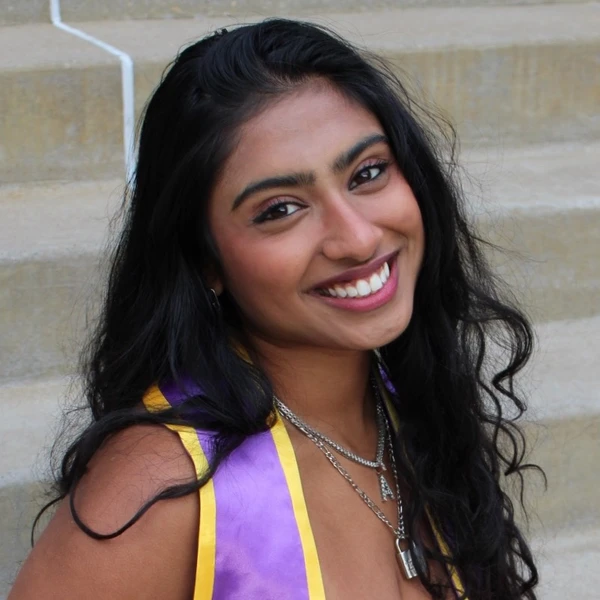
Addee Badhwa

2x

Finalist

Bio

I am an incoming Physician Assistant student and a proud Guyanese American. I am the first in my family to pursue a master’s degree, I am driven by the responsibility of representing my community and expanding access to equitable healthcare. I work full-time in a Cardic Cath lab, where I gain extensive hands-on experience in high-pressure clinical settings while assisting in vascular and cardiac procedures. This role has strengthened my commitment to patient-centered care and innovation in medicine. My education in radiography and advanced science coursework has prepared me to think critically while balancing rigorous academics with full-time work. Growing up in a Caribbean household taught me the importance of compassion and advocating for those whose voices often go unheard. These values guide how I care for patients, especially those facing cultural, language, or socioeconomic barriers. As I begin PA school, my goal is to become a compassionate provider who bridges cultural and systemic gaps and contributes to a more inclusive and accessible healthcare future.

Education

Augsburg University

Master's degree program
2026 - 2028
  • Majors:
    • Biological and Biomedical Sciences, Other
University of Wisconsin-Milwaukee

Bachelor's degree program
2023 - 2024
  • Majors:
    • Biological and Biomedical Sciences, Other
  • GPA:
    3.8

St Catherine University

Associate's degree program
2020 - 2023
  • Majors:
    • Biological and Biomedical Sciences, Other
  • GPA:
    3.6

Miscellaneous

  • Desired degree level:

    Master's degree program

  • Graduate schools of interest:

  • Transfer schools of interest:

  • Majors of interest:

    • Medicine
  • Not planning to go to medical school
  • Career

    • Dream career field:

      Medicine

    • Dream career goals:

      Physician Assistant

    • Cardiovascular Interventional Radiographic Technologist

      Allina
      2023 – Present3 years

    Sports

    Rhythmic Gymnastics

    Club
    2010 – 202010 years
    Post Malone Fan No-Essay Scholarship
    PAC: Diversity Matters Scholarship
    An impactful physician assistant understands that healing begins before a diagnosis is made. It begins when a patient decides whether they feel safe enough to speak honestly and to trust the care they are being offered. I believe the most effective PAs are the ones who create space for trust, especially for people who have learned through experience that healthcare systems were not built with them in mind. Growing up in a Guyanese Caribbean household, medical care was often approached with hesitation. In my family, going to the doctor was never simple. There was always uncertainty about whether we would actually be taken seriously. As a first-generation student, I learned to navigate both education and healthcare on my own. I translated medical forms for my family and completed financial aid applications without guidance. These experiences taught me that access is not something everyone simply has. For many families, it is something they have to fight for. When I entered healthcare, I saw those same patterns reflected in patient care. Charts documented diagnoses, but they missed so much of what patients carried into the room. Working in the cardiac cath lab, I often saw patients just go along with things even when they were clearly confused or overwhelmed. When I took the time to slow down and walk them through what was happening, the whole room felt different. You could almost see the tension leave their bodies as things started to make sense. Moments like that showed me that equity is created through how we communicate, not just through good intentions. These experiences shape what I believe it means to be an impactful PA. It means approaching each patient with humility and awareness of how their background affects their health choices. It means being willing to speak up when systems create obstacles, and to take the extra step to make sure someone truly understands their care. My commitment to this work is also personal. As a colored woman navigating healthcare, I know what it feels like to leave an appointment with unanswered questions, or concerns that were brushed aside. Those moments stayed with me. They strengthened my passion to become a provider who listens closely and makes sure patients feel heard, especially those who have been taught not to speak up. I live out these values not only in patient interactions, but in how I pursue this career. I work full time while preparing for PA school, supporting myself without generational wealth or a built-in support system. Financial pressure has shaped every decision I make, from how many hours I work to how much time I can dedicate to studying or volunteering. Receiving the PAC Diversity Matters Scholarship would ease that burden and allow me to focus more fully on my clinical training and the communities I hope to serve. An impactful PA does not simply treat illness. They help rebuild trust in systems that have left too many people behind. With the support of the PAC Diversity Matters Scholarship, I can keep moving forward in a way that brings better care back to the people who raised me.
    STEAM Generator Scholarship
    I remember the moment my ankle sprained at gymnastics practice. I should have been focused on the healing, but instead I was worried about how much a doctor’s visit would cost. In the Guyanese household I grew up in, we only sought care when something felt life-threatening. Anything less meant Vicks or teas. I didn’t know it then, but those moments were my earliest lessons in how cultural stigma and lack of education keep families like mine on the outside of systems meant to help them. As a first-generation child of Caribbean immigrants, I often felt like an outsider not only in healthcare settings, but in the American education system itself. Being the firstborn, I had to step into adulthood early. With my dad deployed in the Navy and my mom working long shifts, I became the one who packed lunches and clarified medical forms and school papers my parents didn’t understand. I felt like the glue holding two generations together.  That responsibility only grew when I began applying to college. I filled out FAFSA alone at the dining table, spending hours researching. Nobody in my family could guide me through loan decisions or applications because they had never faced these problems. I started working as soon as I could to help my family and save for school, because there was no safety net to fall back on. Every step toward higher education felt like carving a path into a world my family had been locked out of for generations. The turning point came years later in the cath lab. I cared for an older Caribbean woman during a cardiac emergency. She nodded politely to everything the doctor said, but her eyes told a different story. They showed the same quiet uncertainty I grew up seeing in my own family. When I explained in simpler language what was happening, her shoulders relaxed. In her face, I saw my grandmother and her fear, mirroring what I see in my community. And in her relief, I found my purpose. My upbringing did not just shape me but also prepared me to care for people who carry the same cultural weight I did. Choosing the Physician Assistant profession means entering a field where few Guyanese or Caribbean women are represented. I fear being alone in that space and failing without a roadmap. I fear the uncertainty of the financial strain of tuition and rising living costs while continuing to be there for my family. Within all this uncertainty, I hope to become the provider who breaks cycles and brings culturally humble care to communities that are often overlooked. I hope to show other first-generation students that they belong in these spaces too. My journey as a first-generation student has taught me that feeling like an outsider doesn’t limit what you’re capable of becoming. Being accepted into a master’s program is more than a personal milestone but a generational one. Being first-generation means the challenges don’t end at acceptance. This scholarship would allow me to focus fully on succeeding in a rigorous STEM/PA program without sacrificing my well-being or the support my family still depends on. This support would allow me to fully engage in my clinical training, volunteer work, research, and outreach to my community without the fear of choosing between my education and my family’s stability. I may be the first in my family to reach this point, but with this scholarship, I will ensure that others in my community can follow the path I am building.