Ethnicity
Hispanic/Latino, Asian
US CITIZENSHIP
US Citizen
LOW INCOME STUDENT
Yes
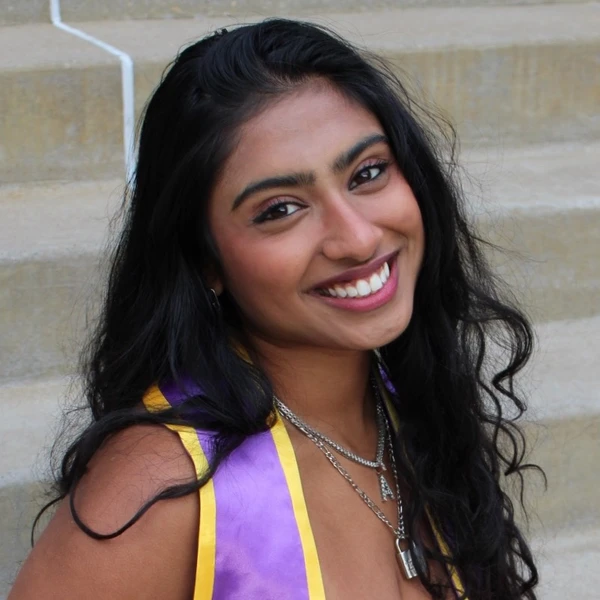
Addee Badhwa
2x
FinalistAddee Badhwa
2x
FinalistBio
I am an incoming Physician Assistant student and a proud Guyanese American. I am the first in my family to pursue a master’s degree, I am driven by the responsibility of representing my community and expanding access to equitable healthcare.
I work full-time in a Cardic Cath lab, where I gain extensive hands-on experience in high-pressure clinical settings while assisting in vascular and cardiac procedures. This role has strengthened my commitment to patient-centered care and innovation in medicine. My education in radiography and advanced science coursework has prepared me to think critically while balancing rigorous academics with full-time work.
Growing up in a Caribbean household taught me the importance of compassion and advocating for those whose voices often go unheard. These values guide how I care for patients, especially those facing cultural, language, or socioeconomic barriers.
As I begin PA school, my goal is to become a compassionate provider who bridges cultural and systemic gaps and contributes to a more inclusive and accessible healthcare future.
Education
Augsburg University
Master's degree programMajors:
- Biological and Biomedical Sciences, Other
University of Wisconsin-Milwaukee
Bachelor's degree programMajors:
- Biological and Biomedical Sciences, Other
GPA:
3.8
St Catherine University
Associate's degree programMajors:
- Biological and Biomedical Sciences, Other
GPA:
3.6
Miscellaneous
Desired degree level:
Master's degree program
Graduate schools of interest:
Transfer schools of interest:
Majors of interest:
- Medicine
Career
Dream career field:
Medicine
Dream career goals:
Physician Assistant
Cardiovascular Interventional Radiographic Technologist
Allina2023 – Present3 years
Sports
Rhythmic Gymnastics
Club2010 – 202010 years
Post Malone Fan No-Essay Scholarship
PAC: Diversity Matters Scholarship
An impactful physician assistant understands that healing begins before a diagnosis is made. It begins when a patient decides whether they feel safe enough to speak honestly and to trust the care they are being offered. I believe the most effective PAs are the ones who create space for trust, especially for people who have learned through experience that healthcare systems were not built with them in mind.
Growing up in a Guyanese Caribbean household, medical care was often approached with hesitation. In my family, going to the doctor was never simple. There was always uncertainty about whether we would actually be taken seriously. As a first-generation student, I learned to navigate both education and healthcare on my own. I translated medical forms for my family and completed financial aid applications without guidance. These experiences taught me that access is not something everyone simply has. For many families, it is something they have to fight for.
When I entered healthcare, I saw those same patterns reflected in patient care. Charts documented diagnoses, but they missed so much of what patients carried into the room. Working in the cardiac cath lab, I often saw patients just go along with things even when they were clearly confused or overwhelmed. When I took the time to slow down and walk them through what was happening, the whole room felt different. You could almost see the tension leave their bodies as things started to make sense. Moments like that showed me that equity is created through how we communicate, not just through good intentions.
These experiences shape what I believe it means to be an impactful PA. It means approaching each patient with humility and awareness of how their background affects their health choices. It means being willing to speak up when systems create obstacles, and to take the extra step to make sure someone truly understands their care.
My commitment to this work is also personal. As a colored woman navigating healthcare, I know what it feels like to leave an appointment with unanswered questions, or concerns that were brushed aside. Those moments stayed with me. They strengthened my passion to become a provider who listens closely and makes sure patients feel heard, especially those who have been taught not to speak up.
I live out these values not only in patient interactions, but in how I pursue this career. I work full time while preparing for PA school, supporting myself without generational wealth or a built-in support system. Financial pressure has shaped every decision I make, from how many hours I work to how much time I can dedicate to studying or volunteering. Receiving the PAC Diversity Matters Scholarship would ease that burden and allow me to focus more fully on my clinical training and the communities I hope to serve.
An impactful PA does not simply treat illness. They help rebuild trust in systems that have left too many people behind. With the support of the PAC Diversity Matters Scholarship, I can keep moving forward in a way that brings better care back to the people who raised me.
Andrea Worden Scholarship for Tenacity and Timeless Grace
I still remember my mother turning pages of a textbook after coming home from work with aching feet and a pounding head, yet she sat at the kitchen table studying every night. My father showed the same determination, studying in the early morning hours before reporting for military duty. Neither of them had a straight path to education but watching their dedication and determination taught me that learning entails sacrifice and resilience, even when life offers little stability in return.
As a first-generation American, I carry my parents’ sacrifices with me. Their perseverance shaped the way I saw opportunity, but it also shaped the way I recognized the barriers my own community faced. In our Guyanese community, we cared for each other like family, yet many of us struggled to feel cared for within the healthcare system. That disconnect became impossible to ignore as I grew older. Many people avoided preventive care because they did not feel represented or understood. At a young age, my grandfather died of heart disease, and much of this could have been prevented if he had someone he trusted in healthcare, and proper education about preventive measures. I watched women in my community push through pain and undiagnosed conditions because they feared their concerns would not be taken seriously. I experienced this myself while struggling with reproductive health issues. I left appointments feeling unheard and confused. These experiences shaped me more than any classroom ever could. They taught me that healthcare involves far more than medicine. It is about trust and cultural humility.
Working in the Cardiac Cath lab made this even clearer. I will never forget an emergent case where an older Hmong woman came in terrified, unable to understand what was happening because she spoke very little English. As we rushed to prepare her for the procedure, it was clear she was terrified. Her voice was unsteady, filled with confusion and worry
As our team continued to work, I stepped in and requested an interpreter. I made sure everything was explained clearly and I watched her nod with a relieved look on her face. At that moment, I realized how powerful it is to make someone feel heard. It reminded me of my grandmother and how confused she is at her doctor’s appointments. Through this journey, I have built strong clinical judgment, maintained high academic performance, and proven that I can excel even while working demanding hours.
These moments guide my ambition to become a Physician Assistant. My path has not been traditional. I worked full-time through school, balancing late-night studying with early-morning call shifts. I paid my own tuition without family wealth to rely on. I carried the pressure of being the first in my family to pursue higher education in the United States. There were times when I felt overwhelmed or stretched too thin, but every time I considered slowing down, I remembered my mother fighting sleep to finish a chapter and my father studying before work. Their quiet perseverance lives in me and continues to anchor my ambitions.
The adversity I faced created a deep sense of purpose. My goal is not simply to enter healthcare, but to provide the kind of care my community has rarely received.
I want to build trust where there has been fear and offer education where there has been silence. One day, I hope to open a clinic that serves immigrant Caribbean families, low-income communities, and anyone who has been historically underserved.
I imagine a space where cultural traditions are respected, and where families understand their care instead of being overwhelmed by it. A place where patients feel safe asking questions and where representation is not the exception, but the norm.
I am the first person in my family to pursue a masters degree and join the healthcare field, this scholarship would make a profound difference in my life. With the current uncertainty in the Department of Education and the rising cost of tuition, the financial burden has weighed heavily on my family. My parents have already sacrificed so much to give me opportunities they never had. Receiving this scholarship would relieve stress for all of us. It would allow me to focus on my education and the patients I care for without constantly worrying about how I will afford the next semester. Most importantly, it would help me continue the legacy my parents began when they chose courage over comfort and built a life for us from the ground up.
Andrea Worden believed in lifting others through compassion, resilience, and integrity. These are the values that shaped my upbringing and the values I hope to bring into my career. Her legacy honors people who move through the world with kindness and a genuine desire to make others feel seen and valued. I see myself in that mission because I have lived through every moment when I helped someone feel understood. If chosen for this scholarship, I will carry Andrea’s spirit forward so that the communities I serve feel valued and heard. With your support, I will become the provider my younger self and my community always needed.
STEAM Generator Scholarship
I remember the moment my ankle sprained at gymnastics practice. I should have been focused on the healing, but instead I was worried about how much a doctor’s visit would cost. In the Guyanese household I grew up in, we only sought care when something felt life-threatening. Anything less meant Vicks or teas. I didn’t know it then, but those moments were my earliest lessons in how cultural stigma and lack of education keep families like mine on the outside of systems meant to help them. As a first-generation child of Caribbean immigrants, I often felt like an outsider not only in healthcare settings, but in the American education system itself.
Being the firstborn, I had to step into adulthood early. With my dad deployed in the Navy and my mom working long shifts, I became the one who packed lunches and clarified medical forms and school papers my parents didn’t understand. I felt like the glue holding two generations together.
That responsibility only grew when I began applying to college. I filled out FAFSA alone at the dining table, spending hours researching. Nobody in my family could guide me through loan decisions or applications because they had never faced these problems. I started working as soon as I could to help my family and save for school, because there was no safety net to fall back on. Every step toward higher education felt like carving a path into a world my family had been locked out of for generations.
The turning point came years later in the cath lab. I cared for an older Caribbean woman during a cardiac emergency. She nodded politely to everything the doctor said, but her eyes told a different story. They showed the same quiet uncertainty I grew up seeing in my own family. When I explained in simpler language what was happening, her shoulders relaxed. In her face, I saw my grandmother and her fear, mirroring what I see in my community. And in her relief, I found my purpose. My upbringing did not just shape me but also prepared me to care for people who carry the same cultural weight I did.
Choosing the Physician Assistant profession means entering a field where few Guyanese or Caribbean women are represented. I fear being alone in that space and failing without a roadmap. I fear the uncertainty of the financial strain of tuition and rising living costs while continuing to be there for my family. Within all this uncertainty, I hope to become the provider who breaks cycles and brings culturally humble care to communities that are often overlooked. I hope to show other first-generation students that they belong in these spaces too. My journey as a first-generation student has taught me that feeling like an outsider doesn’t limit what you’re capable of becoming.
Being accepted into a master’s program is more than a personal milestone but a generational one. Being first-generation means the challenges don’t end at acceptance. This scholarship would allow me to focus fully on succeeding in a rigorous STEM/PA program without sacrificing my well-being or the support my family still depends on. This support would allow me to fully engage in my clinical training, volunteer work, research, and outreach to my community without the fear of choosing between my education and my family’s stability.
I may be the first in my family to reach this point, but with this scholarship, I will ensure that others in my community can follow the path I am building.