Hobbies and interests
Art
Acting And Theater
Cheerleading
Babysitting And Childcare
Choir
Music
National Honor Society (NHS)
Student Council or Student Government
Yearbook
Reading
Romance
Contemporary
Classics
Childrens
Short Stories
I read books multiple times per month
Alexis Clark
1x
Finalist
Alexis Clark
1x
FinalistBio
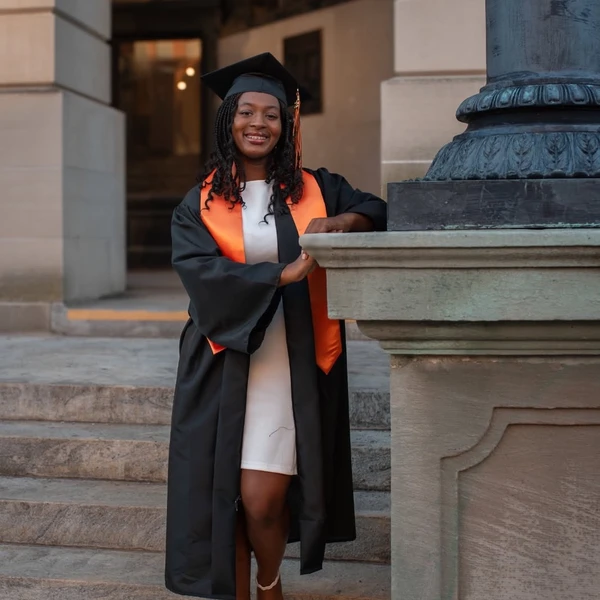
I am a high school senior with many ambitions, with a goal of service. Whether that is helping others through cheerleading, volunteering, my job, at home, or at school, I enjoy working to help others. As well as performing to bring joy or other emotions for others through singing in choir or acting on stage. My future goals is to accomplish getting my masters degree in college continuing my focus of serving others.
Education
Normal Community High School
High SchoolMiscellaneous
Desired degree level:
Bachelor's degree program
Majors of interest:
- Communication Disorders Sciences and Services
Career
Dream career field:
Music
Dream career goals:
Speech Pathology
Concessions stand seller
AMC2025 – Present1 year
Sports
Cheerleading
Varsity2022 – 20264 years
Research
Education, General
School — Student2011 – Present
Arts
School
Acting2023 – Present
Public services
Volunteering
MidWest FoodBank — Volunteer2018 – Present
Charlene K. Howard Chogo Scholarship
Women's empowerment has been an important part of my life because I have seen firsthand the impact that encouragement, opportunity, and strong role models can have on a person's future. As a young woman preparing to pursue a degree in Speech-Language Pathology, I strive to demonstrate that women belong in every field, including STEM-related professions. By setting ambitious goals, working hard academically, and remaining committed to serving others; especially within my own community. I hope to inspire other young women to believe in their abilities and pursue their dreams without limitations.
I have also worked to empower women through leadership and mentorship within my school and community. Whether helping fellow students find their voices, volunteering at community events, or encouraging younger girls to become involved in service activities, I believe empowerment begins with support. I make a daily effort to build others up, celebrate their achievements, and remind them that their voices and contributions matter. Creating an environment where women feel confident, valued, capable, and seen is one of the most meaningful ways to promote lasting change and create a positive "butterfly effect."
My mother has been one of my greatest inspirations. She has overcome challenges that could have easily defined or defeated her, yet she continues to lead with strength and grace. Through her example of resilience, dedication, compassion, and perseverance, she taught me the importance of serving others and never giving up. Watching her balance family, work, and community responsibilities showed me that women can be powerful leaders while remaining caring and supportive. Her influence has motivated me to become a role model for other women and to use my education and experiences to help them recognize their own potential. It is a legacy I hope to pass on to my own daughters someday.
In the future, I plan to continue advocating for women's empowerment through my career and community involvement. As a college student, I hope to establish a women's mentoring program that connects incoming students with upperclassmen who can provide guidance, academic support, social networking opportunities, and a sense of belonging. My goal is to help create a safe and supportive environment where young women can confidently navigate the transition to college life. As a Speech-Language Pathologist, I hope to help women find their voices and gain confidence in their communication abilities. I believe education is one of the most powerful tools for empowering women because it fosters economic independence, informed decision-making, self-confidence, and leadership opportunities. By mentoring young women, promoting education, and encouraging leadership development, I hope to contribute to a future where every woman feels empowered to pursue her goals and make a meaningful impact on the world.
Our Destiny Our Future Scholarship
I plan to make a positive impact on the world through advocacy, service, and sustainable philanthropy by using both my education and my voice to create opportunities for others to feel supported, heard, and valued. As I pursue a degree in Speech-Language Pathology and Audiology, my long-term goal is to advocate for individuals with communication challenges and help remove barriers that often prevent them from fully participating in school, work, and everyday life. Communication is a basic human need, and everyone deserves the chance to express themselves with confidence and be understood. I want to be part of building environments where people feel empowered and included.
Advocacy begins with awareness and action. Through shadowing professionals in school settings, I have seen how important speech and language services are in helping students build confidence, strengthen communication skills, and reach their potential. These experiences confirmed my passion for this field and showed me how powerful early intervention and consistent support can be. I plan to advocate for increased access to speech and language resources, especially for students and families in underserved communities who may not always have access to the services they need. I want to be someone families can trust and someone students feel comfortable with; an advocate who not only provides support but also helps families understand and navigate resources that can improve long-term outcomes.
Service has already become an important part of who I am. In my community, I encouraged our Black Student Union sponsor to organize a volunteer opportunity at Midwest Food Bank so we could help address hunger locally. Together, our efforts helped provide food to more than 100 families. That experience reminded me that service can begin with one idea and one willingness to act. It also showed me how leadership through service can inspire others to join in and create a greater impact. I plan to continue serving through volunteer work, mentorship, and outreach programs that support children and families both educationally and personally.
To me, sustainable philanthropy means creating support that lasts beyond one event or one donation. It means investing time, building partnerships, and creating opportunities that continue to benefit others over time. I hope to support organizations focused on education, communication access, and family wellness while also mentoring future students who are pursuing careers in healthcare and education. By combining advocacy, service, and long-term community investment, I hope to create meaningful change that strengthens my community and uplifts others for generations to come.
Stephan L. Daniels Lift As We Climb Scholarship
My desire to pursue a career in STEM comes from my role within my family. My older brother is on the autism spectrum, and growing up alongside him has deeply shaped my understanding of advocacy, patience, and inclusion.
From a young age, I often found myself stepping into situations where I needed to support him in environments that were not always designed with his needs in mind. Whether it was helping him communicate with others, advocating for his needs in school settings, or simply ensuring he felt understood and included, I learned how important it is to be both a voice and an ally.
What motivated me to take action was not only my love for my brother, but also a growing awareness that many families navigate similar challenges without consistent support. I began to recognize that advocacy is not always something grand—it often happens in everyday moments, through patience, education, and compassion. This realization pushed me to be more intentional in how I treat others and how I respond to inequity when I see it.
I am passionate about using science and education to improve people’s lives in a meaningful and lasting way. Speech-Language Pathology and Audiology combines science, healthcare, and communication in a way that directly impacts a person’s confidence, development, and quality of life. Communication is something many people take for granted, but for individuals with speech, language, hearing, or communication challenges, being able to express themselves and feel understood can affect every part of their lives. I am drawn to STEM because it gives me the opportunity to apply knowledge, research, and problem-solving to help others overcome those challenges and reach their full potential.
My interest in the Speech and Language Pathology field became even stronger through my educational internship during high school, where I had the opportunity to shadow my brother's former Speech Language Pathologist, a professional in a school setting on several occasions. Seeing the connection between science and service firsthand made a lasting impact on me. I watched students develop communication skills, gain confidence, and become more engaged in their learning because they were given the right support. That experience confirmed for me that this is the work I want to dedicate my future to. I love that this field requires both technical knowledge and compassion. It challenges me to think critically, continue learning, and use evidence-based practices while also building trusting relationships with the people I serve.
I plan to use my degree to uplift my community by advocating for individuals with communication differences and helping create spaces where every person feels heard, respected, and included. I am especially interested in working with children in school settings because communication plays such an important role in learning, social development, and confidence. When students have access to the support they need early on, they are better able to participate in the classroom, build relationships, and advocate for themselves. I want to help students develop those skills while also supporting families and educators with tools and resources that strengthen communication beyond the classroom.
I also hope to use my education to bring greater awareness to communication disorders and reduce the stigma that can sometimes surround speech and hearing challenges. STEM careers are powerful because they create solutions, improve access, and strengthen communities. Through Speech-Language Pathology and Audiology, I hope to serve others with compassion, provide meaningful support, and create opportunities for people to feel confident in their own voice. By pursuing this degree, I hope to uplift my community by helping individuals communicate fully, connect with others, and know that their voice matters.
Julie Adams Memorial Scholarship – Women in STEM
I am passionate about pursuing a degree in Speech-Language Pathology and Audiology because communication is one of the most important parts of being human. The ability to express thoughts, share feelings, ask for help, and connect with others shapes how we experience the world. When communication becomes difficult, it can affect confidence, relationships, education, and a person’s sense of belonging. I am passionate about becoming a professional in this field because I want to help people feel heard, understood, and empowered to communicate in ways that are meaningful to them.
My passion and commitment to supporting inclusion and strengthening my community through work comes from my role within my family. My older brother is on the autism spectrum, and growing up alongside him has deeply shaped my understanding of advocacy, patience, and inclusion. From a young age, I often found myself stepping into situations where I needed to support him in environments that were not always designed with his needs in mind. Whether it was helping him communicate with others, advocating for his needs in school settings, or simply ensuring he felt understood and included, I learned how important it is to be both a voice and an ally. These experiences opened my eyes to how frequently individuals with disabilities are overlooked or misunderstood, not because of their abilities, but because of a lack of awareness and accommodation.
What motivated me to take action was not only my love for my brother, but also a growing awareness that many families navigate similar challenges without consistent support. I began to recognize that advocacy is not always something grand—it often happens in everyday moments, through patience, education, and compassion. This realization pushed me to be more intentional in how I treat others and how I respond to inequity when I see it.
My interest in Speech and Language Pathology and Audiology actually grew stronger through my educational internship during high school, where I had the opportunity to shadow my brother's former Speech and Language Pathologist, a professional in my field in a school setting on several occasions. Watching firsthand how a speech-language professional worked with students was inspiring. I saw how much patience, creativity, and compassion the role requires, but I also saw the impact. Small moments; helping a student pronounce a sound correctly, build confidence while speaking, or find strategies to communicate more effectively, made a huge difference. It showed me that speech-language pathology is about much more than speech. It is about helping individuals gain confidence, independence, and the ability to fully participate in school, relationships, and everyday life.
I am especially passionate about working with children in school settings because early support can create lasting change. When students are given the tools to communicate effectively, they are better able to learn, build friendships, advocate for themselves, and feel included in their communities. I want to be someone who helps create those opportunities. I believe every person deserves to feel valued and capable of expressing themselves, and I am drawn to a career where I can advocate for that every day.
Pursuing this degree is meaningful to me because it combines science, education, and service. It will allow me to use evidence-based skills while also building personal connections and serving others in a direct way. I am excited to continue learning and growing in this field so I can make a meaningful difference in the lives of individuals with communication challenges. For me, this degree is more than a career path—it is an opportunity to help others find their voice and ensure they feel heard, respected, and included.
STLF Memorial Pay It Forward Scholarship
One volunteer event I helped organize was a service project through our Black Student Union at Midwest Food Bank. I encouraged our BSU sponsor and fellow members to volunteer there because hunger continues to affect many families in our community, and I wanted our organization to contribute in a meaningful and hands-on way. Together, we spent time sorting and packing food that would be distributed to local families in need. Through our collective effort, we helped provide food for more than 100 families in our community.
This experience reminded me that giving back does not always require a grand gesture; sometimes it begins with recognizing a need and being willing to take initiative. For me, volunteering at Midwest Food Bank was about more than completing service hours; it was about helping meet an immediate need while also encouraging others to get involved. I learned that so many people in our community live in places that are considered a food desert. That is a geographic areas; predominantly in low-income urban and rural communities where residents lack convenient access to affordable, nutritious, and fresh food. Often dominated by convenience stores and fast food, they significantly limit healthy dietary choices and heighten the risk of chronic health conditions like obesity and diabetes. This simply shows that hunger can be a snowball effect leading to health issues which creates a different set of issues.
Food insecurity in McLean County affects over 10% of the population, with tens of thousands of residents relying on SNAP benefits and emergency assistance. The area is supported by a robust network of food pantries, mobile distributions, and meal services to ensure individuals and families facing hunger have consistent access to nutritious food. Seeing our group work together with a shared purpose showed how much impact can happen when people commit their time and energy to serving others.
Leadership through service is important because it focuses on helping others first and creating positive change through action. A strong leader does not simply direct people; they serve alongside them, listen to the needs around them, and inspire others to contribute. By helping organize our volunteer effort, I learned that leadership can be as simple as speaking up, encouraging participation, and being willing to lead by example. Service-based leadership creates stronger communities because it brings people together around shared goals and reminds us that even small actions can make a meaningful difference. I hope to continue leading in this way by using my time, voice, and future education to support others and strengthen the communities I am part of.
Peter and Nan Liubenov Student Scholarship
I see myself as a positive force in society by creating spaces where people feel valued, heard, and supported. For me, making a difference does not always come from one major act; it often comes from consistency in everyday interactions: showing kindness, listening with intention, encouraging others, and being willing to help where I am needed. I believe the way we treat people in ordinary moments can have a lasting impact, and I try to carry that mindset into my relationships with family, school, and my community.
A large part of this perspective comes from my personal experiences. Growing up with my older brother, who is on the autism spectrum, shaped the way I understand advocacy, patience, and inclusion. I saw firsthand how meaningful it is when people are given the opportunity to communicate in ways that work best for them and when they are supported rather than overlooked. Those experiences taught me that being a positive force in society often means speaking up for accessibility, extending compassion, and helping others feel included in spaces where they may not always feel understood. They also influenced my decision to pursue speech-language pathology and audiology, because I want my future career to directly support people facing communication challenges and help them feel confident using their voice.
Current social norms have strengthened this thinking in important ways. Society today places a growing emphasis on inclusion, representation, mental health awareness, and creating environments where people feel safe being themselves. While there is still progress to be made, these conversations have encouraged people to think more intentionally about equity, accessibility, and the ways communities can better support one another. They have also highlighted the importance of listening to different perspectives and recognizing that every person’s experience deserves respect. These social expectations have reinforced my belief that positive change often begins with empathy and a willingness to understand experiences outside of our own.
At the same time, current social norms also bring challenges. Social media and constant comparison can make it easy for people to feel disconnected, misunderstood, or pressured to meet unrealistic expectations. Because of that, I think being a positive force today also means being intentional about building genuine connection. It means creating opportunities for encouragement, offering support when others are struggling, and helping people feel like they belong beyond what is seen online or on the surface. I believe communities grow stronger when people feel connected and supported in real and meaningful ways.
In the future, I hope to continue being a positive force through both my profession and my involvement in the community. As a speech-language pathologist, I want to advocate for individuals who may struggle to communicate and help create environments where their voices are respected and understood. I also hope to mentor students and continue serving in ways that strengthen access, inclusion, and support for families. I believe positive change happens when people choose compassion, lead with purpose, and use their abilities to help others. That is the kind of impact I hope to continue making; both now and in the future.
Tammurra Hamilton Legacy Scholarship
Bringing awareness to mental health and suicide prevention is important because mental health affects every part of a person’s life, yet it is still too often misunderstood or overlooked. Many people struggle silently because they fear judgment, feel isolated, or do not know where to turn for help. Creating awareness helps break the stigma surrounding mental health and reminds people that asking for help is a sign of strength, not weakness. Suicide prevention begins with honest conversations, education, and communities that are willing to recognize when someone may be struggling and respond with compassion. When people feel seen, supported, and safe enough to speak openly about what they are experiencing, lives can truly be changed.
In my community, I can support these efforts by continuing to be an advocate for understanding, inclusion, and connection. I have learned that support does not always come from having the perfect words; it often begins with listening and being present. Through school, volunteer work, and everyday relationships, I try to create spaces where people feel valued and comfortable being themselves. One of my most meaningful volunteer experiences has been with Stay Another Day, a mental health awareness clothing line. It created the space for me to acknowledge and eventually address my own mental health struggles. I can continue supporting mental health awareness by encouraging conversations about emotional wellness, sharing resources when someone may need help, and helping create environments where students feel supported academically, socially, and emotionally. As I continue my education, I hope to use both my voice and my future career to help people feel heard and understood.
My background and experiences have shaped how deeply I value mental health awareness. Growing up with my older brother, who is on the autism spectrum, taught me the importance of patience, empathy, and advocacy from an early age. He has struggled to feel "normal" and even attempted to take his own life. It gave me a deeper understanding of how emotional well-being and communication are connected. I saw firsthand how important it is for individuals to feel supported, understood, and accepted for who they are. Those experiences strengthened my desire to advocate for others and inspired my interest in speech-language pathology and audiology. Communication is closely tied to mental health—when people feel unable to express themselves or feel misunderstood, it can affect confidence, relationships, and emotional wellness.
Because of these experiences, mental health awareness and suicide prevention feel deeply personal to me. I believe every person deserves to feel supported, valued, and reminded that they matter. Whether through simple acts of kindness, meaningful conversations, or the work I hope to do professionally, I want to contribute to a community where mental health is openly discussed and where people know they are never alone. Raising awareness is more than sharing information—it is creating a culture of compassion, understanding, and support that can make a lasting difference in someone’s life.
Kayla Nicole Monk Memorial Scholarship
Choosing to continue my education in STEM comes from both personal experience and a strong sense of purpose. I plan to pursue a career in Speech-Language Pathology and Audiology, a field rooted in science, technology, and evidence-based care. STEM, to me, represents more than academic study. It is a way to understand how people communicate, how the body and brain work together, and how research and innovation can improve someone’s quality of life. I chose this path because I want to use science and education to create meaningful change for individuals who face communication challenges and to help build environments where people feel heard, supported, and empowered.
My interest in this field became personal through my family. My older brother is on the autism spectrum, and growing up alongside him shaped the way I understand communication, patience, and advocacy. I learned early that communication looks different for everyone, and I also saw how important it is to have people who listen carefully, advocate intentionally, and provide the right support. Watching my brother navigate school and everyday life helped me understand how speech and language services can influence confidence, independence, and access to opportunity. Those experiences gave me a deep respect for professionals who help individuals find and strengthen their voices, and they inspired me to pursue a STEM field where I can do the same for others.
My educational experiences have confirmed that this is where I belong. During my senior-year internship, I had the opportunity to shadow professionals in my intended field in a school setting. I observed how speech-language pathologists evaluate students, develop individualized plans, and create strategies that support communication and learning. I saw the science behind language development and hearing, but I also saw the human impact of that work. What stood out most was how each student benefited from someone who understood both the technical side of communication disorders and the personal side of building trust and confidence. That experience strengthened my desire to continue into a STEM program because it showed me how scientific knowledge can be applied directly to improve lives every day.
Receiving this scholarship would have a meaningful impact on my educational journey and future goals. As I prepare to attend Southern Illinois University Edwardsville this fall, financial support would ease the burden of tuition, books, and required academic materials. STEM programs demand a significant investment of time, focus, and resources, and scholarships like this make it more possible for students like me to fully commit to that work. This support would allow me to focus on coursework, clinical experiences, and professional development opportunities that will prepare me to serve others effectively.
Beyond financial support, this scholarship would also represent an investment in the kind of impact I hope to make through STEM. My long-term goal is to work in schools or community-based settings where I can support children and families navigating speech, language, and hearing challenges. I hope to advocate for inclusive services, increase access to communication support, and help individuals feel confident in expressing themselves. STEM gives me the tools to understand problems, find solutions, and contribute to meaningful progress in healthcare and education. This scholarship would help me continue building that future—one where I can use science, compassion, and education to serve others and make a lasting difference in my community.
Ava Wood Stupendous Love Scholarship
One meaningful act of kindness I offered was during my educational internship when I worked with a student who often struggled to keep up in class and rarely participated. I noticed that they would withdraw during group activities and seemed hesitant to ask for help, even when they clearly needed it. Instead of letting them remain unnoticed, I made a consistent effort to support them both academically and emotionally.
I began by sitting with them during independent work time, offering guidance in a way that felt encouraging rather than overwhelming. I also made it a point to check in with them regularly, asking simple questions and celebrating small successes to help build their confidence. Over time, they became more comfortable engaging in class, raising their hand, and even working with peers.
What made this moment important was not just the academic progress they made, but the shift in their confidence and sense of belonging. It reminded me that kindness is not always about grand gestures; it can be found in patience, consistency, and taking the time to truly see someone who might otherwise feel invisible.
This experience had a lasting impact on me. It reinforced my belief that everyone deserves to feel supported and capable, and it strengthened my desire to pursue a career in Speech-Language Pathology. I want to continue helping individuals find their voice, build confidence, and feel empowered in spaces where they may have once felt overlooked.
Creating connection has always been important to me because I believe people thrive when they feel seen, heard, and valued. One of the most meaningful ways I have helped bring people together is through my involvement in my school community, particularly by supporting and uplifting diverse groups of students.
As a member of the Black Student Union, I have worked to create a space where students feel a sense of belonging and pride in their identity. Through organizing events, discussions, and outreach efforts, I’ve helped foster an environment where students can share their experiences openly and feel supported. These efforts not only strengthened connections within the group, but also helped educate and engage the broader school community.
In addition, my experience in an educational internship allowed me to work closely with students of different backgrounds and abilities. I made it a priority to build relationships with each student, recognizing that inclusion starts with understanding individual needs. Whether it was offering encouragement, assisting with learning challenges, or simply being someone they could talk to, I aimed to create a welcoming and supportive environment for everyone.
These experiences have shown me that connection is built through intentional actions; listening, advocating, and showing up for others. As I pursue a career in Speech-Language Pathology, I am committed to continuing this work by helping people find their voice and ensuring that everyone has the opportunity to communicate and be understood. Creating connection is not just something I do; it is a value that will guide both my personal life and future career.
Anita Moore-Hubbard "Butterfly Effect" Memorial Scholarship
Imagine the smell of smoke, raw sewage and, contaminated standing waters. Unpaved dusty dirt roads filled with waste, abandoned materials and debris, huts made of corrugated iron and scrap metal. Now ignore all of that because what matters most are the faces of the children and elderly who inhabit these unimaginable villages. If I were given the wings to fly to any community in the world, I would choose to travel to a community where access to speech and language services is limited; particularly rural communities in South Africa.
What draws me there is the strong need for speech-language support among the children and elderly, paired with a shortage of trained professionals. Many of the elders who should be enjoying their twilight years are suffering in silence after their health fails. Meanwhile, students struggle with communication challenges that go unaddressed, which can impact their education, confidence, and future opportunities. Being able to serve in a place where my skills are truly needed would be both humbling and purposeful.
This experience connects deeply to my values of equity, compassion, and advocacy. I believe every child deserves the opportunity to be heard and understood, regardless of their background or location. The elders in turn, have so much wisdom to impart. Pursuing a career in speech-language pathology is not just about helping individuals speak; it’s about empowering them to express themselves, succeed academically, and feel confident in who they are. Serving in this community would allow me to live out those values in a very impactful, meaningful, and hands-on way.
The “Butterfly Effect” of this experience would extend far beyond my time there. By helping even a small group of children or elders improve their communication skills, I could positively influence their academic journeys, self-esteem or even the wellbeing of the village long-term. In return, I would bring back a broader perspective, cultural awareness, and new approaches to care that I could apply in underserved communities in the United States. This experience would shape me into a more empathetic and effective speech-language pathologist, allowing me to continue creating ripples of impact wherever I go.
My late grandparents would be the ancestors who I take with me. As former educators and members of law enforcement their spirits of serving the community has deeply influenced my decision to serve those in need, to be an advocate and a voice for those in unserved places. They have given me a great example of how hard work and sacrifice can carry you to places you couldn't dream. I draw strength and inspiration from their legacy and I am sure that they are in heaven smiling down proud of me continuing their legacy of serving.