Hobbies and interests
Painting and Studio Art
Drawing And Illustration
Nutrition and Health
Health Sciences
Public Health
Science
Reading
Novels
Classics
Health
I read books multiple times per month
Abigail Looper
1x
Finalist
Abigail Looper
1x
FinalistBio
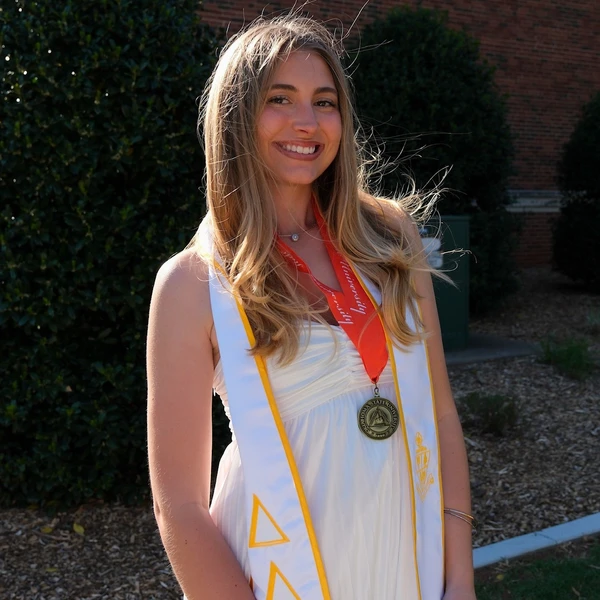
Hello, I am Abigail Looper and I recently finished my undergraduate degree in Nutritional Science-Dietetics at Oklahoma State University. I am pursuing a graduate degree at the University of Central Oklahoma and have begun my dietetic internship as well. Finding a career path that incorporated my love of helping others and my interest in science was essential. After taking my Medical Nutrition Therapy coursework, I found a strong interest in renal dietetics and hope in the future to become a renal dietitian. I work hard to finish all tasks with the absolute most purpose and think this will carry me in my future career path. Working in the community is something I have always had a passion for; from being vice president of my student council in high school, to joining the Tri Delta sorority due to their love of St. Jude Children’s Research Hospital. I am thrilled to continue philanthropic work in the future and am excited for what is in store once I become a Registered Dietitian Nutritionist.
Education
Oklahoma State University-Main Campus
Bachelor's degree programMajors:
- Nutrition Sciences
Miscellaneous
Desired degree level:
Master's degree program
Graduate schools of interest:
Transfer schools of interest:
Majors of interest:
- Nutrition Sciences
- Dietetics and Clinical Nutrition Services
Career
Dream career field:
Hospital & Health Care
Dream career goals:
Renal Dietitian
Retail Sales Associate
NStock2022 – 20231 year
Sports
Tennis
Varsity2018 – 20224 years
Awards
- Outstanding Sportsmanship
Research
Foods, Nutrition, and Related Services
My group was partnered with Oklahoma State University Dining Services. — I was one of the four members that created the intervention and did the research/work to determine the success of the plan.2025 – 2026
Arts
Self taught
Painting2022 – Present
Public services
Volunteering
Delta Delta Delta — Volunteer2022 – 2026Volunteering
Art With a Heart — Volunteer2024 – 2025
Future Interests
Philanthropy
Sloane Stephens Doc & Glo Scholarship
Growing up I have always looked up to my grandpa and how selfless he was in all he did. When his cancer came back in 2020, it felt like my world had stopped. However, as he went through his treatment I found it admirable to watch my grandma and grandpa research how impactful nutrition is while your body tries to heal. My grandparents dove into reading lots of nutrition research for a while and as I heard some of the therapeutic effects of foods they were looking into, I became more fascinated with the world of nutrition than ever before. Watching how the food my grandpa ate played a role in his recovery process made me realize this is a field I would like to explore further. My grandpa’s mission to find a therapeutic diet that worked for him made me aware of the important role nutrition plays in our health. Yet, food is far more than fuel.
Food is a way for people to connect. Most of my favorite memories are food oriented; from baking cinnamon rolls with my great grandma to standing outside chatting with my dad as he grilled. Through these experiences I determined I wanted to be a person of comfort and aid to people going through hard times with their physical health. I feel very grateful for the life I have lived and want to give back in a meaningful way.
For this reason, the past two years I have volunteered for Art With a Heart’s gala night. Meeting children who are going through cancer treatment and their parents is humbling, reminding me of the privilege and sanctity of life. I never realized how impactful this event could be for those affected, the gala is nothing short of amazing as it gives the children a time to feel recognized for their continued strength in treatment. Experiencing events such as this has helped me gain a greater perspective on how to navigate and encourage people who have ties to chronic disease. Ensuring I stay respectful to everyone, no matter their life experiences, is a very useful skill I will take with me not only in my future career, but in life in general.
Working with others has fostered my strong communication and decision making skills. I find myself in situations often through my leadership roles where my committee members confide in me. A quick conversation will typically lead to deeper conversations that are more meaningful for me and my peers. I listen a lot and try to put others at ease, asking for clarification when needed. Establishing trust with clients will allow them to freely share genuine concerns in regards to their eating habits. Both adaptability and approachability are skills that I think will enhance my future careers.
I am currently in a masters program and dietetic internship; ensuring I can later take my RD exam. Long term, I plan to get my CDCES, as I would love to focus my career more around diabetes. Watching group sessions during a past internship experience inspired me, as it was clear the dietitians hold an amazing, supportive community that revolved around individuals learning about their new diagnosis together. Another future goal of mine would be to create a children's book that promotes nutritionally adequate eating patterns from a young age. I am passionate about helping people better their health from a young age, as to build positive lifestyle habits earlier on. Using my education to help others decrease their risk for chronic illness from a nutrition standpoint is in total, my top priority.
Women in Healthcare Scholarship
Growing up I have always looked up to my grandpa and how selfless he was in all he did. When his cancer came back in 2020, it felt like my world had stopped. However, as he went through his treatment I found it admirable to watch my grandma and grandpa research how impactful nutrition is while your body tries to heal. My grandparents dove into reading lots of nutrition research for a while and as I heard some of the therapeutic effects of foods they were looking into. Watching how the food my grandpa ate played a role in his recovery process made me realize this is a field I would like to explore further as I found an interest in the role nutrition plays in our health. Yet, food is far more than fuel.
Food is a way for people to connect. Most of my favorite memories are food oriented; from baking cinnamon rolls with my great grandma to standing outside chatting with my dad as he grilled. Through these experiences I determined I wanted to be a person of comfort and aid to people going through hard times with their physical health. I feel very grateful for the life I have lived and want to give back in a meaningful way.
Working with others through not only leadership positions, but labs as well, has fostered my strong communication and decision making skills. I find myself in situations often through my leadership roles where my committee members confide in me. A quick conversation will typically lead to deeper conversations that are more meaningful for me and my peers. I listen a lot and try to put others at ease, asking for clarification when needed. I see adaptability as a key component in the work field as I can go with any needed changes and find ways to make them work. The approachability of my personality will make clients feel comfortable to speak freely about what is actually going on in their life. Establishing trust with clients will allow them to freely share genuine concerns in regards to their eating habits. Both adaptability and approachability are skills that I think will enhance my future careers.
I hope that being a woman in this career helps open the eyes of other women deterring on whether or not to get into STEM oriented majors due to intimidation from lack of representation. We are far more capable than we give ourselves credit for and through learning this, I have found life is far more enjoyable when we start reaching for what we are passionate about. I hope all women find their inner voice and strength to go for what they believe in.
Amber D. Hudson Memorial Scholarship
When it comes to nutrition, the best way to inform patients is by first analyzing their entire background. Reviewing their social determinants of health to ensure that the interventions being suggested are applicable is key to maintaining respect with a patient. From there, you can appropriately give nutrition education and set up families with resources (SNAP, WIC, etc.) to be successful.
However, it is important to be mindful that the way nutrition education is formatted will depend on the effectiveness. Perhaps the patients are unaware of what macronutrients are and in a session we would want to focus on how to read “big picture” items on a food label. Or if a patient has type two diabetes and is consistently high for blood sugar readings, but constantly drinking full sugar sodas throughout the day; try suggesting they consume diet soda instead. Reaching for the low hanging fruit to make subtle changes at first will help gradual progression towards healthier lifestyle habits.
Once a patient is established and they have a fairly broad idea of general nutrition information for their disease states, going into depth on their conditions goes back to focusing on their education needs. Setting SMART goals is going to be key in these meetings. A SMART goal is one that is specific, measurable, achievable, relevant, and time-bound. The goal should be drawn from what the patient is demonstrating they find achievable. Therefore, before the goal I will need to determine their level of preparedness by comparing them to the readiness for change model. If a patient comes in and is in the precontemplation stage and therefore is completely unready for any lifestyle changes, I am not going to suggest drastic interventions; but rather focus on more easily digestible education.
All in all, it is crucial when assessing and coming up with a plan that is effective for a patient that it is catered specifically to them. Plenty of nutrition counseling will need to occur, so being familiar with motivational interviewing and how to conduct group counseling sessions could be skills that are important to be familiarized with. In general, I specifically would educate patients and families largely depending on what I learn when building rapport with them. In the future as a dietitian, I will never give my patients standardized care, as it is never a “one size fits all” approach. Each patient has their own story and factors that are playing into their health, it is my role to listen to them, to then make actionable suggestions that create self efficacy. The goal is a lifestyle change that they understand the importance of, not a quick fix.
Learner Math Lover Scholarship
Math was always a subject that I enjoyed as the right answer would present itself, and if it didn’t, you could back track your way in the problem to see where the issue occurred. Even more than this, I adored the way that math presents itself in everything. Being a nutritional science major, math was very foundational for many of my classes; especially when it came to conversions. Utilizing my love for math came in handy and made chemistry 1 during my sophomore year of college a lot more enjoyable. However, an even better example of how we see math everywhere, is during the times you go out to grab a slice of pizza with a group of friends and suddenly are doing geometry to determine how to cut the pizza to ensure everyone gets their fair share.
Growing up I remember I had a love, hate relationship for the subject until I realized that my entire negative outlook stemmed from me striving for perfection in getting the problems right on the first time. However, as I got older, the negativity subsided as I learned to love seeing all my erased pencil marks beneath my work as it showed the work it took to get to the final answer. Sometimes the best lessons we learn in life can be through something as simple, yet foundational, as our math classes.