Hobbies and interests
Agriculture
Animals
Biking And Cycling
Reading
Academic
Environment
Religion
I read books multiple times per month
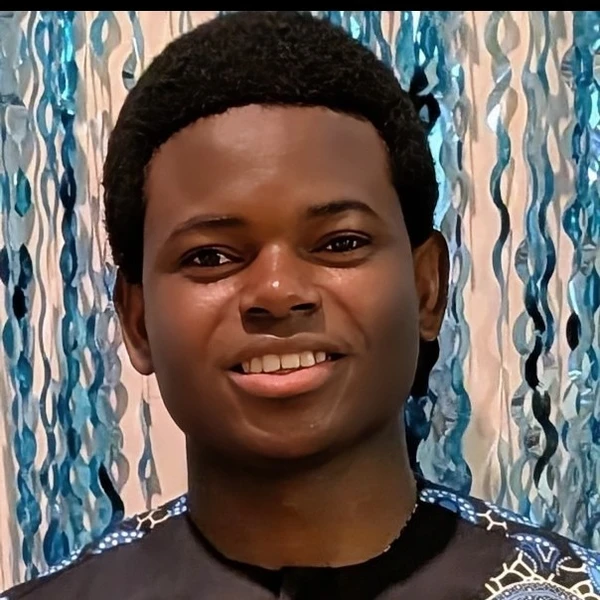
Abdou-Latifou Dare
1x
FinalistAbdou-Latifou Dare
1x
FinalistBio
I’m Abdou-Latifou Dare, a Botany major at Connecticut College with a strong focus on sustainable agriculture and community development.
Raised in a farming family in Togo, I’ve seen firsthand the challenges that smallholder farmers face—from soil degradation to climate change—and I’m passionate about creating innovative, practical solutions that uplift rural communities.
My journey includes hands-on experience in crop production, animal husbandry, and soil science, along with leadership roles on campus and involvement in global agricultural initiatives.
I aim to combine academic knowledge with grassroots action to build resilient food systems and educational opportunities for underserved regions.
Education
Connecticut College
Bachelor's degree programMajors:
- Botany/Plant Biology
Armand Hammer United World Clg
High SchoolMiscellaneous
Desired degree level:
Doctoral degree program (PhD, MD, JD, etc.)
Graduate schools of interest:
Transfer schools of interest:
Majors of interest:
- Botany/Plant Biology
- Agricultural Engineering
- Agricultural and Food Products Processing
Career
Dream career field:
Farming
Dream career goals:
Sprout Garden Intern
Connecticut College2025 – Present1 yearStudent Advancement Officer
Connecticut College2023 – 20241 yearAV Aide
Connecticut College2023 – 20252 yearsHorticulture & Landscape Assistant
Connecticut College2023 – Present3 yearsFlower crew intern
MVM Edibles LLC2024 – 2024
Sports
Soccer
Club2021 – 20243 years
Awards
- none
Cycling
Club2019 – 20234 years
Research
Agricultural and Food Products Processing
Connecticut College — Student researcher2025 – Present
Public services
Volunteering
Connecticut College — Led a sustainability mission focused on reducing waste at Connecticut College by repurposing items disposed of by students during move-out. Coordinated collection, sorting, and redistribution of usable goods.2024 – 2024
Dr. Terran Jordan International Excellence in Leadership, STEM & Emergency Management Scholarship
One of the most meaningful examples of my leadership came during the early stages of my ongoing project to build a rural learning center in my hometown of Bassar, Togo. I envisioned a space where community members—especially youth and women—could gain practical skills in agriculture, trades, and digital literacy, enabling them to improve their livelihoods and break cycles of poverty. The challenge, however, was immense. Funding was scarce, construction costs were rising unexpectedly, and I was trying to coordinate the entire effort from across the ocean while pursuing my studies in the United States.
Rather than letting these challenges stall the project, I stepped forward to lead with creativity and determination. I organized virtual meetings with local community leaders to gather input on what skills and resources were most needed. I coordinated a small, trusted team on the ground to oversee daily progress and troubleshoot issues. I led multiple fundraising campaigns—writing proposals, reaching out to supporters, and designing outreach materials—to secure resources for building materials and equipment.
My background in STEM, specifically plant science, played a direct role in shaping the center’s agricultural training programs. I designed initial workshops around climate-smart farming practices, soil improvement techniques, seed-saving methods, and low-cost irrigation solutions that could be implemented locally. I also leveraged my research skills to find affordable, sustainable construction approaches that matched the environmental realities of Bassar.
This experience taught me that leadership is about more than managing a project, it’s about listening deeply to those you serve, mobilizing the resources you have, adapting quickly when conditions change and trusting in Allah for all other matters that may arise within or without our capacities. Amidst the turbulences and the fear of being denied entry for my continued education in the US as well as pressure for the successful completion of the construction tasks, I only came to realize afterwards that all of it was a carefully planned scenario to help me gain more patience, confidence, partners and ultimately serve my people in a more effective and efficient way. It also reinforced my belief that science and technology, when applied thoughtfully, can be powerful tools for community empowerment.
Looking ahead, I plan to continue using my STEM background to create scalable, sustainable solutions to agricultural and educational challenges in rural communities. I want to integrate practical, hands-on training with emerging technologies such as AI-powered crop monitoring, digital tools for farm recordkeeping, and low-cost environmental sensors for early detection of pests and weather risks. These innovations, combined with strong community leadership, can help farmers increase productivity, protect their environment, and improve their resilience in the face of climate change.
Beyond agriculture, I aim to mentor the next generation of rural leaders—helping young people develop both technical skills and the confidence to design solutions for their own communities. My long-term vision is to create a network of grassroots learning centers across West Africa that exchange ideas, share innovations, and collectively work toward self-sufficiency.
For me, STEM is not just an academic pursuit; it’s a practical toolkit for solving real-world problems, building capacity in underserved communities, and creating opportunities where few existed before. And leadership, I have learned, is the bridge between knowledge and action—the key to turning ideas into impact.
AROC AI/ML Scholarship
In my academic work, especially as a plant science major, AI has become an important support tool in how I process and apply complex information. I often use AI platforms to summarize scientific journal articles, explore comparative case studies in sustainable agriculture, and translate dense material into accessible formats for community presentations or project proposals. These tools allow me to interact with content more efficiently and think critically across disciplines. For example, when preparing for a presentation on the use of microalgae in sustainable food systems, I used AI to help me break down scientific terminology into simpler explanations suitable for a general audience—something that’s especially important when I’m sharing ideas with non-specialists back home. It has helped me become a better communicator, a more agile researcher, and someone who is not afraid to explore unfamiliar academic territory.
Although I have not yet developed my own AI applications or models, I’m particularly fascinated by the ways AI and machine learning can support innovation in agriculture—especially for smallholder farmers who often lack access to timely information and tools. I see enormous potential for AI in developing localized weather alerts, early warning systems for pests or disease outbreaks, and affordable crop monitoring tools. In many parts of rural Africa, farmers still rely on informal knowledge or unpredictable climate patterns to make planting decisions. By integrating AI-driven insights with community training and farmer cooperatives, I believe we can make agriculture not only more efficient but also more climate-resilient and equitable. I envision working with both researchers and farmers to co-develop solutions that combine machine intelligence with indigenous knowledge systems, ensuring that these tools are not only technologically sound but culturally appropriate and user-friendly.
Looking to the future, I hope to play a role in making AI more inclusive and relevant for rural, underserved populations—especially in West Africa. I want to help build a bridge between cutting-edge technologies and everyday needs by working with developers, data scientists, and community leaders to adapt AI tools for local realities. Whether that means developing AI-based educational platforms in local languages, creating mobile tools for diagnosing plant diseases in the field, or helping young people in rural towns learn how to use AI ethically and effectively, I believe my role is that of a connector—someone who understands both the challenges on the ground and the possibilities within emerging technologies. My dream is to ensure that rural communities like mine are not left behind in the digital age but are empowered by it—to build, to learn, and to lead.
Larry Joe Gardner Memorial Scholarship for Public Policy
My name is Abdou-Latifou Dare, and I am a junior at Connecticut College, majoring in plant science. I grew up in Bassar, a small rural town in northern Togo, where I was one of eleven children in a close-knit, faith-centered family. From a young age, I worked alongside my mother in her small retail business, often traveling with her on market days to help sell groceries. While those experiences taught me the value of work ethic, trust, and resilience, they also exposed me to the structural challenges my community faces—limited access to education, sustainable agricultural tools, and economic opportunity.
These early experiences shaped my desire to pursue a career that uses education, agriculture, and community empowerment to create lasting change. Through my degree and future career, I plan to make a positive impact on the world in three main ways:
1. Transforming rural agriculture through sustainable, community-based practices
With my plant science background, I aim to support smallholder farmers—especially in West Africa—by providing access to agricultural education and practices that are affordable, resilient, and climate-conscious. Many rural farmers in Togo still rely on outdated techniques, leading to soil degradation, poor yields, and food insecurity. I want to help reverse this trend by introducing composting, crop rotation, rainwater harvesting, and seed-saving techniques that draw from both modern science and indigenous wisdom. I also plan to help farmers organize into cooperatives to increase their bargaining power and access to markets.
2. Creating local learning centers that teach practical skills and encourage self-reliance
One of the most urgent needs in rural areas like mine is the lack of spaces where people—especially youth and women—can learn skills that translate into income and opportunity. I’m currently working to complete the construction of a learning center in Bassar. Once fully operational, it will provide hands-on training in areas such as regenerative agriculture, beekeeping, shoemaking, computer literacy, and financial management. My long-term vision is to turn this into a replicable model that can be expanded to other villages and regions, adapting to local needs while emphasizing dignity, independence, and lifelong learning.
3. Advocating for educational access and youth empowerment across social and economic barriers
I believe education is more than what we learn in school—it’s about building the confidence to imagine a better future and the tools to make it happen. That’s why I’m passionate about helping youth, especially those from marginalized backgrounds, see value in themselves and their ideas. Whether through mentoring, public speaking, or organizing local workshops, I want to help create pathways for young people to develop leadership, communication, and problem-solving skills. I also hope to influence education policy by highlighting the importance of vocational training alongside academic learning in developing regions.
Even now, I’m taking small but consistent steps toward these goals. Through internships with farms and environmental organizations in the U.S., I’m gaining practical experience in sustainable agriculture. On campus, I’ve participated in cultural and service-based organizations that address inequality and foster dialogue. During school breaks, I return to Togo to work with farmers and youth, listen to their experiences, and shape my future plans around their real needs.
To me, pursuing a degree is not just a personal achievement—it’s a responsibility to give back. I want to be part of a generation of educators and changemakers who use knowledge not to separate ourselves from our communities, but to uplift them from within.
Mark A. Jefferson Teaching Scholarship
My name is Abdou-Latifou Dare, and I am a junior majoring in plant science at Connecticut College. I was born and raised in Bassar, a rural town in northern Togo, where education often feels like a luxury instead of a right. As the second-to-last child in a family of eleven, I grew up witnessing both the resilience and limitations that shaped our daily lives. My mother, a small-scale retailer, worked tirelessly to support us, and from a young age, I helped her carry goods to market, negotiate prices, and manage supplies. Those moments taught me the value of discipline and hard work—but also left me asking why such essential efforts weren’t enough to lift many families out of poverty.
That question has stayed with me, and it’s a big part of why I chose to pursue a career in education—specifically, one that connects people with knowledge that can truly transform their lives. As a student of agriculture, I’ve come to believe that education must go beyond the classroom. It should meet people where they are, connect to their lived realities, and empower them to create better futures for themselves and their communities.
To me, being an educator doesn’t just mean teaching lessons or grading papers. It means being someone who sparks curiosity, builds confidence, and helps others see possibility where they once saw limits. I want to make a positive impact by creating spaces—both physical and emotional—where learning is accessible, practical, and rooted in community. That’s why I’m working on establishing a community learning center in my hometown in Togo. Once completed, it will offer training in agricultural techniques, trades like shoemaking and beekeeping, and foundational digital literacy. It will also serve as a safe space for young people to ask questions, share ideas, and imagine new possibilities for their futures.
At Connecticut College, I’ve continued to build the skills and networks I need to bring this vision to life. From internships in sustainable agriculture to participating in leadership programs and service initiatives, I’ve come to see education as a tool for peacebuilding—something that can help reduce inequality and foster dignity. I also plan to explore how technology and regional partnerships can expand educational access in rural Africa, especially for women and youth who are often left behind.
In the long term, I hope to become an educator who not only teaches, but builds systems of learning—bridging academic knowledge with local wisdom and practical skills. Whether I’m teaching in a classroom, working in a field, or helping a young entrepreneur write a business plan, I want to be a connector—someone who helps others tap into their potential and make lasting change in their own communities.
Kalia D. Davis Memorial Scholarship
I’ve often heard the saying: “Those we long for in this world are not of this world, but those who long for this world are not longed for in this world.” It took me time to grasp its meaning. But throughout my life—and especially after reading about Kalia—I’ve come to understand it more deeply.
My name is Abdou-Latifou Dare. I am the second to last of eleven children, raised in a small village called Bikpassiba in the Bassar region of northern Togo. For the first 15 years of my life, my entire world existed within the borders of that village—family, school, friends, everything. I never left town until I was awarded a full scholarship to the Armand Hammer United World College in New Mexico. That moment changed my life. It was my first time traveling outside Bassar, outside Togo, even outside the African continent.
My father is a farmer. I wasn’t fond of the labor-intensive work back then, so I worked more with my mother, helping to create a market for our produce. We bought goods in bulk from local farmers and resold them at a small profit. I began this work at age five, and I loved it. Perhaps that’s what planted the seed of my passion for agriculture. I grew up hearing firsthand about droughts, rising fertilizer costs, and market struggles—topics that now shape my academic and career interests.
Unlike Kalia, I’ve never been athletic—PE was my academic Achilles’ heel. While I earned straight As in my other classes, I always struggled in gym class. But that taught me something invaluable: I don’t need to excel at everything. I only need to be dedicated and passionate about the things that matter most to me.
Today, I’m working toward something greater. In the summer of 2025, I launched a center for Islamic education and vocational skill-building in my hometown. Funded through personal savings, grants, and the generous support of community donors, the center is still in its early stages—but we’ve taken the first step, and I’m excited about the road ahead.
I’m truly grateful for this scholarship opportunity. It will help me gain certification and skills in agribusiness and agronomy through online coursework, equipping me to better support underserved farming communities around the world. But more than anything, I’m thankful for the chance to share my story. Thank you for investing in the potential of young people like me.
Dr. Samuel Attoh Legacy Scholarship
To me, legacy is not just about what we leave behind—it’s about how we live now. It’s the quiet influence of daily choices, the people we uplift, the knowledge we pass on, and the systems we either accept or change. A legacy is the mark of our values in action. I believe a meaningful legacy is not something you wait to build at the end of your life; it’s something you nurture consistently through service, love, and courage.
My upbringing has shaped this understanding profoundly. I was born into a large, devout Muslim family in Togo, the child before the last in a family of eleven. Our home was modest, but rich in faith, discipline, and a spirit of perseverance. My mother ran a small retail business, buying goods in bulk and selling them locally or on market days. From a young age, I helped her carry, sell, and manage goods—lessons that taught me grit, humility, and the importance of building trust with others.
But I also saw what we lacked—basic infrastructure, access to advanced education, stable jobs, and often, hope. These limitations weren’t due to a lack of intelligence or work ethic, but due to systems that hadn’t been built with people like us in mind. That realization ignited a fire in me: to honor my roots by refusing to accept their limitations as fate.
As I’ve pursued my education—now studying plant science in the United States—I carry my upbringing with me not as a weight, but as a compass. I’ve worked on farms, studied sustainable agriculture, and led community-centered initiatives with the belief that knowledge should never be hoarded. That’s why I’m working to build a learning and resource center in my hometown, where people can gain skills in trades like beekeeping, farming, shoemaking, and digital literacy.
In doing so, I aim to continue the legacy of resilience I inherited, while breaking the cycle of inaccessibility that held so many back. My goal is to help create a future where children like me don’t have to leave home to find opportunity, but can find hope and direction right where they are.
That, to me, is what legacy truly means: healing what hurt us, building what was missing, and passing on what gave us strength. When I am able to do that and I can find the people behind me to support my ideas and help in making it happen, I feel I would have left a good legacy behind, whether remembered or forgotten!
Russell R. Hahn Weed Science Memorial Scholarship
My decision to study weed science is rooted in both my academic background as a Botany major and my lived experiences working on farms and studying agricultural systems in various contexts. I’ve always been drawn to agriculture not just as a science of food production, but as a dynamic interplay between plants, soil, water, climate, and human knowledge. Within this larger field, weed science stood out to me early on as one of the most underrated yet critical components of sustainable and productive farming.
Weeds are often treated as a nuisance—something to be eliminated quickly—but I’ve come to see them as indicators of underlying ecological conditions. Understanding why weeds thrive, when they emerge, and how they compete with crops opens a window into the health and functioning of an entire farm system. This perspective was deeply shaped by my coursework in Ecological Agriculture, where we examined how different weed life cycles—winter and summer annuals, biennials, creeping and stationary perennials—require distinct and ecologically sound control methods. The course challenged me to think beyond herbicide use and engage with practices like intercropping, cover cropping, grazing, and thermal weed control, tailored to each farming context.
In parallel with my academic studies, I’ve gained field experience that reinforced and enriched my classroom learning. I’ve worked on diverse farms where weed pressure posed significant challenges to productivity. Two species in particular—mugwort (Artemisia vulgaris) and nutgrass (Cyperus spp.)—became recurring case studies in my practical learning. On a vegetable farm, I collaborated on a season-long project to reduce mugwort infestation, experimenting with mechanical tillage combined with organic mulching and fallow periods. I came to appreciate how resilient some perennial weeds are and how repeated, context-specific strategies are often required to control them effectively without damaging soil health. With nutgrass, I engaged in manual removal, field monitoring, and studied its underground reproductive system to better understand why many control efforts fail. These experiences pushed me to think critically, adapt strategies over time, and evaluate results through careful observation and record-keeping.
What motivates me most about weed science is its intersection with larger goals I hold dear: improving food security, protecting natural resources, and building agricultural systems that are both productive and regenerative. Many smallholder farmers, particularly in the Global South, suffer significant yield losses due to weed pressure, yet often lack access to effective, affordable, and environmentally sound solutions. By deepening my expertise in weed ecology and management, I aim to serve as a bridge between scientific knowledge and community-based agricultural development. I want to design and help implement weed management strategies that are low-cost, locally adapted, and scalable for communities where labor, capital, and technology are limited.
Ultimately, the skills I am building through my Botany degree—with a strong focus on weed science—will serve a broader vision. I hope to contribute to the design of integrated farming systems, the training of farmers and agricultural extension agents, and the development of research-based solutions that respect traditional knowledge while introducing scientific innovations. Whether through building an agricultural learning center in my hometown or working with international research institutions, I see weed science not just as a technical field, but as a key to unlocking more sustainable, inclusive, and resilient farming futures.
Priscilla Shireen Luke Scholarship
Sowing Service Today, Cultivating Impact Tomorrow
How I Give Back Now
Service is woven into my daily routine. On campus, I’m a Resident Assistant and House Senator, organizing wellness workshops, late-night safety checks, and peer-mentoring sessions that turn dormitories into caring communities. Beyond campus, I volunteer with local food-distribution drives and lead environmental-education activities for primary-school students, showing them how composting and school gardens can cut lunch costs and waste. At home in Bassar, Togo, I’m coordinating a $10 000 Davis Projects for Peace grant to roof and equip a multipurpose learning center that will soon host classes in beekeeping, computer literacy, and small-business finance. Each initiative is grounded in the same belief: knowledge shared locally can ripple outward in powerful ways.
How I Plan to Multiply That Impact
My long-term mission is to make sustainable agriculture a reliable pathway out of poverty across West Africa. In the future, I plan to travel to 20 learning farms through a Watson Fellowship itinerary, studying seed-saving, hydroponics, and cooperative finance models that thrive in equally resource-stretched regions. By 2030, I intend to launch “Moubarak Farms,” a livestock-and-dairy enterprise in Togo that pairs fair wages with on-site training in climate-smart farming. Profits will underwrite micro-grants for women-led market gardens and scholarships for rural students pursuing STEM fields.
Ultimately, I aim to become a bridge between grassroots innovators and global research networks—publishing field data, lobbying for policies that reward soil stewardship, and expanding our learning-center model into a regional hub for agri-entrepreneurship. My life’s work is to make sure that the communities that fed me as a child can one day feed the world—sustainably, profitably, and with dignity.
I have always believed change does not come overnight for most people. It takes time. So what do we do in the meantime then? I had people who supported me and I thank the All Mighty, because through those experiences, I have only grown closer to my people and developed an even deeper connection and love for the citizens of this planet. I am a small individual probably just like millions out there, but I also understand that I don't have to do anything alone. With skills and partnerships, I can have a well rounded team with a common goal and strive together to achieve it. Again, it doesn't have to be today, and I am fully aware of that. Whatever the case, I won't give up on finding opportunities that will give me the chance to make it happen.
I appreciate your scholarship opportunity and look forward with both hope and gratitude to being awarded this grant to assist in my vision!
Lotus Scholarship
Rooted in Struggle, Growing with Purpose
Low income—that’s the reality I’ve always known. I didn’t grow up in a single-parent household, but sometimes, it felt like my parents were fighting against the world with little to no support. My father, a farmer, faced droughts and soil depletion. My mother, a retailer, ran a business with limited capital and no safety net. They didn’t lack strength or will; the system around them lacked support.
Growing up in this environment taught me perseverance. When education meant walking miles or studying by candlelight, I kept going. When we couldn’t afford certain opportunities, I learned to create my own. Scarcity didn’t harden me—it sharpened me. I developed grit, creativity, and a deep desire to break the cycle—not just for myself, but for others like me.
Now, I’m pursuing a degree in Botany with a focus on sustainable agriculture, working to transform agricultural and economic systems in underserved communities. I believe no farmer should go hungry, and no child should have to choose between food and school fees.
I’ve interned with agricultural companies, managed flower fields, installed irrigation systems, and led environmental workshops. I’m launching a livestock and dairy initiative in Togo to support rural families with income-generating tools. Most recently, I received a grant to help build a multipurpose learning center in my hometown that will offer training in trades, computer literacy, and sustainable farming.
My life experiences have made me a bridge—between hardship and hope, forgotten villages and global networks. I will continue advocating for food sovereignty, education, and community resilience. This journey started in a low-income household, but it’s leading toward something much greater: a world where opportunity grows, even in the most overlooked places.
Growing up in the Family Restaurant Business Scholarship
From Her Sacrifice to My Purpose: Lessons from My Mother’s Restaurant
My mother had a restaurant—a big one, as I’ve always been told. Sadly, I never got to see it with my own eyes. What I do have are the vivid stories of her impact in Bassar, Togo: how she fed families during food crises, the tons of goods she moved weekly, and the jobs she created for those around her. It was more than a business; it was a pillar of the community. And then, just like that, it was gone.
Why? I can’t say for sure. Maybe it was because she was too caring—too focused on our future. Despite her thriving restaurant, she made the unthinkable decision to leave it all behind so her children could grow up in a place with better educational opportunities. She gave up her prime not for profit, but for possibility. And that choice—one rooted in love and sacrifice—has shaped me in more ways than I can count.
My siblings and I could have moved instead, but what good would that do. We would just play with friends at our new place instead of study. We were just children and teenagers anyway, what better to do. They tried, but the results were unsatisfactory. The elders, knowing how the restaurant was thriving could not motivate themselves for some reason to try harder. They dropped out! Our parents quickly understood: their presence was a necessary component! But how? They mulled over it, but that was the only alternative, to choose between the present or a possibly better future.
I carry a quiet guilt sometimes, wishing I could have told her not to give it all up. But I also carry pride—pride in being the reason she chose hope over comfort. And I’ve made it my mission to ensure that she doesn’t remember those years as the peak of her life, but as a stepping stone to something greater.
My mother’s story is the reason I care so deeply about service, entrepreneurship, and dignity. I want to support her in every regard. I may never repay all that she gave up, but I can try—by lifting her legacy and transforming it into a new vision.
If I could change the restaurant industry, it would be to build better safety nets for people like my mom—small business owners who feed their communities yet face immense instability. I’d advocate for programs that pair culinary entrepreneurship with access to education, childcare, and healthcare. Restaurants shouldn’t just be places of food and profit; they should be centers of opportunity, where community-minded individuals are empowered to serve without sacrificing their own well-being.
In the end, the restaurant my mom built may be gone, but its spirit lives on in me—in every dream I chase and every community I strive to serve.
Gregory A. DeCanio Memorial Scholarship
Serving with Purpose: A Lifelong Commitment to Community
Growing up in a close-knit community in Bassar, Togo, I witnessed firsthand the importance of selfless service. I saw neighbors respond quickly to house fires, local nurses walk for miles to help the sick, and volunteers gather to rebuild homes after seasonal floods. Although I am now studying in the United States, those early memories remain at the core of my motivation to serve. I am passionate about emergency services because they represent the most direct form of care—rushing into crises when others are running away. For me, it is not just about a job, but about becoming the kind of person I needed growing up: someone who shows up when people need it most.
Currently, I am pursuing a degree in Botany with a focus on environmental science, but my ambitions go beyond the classroom. I plan to enroll in emergency medical technician (EMT) training to prepare for a career in public health and emergency response. My long-term goal is to become a community paramedic, working not only in crisis situations but also in preventative care. I want to bridge the gap between emergency services and community wellness, particularly in underserved areas, both in New York and abroad.
My involvement in community work has been consistent. At my college, I serve as a Resident Assistant, organizing wellness and safety workshops and being a first point of contact during late-night emergencies. I’ve also volunteered with food distribution programs and participated in training on mental health first aid. These experiences have taught me the importance of calm, clear-headed leadership during high-stress moments, a skill I know is crucial in emergency services.
What drives me most is the understanding that emergency service workers do more than just respond—they restore trust and dignity during people’s darkest moments. Whether it is administering CPR, ensuring someone receives the right medication, or simply listening during a mental health crisis, these actions leave lasting impacts. I want to be part of that impact. I want to be the reassuring voice on the other end of a 911 call, the hands that stabilize someone until further help arrives, and the advocate who fights for better access to care in under-resourced neighborhoods.
Being in the United States has deepened my understanding of how structured emergency systems can save lives. However, even here, many communities remain underserved. In Suffolk County and especially within smaller hamlets like those in the Town of Islip, access to prompt, culturally sensitive, and affordable care remains a challenge. My goal is to be part of a new generation of emergency professionals who are not only highly trained but also deeply rooted in the communities they serve.
If granted this scholarship, I will use it to fund my EMT certification program, purchase essential training materials, and take the next steps toward a career that combines frontline service with advocacy for systemic improvement. With your support, I will continue to build a life defined by service—responding to emergencies, educating communities, and being a steady force when unpredictability strikes.
My dream is not only to respond to emergencies but to prevent them—to help create systems of care where wellness is accessible, and where people don’t feel forgotten. Whether I am serving in Suffolk County or abroad, I carry with me the firm belief that everyone deserves to be safe, to be heard, and to be helped. This is not just my career plan—it is my life’s mission.
SrA Terry (TJ) Sams Jr. Civil Engineering Scholarship
Hello Dear Committee,
My name is Abdou-Latifou Dare, and I am currently pursuing a Bachelor’s degree in Botany with a concentration in Plant Science and Sustainable Agriculture at Connecticut College. While my field of study may seem distinct from civil engineering, it is deeply aligned with environmental stewardship, land use planning, and infrastructure development—all of which intersect with the broader mission of civil engineering, especially within community resilience, sustainability, and service.
Although I am not currently enrolled in the United States Air Force or any other, my connection to service lies in my commitment to uplifting communities—particularly in under-resourced regions like my hometown in Togo, West Africa. My long-term goal is to build a sustainable agricultural learning center and community hub that provides education, vocational training, and food security through regenerative farming and renewable infrastructure. This mission mirrors the core values of the Air Force: integrity, service before self, and excellence.
After graduation, I plan to return to West Africa and expand on the projects I have already initiated, including the recent construction of a multi-purpose learning center. With additional training in civil and environmental systems, I hope to lead integrated projects that combine agriculture, clean water access, renewable energy, and climate-resilient infrastructure. Whether it's building solar-powered irrigation systems or designing learning spaces that can withstand extreme weather, I believe that a foundation rooted in both biological sciences and engineering principles will allow me to serve humanity in a powerful and lasting way.
I think every day of ways to also contribute meaningfully to this world I live in. Not to change the world, in fact I never planned on it, but rather to support myself and those around me in a way that we will not become additional burdens on others. Ideas on doing so are there, but just one thing lacks at the moment: the financial backing to learn and develop the skills and mindset I require to take action. I work, I apply for scholarships and loans alike, but I know that it is not all in vain as long as I get what I need to achieve my objectives.
This scholarship would not only support my academic journey but also bring me one step closer to fulfilling a lifelong mission of combining science, sustainability, and service for the betterment of global communities and you alone can help me make that happen!
Thank you for considering my application.
With hope and gratitude,
Abdou-Latifou.
Jay Curry Eternal Garden Scholarship
My name is Abdou-Latifou Dare, and I am currently pursuing a degree in Botany at Connecticut College with the goal of transforming agricultural practices and creating sustainable, beautiful spaces that nourish both the land and the people who depend on it. My passion for horticulture and agriculture is deeply rooted in my upbringing in Togo, where I worked with my father on our family farm. I watched the soil grow tired, yields decline, and communities struggle—not because of lack of will, but because of lack of knowledge and opportunity. That’s when I promised myself I would dedicate my life to restoring the health of the land through science and compassion.
Nature has always been my refuge and teacher. In moments when I felt overwhelmed by financial strain, academic pressure, or personal loss, tending to plants or walking through a quiet garden reminded me of life’s resilience. As a Black, first-generation student navigating higher education in the U.S. without family wealth or a safety net, I’ve had to face many uphill battles. Every semester has brought anxiety over whether I could continue affording school. And as someone who has been close to family members battling addiction and depression, I know how heavy the weight of inner struggle can be, even when everything looks fine on the surface.
But like Jay Curry, I find pride in the healing power of growth—both in plants and in people. I have led sustainability and horticulture initiatives on campus, including a waste reduction program that repurposes discarded student items to reduce landfill waste. I am also working to finish building a learning center in my hometown that will teach youth about horticulture, beekeeping, and environmental stewardship. I want to create spaces of growth and beauty that bring hope, as Jay did with his work and his life.
My peers ask me every time: "What can you do with a botany major?"-implying I cannot make a living with it, but I have always thought of it differently. It is true that farmers and gardeners work super hard but get paid little and receive even less recognition, but I find it necessary to make it known that the beauty in the plants and their role in every aspect of our lives is certainly undeniable and cannot be overlooked.
This scholarship would ease the burden of tuition and allow me to continue focusing on what matters—using plants and knowledge to heal people, communities, and ecosystems. I carry my love for the land with pride, and I carry those we’ve lost—like Jay Curry—in spirit as I work to build a more sustainable and beautiful world.
Byte into STEM Scholarship
My name is Abdou-Latifou Dare, a Black Muslim immigrant and a Botany major at Connecticut College. Growing up in Togo, my journey began in a small farming village where I worked alongside my father, a farmer since 1976. I witnessed firsthand the toll that environmental degradation and limited access to science-based knowledge had on rural communities. It was here that my passion for science and sustainability took root. I saw how much untapped potential existed—not in lack of intelligence, but in lack of access and support.
When I moved to the United States, I faced new challenges—navigating life as a nonresident student, financial hardship, and cultural displacement. Yet, I leaned into those struggles, using them as fuel to persist. I found my calling in the intersection between environmental science, agriculture, and community empowerment. As a student researcher, I’ve studied soil health, fertilizer impacts, and sustainable crop systems. I’m also deeply engaged in ethnobotany, exploring how colonization disrupted traditional plant knowledge systems in West Africa and how we can reclaim them. I recently, during the month of March, visited Cochabamba in Bolivia, a field trip with immense benefits as it opened my eyes to a world I never knew before. Practices in water waste management from sewers and rain run off. The people of Cochabamba had so many initiatives I could not help but take note of for future prospects. Opportunities such as this one can only be facilitated with financial means and your support would help me continue my journey!
Beyond academics, I lead service projects aimed at transforming lives through sustainability. I organized a micro-farming initiative that provided essential tools to underserved farmers in my hometown and launched a learning center that offers skills training in trades like beekeeping and shoemaking. Most recently, I led a campus waste repurposing project, collecting discarded items from students and distributing them to local communities.
What drives me is the vision of a just food system where science serves the people—where youth in rural Africa and urban America can see someone like them solving real-world problems through STEM. The program I am pursuing gives me the scientific foundation and global perspective to one day return home and build an agricultural education center in Togo that blends technology with indigenous wisdom.
Winning the Gigabyte Award would directly support my tuition at Connecticut College and allow me to participate in a marine science program through the School for Field Studies, expanding my ecological literacy beyond terrestrial systems. With this support, I will become the kind of scientist and leader who uses STEM not only to innovate but to uplift.