user profile avatar

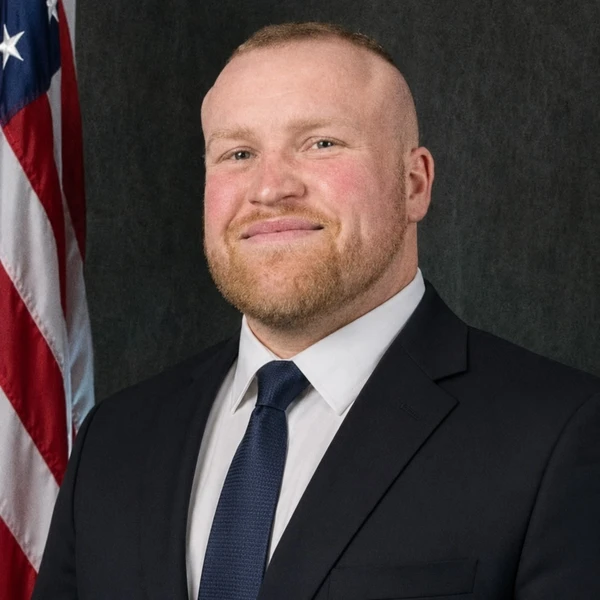
Aaron Ewy

1x

Finalist

Bio

Hi, I’m Aaron! I’m a 10 year veteran of the Air Force Reserve with one deployment to the Middle East. I’m also a former police officer with almost four years of law enforcement experience. I’m a first generation law student and will start my journey as a Washburn 1L in August 2026. Last but farthest from least, I’m husband and a father who is working toward a better life for my family. I live in Augusta, KS, and am unable to relocate my family. For this reason, I must commute almost two hours one way to school every day or fund intermittent lodging for more intensive weeks. It is scary to abandon a full time job and career after supporting my family all these years, but I must take the bold leap in pursuit of a new professional era for my family and those I intend to serve.

Education

Washburn University

Doctoral degree program (PhD, MD, JD, etc.)
2026 - 2030
  • Majors:
    • Law

Wichita State University

Bachelor's degree program
2016 - 2018
  • Majors:
    • Criminal Justice and Corrections, General

Hutchinson Community College

Associate's degree program
2014 - 2016
  • Majors:
    • Education, General

Miscellaneous

  • Desired degree level:

    Doctoral degree program (PhD, MD, JD, etc.)

  • Graduate schools of interest:

  • Transfer schools of interest:

  • Majors of interest:

  • Not planning to go to medical school
  • Career

    • Dream career field:

      • Law Practice
    • Dream career goals:

    • Safety Officer (Police and Fire)

      Augusta Department of Public Safety
      2025 – Present1 year
    • Field Investigations Manager

      The Claims Center, LLC
      2022 – 20253 years
    • Police Officer

      Hays, KS Police Department
      2019 – 20212 years
    • Technical Sergeant/E-6

      United States Air Force Reserve
      2013 – 202411 years

    Sports

    Powerlifting

    Club
    2009 – Present17 years

    Public services

    • Volunteering

      Veterans Affairs — Knowledgeable friend
      2023 – Present
    • Volunteering

      Medical Ministries International — Medical Interpreter
      2019 – 2019

    Future Interests

    Advocacy

    Politics

    Volunteering

    Philanthropy

    Entrepreneurship

    Bick First Generation Scholarship
    While enjoying an upscale chocolate from our favorite local candy store, I could not help but admire the fine packaging. From the box the chocolate came in, to the bag that box came in, every part of the experience was exemplary. I shared this thought with my wife, whose upbringing was like mine. “Those kinds of things only impress us because we grew up poor,” she said. This phrase, while meant playfully and respectfully, lingers with me to this day. It is a quintessential “little bit of truth to every joke” moment that feels like a mild gut punch when I really begin to meditate on it. And with that meditation also comes meditation on my journey to this point. Nobody in my family has ever gone where I have gone or taken the steps I have taken through life. From enlisting in and deploying with the United States Air Force, to being the first to aspire for undergraduate and law degrees, pioneering a new way of life has defined my life journey thus far. To me, being a first-generation student means living on an island. The fear of failure and the unknown are ever salient, and nobody in your family or inner circle can instruct you through the nuances of the trail you blaze. Though their love props you up, they simply do not understand what challenges you are navigating. They do not feel self-doubt in the wake of this dark place. They do not tell themselves how denigrating it might feel should your best not be enough and you return to them a tail-tucking failure. However, there is extraordinary pride in stepping toward the summit. There is elation in doing what those around you have never done so that you can share with them things they have never had. All these things are what being a first-generation student means to me. The closest school that offers an in-person curriculum in my region is a little over an hour and a half away from where I live. However, as a father and husband, the decision to relocate for sake of convenience is one I cannot make. I cannot abandon my familial duties, nor can I uproot the lives of my wife and daughter. After all, they are my biggest reasons for taking this bold next step. Omitting them from this process and my life over the next few years would be contradictory to my vision for our family. As such, this scholarship would help offset transportation and temporary lodging costs while I attend school. It would help offset the cost of supplies for my classes so that my mind can remain on my studies, rather than my expenses. A career as an attorney would not only afford me an opportunity to make a meaningful impact for strangers in my community, but it would also represent a break in the cycle that defined lives of generations before me. The theme of financial destitution in my family will end with me.
    Jimmy Chong Scholarship
    From refusing to omit facts from a report to carefully avoiding Fourth Amendment violations that officers confront daily, ethical, and professional considerations have been ingrained in every aspect of my career. As a former police officer, I witnessed firsthand how widespread methamphetamine and heroin use can erode both a community and the public’s confidence in an agency’s competence. On multiple occasions, I was tempted to stretch my interpretation of the law to catch someone in possession of stolen property or illegal drugs. However, my training and experience taught me that “bending the rules” causes citizens, defense attorneys, and even prosecutors to question the integrity and quality of your work. Who, then, becomes the true victim? Is it the defendant whose life is temporarily disrupted, only to have the case dismissed because the evidence was deemed fruit of the poisonous tree? That individual may have needed rehabilitation, yet because someone chose to circumvent the law, they were denied court-ordered treatment and instead may have learned only how to better conceal their criminal conduct. Or is society itself the greater victim? After all, the public entrusts law enforcement officers not only to uphold justice, but also to serve as responsible stewards of taxpayer resources. Arresting, reporting on, and attempting to prosecute someone without proper probable cause or without legal and ethical justification is a betrayal of that trust. This is one example of how overzealous practices can erode public confidence, waste resources, and undermine the efficiency and legitimacy of the justice system. Zealous advocacy becomes problematic when integrity is cast aside and winning is valued more highly than honesty and the legal process itself. As officers of the court, attorneys are held to an even higher standard than law enforcement officers in preserving the integrity of the legal system and maintaining the public’s trust in the same. Throughout my career as a police officer, I remained committed to preserving the public trust through equal enforcement of the law, regardless of who I encountered. I focused on criminal conduct and patterns of behavior rather than personal characteristics. I never based enforcement decisions on race, gender, age, creed, or disability status, but instead on the concerns and safety of the community I served. For example, I was notified by a concerned citizen that a young toddler was regularly being transported in her mother’s vehicle without even a seatbelt. Using lawful means and operating fully within the confines of the law, I conducted a traffic stop, observed the child seated improperly in the front passenger seat, and issued the mother a citation for failing to properly restrain her daughter. I did not issue the citation to create unnecessary hardship for the mother, but rather to protect a child who was too young to understand the danger she faced each day. Sometime later, I learned that the mother had immediately purchased and properly installed an appropriate child restraint system for her daughter. This application of the law did not infringe upon anyone’s rights, nor was it motivated by the mother’s race or age. Instead, it demonstrated how laws are often written not merely to punish, but to protect society. I intend to continue applying the law in this manner throughout my legal career—not only to advocate effectively for future clients, but also to uphold public confidence in the legal system designed to serve and protect society at large. I intend to continue equal application of the law to all, without preference or prejudice, but the needs of the client in front of me and the trust bestowed upon the courts by generations of faithful American people.
    Ethel Hayes Destigmatization of Mental Health Scholarship
    On February 19, 2026, my life changed forever. I was driving to the gym when I received a phone call from a family member informing me that my older cousin, Christina “Tina” Marie Schoenecker, had died. As the oldest child in my household, I always viewed Tina as more of a sister than a cousin. I admired her and aspired to follow in her footsteps. After Tina joined the United States Army Reserve directly out of high school in 2010, I followed a similar path by enlisting in the United States Air Force Reserve in 2013. In May 2017, Tina deployed to Baghdad, Iraq. Two months later, I deployed to Kuwait. During our deployments, we communicated regularly, often discussing military life and challenges of deployment that nobody else in our family would understand. We spoke often about the future and made plans to travel together once we returned home. I returned home in January 2018. Tina was expected to return only weeks later. Instead, I received the devastating news that she had died from an apparent self-inflicted gunshot wound in her barracks. The moment I heard those words, everything around me seemed to stop. I immediately called my mother to see whether she had been notified. To this day, I can still hear her screams after learning that her oldest niece was gone. I remember experiencing tunnel vision. I was already driving when I got the call, and I could not even process where I was going. I drove straight to the gym simply because that had been my original destination. Sitting in the parking lot, I tried to gather my thoughts before realizing I needed to go home to Arlington, Kansas. Tina was buried in our hometown cemetery after a closed-casket military service, a reality that felt impossible to accept. In the months following her death, my aunt frequently consulted me about military procedures and information she received from the Army bereavement liaison. As she shared additional details surrounding Tina’s death, I found myself searching for answers and closure that never came. Nothing about her death made sense to me. I replayed our conversations repeatedly, looking for warning signs I may have missed. The more information I learned, the less peace I found. Over time, I developed an overwhelming and irrational sense of guilt. I convinced myself that Tina should have made it home instead of me, despite knowing logically that such thoughts made no sense. At the time, however, I did not understand why I felt that way. I believed I needed to remain strong for my family, which struggled to cope with our loss. I wanted to be the person who held everyone together. I wanted to fix what had been broken. Instead, I suffered in silence. As the years passed, the cumulative effect of suppressing my emotions and feeding my own negative thoughts began to take hold. What I ignored mentally began to manifest physically through anger, emotional withdrawal, and thoughts of self-harm. Even then, I refused to acknowledge that I needed help. When Tina’s younger sister later attempted to overdose on over-the-counter medication, I focused entirely on helping her while continuing to ignore my own deteriorating mental health. In the military, suicide awareness and prevention training is common. Service members are taught to recognize warning signs and support others in crisis. At the same time, however, military culture often emphasizes toughness, resilience, and pushing through pain to accomplish the mission. I embraced that mentality fully. I internalized the belief that admitting vulnerability was failure. In 2021, I married my wife and began building a family despite carrying unresolved trauma and emotional instability. The reality of how deeply I was struggling became impossible to ignore in 2022, when I failed a polygraph examination during the hiring process for a law enforcement position because I answered honestly that suicidal thoughts had crossed my mind in the past. Without any meaningful discussion or context, I was effectively excluded from a profession centered around exposure to trauma and crisis. That experience profoundly changed how I viewed mental health in society. For the first time, I realized that honesty about mental health struggles could carry professional and social consequences. I came away believing that, if I wanted to succeed, I would need to suppress my reality and pretend everything was fine. Meanwhile, my wife often described me as a “ticking time bomb.” Although I was never physically abusive, I was irritable, emotionally distant, and difficult to be around. By 2024, it became undeniable that something needed to change. Encouraged by my wife and recognizing that I could not continue living the way I had, I sought treatment through the Veterans Health Administration. I was diagnosed with Post-Traumatic Stress Disorder, Generalized Anxiety Disorder, and Major Depressive Disorder. Treatment forced me to confront emotions I had spent years suppressing. I began to understand that seeking help was not weakness, but strength. That realization changed my life. As I progressed through treatment, I began opening up to my family about my experiences. I established more honest and meaningful conversations with my aunt, cousins, and others who had also been affected by Tina’s death. I also became someone friends and colleagues could confide in regarding their own struggles with mental health. Rather than avoiding difficult conversations, I worked to create an environment where people felt safe being honest about their pain and seeking help when needed. Most importantly, I learned what healthy coping and emotional communication looked like, lessons I now strive to model for my daughter. My experiences have fundamentally changed how I communicate with both myself and others. They have deepened my empathy, strengthened my relationships, and reshaped my goals in life. While Tina’s death will always remain one of the most painful experiences I have endured, it also forced me to confront truths about mental health, vulnerability, and resilience. Through that journey, I have become more compassionate, more self-aware, and more committed to living authentically and helping others do the same.