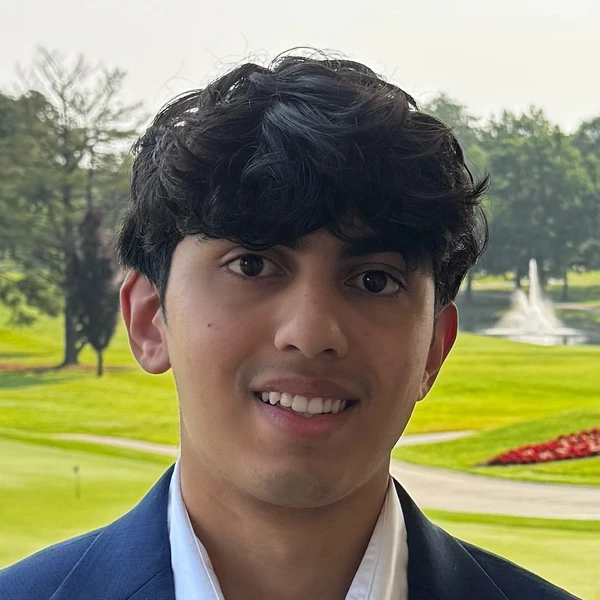
user profile avatar

Aaditya Kotadia

1x

Finalist

Bio

Hi there! My name is Aaditya, a first-gen American college student, Eagle Scout, and Computer Science major at the University of Virginia, where I'm also an RA for 52 of my residents! From teaching Taekwondo, to building educational software like Taikwondo.org, I love the feeling of supporting people in any way I can, and I really strive to put my best foot forward everyday. I'm a huge believer in the butterfly effect and with that mindset, I do my best to live every day to its fullest! My other interests at college are entrepreneurship and business, weightlifting, exploring the outdoors, and trying new coffee! To whomever is reading this, I would - from the bottom of my heart - be so incredibly grateful for any support you could provide for me to reach my educational dreams.

Education

University of Virginia-Main Campus

Bachelor's degree program
2024 - 2025
  • Majors:
    • Entrepreneurial and Small Business Operations
    • Computer Science
  • Minors:
    • Business/Commerce, General

Broad Run High School

High School
2021 - 2024

South Lakes High School

High School
2020 - 2021

Miscellaneous

  • Desired degree level:

    Doctoral degree program (PhD, MD, JD, etc.)

  • Graduate schools of interest:

  • Transfer schools of interest:

  • Majors of interest:

    • Computer Science
    • Human Computer Interaction
    • Computer Systems Analysis
    • Mathematics and Computer Science
    • Business/Commerce, General
    • Entrepreneurial and Small Business Operations
  • Not planning to go to medical school
  • Test scores:

    • 1550
      SAT
    • 1450
      PSAT

    Career

    • Dream career field:

      Computer Software

    • Dream career goals:

      EdTech Software Engineer / Technical Founder

    • Founder

      Cardinal
      2025 – Present1 year
    • Co-Founder

      Classik.ai
      2025 – 2025
    • RA (Resident Advisor)

      UVA Resident Staff
      2025 – Present1 year
    • Founder

      Taikwondo.org
      2023 – 20241 year
    • Head Instructor

      Sterners Tae Kwon Do Academy
      2020 – 20244 years

    Sports

    Pickleball

    Intramural
    2024 – Present2 years

    Climbing

    Intramural
    2024 – Present2 years

    Weightlifting

    Club
    2023 – Present3 years

    Taekwondo

    Club
    2011 – 202413 years

    Awards

    • Regional Tournament Awards (Sparring, Breaking, Forms, Weapons)

    Public services

    • Volunteering

      NHS (National Honor Society) — Color Run Committee, Tutor, Volunteer
      2022 – 2024
    • Volunteering

      Mu Alpha Theta (Math Honor Society) — Competitions Coordinator, Tutor
      2022 – 2024
    • Volunteering

      Boy Scouts of America (BSA) — Eagle Scout, Patrol Leader, Troop Guide, Scribe, Historian
      2013 – 2024
    • Volunteering

      Interact — Vice President of Service, Vice President of Membership, Volunteer
      2022 – 2024

    Future Interests

    Advocacy

    Politics

    Volunteering

    Philanthropy

    Entrepreneurship

    Learner Calculus Scholarship
    To the human eye, a roundhouse kick is fluid art. It is the snap of the uniform, the pivot of the heel, and the blur of motion. But to a computer? It’s chaos. When I started building Taikwondo.org, my goal was simple: create an instructor that could critique form for students who, like me, couldn’t afford private lessons. I fed the video feed into my code, expecting magic. I got gibberish. The computer didn’t see a kick, it saw a frantic, shifting grid of millions of pixels. It was blind to the motion I loved. That’s when I realized that code alone wasn’t enough. I needed a way to translate the dynamic, sweating reality of the dojo into the binary logic of the machine. I needed the language of change. I needed Calculus. I stopped looking at the screen as a programmer and started looking as a mathematician. How does a computer know where a leg ends and the wall begins? It’s not magic; it’s a derivative. The algorithm scans the grid of pixels, calculating the rate of change in intensity. Where the brightness shifts suddenly - a spike in the graph, a steep slope - that is an edge. That is a limb. By measuring these rates of change across time, the machine doesn’t just see a picture; it understands velocity, acceleration, and form. Calculus was the optic nerve that allowed my software to see. This realization that Calculus is the engine of “how” has become the obsession driving my career goals—not stopping at computer vision. Now, as I co-found Classik.ai to build an adaptive SAT tutor, I am wrestling with Large Language Models. People call AI intelligent, but under the hood, it’s just a massive optimization problem. When we train a model using libraries like TensorFlow, we essentially prompt a hike down a mountain blindfolded - we use gradient descent, a fundamental calculus concept, to find the lowest point of error. Every time the LLM learns to explain a math problem better, it’s because the Chain Rule allowed us to propagate that correction back through billions of parameters, adjusting the weights just enough to minimize the loss. In my field, Calculus is not a dusty prerequisite or a weed out class. It is the difference between a static database and a learning mind. It is the only tool we have that can model the messy, beautiful continuity of the real world. Yet, for me, the most impactful lesson didn’t come from a textbook. It came when I was debugging those error functions at 2 a.m., realizing that my struggle with the math was directly proportional to the solution I was building. That struggle finally paid off when I read a comment under my Taikwondo.org tutorial YouTube video from a stranger: @safa-uc1mk “As someone that can’t afford to study tkd but has always wanted to, I can’t wait to try this tool.” In that moment, the math shifted. I realized that while Calculus is technically the study of limits, for builders like me, it is the tool that removes them. My code - my functions (and derivatives) - were creating opportunities others never had. I used to think of myself as just a tinkerer, moving colored blocks of code around a screen on Scratch as a kid. However, in these past few years, I’ve learned that building for the future requires more than just syntax; it requires vision. Calculus gives me that vision. It allows me to take the “why” that I’ve asked since childhood and translate it into systems that can see, learn, and hopefully, teach the world.
    Dream BIG, Rise HIGHER Scholarship
    The structural integrity of a toaster pastry is, frankly, terrible. I learned this the hard way during a $15,000 Pop-Tart house competition at my high school's Real Estate club (which I founded). While my members debated zoning laws of our Pop-Tart houses, I was frantically trying to cement a load-bearing wall made of strawberry filling before the roof collapsed. It was messy, chaotic, and sticky. But when we finally stepped back, looking at that sugar-coated duplex, I realized something profound: you can build value out of almost anything if you understand the architecture. That day, we were building with frosting. Today, I am trying to build with something much heavier. My life hasn’t always felt like a sturdy construction. Growing up, the "foundation" was often shifting. My parents, immigrants from India, carried the trauma of scarcity—memories of days where they couldn't afford both food and a bus ticket. This bred a deep, structural frugality in our household. I didn't have my own room until recently; I didn't go to the dentist until I was sixteen. I tried to help stabilize things early on. At five years old, I opened an art gallery in our small apartment hallway. Admission: 10 cents. For an extra nickel, I’d draw your shoe. I hustled for every dime, not because I wanted toys, but because I could feel the tension radiating off my parents when the bills arrived. I wanted to contribute to the rent, one nickel sketch at a time. But you can’t build a skyscraper on nickels. I needed a better blueprint. That blueprint became education. Specifically, Computer Science. My introduction to it wasn't in a gleaming lab, but through a glass window at the Herndon Library, watching a projector screen display what looked like a mix of gibberish and magical runes: curly braces and colons. I realized then that code was the ultimate construction material. It didn't cost money to buy "bricks" of Python. It didn't require a permit to pour a foundation of C++. It just required the will to learn. So, I started building. I didn’t have the capital to buy land, so I built digital real estate. My first major project, Taikwondo.org, was born from a simple inefficiency: I was a head instructor at my Taekwondo dojang, but I could only fix one student's kick at a time. I saw fragments of my past self in them—kids with *generously* sub-par technique - but massive potential. I wanted to help them all, but teaching 30 students individually in a 30-minute class proved to be impossible. I spent months learning computer-vision libraries from scratch and crashing my code hundreds of times. But eventually, I launched Taikwondo.org to correct stances in real-time - and it grew to 8,000 users globally. It was a space—a virtual dojang—where anyone could enter without an admission fee. What sticks with me the most to this day is a YouTube comment by a user named Safa, under a video I made explaining how to use my site. @safa-uc1mk “As someone that can't afford to study tkd but has always wanted to, I can't wait to try this tool. Thank you for making and sharing this!” For the first time, I wasn’t just breaking down barriers in my own life, I was able to tear down the walls for people I had never even met. After this, for a few years, I thought I had reinforced my family’s foundation—I was working and earning an income, investing in a Roth IRA, and I even got into and was doing well in college. Then, the earthquake hit. June 2025. My dad lost his job. He had been the primary earner. We had just signed a mortgage, a symbol of the stability we had chased for decades, right before the layoff. Suddenly, the "how are we going to pay for it?" conversation wasn't just a whisper over dinner; it was the only conversation. The financial gap for my tuition widened to over $19,000. It felt like being back in the gym during 10th grade, staring at the ‘naked’ bar on the bench press with my arms shaking, unable to move the weight. The pressure was physical. But hypertrophy - muscle growth - only happens through stress. You have to tear the fibers to rebuild them stronger. I didn’t buckle under the bar then, and I won’t buckle under this mortgage now. Instead, I am doubling down on the build. My education has given me the tools to scale my impact from a hallway gallery to a global infrastructure. As someone who scored a 1550 on the SAT, this summer, using the lessons I learned building Taikwondo.org, I co-founded Classik.ai, an AI-powered SAT tutoring concept. The goal wasn’t just "ed-tech"; it was about democratizing personalized tutoring that I wished I had. I wanted to ensure that a kid in a rural village—or a kid in a crowded apartment trying to save 10 cents—has access to the same educational "blueprints" as the 1%. The more I reflect on my life, the more I understand that I am fulfilled not by money, but by the impact I can have on others lives. This was the primary reason that I worked so hard to become a residential advisor for 52 of my peers this year, where I’ve had the honor of supporting them through homesickness and facing discrimination. Receiving the Dream BIG, Rise HIGHER Scholarship would be the steel reinforcement I desperately need right now. It would allow me to focus on architecting these solutions for support - both through code and community - rather than scrambling to keep the bills paid. Life, unlike a Pop-Tart house, rarely comes with instructions on the box. However, I have learned that if you are willing to study the schematics, endure the stress of the heavy lift, and keep pouring the foundation even when the ground shakes, you can build something that lasts. I am ready to rise higher. I just need a little help with the materials.
    LiveYourDash Entrepreneurs Scholarship
    "Aaditya's Displays." That was the name taped to the wall in jagged, crayon-red letters. I was five. The business model was, in my professional opinion, airtight: 10 cents for general admission to my living room, with a premium upsell of 5 cents for a custom charcoal drawing of your left shoe. And go to market strategy? Even better—a few flyers posted on my apartment building's bulletin board. I sat by the door of my apartment. I waited. And waited. I learned my first lesson in Total Addressable Market (TAM) that afternoon: it was, unfortunately, limited to my mother. But the silence of that empty living room didn’t deter me. It was the spark. I didn't want a job where I showed up to someone else's building; I wanted to build the museum myself. For the next decade, I iterated. In elementary school, I bought snacks in bulk and sold them in the hallways. The margins were better than the shoe drawings, but the soul was missing. It was just arbitrage. Money moving from one pocket to another. I needed a pivot. Growing up in a family where frugality was our first language, I saw how walls—financial, geographic, or social—kept people from their potential. I tried to chip away at these walls by founding a Real Estate Club at my High School to "translate" the complex, foreign world of property ownership for my peers. It was my first taste of using business to lower a ladder for others, not just to climb one myself. Then came Taekwondo. As a head instructor, I loved the feeling of teaching—seeing the "click" in a student's eyes when a kick finally connected. But I was fighting physics. I could only be in one place at one time. My impact was capped by the clock and the four walls of the dojang. That frustration - the friction between the impact I wanted and the limitations of my own two hands - is what truly inspired me to become a technical entrepreneur. It drove me to code Taikwondo.org - to ‘clone’ myself through code and computer-vision for 8,000 students I’d never meet. And it’s what drives me now, at UVA, where "sleepless nights" isn't a metaphor but a scheduled activity. Today, I’m building Convex, an AI-powered conversation coach. Think of it like Duolingo, but for social skills: helping people practice tricky interactions in a safe, private environment. Real entrepreneurship is far less glamorous than the magazines suggest. It’s me, huddled over a laptop, debating latency issues at 3 AM, fueled only by cheap coffee at the Foundry (the student Entrepreneurship space) and the terrifying, exhilarating possibility that I might actually fail. It’s the relentless pressure to build something that doesn't just "work" technically, but feels human. Because when a beta tester - someone who struggles with social anxiety - uses my tool to practice a conversation they’ve been dreading, and then goes out and nails it in the real world? That impact is worth every caffeine headache. With Convex, I recently won the B2C track of UVA's Entrepreneurship Cup out over 300 competitors - and I felt that same rush I was chasing at five years old. Entrepreneurship excites me because it is the ultimate translation tool. It allows me to take a small, localized value, like the empathy of a teacher or the comfort of a private space, and scale it until it touches millions. I’m still that kid sitting by the door of "Aaditya's Displays," hoping someone shows up. But the admission isn't 10 cents anymore. And the door is open to the whole world.
    STEAM Generator Scholarship
    When I first built my computer-vision program for Taikwondo.org, it had a problem: it couldn't recognize darker skin tones as accurately as lighter ones. The algorithm had learned from datasets collected from - and overwhelmingly for - the majority. Standing in my cramped apartment, watching frames misclassify over and over, I was reminded: this is what it means to be an outsider in the system. Even the AI couldn't see me. I’d spent my whole life learning to navigate systems that weren’t designed for people like me - the first in my family to attend college in America, the son of immigrants who back home had to choose between food and a bus ticket; being invisible wasn’t new. This time, though, I could rewrite the code which I, and people like me, lived by. Growing up, “outsider” had specific shapes. It was not having vacation stories when teachers asked where we went for break. It was finally getting my own room at fifteen - the first time I could close a door and feel like I had space to think. My parents worked themselves to exhaustion, and because they'd saved for the chronic medical expenses common in my family, we technically weren't “need-y” enough for much financial aid. On paper, we had resources. In reality, I worked 25 hours a week in high school, missing every football game and friend's lacrosse match, just to help cover what a college education would cost. I felt so deeply that the ‘system’ failed me again. However, these constraints taught me something unexpected: when systems fail you, you learn to build better ones. At fourteen, teaching Taekwondo to thirty students at a time, I saw kids struggle with techniques I couldn’t correct one-on-one. I realized I wasn't limited by what I knew, but by only being in one place at one time. I then had a paradoxical idea: what if I could help every one of my students at the same time - individually? So I learned - and wrote - the code. While my peers had tutors, I had YouTube tutorials at 2x speed and documentation I’d read three times to understand. But for the first time, with code, my only limitations were my own curiosity and patience - something entirely in my control. After a few months, I scraped together Taikwondo.org, a computer-vision-powered trainer that beyond my wildest dreams, reached over 8,000 users - and I made it free deliberately. I’d spent years watching resources I desperately needed sit behind paywalls my family couldn't afford - SAT prep courses, tutoring, even extra martial arts training. I wasn’t going to replicate that barrier. That same thinking led me to begin co-founding Classik.ai this summer - an AI-powered SAT tutoring platform making personalized test prep (which normally costs thousands of dollars) accessible and affordable. I now have the power to build and empower people just like and completely different to me. It’s a power I’m not going to take for granted. My biggest concern when I entered higher education wasn't academic - it was financial, with that recurring dinner table question: “How are we going to pay for this?” replaying in my mind. My hope is that computer science gives me the tools to build technology that doesn’t replicate existing biases but actively corrects them. Education for me isn’t an escape from my background; it’s the amplification of the perspective that background provides. Today, I'm making sure the systems I build can see everyone clearly - because I know what it's like when the system can't - and I know what it costs.
    Anthony Belliamy Memorial Scholarship for Students in STEAM
    I was the kid who ate peanut butter sandwiches in silence while others shared family camping stories. At Scout meetings, when the troop swapped tales of favorite campout meals and family traditions, I'd nod along, chewing my simple sandwich and wondering if I'd ever find my voice in this circle of belonging. But in that quiet space between listening and longing, I learned something that would reshape how I see leadership entirely: the most powerful voices aren't always the loudest ones in the room. Sometimes they're the ones who notice who isn't being heard. Growing up as a student of immigrant parents where frugality wasn't a choice but survival, I understood early that being different often means being invisible. I had to skip some Scout camps to help my family save money, missing those late-night campfire conversations that seemed to weave everyone else together. When teachers asked about spring break adventures, I had nothing to share except the adventures I'd read about in my Percy Jackson books. That feeling of existing on the margins taught me to see the world from a unique vantage point - one that noticed the other quiet kids, the ones whose stories never got told. This perspective became invaluable when I stepped into my leadership role as Scout Guide. I wasn't drawn to the position for rank advancement; I wanted it because I recognized something profound in the nervous energy of younger Scouts that reminded me of myself. When I met a hesitant new Scout worried about his first campout, I didn't just give him a packing list. I spent an hour walking him through what to expect, sharing the fears I'd once carried, staying by his side that entire weekend. Watching him transform from anxious to confident, seeing parents approach me with heartfelt gratitude, I realized my early experiences of feeling overlooked had equipped me with something invaluable: the ability to see and nurture potential in others who felt invisible. This revelation followed me into the Taekwondo dojang, where I evolved from a five-year-old student struggling with basic forms to head instructor leading classes of thirty. I wasn't drawn to teach for the paycheck - I taught because every time I saw a frustrated beginner staring at their reflection, wondering if they'd ever get it right, I saw myself. When I knelt down to a struggling student, and instead of critiquing his technique, praised his resilience, I was saying what I'd wished someone had told me: your way of learning matters, and there's a path forward designed just for you. This teaching philosophy sparked something bigger. Sitting in my room during junior year, with my laptop screen overflowing with YouTube Python tutorials and Linear Algebra textbooks, I built Taikwondo.org - a free, AI-powered platform offering real-time technique correction to students who couldn't always afford traditional instruction. Watching it reach over 6,000 users globally, I understood that technology could be more than just code. It could be empathy scaled. Now, as a Computer Science major at UVA, and a Residential Advisor creating community for 52 residents from vastly different backgrounds, I see how those early experiences prepared me for this moment. When I buy each resident their favorite fruit - mangoes for Annabelle, apples for Ari - I'm creating the environment where everyone feels seen, the kind I needed when eating those peanut butter sandwiches alone. When residents come to my door at 9 AM, struggling with homesickness or discrimination, they're finding someone who understands what it feels like to navigate challenges while wondering if you belong. This journey has taught me that quiet revolution happens through consistent acts of noticing and nurturing. My proudest achievement towards this path has been the adaptive and personalized AI tutor I co-founded this summer with a friend from UVA. We’ve received verbal commitment to implement in a local K-12 school, which for me has been my biggest leap towards my goal for everyone to have a teacher that adapts to their unique needs, their unique story, and their unique way of making sense of the world. Anthony Belliamy's legacy lives in this understanding - that true strength isn't about overcoming adversity alone, but about transforming that experience into a bridge helping others cross their own challenges with dignity and hope. In STEAM fields, where innovation often focuses on solving problems at scale, I want to build systems that preserve what matters most: the human connection - the individual story, the quiet voice that has something powerful to say.