Hobbies and interests
Exercise And Fitness
Community Service And Volunteering
Business And Entrepreneurship
Artificial Intelligence
Education
Martial Arts
Taekwondo
Jiu Jitsu
Rock Climbing
Hiking And Backpacking
Camping
Weightlifting
Beach
Reading
Business
Self-Help
I read books multiple times per month
Aaditya Kotadia
1x
FinalistAaditya Kotadia
1x
FinalistBio
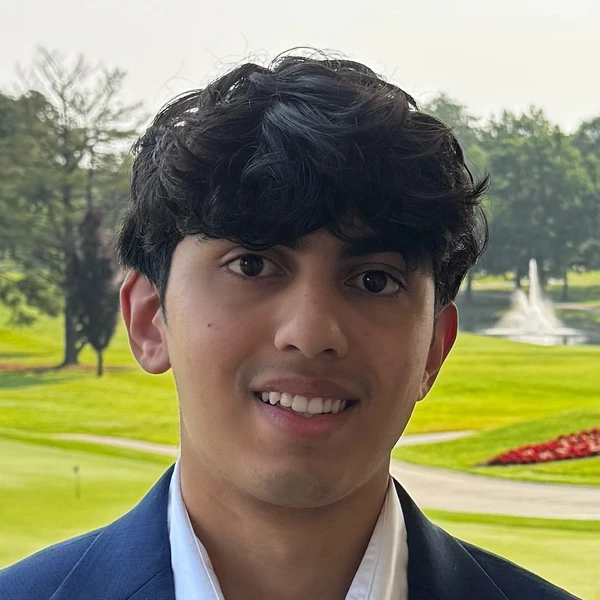
Hi there! My name is Aaditya, a first-gen American college student, Eagle Scout, and Computer Science major at the University of Virginia, where I'm also an RA for 52 of my residents! From teaching Taekwondo, to building educational software like Taikwondo.org, I love the feeling of supporting people in any way I can, and I really strive to put my best foot forward everyday. I'm a huge believer in the butterfly effect and with that mindset, I do my best to live every day to its fullest!
My other interests at college are entrepreneurship and business, weightlifting, exploring the outdoors, and trying new coffee!
To whomever is reading this, I would - from the bottom of my heart - be so incredibly grateful for any support you could provide for me to reach my educational dreams.
Education
University of Virginia-Main Campus
Bachelor's degree programMajors:
- Entrepreneurial and Small Business Operations
- Computer Science
Minors:
- Business/Commerce, General
Broad Run High School
High SchoolSouth Lakes High School
High SchoolMiscellaneous
Desired degree level:
Doctoral degree program (PhD, MD, JD, etc.)
Graduate schools of interest:
Transfer schools of interest:
Majors of interest:
- Computer Science
- Human Computer Interaction
- Computer Systems Analysis
- Mathematics and Computer Science
- Business/Commerce, General
- Entrepreneurial and Small Business Operations
Test scores:
1550
SAT1450
PSAT
Career
Dream career field:
Computer Software
Dream career goals:
EdTech Software Engineer / Technical Founder
Founder
Cardinal2025 – Present1 yearCo-Founder
Classik.ai2025 – 2025RA (Resident Advisor)
UVA Resident Staff2025 – Present1 yearFounder
Taikwondo.org2023 – 20241 yearHead Instructor
Sterners Tae Kwon Do Academy2020 – 20244 years
Sports
Pickleball
Intramural2024 – Present2 years
Climbing
Intramural2024 – Present2 years
Weightlifting
Club2023 – Present3 years
Taekwondo
Club2011 – 202413 years
Awards
- Regional Tournament Awards (Sparring, Breaking, Forms, Weapons)
Public services
Volunteering
NHS (National Honor Society) — Color Run Committee, Tutor, Volunteer2022 – 2024Volunteering
Mu Alpha Theta (Math Honor Society) — Competitions Coordinator, Tutor2022 – 2024Volunteering
Boy Scouts of America (BSA) — Eagle Scout, Patrol Leader, Troop Guide, Scribe, Historian2013 – 2024Volunteering
Interact — Vice President of Service, Vice President of Membership, Volunteer2022 – 2024
Future Interests
Advocacy
Politics
Volunteering
Philanthropy
Entrepreneurship
Learner Calculus Scholarship
To the human eye, a roundhouse kick is fluid art. It is the snap of the uniform, the pivot of the heel, and the blur of motion. But to a computer? It’s chaos.
When I started building Taikwondo.org, my goal was simple: create an instructor that could critique form for students who, like me, couldn’t afford private lessons. I fed the video feed into my code, expecting magic. I got gibberish. The computer didn’t see a kick, it saw a frantic, shifting grid of millions of pixels. It was blind to the motion I loved.
That’s when I realized that code alone wasn’t enough. I needed a way to translate the dynamic, sweating reality of the dojo into the binary logic of the machine. I needed the language of change.
I needed Calculus.
I stopped looking at the screen as a programmer and started looking as a mathematician. How does a computer know where a leg ends and the wall begins? It’s not magic; it’s a derivative. The algorithm scans the grid of pixels, calculating the rate of change in intensity. Where the brightness shifts suddenly - a spike in the graph, a steep slope - that is an edge. That is a limb. By measuring these rates of change across time, the machine doesn’t just see a picture; it understands velocity, acceleration, and form.
Calculus was the optic nerve that allowed my software to see.
This realization that Calculus is the engine of “how” has become the obsession driving my career goals—not stopping at computer vision. Now, as I co-found Classik.ai to build an adaptive SAT tutor, I am wrestling with Large Language Models. People call AI intelligent, but under the hood, it’s just a massive optimization problem.
When we train a model using libraries like TensorFlow, we essentially prompt a hike down a mountain blindfolded - we use gradient descent, a fundamental calculus concept, to find the lowest point of error. Every time the LLM learns to explain a math problem better, it’s because the Chain Rule allowed us to propagate that correction back through billions of parameters, adjusting the weights just enough to minimize the loss.
In my field, Calculus is not a dusty prerequisite or a weed out class. It is the difference between a static database and a learning mind. It is the only tool we have that can model the messy, beautiful continuity of the real world.
Yet, for me, the most impactful lesson didn’t come from a textbook. It came when I was debugging those error functions at 2 a.m., realizing that my struggle with the math was directly proportional to the solution I was building. That struggle finally paid off when I read a comment under my Taikwondo.org tutorial YouTube video from a stranger:
@safa-uc1mk
“As someone that can’t afford to study tkd but has always wanted to, I can’t wait to try this tool.”
In that moment, the math shifted. I realized that while Calculus is technically the study of limits, for builders like me, it is the tool that removes them. My code - my functions (and derivatives) - were creating opportunities others never had.
I used to think of myself as just a tinkerer, moving colored blocks of code around a screen on Scratch as a kid. However, in these past few years, I’ve learned that building for the future requires more than just syntax; it requires vision. Calculus gives me that vision. It allows me to take the “why” that I’ve asked since childhood and translate it into systems that can see, learn, and hopefully, teach the world.
Priscilla Shireen Luke Scholarship
I stood on the mat, holding a brown breaking board, watching a room of thirty students. I could correct Sam’s pivot, or I could fix Victoria’s chamber, but I couldn’t do both simultaneously. As the Head Instructor of my Taekwondo dojang, I lived for the spirit and the moment a student finally "got it." But I hated the clock. A half an hour class, thirty students, one me. The math was cruel: my impact was capped by physics. I could only be in one place at a time.
That frustration became my catalyst. The tinkerer in me realized I was using the wrong tool. To truly give back, I needed to stop teaching a class, and start writing Classes.
I traded the confidence of the dojang floor for the quiet struggle of a computer screen. I didn’t have formal training; I had late nights, confusion, and a feeling of being small again. But driven by the memory of those thirty kids, I taught myself to build Taikwondo.org from scratch. It wasn’t a startup launch; it was an extension of my hand to students I couldn’t reach physically. When I received a message from a user in India - someone who had never stepped foot in a Taekwondo gym but learned a technique from my code - I realized the power of this shift. My service wasn’t limited to my zip code anymore. With Taikwondo growing to over 8,000 users globally, I had found a way to be in 8,000 places at once.
This drive to democratize access isn’t academic; it’s autobiographical. As a First-Generation Low-Income student, I know what it feels like to be the mismatched puzzle piece, quietly eating peanut butter sandwiches on Boy Scout trips while others swapped stories of family traditions I didn’t have. That isolation fueled my resolve to become a Troop Guide, ensuring younger Scouts never felt the same exclusion. When parents thanked me for creating a space where their children finally belonged, I realized I could build that opportunity physically. For my Eagle Scout project, I engineered a modular maze at the local library, constructing a free, public playground for kids to discover robotics logic and programming in a fun and approachable way - the way I would have wanted.
This truth is what drives my current work with Classik.ai. I co-founded this AI-powered tutoring concept not to disrupt an industry, but to scale a specific feeling. As a Resident Advisor, I often have 12 AM conversations with overwhelmed students, talking about fears and dreams rather than just homework. Technology usually strips away that humanity, but I am building Classik.ai to replicate it, creating adaptive models that understand a student’s struggle, not just their test score— today, I'm using my technical skills to offer that level of personal care to thousands of students who can’t afford a private tutor.
Looking to the future, my ambition is to engineer hope. I refuse to let the next generation’s potential be defined by their parents’ tax bracket. My specific goal is to open-source the adaptive algorithms behind Classik.ai, allowing educators in under-resourced communities to build their own localized tutoring tools without needing a software engineering degree. I want to build the digital infrastructure that allows others to teach.
Priscilla Shireen Luke’s legacy was one of spreading hope. My goal is to spread the means to achieve it. I want to use my blocks - code and otherwise - to build platforms where millions can stand. I will continue to be the bridge, using syntax to serve, ensuring that no student ever feels like a mismatched piece again.
Dream BIG, Rise HIGHER Scholarship
The structural integrity of a toaster pastry is, frankly, terrible.
I learned this the hard way during a $15,000 Pop-Tart house competition at my high school's Real Estate club (which I founded). While my members debated zoning laws of our Pop-Tart houses, I was frantically trying to cement a load-bearing wall made of strawberry filling before the roof collapsed. It was messy, chaotic, and sticky. But when we finally stepped back, looking at that sugar-coated duplex, I realized something profound: you can build value out of almost anything if you understand the architecture.
That day, we were building with frosting. Today, I am trying to build with something much heavier.
My life hasn’t always felt like a sturdy construction. Growing up, the "foundation" was often shifting. My parents, immigrants from India, carried the trauma of scarcity—memories of days where they couldn't afford both food and a bus ticket. This bred a deep, structural frugality in our household. I didn't have my own room until recently; I didn't go to the dentist until I was sixteen.
I tried to help stabilize things early on. At five years old, I opened an art gallery in our small apartment hallway. Admission: 10 cents. For an extra nickel, I’d draw your shoe. I hustled for every dime, not because I wanted toys, but because I could feel the tension radiating off my parents when the bills arrived. I wanted to contribute to the rent, one nickel sketch at a time.
But you can’t build a skyscraper on nickels. I needed a better blueprint.
That blueprint became education. Specifically, Computer Science. My introduction to it wasn't in a gleaming lab, but through a glass window at the Herndon Library, watching a projector screen display what looked like a mix of gibberish and magical runes: curly braces and colons. I realized then that code was the ultimate construction material. It didn't cost money to buy "bricks" of Python. It didn't require a permit to pour a foundation of C++. It just required the will to learn.
So, I started building.
I didn’t have the capital to buy land, so I built digital real estate. My first major project, Taikwondo.org, was born from a simple inefficiency: I was a head instructor at my Taekwondo dojang, but I could only fix one student's kick at a time. I saw fragments of my past self in them—kids with *generously* sub-par technique - but massive potential. I wanted to help them all, but teaching 30 students individually in a 30-minute class proved to be impossible.
I spent months learning computer-vision libraries from scratch and crashing my code hundreds of times. But eventually, I launched Taikwondo.org to correct stances in real-time - and it grew to 8,000 users globally. It was a space—a virtual dojang—where anyone could enter without an admission fee. What sticks with me the most to this day is a YouTube comment by a user named Safa, under a video I made explaining how to use my site.
@safa-uc1mk
“As someone that can't afford to study tkd but has always wanted to, I can't wait to try this tool. Thank you for making and sharing this!”
For the first time, I wasn’t just breaking down barriers in my own life, I was able to tear down the walls for people I had never even met.
After this, for a few years, I thought I had reinforced my family’s foundation—I was working and earning an income, investing in a Roth IRA, and I even got into and was doing well in college. Then, the earthquake hit.
June 2025. My dad lost his job.
He had been the primary earner. We had just signed a mortgage, a symbol of the stability we had chased for decades, right before the layoff. Suddenly, the "how are we going to pay for it?" conversation wasn't just a whisper over dinner; it was the only conversation. The financial gap for my tuition widened to over $19,000.
It felt like being back in the gym during 10th grade, staring at the ‘naked’ bar on the bench press with my arms shaking, unable to move the weight. The pressure was physical. But hypertrophy - muscle growth - only happens through stress. You have to tear the fibers to rebuild them stronger. I didn’t buckle under the bar then, and I won’t buckle under this mortgage now.
Instead, I am doubling down on the build.
My education has given me the tools to scale my impact from a hallway gallery to a global infrastructure. As someone who scored a 1550 on the SAT, this summer, using the lessons I learned building Taikwondo.org, I co-founded Classik.ai, an AI-powered SAT tutoring concept. The goal wasn’t just "ed-tech"; it was about democratizing personalized tutoring that I wished I had. I wanted to ensure that a kid in a rural village—or a kid in a crowded apartment trying to save 10 cents—has access to the same educational "blueprints" as the 1%.
The more I reflect on my life, the more I understand that I am fulfilled not by money, but by the impact I can have on others lives. This was the primary reason that I worked so hard to become a residential advisor for 52 of my peers this year, where I’ve had the honor of supporting them through homesickness and facing discrimination.
Receiving the Dream BIG, Rise HIGHER Scholarship would be the steel reinforcement I desperately need right now. It would allow me to focus on architecting these solutions for support - both through code and community - rather than scrambling to keep the bills paid.
Life, unlike a Pop-Tart house, rarely comes with instructions on the box. However, I have learned that if you are willing to study the schematics, endure the stress of the heavy lift, and keep pouring the foundation even when the ground shakes, you can build something that lasts. I am ready to rise higher. I just need a little help with the materials.
RonranGlee Literary Scholarship
Title: The Benevolent Deception: Wormwood, Honey, and the Architecture of Truth
Selected Text: Lucretius, De Rerum Natura, Book I, lines 936-950
Latin Text: Sed veluti pueris absinthia taetra medentes cum dare conantur, prius oras pocula circum contingunt mellis dulci flavoque liquore, ut puerorum aetas improvida ludificetur labrorum tenus, interea perpotet amarum absinthi laticem deceptaque non capiatur, sed potius tali pacto recreata valescat, sic ego nunc, quoniam haec ratio plerumque videtur tristior esse quibus non est tractata, retroque vulgus abhorret ab hac, volui tibi suaviloquenti carmine Pierio rationem exponere nostram et quasi musaeo dulci contingere melle, si tibi forte animum tali ratione tenere versibus in nostris possem, dum percipis omnem naturam rerum ac persentis utilitatem.
English Translation (Adapted): But just as healers, when they try to give to children rank wormwood, first touch the rim of the cup all round with the sweet and golden fluid of yellow honey, so that the unwitting age of childhood may be deluded as far as the lips, and meanwhile may drink down the bitter juice of the wormwood, and though deceived, not be betrayed, but rather by such means be restored and gain strength; so now do I: since this doctrine seems generally somewhat bitter to those by whom it has not been handled, and the multitude shrinks back from it in dismay, I have resolved to set forth to you our doctrine in sweet-speaking Pierian song, and as it were to touch it with the sweet honey of the Muses, if by chance in this way I might hold your mind with my verses, until you perceive the whole nature of things and sense its utility.
In Book I of De Rerum Natura, Lucretius offers a seemingly humble apology: he coats the bitter “wormwood” of philosophy with the sweet “honey” of poetry. On the surface, it appears to be a stylistic concession, an admission that his atomic theory is too dry for the average palette. However, the tension between the Latin verbs ludificetur (deluded) and capiatur (captured or betrayed) reveals that this is not an apology for style, but a radical epistemological claim. Lucretius posits that the human mind is biologically hardwired to reject the raw, unvarnished nature of reality. Therefore, to save the human soul from the sickness of superstition, the philosopher must not simply state the truth; he must disguise it. In a universe of indifferent atoms, “deception” is not the opposite of truth, but the only medicinal delivery system capable of curing the human condition.
The premise of the analogy is inherently insulting to the reader, yet this insult serves a diagnostic purpose. Lucretius casts the philosopher as the medentes (healer) and the reader as the pueris (child). The Latin aetas improvida, the “unwitting” or “unforeseeing” age, suggests a mind incapable of looking past immediate sensation. While this may seem condescending, closer examination of Epicurean doctrine reveals it to be an assessment of the universal human ego. Lucretius preaches a universe of strict materialism: no gods, no afterlife, only atoms and void. To the “unwitting” human mind, which craves eternal significance and divine protection, this reality is not just dry; it is terrifying.
Lucretius captures this terror in lines 944-945, noting that his doctrine appears tristior (grimmer/sadder) to the uninitiated. The vulgus (the crowd) abhorret ab hac - they shrink back from it in horror. The physical recoil implied by abhorret is essential to understanding the text. The “sickness” Lucretius is treating is a visceral, emotional rejection of mortality. A doctor cannot heal a patient who refuses to open their mouth. Thus, the central problem of the text is not “how to explain physics,” but “how to bypass the reader’s fear.”
This necessitates an inquiry into the ethics of the “Noble Lie.” Lucretius writes that the honey is applied so that the child ludificetur (may be deluded). The choice of ludificetur is arresting; it carries a connotation of mockery or making sport of someone. It is a dangerous word for a philosopher to use regarding his students. However, Lucretius immediately acts to contain the damage of this verb by pairing the deception with the result: decepta non capiatur.
While standard translations render this as “deceived but not betrayed,” the Latin capiatur (from capio) implies a physical capturing, seizing, or victimization. The distinction is crucial: while the reader’s senses are tricked, their agency is not “captured.” The deception is spatial and temporary: labrorum tenus (“as far as the lips”). The illusion of sweetness exists only at the “rim of the cup” (oras pocula). Once the liquid passes the lips, the deception dissolves, and the reality of the wormwood begins.
This redefines the morality of rhetoric. Conventionally, deception is considered malicious because it obscures the truth. Here, Lucretius uses deception to reveal the truth. The result of the trick is recreata valescat—”restored and gaining strength.” The means (the lie of the honey) are justified by the necessity of the cure (the truth of the wormwood). Without the honey, the wormwood is rejected; without the wormwood, the patient dies of ignorance.
There is also a profound “meta” struggle occurring in these lines. Lucretius was a devotee of Epicurus, a master who notoriously despised poetry and myth, viewing them as engines of superstition. By writing De Rerum Natura in dactylic hexameter, the meter of Homer and the gods, Lucretius effectively disobeys his master to save his master’s message. He explicitly identifies the honey as musaeo dulci... melle (“the sweet honey of the Muses”). This is an audacious intellectual risk. He invokes the very symbols of mythology (the Muses, the Pierian song) to coat the pill that destroys the belief in mythology. He uses the tools of the gods to dismantle the gods.
This suggests that Lucretius understood something about human psychology that Epicurus missed: we are creatures of narrative, not just logic. If the void were presented in dry prose, the human mind would flee. By wrapping the hard physics in the soft texture of the Muses, Lucretius creates a charm (carmine) to hold the reader’s attention (animum... tenere) while the difficult logic of atomism infiltrates the mind.
The sensory imagery employed reinforces this duality. The reader is forced to hold two opposing sensations simultaneously: the absinthia taetra, “rank” or “foul” wormwood, and the dulci flavoque liquore, the “sweet and yellow fluid.” Taetra implies something loathsome, the smell of death or rot; flavus evokes light, warmth, and vitality. This sensory clash is a simulation of the Epicurean life itself. To live as an Epicurean is to accept the taetra reality of non-existence (the wormwood) while still enjoying the flavus pleasures of the senses (the honey). The wise man does not deny the bitterness of the medicine; he drinks it, but he ensures the cup is rimmed with sweetness.
The sentence structure itself enacts this suspension. It is a long, winding periodic sentence that delays the main verb, lulling the reader through the description of the doctors and children before landing firmly on sic ego nunc (“so now do I”). The syntax effectively traps the reader. It forces the acceptance of the analogy’s logic before the application is revealed. We watch the child being tricked, only to reach the semicolon and realize we are the child. Lucretius has done to the reader exactly what the doctor did to the boy: beguiled with a beautiful simile to facilitate the acceptance of a harsh diagnosis.
Ultimately, the passage exposes the utility (utilitatem) of form. The “unwitting age” Lucretius describes is not merely a phase of childhood, but the default state of the human ego. We are legally and biologically blind to our own mortality. The naked truth of the universe: entropy, indifference, dissolution is often too bright and too dark for the mind to grasp directly. We need the mediation of art. We need the narrative structure, the poetic rhythm, the “honey” of the humanities to make the “wormwood” of existential reality palatable.
In the final analysis, reading De Rerum Natura is the act of accepting the cup. The reader is seduced by the Pierian song, by the rhythm and the imagery, but the deception is finite. Eventually, one must swallow. The honey makes it possible to drink, but it does not change the contents of the cup. The wormwood remains bitter. The truth of mortality still burns. But Lucretius suggests that without the poet’s benevolent deception, humanity would never be brave enough to taste the cure at all. Art, in this view, is not a distraction from reality; it is the only mechanism that allows us to survive it.
Bright Lights Scholarship
The glow of my monitor usually illuminates complex Python scripts—large language models designed to democratize education. But turn away from the screen, and the blue light catches a different reality: my father, sitting at the kitchen table at 1 A.M., pencil in hand, quietly recalculating a mortgage we can no longer afford.
This is the dichotomy of my life. In one world, I am an architect of a future I dreamed of, building AI tools to teach thousands. In the other, I am a First-Generation son in a house where the silence has grown heavy since my dad lost his job and we put on a third layer before turning up the heat.
I didn’t choose Computer Science for the salary (though my parents, with their survivor’s pragmatism, certainly hoped I would). I chose it because I know what it feels like to be locked out. Growing up, frugality was our first language. It meant no private tutors, no expensive camps, and learning early on that while "intelligence" is evenly distributed, "opportunity" is not.
That feeling - the visceral frustration of a passion stuck behind a paywall - is my fuel. It’s why when I realized I could never be in two places at once as Taekwondo Head Instructor to teach my students (even though I so very much wanted to help every single one of them at their own pace), I didn't just give up. I went home, taught myself Python with YouTube coding tutorials, learned about computer vision libraries through chapters of documentation, and built Taikwondo.org. It was a free, computer-vision-powered trainer that eventually reached over 8,000 users all across the world - all through talking about it on Reddit threads and YouTube comment sections. It was my proof of concept: technology can be the great equalizer.
This summer, I expanded upon that dream with Classik - an AI tutoring concept designed to adapt to a student’s learning style in real-time—not just checking correctness, but guiding critical thinking, assessing the students emotional state and guiding them—not just to the answer, but to fixing their problems. With this work and insight gained from talking to students, teachers, and administrators, I’ve secured a $700 grant from UVA Engineering to keep this dream alive.
Through everything, however, I’m reminded that innovation requires risk, but poverty requires safety.
This is where the two worlds collide. When my dad lost his job, the safety net vanished. The "start-up dream" suddenly felt like a selfish indulgence. Every hour I spend coding Classik.ai is an hour I’m not working a shift to pay the electric bill. The pressure to drop the "builder" identity and adopt the "survivor" identity is constant. I find myself calculating the opportunity cost of my own ambition.
This is why the Bright Lights Scholarship would mean so much to me. It wouldn't just be a line item on a tuition bill; it would be a buy-back of my time. It would provide me the mental bandwidth to continue building tools for others, rather than just working to survive myself. It would validate the idea that a First-Generation student doesn’t just have to "make it out” - they can build a ladder for everyone else to climb up, too.
I am building a world where a student’s potential isn’t capped by their zip code or their parents' bank account. I want the girl in a rural village to have the same personalized tuition as the son of a CEO. I have the blueprint. I have the code. I just need the resources to keep the heater on while I work.
LiveYourDash Entrepreneurs Scholarship
"Aaditya's Displays."
That was the name taped to the wall in jagged, crayon-red letters. I was five. The business model was, in my professional opinion, airtight: 10 cents for general admission to my living room, with a premium upsell of 5 cents for a custom charcoal drawing of your left shoe. And go to market strategy? Even better—a few flyers posted on my apartment building's bulletin board.
I sat by the door of my apartment. I waited. And waited.
I learned my first lesson in Total Addressable Market (TAM) that afternoon: it was, unfortunately, limited to my mother.
But the silence of that empty living room didn’t deter me. It was the spark. I didn't want a job where I showed up to someone else's building; I wanted to build the museum myself.
For the next decade, I iterated. In elementary school, I bought snacks in bulk and sold them in the hallways. The margins were better than the shoe drawings, but the soul was missing. It was just arbitrage. Money moving from one pocket to another.
I needed a pivot. Growing up in a family where frugality was our first language, I saw how walls—financial, geographic, or social—kept people from their potential. I tried to chip away at these walls by founding a Real Estate Club at my High School to "translate" the complex, foreign world of property ownership for my peers. It was my first taste of using business to lower a ladder for others, not just to climb one myself.
Then came Taekwondo. As a head instructor, I loved the feeling of teaching—seeing the "click" in a student's eyes when a kick finally connected. But I was fighting physics. I could only be in one place at one time. My impact was capped by the clock and the four walls of the dojang.
That frustration - the friction between the impact I wanted and the limitations of my own two hands - is what truly inspired me to become a technical entrepreneur.
It drove me to code Taikwondo.org - to ‘clone’ myself through code and computer-vision for 8,000 students I’d never meet. And it’s what drives me now, at UVA, where "sleepless nights" isn't a metaphor but a scheduled activity.
Today, I’m building Convex, an AI-powered conversation coach. Think of it like Duolingo, but for social skills: helping people practice tricky interactions in a safe, private environment.
Real entrepreneurship is far less glamorous than the magazines suggest. It’s me, huddled over a laptop, debating latency issues at 3 AM, fueled only by cheap coffee at the Foundry (the student Entrepreneurship space) and the terrifying, exhilarating possibility that I might actually fail. It’s the relentless pressure to build something that doesn't just "work" technically, but feels human. Because when a beta tester - someone who struggles with social anxiety - uses my tool to practice a conversation they’ve been dreading, and then goes out and nails it in the real world? That impact is worth every caffeine headache.
With Convex, I recently won the B2C track of UVA's Entrepreneurship Cup out over 300 competitors - and I felt that same rush I was chasing at five years old.
Entrepreneurship excites me because it is the ultimate translation tool. It allows me to take a small, localized value, like the empathy of a teacher or the comfort of a private space, and scale it until it touches millions.
I’m still that kid sitting by the door of "Aaditya's Displays," hoping someone shows up. But the admission isn't 10 cents anymore. And the door is open to the whole world.
STEAM Generator Scholarship
When I first built my computer-vision program for Taikwondo.org, it had a problem: it couldn't recognize darker skin tones as accurately as lighter ones. The algorithm had learned from datasets collected from - and overwhelmingly for - the majority. Standing in my cramped apartment, watching frames misclassify over and over, I was reminded: this is what it means to be an outsider in the system. Even the AI couldn't see me.
I’d spent my whole life learning to navigate systems that weren’t designed for people like me - the first in my family to attend college in America, the son of immigrants who back home had to choose between food and a bus ticket; being invisible wasn’t new. This time, though, I could rewrite the code which I, and people like me, lived by.
Growing up, “outsider” had specific shapes. It was not having vacation stories when teachers asked where we went for break. It was finally getting my own room at fifteen - the first time I could close a door and feel like I had space to think. My parents worked themselves to exhaustion, and because they'd saved for the chronic medical expenses common in my family, we technically weren't “need-y” enough for much financial aid. On paper, we had resources. In reality, I worked 25 hours a week in high school, missing every football game and friend's lacrosse match, just to help cover what a college education would cost. I felt so deeply that the ‘system’ failed me again.
However, these constraints taught me something unexpected: when systems fail you, you learn to build better ones.
At fourteen, teaching Taekwondo to thirty students at a time, I saw kids struggle with techniques I couldn’t correct one-on-one. I realized I wasn't limited by what I knew, but by only being in one place at one time. I then had a paradoxical idea: what if I could help every one of my students at the same time - individually?
So I learned - and wrote - the code. While my peers had tutors, I had YouTube tutorials at 2x speed and documentation I’d read three times to understand. But for the first time, with code, my only limitations were my own curiosity and patience - something entirely in my control.
After a few months, I scraped together Taikwondo.org, a computer-vision-powered trainer that beyond my wildest dreams, reached over 8,000 users - and I made it free deliberately. I’d spent years watching resources I desperately needed sit behind paywalls my family couldn't afford - SAT prep courses, tutoring, even extra martial arts training. I wasn’t going to replicate that barrier.
That same thinking led me to begin co-founding Classik.ai this summer - an AI-powered SAT tutoring platform making personalized test prep (which normally costs thousands of dollars) accessible and affordable. I now have the power to build and empower people just like and completely different to me. It’s a power I’m not going to take for granted.
My biggest concern when I entered higher education wasn't academic - it was financial, with that recurring dinner table question: “How are we going to pay for this?” replaying in my mind. My hope is that computer science gives me the tools to build technology that doesn’t replicate existing biases but actively corrects them. Education for me isn’t an escape from my background; it’s the amplification of the perspective that background provides.
Today, I'm making sure the systems I build can see everyone clearly - because I know what it's like when the system can't - and I know what it costs.
Kyle Lam Hacker Scholarship
Victoria's side kick wobbled for the ninth time. Across the Dojang, Marcus's roundhouse collapsed inward. From three directions, nearly synchronized: "Mr. Aaditya, can you help me?" I did the math without thinking. Sixty-minute class. Thirty students. Two minutes each - if I could somehow split myself perfectly and never waste a second.
I couldn't.
Every weekday, I watched the same students struggle with the same TaeKwonDo techniques, not because they weren't trying, but because I physically couldn't be everywhere. I remembered being that confused kid, failing my second belt test because my instructor hadn't corrected my breaking technique in class. The guilt lived in my chest for months.
This feeling led to a paradoxical thought during a drive home: "what if countless students could be helped individually at the same time?"
I had no idea how. My coding experience was limited to Scratch projects in middle school - dragging colorful blocks to make a cat move. Later that week, I saw a YouTube video where someone used computer vision for detecting sign language and translating it, and suddenly I had an idea. If computer vision could track hand signs, why not blocks and chambers for kicks? That night, I started teaching myself, not being able to sleep from the excitement. Still, my first “Hello World” in Python took an embarrassing amount of tutorials.
However, week after week, I worked a bit more on this wild idea - through the fatal crashes and syntax errors.
Building the first version was humbling. It tracked my foot but missed my hip position entirely and complimented terrible blocks if my thumb was properly closed. The second version worked better, but the feedback was nit-picky enough to discourage even me. The third version showed promise. Sometimes.
And then something really cool happened - v3 caught an error in MY ‘v’-stretch. After ten years, the app noticed something no instructor had ever flagged. My scrappy creation, held together by YouTube tutorials and resilience, was teaching me.
With the MVP done, I made TaiKwonDo.org free, as I remembered what it felt like wanting to learn something and having a paywall kill my curiosity. I posted it on r/TaeKwonDo, bracing for criticism. And it came - brutally honest: "Would never use it." But I also saw "Just tried it, lots of potential!" Then came messages from people I'd never met. A girl in India who’d never tried TaeKwonDo tried for the first time.
Later, a student from my own Dojang (who I knew never practiced at home) told me that he’d give TaiKwonDo a shot. My sister Diya, 6 years old at the time and newly obsessed with TaeKwonDo, gave me a high five and a hug when I showed her. Days later, bursting into my room: "I showed my friends at school!" - she was actually proud and used what I made.
The thing I built out of frustration in my bedroom was enabling dreams I'd never witness, in rooms I'd never been.
Here's what I learned: technology's best use isn't showcasing sophistication. It's scaling care. I still can't be in thirty places at once, but code carries my teaching: the encouragement, the corrections, the belief anyone can learn this to students in bedrooms and basements across time zones.
In my view, that's the hacker spirit: building exciting software and solving problems everyone accepts as unsolvable.
The girl in India now knows the basics of TaeKwonDo. Diya is still learning. And me? I'm already wondering what other limitations aren't actually limitations, just problems waiting for someone stubborn enough to ask, "What if I build something that can?"
Anthony Belliamy Memorial Scholarship for Students in STEAM
I was the kid who ate peanut butter sandwiches in silence while others shared family camping stories. At Scout meetings, when the troop swapped tales of favorite campout meals and family traditions, I'd nod along, chewing my simple sandwich and wondering if I'd ever find my voice in this circle of belonging. But in that quiet space between listening and longing, I learned something that would reshape how I see leadership entirely: the most powerful voices aren't always the loudest ones in the room. Sometimes they're the ones who notice who isn't being heard.
Growing up as a student of immigrant parents where frugality wasn't a choice but survival, I understood early that being different often means being invisible. I had to skip some Scout camps to help my family save money, missing those late-night campfire conversations that seemed to weave everyone else together. When teachers asked about spring break adventures, I had nothing to share except the adventures I'd read about in my Percy Jackson books. That feeling of existing on the margins taught me to see the world from a unique vantage point - one that noticed the other quiet kids, the ones whose stories never got told.
This perspective became invaluable when I stepped into my leadership role as Scout Guide. I wasn't drawn to the position for rank advancement; I wanted it because I recognized something profound in the nervous energy of younger Scouts that reminded me of myself. When I met a hesitant new Scout worried about his first campout, I didn't just give him a packing list. I spent an hour walking him through what to expect, sharing the fears I'd once carried, staying by his side that entire weekend. Watching him transform from anxious to confident, seeing parents approach me with heartfelt gratitude, I realized my early experiences of feeling overlooked had equipped me with something invaluable: the ability to see and nurture potential in others who felt invisible.
This revelation followed me into the Taekwondo dojang, where I evolved from a five-year-old student struggling with basic forms to head instructor leading classes of thirty. I wasn't drawn to teach for the paycheck - I taught because every time I saw a frustrated beginner staring at their reflection, wondering if they'd ever get it right, I saw myself. When I knelt down to a struggling student, and instead of critiquing his technique, praised his resilience, I was saying what I'd wished someone had told me: your way of learning matters, and there's a path forward designed just for you.
This teaching philosophy sparked something bigger. Sitting in my room during junior year, with my laptop screen overflowing with YouTube Python tutorials and Linear Algebra textbooks, I built Taikwondo.org - a free, AI-powered platform offering real-time technique correction to students who couldn't always afford traditional instruction. Watching it reach over 6,000 users globally, I understood that technology could be more than just code. It could be empathy scaled.
Now, as a Computer Science major at UVA, and a Residential Advisor creating community for 52 residents from vastly different backgrounds, I see how those early experiences prepared me for this moment. When I buy each resident their favorite fruit - mangoes for Annabelle, apples for Ari - I'm creating the environment where everyone feels seen, the kind I needed when eating those peanut butter sandwiches alone. When residents come to my door at 9 AM, struggling with homesickness or discrimination, they're finding someone who understands what it feels like to navigate challenges while wondering if you belong.
This journey has taught me that quiet revolution happens through consistent acts of noticing and nurturing. My proudest achievement towards this path has been the adaptive and personalized AI tutor I co-founded this summer with a friend from UVA. We’ve received verbal commitment to implement in a local K-12 school, which for me has been my biggest leap towards my goal for everyone to have a teacher that adapts to their unique needs, their unique story, and their unique way of making sense of the world.
Anthony Belliamy's legacy lives in this understanding - that true strength isn't about overcoming adversity alone, but about transforming that experience into a bridge helping others cross their own challenges with dignity and hope. In STEAM fields, where innovation often focuses on solving problems at scale, I want to build systems that preserve what matters most: the human connection - the individual story, the quiet voice that has something powerful to say.
Pereira Art & Technology Scholarship
In a small village in India, a girl logs onto her brother’s shared computer. For the next hour, an AI instructor I built guides her through Taekwondo forms she could never afford to learn in a studio. She doesn’t know my name. But I know her story. I know the feeling of a passion stuck behind a barrier, and I’ve spent my life trying to tear those walls down.
This mission didn’t start with code. It started with the quiet hum of a refrigerator in a cramped apartment. Growing up in a low-income home, frugality was our first language, and personal space was a forgotten dialect. That feeling - of being constrained - drove me to understand the systems of finance and property that felt so alien. In high school, I started a Real Estate Club to translate that foreign language for my friends. It was more than a club; it was a map. When my parents used that knowledge to finally buy our first house, the feeling of closing the door to my own room for the first time taught me everything. A little bit of knowledge, a little bit of space, could change a person’s world. It gives you room to dream.
This desire to translate complex knowledge wasn't just financial. In high school, I spent my afternoons tutoring students who couldn’t afford outside help. In their moments of frustration and breakthrough, I felt a deep sense of purpose. My math teacher must have seen it, too. She pulled me aside one day, her voice full of a pride that still warms me. "You have a gift for this," she said. "You should be a teacher."
However, I already WAS a teacher - on the Taekwondo mat. After years as a student, I became an instructor, seeing my past self in the nervous energy of the beginners I taught and mentored. That connection fueled a desire to do more, which led me to create Taikwondo.org. Using self-taught code, I built a free platform that offered real-time, AI-powered form correction, eventually reaching over 6,000 users in dozens of countries.
This journey was mirrored in my love for another place: the Herndon public library. I remember spending hours there as a kid, the mountains of bookshelves containing my imagination and resources to express my passions. My Eagle Scout project was my chance to give that feeling back. At the library, I designed and constructed an interactive, educational, and modular maze that kids would program tiny robots to navigate through - teaching them the foundations of computer science, problem solving, creative thinking, all while having fun and exploring in the same place I did.
The dojang, the library, the classroom - each was a training ground, and they all pointed to the same problem: a great teacher can only be in one place at a time. How could I scale that personal, encouraging gift my teacher saw in me? As a Computer Science student, I’m building the answer: an AI tutor that offers hyper-personalized, 24/7 support through multi-modal mediums never before possible. We’ve already secured a verbal commitment to implement it in a local school, set to impact hundreds of students in their most impressionable years. This platform is more than code - it’s the empathy from the dojang, the access from the library, and the stability I first felt in my own room.
My goal is to architect a world where a kid's dream isn’t limited by a zip code - a world where the girl at her brother’s computer can one day build a world of her own.
Michael Rudometkin Memorial Scholarship
Seven-year-old Sarah's eyes lit up as she chambered and shot out her first perfect front kick. "Mr. Aaditya! Did you see that?" In that moment, watching her discover her own potential, I understood what brought me true fulfillment, and what I wanted to be remembered for.
This revelation has guided my journey from Cub Scout to Eagle Scout, Taekwondo Student to Head Instructor, and Resident to Residential Advisor at UVA. Like Michael Rudometkin, I understood that life transcends grades; it's about relationships, impact, and fulfillment.
My commitment to selflessness crystallized through teaching Taekwondo, where I taught not for income, but for connection. Over four years, I led classes of 30 students, from toddlers to adults. When I saw my own struggles reflected in Joey, a hesitant teenager afraid to spar, I stayed after class helping him build courage. That investment transformed not just his technique, but his entire approach to challenges. Yet I began to feel the limitations of physical presence - I could only impact students within one dojang, bound by geography.
This realization drove me to create Taikwondo.org during the summer of my junior year. I spent hundreds of hours learning Python and Linear Algebra through YouTube tutorials, documentation, and forums, driven by the vision of breaking those barriers. The free AI-powered Taekwondo trainer I developed served over 6,000 users across 37 countries, transforming my ability to serve from helping thirty students to empowering hundreds simultaneously, automatically. What began as addressing individual instruction constraints became a global resource, proving that innovative service transcends traditional limitations.
In Scouting, I discovered that leadership means creating pathways for others' success. As Troop Guide, I encountered younger Scouts facing familiar challenges - feeling like an outsider as the first Scout in my family, struggling with vegetarian dietary restrictions during campouts. I developed cooking guides for scouts with dietary needs and mentored new members through their experiences. My service extended beyond the troop through forest fire prevention work in New Mexico, autism awareness programs during COVID, and leading food drives. My Eagle Scout project, designing an interactive educational maze at our local library, created a space where children could learn through exploration. These efforts helped recruit over 15 new scouts while fostering belonging for all.
Throughout high school, I extended this service philosophy by founding my school's Real Estate Club to teach financial literacy, raising over $2,000 for charities through NHS, and tutoring peers in Mu Alpha Theta - not just to help them pass, but to genuinely understand their subjects.
My most ambitious service project is the AI tutoring platform I'm currently co-founding. After witnessing educational inequity firsthand while tutoring - brilliant students lacking personalized support to unlock their potential - our AI tutor prioritizes deep understanding over shortcuts, committed to equitable access regardless of background. I've secured commitment to implement this tool in a K-12 school, potentially impacting hundreds of students.
Now, as an RA at UVA, I bring all these lessons forward, serving as a beacon of support for residents navigating their own challenges.
Like Michael Rudometkin, I believe helping others involves consistent presence, active listening, and using our skills to lift others up. This scholarship would enable me to continue this mission while pursuing Computer Science, launching our tutoring platform and conducting research on AI's educational effectiveness. As I carry forward the principles that have served me these last few years: that true success is measured not by personal achievements, but by the potential we help others discover within themselves, I'm reminded that every act of service creates ripples that can transform lives far beyond what we can imagine.
Nintendo Super Fan Scholarship
Chapter 1: The Celestial Duo
Our story begins a very, very long time ago with a young boy. One day, this boy spotted a CD box filled with vibrant, contrasting colors of stars and planets (and an Italian plumber).
Filled with wonder, he rushed home from his 5th birthday party to unbox the present. As he delicately slipped the shimmering game disc into the waiting mouth of the Wii, it felt like he was feeding a portal to a universe of adventures, each click and whirr echoing the promise of a new and magical journey.
Before he could even hear the fans spin up, he ran to his friend's house to tell him about this discovery. With a shaky breath and racing heart, he warned him that Mushroom Kingdom was in peril, and he needed his player 2.
As someone with a long list of food allergies and asthma, his friend could not participate in many of the activities that all the other kids could. Within this game however, they were able to create adventures and stories that transcended the Wii, and created bonds that could not be forged anywhere else. And so, with an ethereal soundtrack playing, they pressed ‘A’ to start, and flew head first into Super Mario Galaxy.
First starting in the Gateway galaxy, the levels symbolized more than just a tutorial; rather, it illustrated the unlimited possibilities their choices could have on their in-game characters. This is the moment that meant the most to this boy. His best friend - his luma - standing beside him, both in real life and in the game as they pushed towards the unknown adventure with limitless possibilities, filled with lessons, lunas, and laughter.
Throughout all of that, however, I was his player 2, and he was mine.
Chapter 2: The Dream
Through every galaxy, we held strong onto our goal: to save Princess Peach.
Creating on-the-fly solutions for new enemies we’ve never seen or using the novel ice flower taught us the power of quick thinking, but more importantly, perseverance. After what seemed like endless ‘Too bads’, we never gave up. When one of us couldn't time the ground pound right, the other would switch off and help win the star. When one of us couldn’t deal with all the goombas, the other would shoot just enough star bits at them to save the day. It was a dream come true.
Chapter 3: The Wish
I could genuinely write about this masterpiece of a game for ten pages, and that still wouldn’t be enough to summarize the emotion, the wonder, and the memories this masterpiece of a game captivated in my young self. I will always carry a (star) bit of this game inside me and will light up with a smile every time I look up at the night sky, reminded of the amazing adventures we once had.
This game has transformed into its own launch star, catapulting us across life. It taught us problem-solving, patience, teamwork, and compassion, which has translated to lifelong friendships. We grew up from lunas to stars of our own, filled with limitless possibilities and a grand purpose; we radiantly shine upon the lives of ourselves and those around us. Like the comet observatory, every great adventure starts with one grand star(t).
Writing this as I listen to the Super Mario Galaxy OST, I will never forget the memories forged within this game. From the Good Egg galaxy to the Final galaxy, with a whole universe of opportunities being born in front of our eyes, I wish to never forget you, Enoch.