user profile avatar

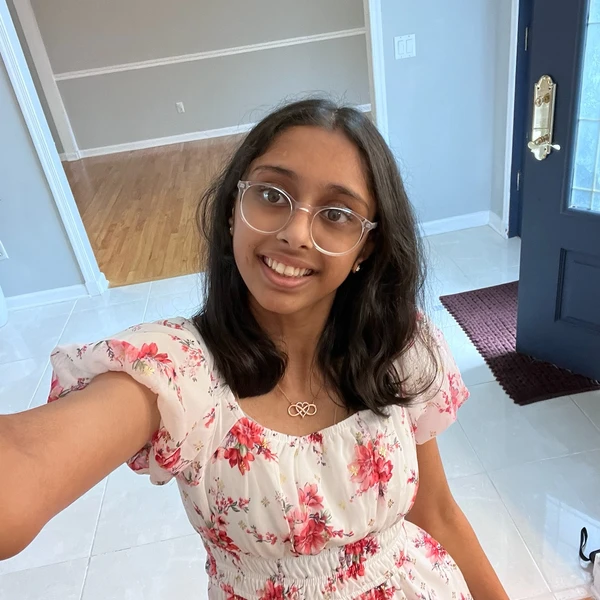
Aadhya Patel

1x

Finalist

General information

Hobbies & Interests

  • Babysitting And Childcare
  • Crocheting
  • Running
  • Dance
  • French
  • Community Service And Volunteering
  • Advocacy And Activism
  • Art
  • Baking
  • Biology
  • Biochemistry
  • Biotechnology
  • Coffee

Reading

  • Fantasy
  • Adventure
  • Mystery
  • Romance

I read books daily.

Bio

As a high school junior with a 4.0 GPA and advanced coursework in the sciences, I bridge molecular biology research with global social impact. I am the co-founder of the Nari Foundation, which empowers and educates girls in rural areas, and co-creator of EduWAVE, a digital literacy initiative for educators. Balancing rigorous academics with athletics and the arts, I am a varsity cross-country runner, a long-time classical dancer, and an avid creative writer and poet. I aim to bring this unique blend of scientific curiosity, leadership, and creative discipline to a dynamic college campus.

Education

John P. Stevens High School

High School

2024 – 2028
Miscellaneous

Desired degree level:
Doctoral degree program (PhD, MD, JD, etc.)
Majors of interest:
Biochemical Engineering, Biotechnology, Biochemistry, Biophysics and Molecular Biology
Desired degree modality:
In-Person, Full-Time, Hybrid
Medical school interest:
No
English as first language:
No
Homeschooled:
No

Career

  • Biology and Math Tutor

    Teaching

    Jan 2026 – Present

Miscellaneous

Dream career field:
Biochemistry, Biomedical Engineering, Biotechnology, Business Supplies and Equipment, Business
Dream career goals:
My long-term career goal is to leverage scientific innovation and human services leadership to scale impactful initiatives or start-ups like the Nari Foundation, advancing global health literacy, educational equity, and sustainable community empowerment.
Work experience:
0 years
Has nursing license:
No
Leadership experience:
Yes

Future Interests

  • Advocacy
  • Volunteering
  • Philanthropy
  • Entrepreneurship
Ethel Hayes Destigmatization of Mental Health Scholarship
I spent my sixteenth birthday staring at a moldy spot on the ceiling of a small, empty room in India, realizing I had become completely invisible. For as long as I could remember, my entire existence had been defined by my younger brother. Back home in New Jersey, during my parents' absence, I was his primary caretaker. My days revolved around him: managing our household, making sure he was safe, and sitting on the floor for hours building Lego sets with him. My identity was entirely tied to being his anchor. I didn't have room to discover who I was as an individual because my life was built around being who he needed me to be. When I was sent to live in India alone for two years to pursue my studies, that anchor was violently pulled away. Trapped in a tiny room thousands of miles away from everything I knew, I fell into a void. I had no idea who I was supposed to be or what I was supposed to do without him. That loss of identity quickly spiraled into a deep, crushing depression, compounded by the overwhelming academic rigor of my new school. The sheer pressure of the workload, combined with the extreme culture shock, triggered an intense, constant anxiety that made my chest feel too heavy to breathe. I didn't fit into the local community; I didn't understand the environment around me, and I felt completely misunderstood by everyone I encountered. Every night ended the same way: crying myself to sleep in the dark, suffocated by a loneliness so profound it felt physical. During the worst weeks, I stopped functioning entirely. I didn't brush my hair or step into a shower for days. I stayed awake for forty-eight hours straight, staring at the ceiling, or slept for days on end. I skipped meals until my body felt completely hollow because the effort to care for myself felt pointless when I didn't even know who I was caring for. Navigating that severe mental health crisis in total isolation fundamentally reshaped my understanding of the world, my relationships, and my future goals. First, it transformed how I view relationships. I realized that while caring for my brother gave me purpose, I had allowed my devotion to him to replace my own sense of self. Learning to survive without him forced me to build a personal foundation that wasn't dependent on someone else needing me. It taught me that real connection requires showing up as a whole person, not just a caregiver. Second, my battle with depression and academic anxiety completely reconfigured my goals. Experiencing how easily a person can slip into the dark—and how invisible mental health struggles can be behind academic success—showed me that achievement means nothing without well-being. It ignited a deep passion in me to pursue a future where I can advocate for mental health awareness, especially for students navigating high-pressure environments and severe isolation. Surviving those two years in that white room proved to me that even when you lose every piece of who you thought you were, you have the power to rebuild yourself from the ground up. My experience with depression didn't destroy me; it gave me an unbreakable empathy, a clearer sense of self, and a quiet, permanent resilience that fuels everything I do today.
Michael Rudometkin Memorial Scholarship
When I reached out to hand a brightly printed flyer to a young girl sitting near the back of a classroom in Gujarat, India, I expected a polite nod or a simple thank-you. Instead, she paused, turned her unseeing eyes slightly toward my voice, and asked in quiet Gujarati, "Hu su karva lau? Te dhul ektrit karshe." Why should I take it? It will collect dust. Her name was Kushi, and her words stopped me cold. As the co-founder of the Nari Foundation—a non-profit organization focused on providing biological educational outreach and empowering young women by breaking menstrual stigmas—I had traveled there to distribute learning resources and reusable mentrual products. In an instant, Kushi’s honest response exposed a massive blind spot in my work. Accessibility isn’t just an ideal to talk about; it requires real, thoughtful action. Giving someone information they literally cannot read isn't help—it's an empty gesture. True selflessness isn't about feeling good about what you've given; it's about listening to what the recipient actually needs. I knew I couldn't just walk away. Returning home, I spent the next two months coordinating directly with Kushi's school teacher, researching accessible media, and figuring out how to translate our outreach materials into Gujarati Braille. It took endless hours of trial, error, and formatting adjustments to ensure the tactile characters were exact. Eight weeks later, I walked back into that same classroom and placed a newly printed booklet into Kushi’s hands. As her fingertips moved across the raised dots of the Braille pages, her face lit up with a realization that this was made specifically for her. For the first time, she wasn't left out of the conversation. That moment transformed how I viewed service: it isn't about high-level leadership titles or large-scale initiatives; it’s about meeting a single person where they are and doing the quiet, unglamorous work to make sure they aren't left behind. That mindset shapes every aspect of my community involvement. Selflessness isn't a single event you check off a list—it's a daily commitment to looking past your own routine to support someone else's dignity. Outside Nari Foundation, I spend time volunteering at a local senior citizen residence that supports disabled veterans. Whether I am listening to a resident recount memories from decades past, helping navigate daily mobility challenges, or simply keeping someone company on a quiet afternoon, I’ve learned that showing up consistently matters far more than making grand promises. The veterans have taught me patience, humility, and the deep value of human connection. Embodying selflessness means constantly asking yourself how you can do better for the people you serve. It requires listening when someone tells you that your effort isn't reaching them, and then doing whatever it takes to bridge that gap. Through my work with the Nari Foundation and my time with our senior veterans, I’ve realized that impact isn't measured by how many flyers you hand out—it’s measured by whether you took the time to make sure everyone had a way to read them.
Olivia Rodrigo Fan Scholarship
There is a specific, quiet grief in being forced to grow up before you ever get a chance to just be a kid. When parents are mentally absent, the vacuum in a house doesn't stay empty for long—someone has to step in. For me, that meant absorbing adult responsibilities early, becoming the main caretaker for my younger brother, and trying to navigate the confusing, intimidating world of his hearing loss on my own. From the outside, handling doctor appointments, insurance calls, and daily care looked like incredible independence. On the inside, it felt like being trapped in a life I wasn't ready to run, holding up a household meant for two adults while watching my own teenage years slip away. When Olivia Rodrigo sings, "When am I gonna stop being wise beyond my years and just start being wise?" in "Teenage Dream," it cuts straight to the point. For a long time, people praised me for being mature, and I took it as a point of pride because I had to. But eventually, that praise turned into a prison. When everyone expects you to handle crisis after crisis without flinching, there is no space left to mess up, break down, or just be young. Rodrigo’s lyric hits on the core reality of forced maturity: getting compliments for surviving constant pressure isn't the same thing as actually being okay. You aren't secretly wise. You are just completely exhausted. That relentless survival mode eventually turns inward, leaving you isolated and stuck. In "making the bed," Rodrigo writes: "Sometimes I feel like I don't wanna be where I am / Push away all the people who know me the best... / It's me who's been making the bed." This line hits close to home because of how suffocating the routine becomes. I never chose to take on my parents' job, but out of necessity, I became the person keeping everything afloat. When you spend years setting aside your own life to protect a sibling who relies on you, your own identity disappears. You stop letting people in because nobody really gets the weight of it all. You look around one day and realize you are totally trapped, with no obvious way out of a role you never asked for in the first place. Naming that reality is probably the hardest part of surviving it. My story doesn't have a clean, dramatic resolution where all the weight suddenly disappears. If there is any real triumph here, it is just learning to admit out loud that this is hard. Rodrigo’s music works because she doesn't wrap things up in neat, fake little bows; she stays in the messy, uncomfortable reality of growing up. Her lyrics remind me that admitting my own burnout and grief doesn't mean I love my brother any less—it just means I'm finally letting myself be human.
Science and Advocacy Scholarship
When I watched a glowing green band of Green Fluorescent Protein separate from resin beads inside a chromatography column during an E. coli genetic modification lab, I didn’t just see a successful biochemical protocol—I saw the life-changing ability of biotechnology. Science, at its highest potential, is the intentional rewriting of possibilities. My passion lies in the blend of molecular biology and biotechnology, fields that serve as the ultimate bridge between rigorous scientific discovery and palpable human innovation. My passion for science drove me to seek out academic challenges beyond the standard secondary school curriculum. I completed independent, college-level molecular biology coursework for college credit to build a rigorous foundation in molecular biology. Furthermore, engaging in hands-on laboratory work—specifically conducting gene insertion into E. coli, extracting GFP, and mastering protein purification protocols—taught me that scientific investigation requires precision, patience, and creative problem-solving. However, hours spent analyzing molecular structures and cellular pathways prompted me to ask a bigger question: How can the empirical power of biological research move beyond the lab bench to improve human lives directly? That question found its answer when I co-founded the Nari Foundation, an organization dedicated to breaking long-standing stigmas around menstrual health in rural regions while safeguarding young women’s access to education. In many rural communities, a widespread lack of scientific literacy regarding basic human biology turns a natural biological function into a source of shame and isolation. Without access to hygiene products or accurate information, young girls frequently miss school during their cycles, eventually sacrificing their education entirely. I realized that dismantling this barrier required more than basic benevolence; it demanded a scientifically grounded solution. Applying my biology knowledge, I conducted in-depth research into material science, absorbency mechanics, and biocompatible materials to help design a high-performing, reusable, and sustainable menstrual pad. Without a proper understanding of fluid dynamics, cell-level absorption, and microbial safety standards, creating a durable product capable of withstanding harsh local conditions while maintaining proper hygiene would have been impossible. Science gave us the groundwork to turn empathy into an effective physical solution. Alongside distributing these pads, we led educational workshops grounded in human anatomy and biology, directly replacing harmful cultural taboos with facts. To date, the Nari Foundation has empowered hundreds of young women across dozens of middle schools in Gujarat to pursue their academics uninterrupted, reclaiming their education and autonomy. This experience underscored what is truly at stake if science is not actively championed. When scientific knowledge is treated as an elite luxury or allowed to remain trapped within academic journals, a dangerous void is created—one that is quickly filled by misinformation, fear, and dogma. When communities lack access to scientific truth, policy decisions become detached from reality, public health crises escalate, and marginalized populations suffer under preventable burdens. Championing science is not merely about defending technical data; it is about defending human dignity and social justice. Science provides the objective foundation necessary to evaluate reality, challenge oppressive norms, and engineer equitable solutions. Without dedicated advocates willing to translate complex discoveries into accessible public knowledge, society loses its most reliable motor for human progress. Defending science calls for bridging the gap between in-depth research and community action. My future degree in biotechnology will allow me to remain at the forefront of scientific discovery. I intend to utilize cutting-edge genetic and molecular tools to pioneer sustainable, evidence-based solutions for global health and equity challenges. I am committed to being both an innovative researcher at the bench and an uncompromising advocate in the world, ensuring that the light of scientific truth will always empower those who need it most.
Bick New Jersey Scholarship
Growing up in New Jersey means learning how to build something entirely your own in the quiet spaces between towering horizons. Tucked between major metropolises, we are often seen as a transit hub, but to me, Jersey–with all its intensity, quiet running trails, and rich cultural tapestry–is home. It's the place where grit and deep community intersect. My story isn’t defined by a single environment, but by a weight I carried long before I fully understood it. With absent parents, the responsibility of raising my younger brother fell almost entirely onto my shoulders while he was still a baby. Growing up as a caregiver forced me into an overwhelming routine of self-sacrifice, constantly navigating the agonizing choice between what was best for my own future and what was essential for him. Moreover, a large portion of our family’s resources has always been directed towards treatment and management of his complex health issues, specifically his severe hearing loss. Watching my family struggle financially just to give him access to basic healthcare stripped away any remaining hope and self-involvement. It taught me quiet resilience, but it also exposed how brutally unjust the healthcare and education systems can be for families without deep pockets. Witnessing these glaring educational gaps firsthand became the catalyst for my life’s work and mission. It has lead to my co-founding of the Nari Foundation–an organization dedicated to providing educational resources and sustainable menstrual products to girls in underserved, rural communities who are similarly overlooked–while also launching EduWAVE (a digital literally initiative proving smartboard and tech training to government schools in India). Balancing that non-profit work, varsity athletics, a decade of classical dance training, and a 4.0 academic workload alongside childcare tested my absolute limits. Yet, late nights spent drafting outreach or reimagining young faces filled with gratitude and joy enhanced one truth: my scientific pursuits and my philanthropic commitments are inseparable. This scholarship is the support for my goal of studying biotechnology and molecular biology. More importantly, these funds could unlock the ability to allocate a portion of the money to Nari Foundation as a direct donation. This would allow us to expand our reach and serve girls with improved menstrual resources across a greater range of locations. Looking forward, my career is dedicated to dismantling the barriers my family faced. Alongside expanding Nari, I plan to establish a custom initiative—whether through a dedicated non-profit organization, an exceptional school, or a clinical facility—focused entirely on children who are deaf or hard of hearing. No family should have to count pennies just to afford a surgery that allows their child to hear for the first time, nor should a child be left without the long-term speech therapy and tailored school environments required to thrive afterward. Thank you for investing in a story curated right here in New Jersey—one rooted in sacrifice, discipline, and an unwavering commitment to bridging the gap between medical innovation and human need.
Aadhya Patel Student Profile | Bold.org