Nadia Ansari Design Award


Sometimes illness takes more than health. It interrupts a life already underway: the body you trusted, the plans you made, the version of yourself you expected to keep.
Grief is part of surviving that loss. Acceptance matters; it is hard-earned, and it asks a great deal. But acceptance answers only one question: How do I live with this? It can leave the harder question untouched: Does it have to be this way for the next person?
Nadia Ansari began asking that question after being diagnosed at thirteen with Guillain-Barré Syndrome, an autoimmune condition that attacks the nervous system. She was left with whole body crippling neuropathic pain and lived through the fear, pain, and uncertainty of it. But she kept asking, does it have to be this way for everyone?
Only two years later, in 2019, she began researching photobiomodulation: how targeted light can support healing and regeneration. Her work earned recognition from NASA, but its meaning was deeply personal: she was studying a problem she understood from the inside. When her brother built a neuromodulation device to help ease her chronic pain, Nadia saw beyond her own relief. She saw a way to help patients still waiting for better options.
That question continued to shape her path. This year, Nadia graduated from Stanford, where she studied design for healthcare. Today, she is helping lead that effort forward, overseeing FDA-regulated clinical trials for the company bringing the device to patients with chronic pain.
Nadia’s story is not simply about resilience. It is about agency: refusing to treat suffering as inevitable when something better can be built. This award honors people who carry that same refusal… those who look at what patients are forced to endure and choose to design a different future.
Any high school senior or undergraduate student who is pursuing biology or product design may apply for this scholarship opportunity.
To apply, tell us about your interest in creating solutions for those with chronic health conditions, what specific problem you want to solve, and how you chose this problem.
Tell us about a problem in health, care, or patient experience that you refuse to accept as inevitable. What did you do to understand it, what did you plan to build or change about it, and how will it shape the future you hope to create?
Explore All Kinds of Scholarships for All Kinds of Students
How it works
Bold.org is Built to Make Scholarships Feel Possible
Step 01
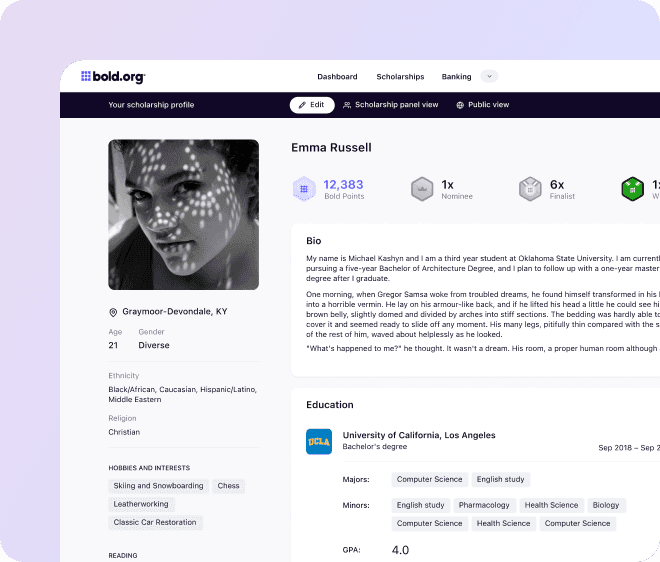
Start with your story
Bold.org helps students show donors who they are beyond a transcript.
Step 02
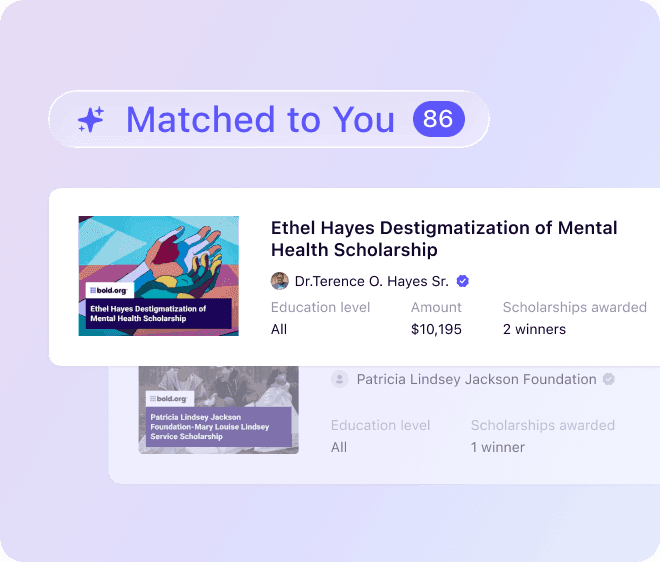
Where scholarships are awarded
Every scholarship is funded by donors and managed directly on Bold.org.
Step 03
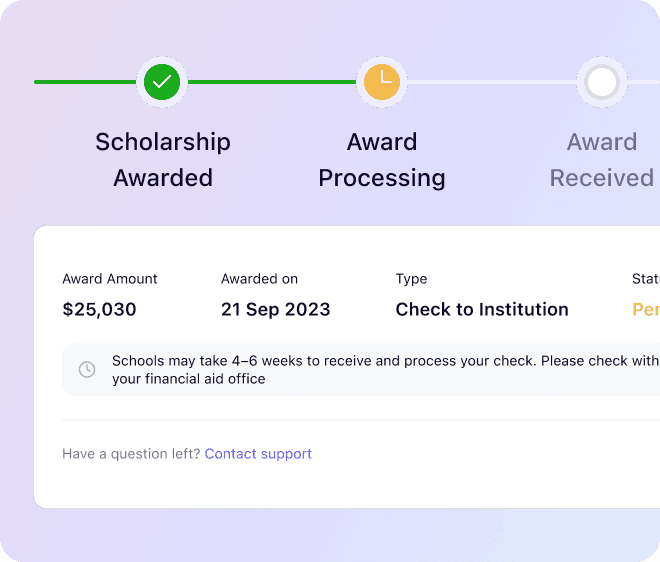
Fund your future
Scholarship dollars are disbursed through Bold.org to help students pay for school.
FAQ
The application deadline is Oct 8, 2026. Winners will be announced on Nov 9, 2026.
Your privacy is a top priority on the Bold.org platform, and you can find our privacy policy in full here. You may opt out of communications from Bold.org at any time, and unless we’ve first notified you and gotten your consent, you’ll never receive communication from any third parties related to personal information you give us.
Award amounts per winner are designated by the donor. Check the award amount for a detailed breakdown.
The winner will be publicly announced on Nov 9, 2026. Prior to the announcement date, we may contact finalists with additional questions about their application. We will work with donors to review all applications according to the scholarship criteria. Winners will be chosen based on the merit of their application.
Award checks will be sent to the financial aid office of the winner's academic institution or future academic institution in their name to be applied to their tuition, and in the name of their institution (depending on the school's requirements). If the award is for a qualified educational non-tuition expense, we will work with the winner directly to distribute the award and make sure it goes towards qualified expenses.
Before we award the scholarship, the winner will be required to confirm their academic enrollment status. Depending on the circumstances, verification of Student ID and/or their most recent transcript will be required.
If you have any questions about this scholarship or the Bold.org platform, just email contact@bold.org and we’ll get back to you as quickly as we can.
Yes. The terms and conditions for this scholarship can be found here.
