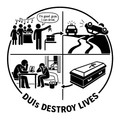
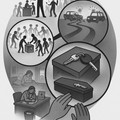
Anthony McPherson, left this planet at the age of 26 to go on a heavenly adventure on 7/9/2017. His body gave up his spirit immediately in a car accident because of an intoxicated driver. His goals and dreams were cut short but will pick up in the new life to be.
Anthony had a passion for cars, technology, and media. He attended car meets and built sound systems for car installation. He was a devoted son, brother and friend until his life came to an abrupt halt. He was always working on vehicles, whether pulling the engines apart or running diagnostics. His ultimate goal was to open his own car business. He was a devout born again Christian and we are so blessed with the time we had with him. He is now with his Lord and we can't wait to see him again.
Unfortunately, a person dies in a drunk-driving crash roughly every 39 minutes in the US alone, resulting in an over 12,000+ deaths per year.
This scholarship seeks to honor the life of Anthony McPherson by raising awareness about drunk driving and supporting students pursuing careers in the automotive industry.
Any high school or undergraduate student who’s pursuing the automotive industry may apply for this scholarship.
To apply, express your creativity through the use of various media such as videos, art, which depicts DUI OR write an essay regarding the effects of DUIs and strategies that can be used to prevent them; as well as the correlation of the effects to those that are left behind.
If submitting a link to a video (3 minutes or less), submit it as a public YouTube link or a Google Drive link. Settings should be set to "public" or "anyone with the link can view." If we can't access your video, your application won't be considered.
Selection Criteria:
Ambition, Need, Boldest Bold.org Profile
Essay Topic Requirements
Tell us about the effects of DUIs and strategies that can be used to prevent them from a moral and technical viewpoint as well as the impact it has on family and friends.
0–600 words
Link Requirements
Submit videos/links here
Attachment Requirements
Submit images/files here
File limits: 1–3 files
$500
1 winner$500
Awarded
Application Deadline
Jul 8, 2026
Winners Announced
Aug 9, 2026
Education Level
High School, Undergraduate
Share
Explore All Kinds of Scholarships for All Kinds of Students
Every time someone chooses to drive under the influence, they make a decision that can permanently change countless lives. A DUI is not simply a traffic offense; it is a choice that can leave families grieving, dreams unfinished, and communities forever affected. The story of Anthony McPherson is a powerful reminder that one person's reckless decision can take away another person's future in an instant.
As someone pursuing a career in the automotive industry, this scholarship resonates deeply with me. I will soon begin my education in automotive technology while working at a Ford dealership, where I hope to build a long-term career as a professional technician. I chose this field because I enjoy solving mechanical problems, learning new technologies, and helping keep vehicles safe and reliable. While technicians cannot control the decisions drivers make, we play an important role in ensuring vehicles are operating as safely as possible and in educating customers about the importance of responsible vehicle ownership.
From a moral perspective, driving under the influence is a betrayal of the responsibility every driver accepts when getting behind the wheel. Choosing to drive impaired puts innocent people at risk, including children, parents, friends, and complete strangers. No celebration, convenience, or short drive is worth risking another person's life. Every driver has alternatives, such as using a designated driver, calling a rideshare service, taking public transportation, or simply waiting until they are sober.
From a technical perspective, alcohol and drugs significantly reduce a driver's reaction time, judgment, coordination, and awareness. Modern vehicles include advanced safety systems such as automatic emergency braking, lane-keeping assistance, blind-spot monitoring, and electronic stability control. While these technologies help reduce crashes, they cannot overcome the dangerous effects of an impaired driver making poor decisions. Technology is a valuable tool, but it can never replace personal responsibility.
The impact of a DUI extends far beyond the crash itself. Families lose loved ones, friends lose lifelong companions, and communities lose talented individuals who had goals, dreams, and futures ahead of them. Survivors often face years of physical recovery, emotional trauma, and financial hardship. The ripple effects continue long after the headlines disappear.
Preventing DUIs requires both education and accountability. Schools, families, employers, and communities should continue promoting the dangers of impaired driving. Rideshare services, designated driver programs, stricter enforcement, and public awareness campaigns all help reduce preventable tragedies. Most importantly, every individual must recognize that choosing not to drive while impaired is an act of respect for everyone else on the road.
As I begin my journey in the automotive industry, I hope to contribute to safer roads through my work and to encourage responsible driving whenever I can. Honoring Anthony McPherson's memory means remembering that behind every statistic is a person whose life mattered. If sharing his story inspires even one person to make the right decision and avoid driving under the influence, then his legacy will continue to save lives.
I didn’t understand how serious driving really was when I first got behind the wheel. Growing up homeschooled, most of my social life happened online. I spent a lot of time playing video games like Need for Speed. For a while, it blurred the line between real life and the screen. My mom noticed that disconnect and signed me up for a program called B.R.A.K.E.S. in New Jersey—a defensive driving class that gave me hands-on experience with things like sudden skids, distractions, and emergency braking. It wasn't just another class. It changed the way I think about being behind the wheel.
The truth is, no matter how prepared you feel, nothing gets you ready for the moment someone passes out behind the wheel or a friend swears they’re “barely buzzed,” and the next thing you know, you’re in the middle of a horror scene. DUI is just the title—tragedy is the reality. Families are left with only memories. I've been told that when someone dies a tragic death, the mind fills in the unknown with imagined scenes—real or not—that match the heartbreak, leaving behind mental scars that impact the future of the person living with them.
From a moral perspective, DUI prevention has to start with responsability. It’s not just about you—it’s about the people you could hurt or kill. That means thinking ahead, making a plan before you drink, and never letting a friend drive impaired—even if they say they’re fine. It also means creating a culture where saying “I’ll call you a ride” isn’t seen as controlling—it’s just normal.
One of my high school teachers often told a story about her older son and his group of friends. They had a rule: all car keys go in a lockbox at the beginning of the night and don’t come out until the next day. They line up sober drivers, Ubers, or taxis ahead of time—like picking an outfit. I asked her where that habit came from, and she told me something that stuck with me. When her son was young, she was a caregiver for a woman who had been hit by a drunk driver on her way to prom. She was paralyzed on the left side of her body and never got to dance at prom, never became the cartoon artist she dreamed of being, and never sang again. Years later, her son saw that same woman walk just a few small steps in a local parade using a brace and a crutch, with his mom helping her. Her story shaped his behavior before he ever had a license. That’s the kind of reminder that stays with you. But it shouldn’t take a tragedy to build that understanding.
That’s where technical prevention comes in. We need to introduce safety habits from the start—especially using tools that don’t rely only on a person’s choice. Ignition interlock systems that detect blood alcohol, apps that offer quick rides home, and new in-car sensors that alert or even stop the car when something seems off can all help. I hope to work on vehicles like these in the future and be part of building smarter, safer cars.
Regardless of whether I win or not, writing this essay has put a clear image of Anthony’s story in my mind. I know I will think of him often. Every time I look at my own automotive certificate, I will remember Anthony McPherson and the family that turned their pain into something meaningful. If I do receive this scholarship, I would be honored to be part of that meaning.
Driving under the influence is not only illegal but is is profoundly irresponsible and ethically wrong. It endangers the lives of the driver, passengers and others on the road. From a moral perspective, choosing to drive while impaired shows a blatant disregard for the well-being of others. It violates the ethical duty to respect others' rights to safety and life. The moral implications are severe because DUI can lead to accidents causing injury or death, inflicting immense pain and loss on innocent people and their families.
From a technical standpoint, DUI affects a person's ability to operate a vehicle safely. Alcohol and drugs impair reaction time, coordination, and judgement, which are crucial for safe driving. Technologically, the presence of alcohol can be measured through breathalyzers and blood tests, which law enforcement uses to determine intoxication levels. DUI convictions can lead to legal consequences such as fines, license suspension, increased insurance rates and potential jail time.
The impact of a DUI extends beyond the individual to affect family and friends profoundly. Families may experience emotional and financial strain due to legal fees and it takes an emotional toll of worry, shame and disappointment.
Education and awareness are strategies that can be used to prevent DUIs by promoting education about the dangers and moral implications of dunk driving, we can create a strong community norm against it. Schools, community groups and media campaigns can play a significant role in spreading awareness. Role models and mentors can help set standards, when peers and respected individuals are absent. It is also important to take personal responsibility. Emphasizing the moral responsibility to protect oneself and others can deter individuals from driving under the influence.
Technically, sobriety checkpoints established by law enforcement to deter and catch drunk drivers can be a strong deterrent. Ignition interlock devices can be used to prevent cars from starting if the driver has been drinking. Public transportation and ride-sharing can also be strong strategies that can help with the increasing availability and awareness of alternative transportation options, with this, we can reduce the temptation to drive while impaired. Apps like Uber and Lyft provide convenient alternatives.
In conclusion, it is important to establish strong support systems for individuals at risk of DUIs. If you see something, say something because it can save a life or lives of those impacted by an unwise decision. When you drink and drive, everyone loses and the effects are instant, long lasting and unfortunately in many cases, permanent. We all have a part to play in preventing DUIs.
The effects of drunk driving are nothing short of devastating and far-reaching. When an intoxicated individual takes the wheel, they jeopardize not only their own life but also the safety of every other person on the road. It's a reckless act that brings about entirely preventable tragedies, with over 10,000 lives lost each year to this senseless behavior. One such life cut short was that of Anthony McPherson, a promising 26-year-old who fell victim to a drunk driver. While his dreams were cruelly extinguished, his memory can endure as a driving force for raising awareness about the perils of DUIs and igniting the spark for change.
Losing a loved one to a drunk driving incident inflicts emotional and psychological wounds that can linger for a lifetime. The abrupt and traumatic nature of such loss often gives rise to complex and enduring grief among family and friends. The situation's injustice and senselessness typically engender deep-seated anger. The choice of a drunk driver can set off a ripple effect, impacting countless individuals far beyond the initial victim. Survivors are left grappling with unanswered questions, remorse, and the unenviable task of making sense of an unfathomable tragedy.
The repercussions of drunk driving extend to legal and financial realms as well. A DUI conviction carries hefty fines, potential jail time, probation, mandatory ignition interlock devices, and license suspension or revocation. The financial burdens mount with medical and funeral expenses, along with legal representation costs, placing tremendous strain on affected families. For those who survive, expensive medical treatments and rehabilitation may become a lifelong reality. While individuals who cause harm due to drunk driving may face severe legal consequences, it can never truly compensate for the pain and suffering inflicted.
Efforts to prevent drunk driving necessitate a multi-faceted approach, involving education, responsible choices, and changes in public policy. Initiatives targeting teenagers, providing them with knowledge about responsible drinking and the dangers of impaired driving, can effectively curb the problem at its source. To accomplish this, schools and community organizations require robust funding and support. For adults, the availability of ride-sharing services has been a step in the right direction, offering convenient transportation alternatives when impaired. However, the associated costs can pose a barrier, warranting consideration of subsidies or discounted fares to encourage safer choices. Establishments serving alcohol can contribute by offering breathalyzers and prominently displaying information about the associated risks. Furthermore, the enforcement of ignition interlock laws, more stringent blood alcohol content (BAC) limits, license suspensions, and DUI checkpoints has proven to be moderately effective as deterrents. Ultimately, the linchpin to success lies in perpetuating awareness and instigating shifts in societal attitudes.
Anthony McPherson's aspirations were tragically unfulfilled due to a thoughtless act. While nothing can erase this profound tragedy, we can honor Anthony's memory by advocating for change and tirelessly working to prevent further senseless loss of life. Each small effort to raise awareness and initiate change contributes to a growing momentum. Through the dissemination of knowledge, unwavering commitment, and the implementation of policy reforms, we can strive to ensure that no other bright and talented young individuals have their futures unjustly curtailed. Anthony's indomitable spirit persists through these collective endeavors, aimed at educating and safeguarding all those who navigate our roads.
The effects of DUIs can be devastating, deadly, and debilitating. I have experienced this in my family. At the hand of a drunk driver, my uncle was the victim of a hit and run. Because of this choice, not one but three cars struck my uncle! When a driver chooses to drive with alcohol, they are putting their lives and the lives of others at great risk. DUIS can cause Bodily harm and fatalities. If you get arrested for a DUI, you have to live with the consequences. It can put your finances in a crunch. You will have to pay for your mistakes in fines. You will pay jail time if convicted and get a criminal record. You will have freedoms taken away such as a suspended license and have to pay higher insurance. You could lose your reputation by losing your job and maybe even prevent career opportunities because of it, and you will have negative labels on you for the rest of your life causing extreme shame and embarrassment.
There are some steps to prevent DUIs. The best one is to not drink. If you must drink, you must make smart choices when choosing to engage in activities involving alcohol. Pick a responsible friend who is not going to drink alcohol to watch over you and help you stay safe. Know your limits when it comes to drinking. If you know you are going to drink, maybe drink one drink and cut yourself off so you will NOT get drunk then wait responsibly before you drive or call a friend or loved one to help you get home. You can also decide to spend the night at someone's house before you make your way home so that you will not hurt yourself or others by driving.
There are programs and resources available in schools, communities, and states that provide reliable information to make you aware of the effects of alcoholism and drunk driving. These need to be readily available so that you can know the consequences of your actions. If you or someone you know has an alcohol problem, they need to seek help and treatment right away and it needs to be financially affordable, encouraging, and have an attainable reachable goal so that offenders will not give up the program before they even start it.
There are also laws and penalties for driving drunk that the public needs to be aware of so that they can know the dangers of driving impaired. Funding and resource information needs to be easily accessible.
Taking the necessary steps to protect people from DUI is a must. If you want to get on the road drunk, you will make a life-altering mistake. You need to have a plan in place that would include having designated drivers or using public transportation as a safe way to get home. Smart choices ensure that people do not get on the road after drinking. Make that choice today to either not drink or to use wisdom. Keep safety at the forefront of your mind so that you or people will not get hurt, and you won't suffer an arrest or be marked with jail time, loss of employment, and possibly your loved ones because of it. Take the time to get educated and hide your keys when you are tempted. DUI can have a negative effect on your life and the lives of the innocent. Do not allow three letters, (DUI) to ruin your life, take action today and live with a mind of safety using wisdom when choosing to drink alcohol and drive.
How it works
Bold.org is Built to Make Scholarships Feel Possible
Step 01
Start with your story
Bold.org helps students show donors who they are beyond a transcript.
Step 02
Where scholarships are awarded
Every scholarship is funded by donors and managed directly on Bold.org.
Step 03
Fund your future
Scholarship dollars are disbursed through Bold.org to help students pay for school.
FAQ
When is the scholarship application deadline?
The application deadline is Jul 8, 2026. Winners will be announced on Aug 9, 2026.
How will scholarship application information be used?
Your privacy is a top priority on the Bold.org platform, and you can find our privacy policy in full here. You may opt out of communications from Bold.org at any time, and unless we’ve first notified you and gotten your consent, you’ll never receive communication from any third parties related to personal information you give us.
What is the scholarship award?
Award amounts per winner are designated by the donor. Check the award amount for a detailed breakdown.
When will the scholarship winner be chosen? How will they be notified?
The winner will be publicly announced on Aug 9, 2026. Prior to the announcement date, we may contact finalists with additional questions about their application. We will work with donors to review all applications according to the scholarship criteria. Winners will be chosen based on the merit of their application.
How will the scholarship award be paid?
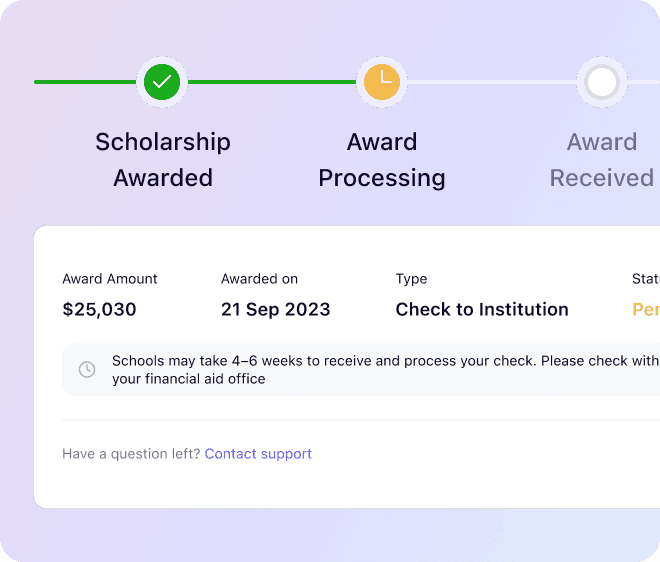
Award checks will be sent to the financial aid office of the winner's academic institution or future academic institution in their name to be applied to their tuition, and in the name of their institution (depending on the school's requirements). If the award is for a qualified educational non-tuition expense, we will work with the winner directly to distribute the award and make sure it goes towards qualified expenses.
How will my scholarship application be verified?
Before we award the scholarship, the winner will be required to confirm their academic enrollment status. Depending on the circumstances, verification of Student ID and/or their most recent transcript will be required.
How should I get in touch with questions?
If you have any questions about this scholarship or the Bold.org platform, just email contact@bold.org and we’ll get back to you as quickly as we can.
Does the scholarship have terms and conditions?
Yes. The terms and conditions for this scholarship can be found here.
97% of students don't win scholarships. We’re here to change that.